Quick Top 10 Facts about Zonkey
| SCIENTIFIC NAME | Equus zebra × Equus asinus |
| CLASSIFICATION | KINGDOM: Animalia PHYLUM: Chordata CLASS: Mammalia ORDER: Perissodactyla FAMILY: Equidae GENUS: Equus SPECIES: Hybrid (zebra × donkey) |
| SIZE | Height: 3.5–5 feet (1.1–1.5 m) at the shoulder, Weight: 500–700 pounds (225–320 kg) |
| HABITAT | Found in captivity or private reserves; not naturally found in the wild |
| DIET | Herbivorous; eats grasses, hay, and grains, similar to zebras and donkeys |
| SPECIES | Zonkey, a crossbreed between a zebra (usually male) and a donkey (usually female) |
| COUNTRY | Mostly bred in zoos, wildlife parks, and occasionally farms across various countries |
| GESTATION PERIOD | Approximately 12 months |
| LIFE SPAN | 15–25 years (in captivity) |
| CONSERVATION STATUS | Not evaluated; hybrids like zonkeys are rare and not recognized as a species |
Amazing Facts About Zonkeys
1. Zonkeys are zebra-donkey hybrids
Zonkeys are the offspring of a male zebra and a female donkey, combining traits from both parents in a striking way.
2. They have striped legs and solid bodies
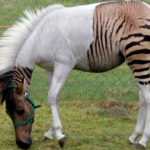
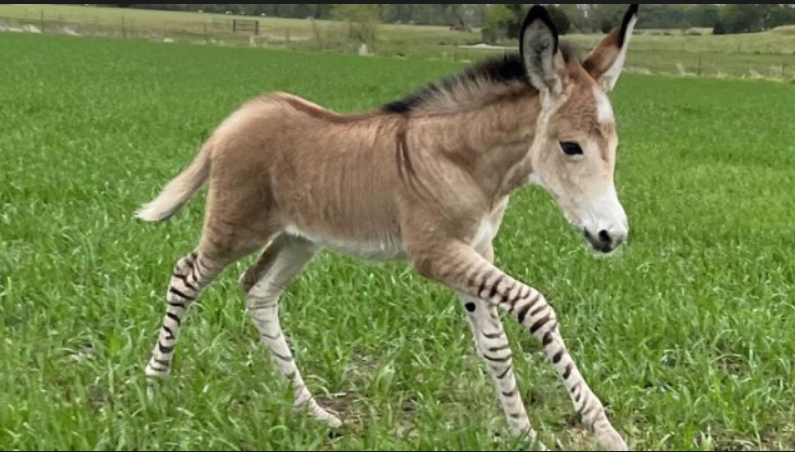
Most zonkeys inherit their stripes from their zebra parent, especially on the legs, while their body resembles a donkey.
3. Zonkeys are sterile
Like most hybrids between different species, zonkeys are usually sterile and cannot reproduce.
4. They are very rare
Zonkeys do not occur naturally in the wild and are extremely rare, mostly found in zoos or private collections.
5. They are strong and sturdy
Zonkeys combine the toughness of donkeys with the agility and speed of zebras, making them surprisingly hardy animals.
6. Each zonkey looks unique
No two zonkeys look exactly alike—their patterns and coloring vary depending on the parents’ genes.
7. They are intelligent but stubborn
Zonkeys are clever animals, but they also inherit a strong-willed, sometimes stubborn nature from both parents.
8. They are not good for riding
Though strong, zonkeys are not commonly used for riding or work due to their unpredictable behavior.
9. They make loud vocalizations
Zonkeys produce a blend of zebra braying and donkey hee-haws, resulting in a very unusual and loud call.
10. Zonkeys are symbols of hybrid vigor
While not natural species, zonkeys are admired for their resilience and unique genetic combination.
Zonkey: The Intriguing Crossbreed of a Zebra and a Donkey
A zonkey is a hybrid animal that results from the mating of a zebra (Equus zebra) and a donkey (Equus asinus). This unusual crossbreeding between two distinct equine species creates a one-of-a-kind animal that displays traits from both parents. The zonkey, with its zebra-like striped patterns and the donkey’s robust build, has piqued the interest of many. Known for its remarkable appearance and distinctive qualities, zonkeys have become a subject of fascination around the globe.
The zonkey is a captivating hybrid that merges the striking stripes of a zebra with the solid frame of a donkey. While they are not commonly encountered in the wild, zonkeys have attracted attention due to their eye-catching looks and unique characteristics. Though most zonkeys are sterile and unable to reproduce, they still hold a notable place in human culture, often found in zoos and tourist attractions. The ethics of breeding hybrid animals like the zonkey have sparked debates, but their appeal remains, offering a deeper understanding of nature’s complexity and diversity.
The Origins of the Zonkey
Zonkeys result from interbreeding between a zebra and a donkey. This pairing typically occurs in controlled settings like zoos, animal sanctuaries, or sometimes on private farms. In the wild, such crossbreeding is rare, as zebras and donkeys generally occupy different habitats and display distinct behaviours.
Zebra
Zebras are native to Africa and are famous for their distinctive black and white stripes. There are three main species of zebras: the plains zebra, the Grevy’s zebra, and the mountain zebra. As wild animals, zebras are not generally domesticated, though a few have been tamed for certain uses in some cultures.
Donkey
Donkeys, in contrast, are domesticated and have served humans for millennia as working animals. Found across the globe, donkeys are known for their endurance, strength, and calm demeanour.
When a male zebra (stallion) mates with a female donkey (known as a Jenny), the offspring is a zonkey. Conversely, if a male donkey mates with a female zebra, the offspring is also a hybrid, though rarer, called a zebras.

Physical Features of the Zonkey
The zonkey is a striking hybrid that brings together the most remarkable traits of both its zebra and donkey parents. Its physical appearance blends the zebra’s bold stripes with the donkey’s more compact and sturdy body.
Coat and Stripes
One of the most distinctive features of a zonkey is its striped coat, which typically showcases the zebra’s iconic black-and-white stripes, mostly on the legs, hindquarters, and neck. However, the stripes are not as widespread as those of a zebra, with zonkeys generally having solid-coloured bodies and stripes appearing only in select areas. The striping pattern can vary, and some zonkeys have more noticeable stripes than others.
Size and Build
Zonkeys tend to inherit a combination of their parents’ sizes, generally having a more compact physique like that of a donkey. They are usually larger than a donkey but smaller than a zebra, with most standing between 12 to 14 hands (48 to 56 inches) at the shoulder—similar in height to a small horse. Their bodies are typically muscular, reflecting the donkey’s sturdy frame, built for endurance and strength.
Mane and Tail
The mane of a zonkey usually resembles that of a donkey—shorter and sparser than a zebra’s. Their tail ends with a tuft of hair, characteristic of a donkey, though the tail often displays the zebra’s striped pattern along its length.
Facial Features
The face of a zonkey typically reflects a mix of its zebra and donkey lineage. It usually features a longer, more elongated face similar to a donkey’s, with the zebra’s striking eyes and facial stripes. Some zonkeys may have a slightly flatter nose and shorter snout, closer to that of a donkey.
Behaviour and Personality
Zonkeys, like their parents, possess personalities that combine the stubbornness of a donkey and the independence of a zebra. Their behaviour can be shaped by their environment and how they are raised, especially in relation to their interactions with humans.
Temperament
Zonkeys are generally gentle, curious, and intelligent, traits they share with donkeys. However, due to the wild nature of zebras and their stronger instinct for self-preservation, zonkeys can sometimes display a level of wariness or independence, characteristic of their zebra heritage. Some zonkeys may be harder to train than donkeys due to their zebra-like wilder instincts. Despite this, they are typically not aggressive unless provoked.
Trainability
Zonkeys can be trained, though it may require more patience than working with a standard donkey. While donkeys are highly intelligent and able to learn various tasks, zebras are less domesticated and more resistant to training. The ease with which a zonkey can be trained depends on the specific traits inherited from its zebra and donkey parents. Some zonkeys are docile and easy to manage, while others can be more stubborn or independent.
Social Behaviour
Zonkeys are typically social animals that enjoy the company of others. They can form bonds with humans and other animals, although their interactions may be influenced by their hybrid nature. Some may bond more easily with donkeys, while others may exhibit more zebra-like behaviour, preferring to keep their distance.
Fertility and Reproduction
Zonkeys are sterile hybrids, meaning they are incapable of reproducing. This is a common trait in most hybrid animals resulting from the mating of two different species, such as mules (which are a cross between a horse and a donkey). The differences in chromosome numbers between zebras and donkeys prevent zonkeys from being fertile, as the hybrid has an intermediate chromosome count.
Sterility
Like other hybrid animals, zonkeys are typically sterile because of the chromosomal differences between their zebra and donkey parents. Zebras have 44 chromosomes, while donkeys have 62, which results in a zonkey having 53 chromosomes. This unbalanced number of chromosomes makes reproduction difficult, and most zonkeys are unable to reproduce.
Exceptions
Rare instances of fertility in hybrid animals like zonkeys have been recorded, but these are considered anomalies. The vast majority of zonkeys, like mules, are infertile and unable to breed.
Zonkeys in Human Culture and Agriculture
While zonkeys are often bred for curiosity and novelty, they have also served various roles throughout history. In some areas, they are bred for their strength, endurance, and unique physical traits, although they are less commonly used in agriculture compared to donkeys or mules.
Tourist Attractions
One of the most common places to see a zonkey is in zoos or wildlife parks, where they are kept for educational purposes or as a curiosity. Their distinctive striped appearance and hybrid nature make them a draw for visitors. Zonkeys are often displayed alongside zebras and donkeys to demonstrate the concept of hybridisation and the diverse range of species in the animal kingdom.
Farming and Labour
Though zonkeys are not typically used for agricultural work like donkeys or mules, their strength and adaptability could make them useful in specific situations. However, their more difficult training and management make them less practical for general use in agriculture.
Ethical and Legal Issues
Breeding hybrid animals such as the zonkey raises several ethical concerns. The desire to create zonkeys for novelty or entertainment can sometimes come at the expense of the animals’ well-being. The ethical debate centres around the health, welfare, and conservation issues that arise when hybrids are bred for non-essential purposes. Breeding animals solely for commercial or entertainment value may lead to unexpected health problems for the animals involved.
In many places, breeding hybrids like zonkeys is regulated to protect the welfare of the animals. Furthermore, some animal rights advocates have raised concerns about the environmental consequences of introducing hybrid animals into non-native ecosystems and the risks involved.
FAQ (Frequently Asked Questions) about Zonkey
Q: What is a Zonkey?
Ans: A Zonkey is a rare hybrid animal that results from the crossbreeding of a male zebra and a female donkey. It inherits physical traits from both parents, often featuring the zebra’s distinctive stripes and the donkey’s body structure.
Q: Are Zonkeys real animals?
Ans: Yes, Zonkeys are real but rare. They do not occur frequently in the wild and are usually bred in captivity. They are hybrids, meaning they are not a separate species but a cross between two different species.
Q: What does a Zonkey look like?
Ans: Zonkeys typically have a donkey-like body with patches or stripes reminiscent of a zebra. These stripes often appear on the legs, neck, or rear, and their overall coloration and appearance vary depending on the parent genetics.
Q: Are Zonkeys sterile?
Ans: Yes, like many hybrid animals, Zonkeys are generally sterile due to the differing number of chromosomes between zebras and donkeys. This means they cannot reproduce.
Q: Where can Zonkeys be found?
Ans: Zonkeys are mainly found in wildlife sanctuaries, zoos, and sometimes on private farms. They are not common in the wild, as zebras and donkeys do not usually interbreed naturally due to geographic and behavioral differences.
Q: What is the behavior of a Zonkey?
Ans: Zonkeys tend to have strong, energetic, and sometimes stubborn personalities. They can inherit the zebra’s alertness and wild instincts along with the donkey’s more docile nature, making them intelligent but occasionally challenging to manage.
Q: What do Zonkeys eat?
Ans: Zonkeys are herbivores and primarily eat grasses, hay, and grains. Their diet is similar to that of donkeys and zebras, and they require fresh water and occasional supplements when in captivity.
Q: Are Zonkeys endangered?
Ans: Zonkeys are not classified as endangered because they are not a wild species or a naturally occurring population. However, they are considered rare due to the difficulty of successful crossbreeding between zebras and donkeys.
Q: Can Zonkeys be domesticated?
Ans: While Zonkeys can be trained, they are not considered fully domesticated animals. Their unpredictable temperament, inherited from wild zebra ancestors, can make them difficult to handle compared to traditional livestock or pets.
#Zonkey, #HybridAnimals, #ZebraDonkeyHybrid, #UnusualAnimals, #RareHybrids, #WildlifeFacts, #AnimalHybrids, #NatureCuriosities, #ZebraCrossbreed, #DonkeyHybrid, #ExoticAnimals
Our sources and references about Zonkey
1: Wikipedia – Zonkey
2: Britannica – Zonkey
3: A-Z Animals – Zonkey Facts
4: HowStuffWorks – Zonkey