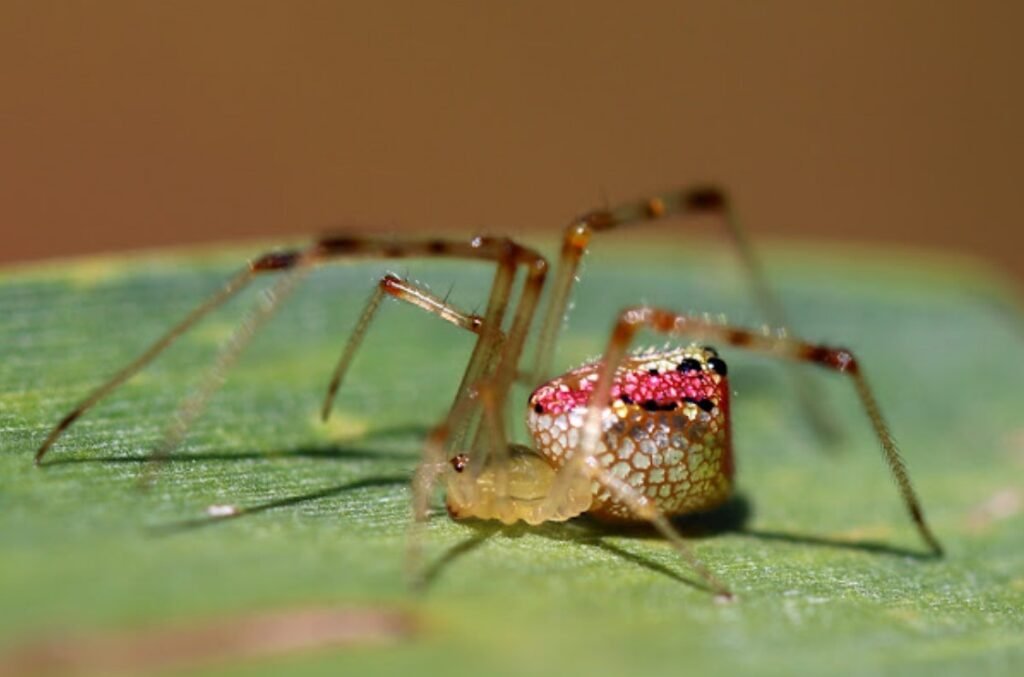
The Sequined Spider is a fascinating species of spider known for its dazzling, jewel-like appearance. Native to various parts of the world, this spider is renowned for the reflective, sequined patches on its body, which are thought to serve as camouflage or as a means of communication. Although small in size, the Sequined Spider’s web is an intricate and delicate structure, often designed to catch a variety of small prey like insects. These spiders are not venomous to humans and are primarily found in tropical and subtropical regions.
Quick Top 10 Facts about Sequined Spider
| SCIENTIFIC NAME | Theridion spp. |
| CLASSIFICATION | KINGDOM: Animalia PHYLUM: Arthropoda CLASS: Arachnida ORDER: Araneae FAMILY: Theridiidae |
| SIZE | Body length: 5–10 mm (0.2–0.4 inches) |
| SPECIES | Sequined Spiders belong to the genus *Theridion*, which contains many species with similar characteristics. |
| APPEARANCE | The Sequined Spider features shimmering patches on its abdomen, often appearing like jewels or sequins. Its body is small and round, with distinct markings that provide excellent camouflage. |
| LIFE SPAN | Typically 1–2 years, depending on environmental conditions and food availability. |
| HABITAT | Tropical and subtropical regions, often in areas with dense vegetation such as forests, gardens, and coastal areas. |
| DIET | Sequined Spiders primarily feed on small insects, which they catch using their webbing. Their diet includes flies, ants, and moths. |
| NATURAL PREDATORS | Birds, lizards, and larger arachnids may prey on Sequined Spiders. |
| COUNTRY | Found across tropical and subtropical regions of the world, including parts of Africa, Asia, and Central America. |
| GESTATION PERIOD | Egg sacs are typically laid shortly after mating, with the incubation period ranging from a few weeks to a couple of months depending on the species. |
| CONSERVATION STATUS | Least Concern (IUCN), as Sequined Spiders are abundant in their native habitats and have no significant threats. |
Amazing Facts About the Sequined Spider
1. Jewel-Like Iridescent Appearance
The Sequined Spider earns its name from the iridescent, jewel-like patches on its body. These shimmering patterns reflect natural light brilliantly and help the spider blend into its habitat. The glittering colours also deter predators by flashing bright hues when sunlight strikes the surface.
2. Skilled and Creative Web Builders
Sequined Spiders build small, delicate webs that capture tiny insects efficiently. They construct these intricate structures in sheltered areas, including under leaves and around dense garden plants. They position the webs carefully to maximise insect traffic and avoid harsh weather.
3. Small Yet Remarkably Powerful
Although tiny, the Sequined Spider displays impressive hunting ability and captures prey much larger than itself. It uses strong webbing and quick reflexes to overpower insects effectively. Its rapid movements transform it into a surprisingly formidable predator.
4. Highly Effective Natural Camouflage
The reflective patches on the Sequined Spider’s body provide exceptional camouflage against predators. These shimmering patterns allow the spider to blend smoothly with leaves, bark, or forest debris. This natural disguise makes detection incredibly difficult for birds and other predators.
5. Harmless and Non-Venomous to Humans
Sequined Spiders pose no danger to humans because their mild venom cannot cause harm. They rarely bite unless severely threatened, and even then the bite causes negligible discomfort. They remain safe garden companions that help control insect pests naturally.
6. Tropical and Subtropical Natural Habitat
These spiders thrive in tropical and subtropical regions with abundant vegetation. They hide under leaves or deep inside plant clusters where they build discreet webs. The warm, humid environment supports their feeding and camouflage needs effectively.
7. Naturally Solitary Arachnid Behaviour
Sequined Spiders live solitary lives and avoid interaction with other spiders. They come together only for mating and typically separate immediately after. Their independent behaviour reflects common traits found in many spider species.
8. Fast and Efficient Predatory Hunters
Despite their small size, Sequined Spiders hunt quickly and capture prey with precision. They rely on finely woven webs and swift reactions to trap insects instantly. Their speed makes them efficient predators within dense vegetation.
9. Efficient and Strategically Designed Web Structure
The Sequined Spider weaves webs with fine, sticky strands that trap prey effectively. Once insects become ensnared, the spider immobilises them rapidly and carries them to safety. Its web structure enhances both hunting efficiency and survival.
10. Fascinating and Intelligent Behaviour Patterns
Researchers have observed Sequined Spiders displaying captivating behavioural traits. They sometimes use their shimmering patches for visual communication during mating. These reflective scales may also deter predators through sudden bright flashes.
Rare Spiders and Unique Arachnid Species
A spectacular form of arachnid, the Sequined Spider stands out due to its unusual and captivating appearance. The shimmering patches across its body create stunning, eye-catching designs that resemble decorative sequins. This glittering trait places the species among the most visually striking fascinating spiders known today. The word “sequined” refers to the spider’s reflective patches that mimic sparkling embellishments found on textiles. Scientists, nature enthusiasts, and arachnid collectors highly admire this extraordinary feature. These spiders belong to a wider group of arachnids that display remarkable evolutionary adaptations.
1. Sequined Spider Identification and Species Classification
Although the term “Sequined Spider” does not refer to a single species, it describes a group of spiders that share shimmering, sequin-like body patches. Many of these species belong to the Theridiidae family, including cobweb and comb-footed spiders. Some Steatoda species are particularly well-known for their sequined appearance. Their dazzling patches and delicate reflective scales create a striking metallic sheen visible in sunlight.
Outward Appearance – Spider Features and Iridescent Arachnid Traits
- Shimmering Body – Iridescent Spider Exoskeleton: The Sequined Spider features a shimmering body created by reflective scales along its exoskeleton. These tiny metallic patches make the spider appear decorated with diamond-like sparkles or bright glitter. This iridescent quality enhances camouflage and adds a breathtaking natural beauty.
- Colouration – Metallic-Coloured Spider Species: Sequined Spiders display a wide range of colours, typically including dark brown, grey, or black shades. Their shimmering patches may vary from silver and gold to more vivid metallic colours depending on the species.
- Size – Small to Medium Spider Species: Sequined Spiders usually grow from a few millimetres to around one inch in length. Their small size helps them hide efficiently within forest vegetation and garden habitats.
Action and Movement – Spider Behaviour, Web-Building and Mating Habits
Sequined Spiders display traditional arachnid behaviours, including web-building, hunting, and mating. Their shimmering appearance also supports communication, camouflage, or mate attraction. They avoid attacking humans and only defend themselves when they feel genuinely threatened.
2. Sequined Spider Habitat and Global Dispersal
Like many other arachnids, Sequined Spiders choose sheltered, shaded environments where they can weave secure webs. They nest inside small crevices and thrive in dense vegetation, including gardens, forests, woodlands, and even urban spaces. They flourish in locations with abundant food supplies, mainly small insects and arthropods that enter their webs.

Favourite Environmental Settings – Woodland, Garden and Urban Spider Habitats
- Woods and Woodlands – Forest Spider Habitats: Many Sequined Spiders inhabit temperate or tropical woodlands, where moist conditions support insect-rich ecosystems. The dense foliage provides shade, humidity, and protection that encourage their survival and reproduction.
- Gardens and Metropolitan Areas – Urban Spider Locations: Sequined Spiders frequently appear in gardens, parks, and green urban areas with strong vegetation growth. They build webs along wooden fences, garden structures, and tree branches where prey gathers naturally.
- Low-Light Conditions – Nocturnal Spider Activity: Because these spiders behave mainly at night, they hunt when temperatures cool and predators decrease. Their nocturnal activity increases hunting success and reduces exposure to larger daytime hunters.
3. Spider Hunting Techniques and Insectivorous Diet
Sequined Spiders employ finely crafted webbing to trap and capture prey efficiently. Their webs differ from the symmetrical orb webs built by common garden spiders. Instead, they weave irregular, loosely structured cobwebs that entangle insects effectively within concealed areas.
Nutrition – Diet Patterns, Prey Capture and Cobweb-Trapping Techniques
- Insectivorous Diet – Primary Spider Prey Types: Sequined Spiders feed on insects such as ants, flies, mosquitoes, moths, and other small arthropods. Their webs intercept unsuspecting prey that wander into sticky strands during daily movement.
- Web Building – Classic Cobweb Spider Web Structures: These spiders weave tangled, asymmetrical webs that efficiently trap passing insects. They place these webs in quiet, hidden regions, including behind rocks, beneath branches, or along the undersides of leaves.
Hunting Method – Web-Based Predation and Spider Feeding Behaviour
Although they act as aggressive hunters, Sequined Spiders rely on their webs rather than active pursuit. When an insect becomes stuck in the sticky silk, the spider detects vibrations quickly and rushes to attack. It subdues the prey, injects digestive enzymes, liquefies internal tissues, and consumes the remaining nutrients.
4. Life Cycle and Reproduction of Sequined Spiders
The life cycle of a Sequined Spider includes four stages: egg, larva, nymph, and adult. Although reproductive habits vary among species, they follow typical patterns found in Theridiidae spiders. Their courtship rituals often involve vibrations, specialised movements, and web-based communication.
Mating and Courtship – Spider Rituals and Reproductive Behaviour
Male Sequined Spiders express interest in females through rhythmic movements or vibrational signals. The male often creates specific web patterns or performs detailed movements to initiate mating. Mating occurs within the female’s web if she accepts his presence. If she rejects him, the male escapes rapidly to avoid being eaten.
Production of Eggs – Egg Sac Formation and Spider Reproductive Cycle
The female deposits a clutch of fertilised eggs and attaches it securely to a web or hides it nearby. Depending on the species, she may produce dozens or even hundreds of eggs. She guards the spherical or oval egg sacs carefully and protects them from predators until they hatch.
Life Cycle – Spider Development Stages and Natural Lifespan
Spiderlings emerge and undergo several moults before maturing into adults. Their exoskeleton grows stronger and larger after each successful moult. Most Sequined Spiders live for one or two years, although favourable environments may extend their lifespan. Stable climates, abundant prey, and minimal predators allow some species to survive longer than expected.
5. Ecological Function and Environmental Advantages
Like many other arachnids, Sequined Spiders serve as vital components of ecological systems. They regulate insect populations naturally, preventing excessive growth of pest species. Their role in controlling small insects helps maintain balanced ecosystems within forests and gardens.
Advantages for Farming – Natural Pest Control and Beneficial Garden Predators
As natural predators, Sequined Spiders reduce populations of flies, moths, mosquitoes, and other pest insects. Their web-building behaviour supports organic pest control in gardens and agricultural fields. Their presence decreases reliance on chemical pesticides and promotes healthier soil and crop conditions.
Measures of Biodiversity – Spider Bioindicators and Ecosystem Health
Spiders often act as valuable bioindicators that reflect ecosystem stability. The presence of Sequined Spiders indicates healthy vegetation and thriving insect populations. These signals help researchers measure biodiversity quality and assess environmental conditions accurately.
6. Interesting Facts About Sequined Spiders and Unique Adaptations
- Reflective Coating – Iridescent Spider Camouflage: These spiders possess reflective scales and metallic dots that create a shimmering, sequin-like appearance. This natural coating allows them to blend effectively with tree bark, leaves, and moss-covered surfaces. Their iridescence contributes to powerful camouflage that protects them from alert predators.
- Nocturnal Behaviour – Night-Active Spider Species: Sequined Spiders remain most active during nighttime, which enables them to avoid daytime predators. Their nocturnal habits enhance hunting efficiency and reduce exposure to birds and larger arthropods. Night activity also supports their survival within competitive natural habitats.
- Mimicry and Camouflage – Spider Mimicry Adaptations: The reflective body patterns help Sequined Spiders mimic natural textures like moist leaves or rough tree bark. This mimicry reduces detection by predators, allowing them to remain unnoticed in dense vegetation. Their shimmering scales enhance both camouflage and survival adaptability.
FAQ (Frequently Asked Questions) about Sequined Spiders
Q: What is a Sequined Spider?
Ans: A Sequined Spider is a small arachnid with distinctive shimmering patches that resemble sequins. It builds intricate webs to catch prey and displays remarkable iridescent body patterns.
Q: Where do Sequined Spiders live?
Ans: Sequined Spiders inhabit tropical and subtropical regions, including areas of Africa, Asia, and Central America. They hide under leaves or deep within vegetation where they construct protective webs.
Q: What do Sequined Spiders eat?
Ans: They feed primarily on small insects, including flies, ants, and moths. They capture these creatures in their sticky, finely constructed webs.
Q: Are Sequined Spiders dangerous to humans?
Ans: No, these spiders are harmless to humans. Their venom lacks potency and cannot cause harm. They only bite if severely threatened, which occurs very rarely.
Q: How long do Sequined Spiders live?
Ans: Their lifespan typically ranges from one to two years, depending on environmental conditions. Suitable habitats and reliable prey sources can extend their natural lifespan.
Q: How do Sequined Spiders communicate?
Ans: They may use their reflective patches to send visual signals during mating rituals. These shimmering patterns can also deter predators through sudden flashes of light.
Q: Do Sequined Spiders make webs?
Ans: Yes, they build small, intricate webs designed to trap tiny prey efficiently. They often construct these webs in sheltered spaces, including under leaves and around garden plants.
Q: Are Sequined Spiders endangered?
Ans: No, they are not considered endangered. The IUCN lists them as “Least Concern” with stable population levels across regions.
Q: Can Sequined Spiders be kept as pets?
Ans: Yes, but they require specialised care due to their delicate nature and environmental needs. Most people prefer observing them in natural habitats rather than keeping them in captivity.
Q: How do Sequined Spiders catch their prey?
Ans: They rely on finely woven webs to capture unsuspecting insects. When prey becomes stuck in sticky strands, the spider immobilises it swiftly and consumes the softened tissues.
#SequinedSpider #Theridion #Spiders #Arachnids #WebBuilding #InsectHunters #Nature #Wildlife
Our sources and references about Sequined Spider
1: Wikipedia – Sequined Spider
2: Britannica – Sequined Spider
3: National Geographic – Sequined Spider
4: Arachnids – Theridion