Quick Top 10 Facts about Spotted Garden Eel
| SCIENTIFIC NAME | Heteroconger hassi |
| CLASSIFICATION | KINGDOM: Animalia PHYLUM: Chordata CLASS: Actinopterygii ORDER: Anguilliformes FAMILY: Congridae GENUS: Heteroconger SPECIES: H. hassi |
| SIZE | Length: Up to 12 inches (30 cm) |
| HABITAT | Shallow sandy or muddy seabeds, typically in the Indo-Pacific region, especially around Japan and the Philippines |
| DIET | Planktivorous; primarily feeds on zooplankton, small crustaceans, and other microscopic organisms found in the water |
| SPECIES | Spotted Garden Eel, known for its small size and distinctive black spots on its white body |
| COUNTRY | Found in the Indo-Pacific region, including Japan, Indonesia, and the Philippines |
| GESTATION PERIOD | Oviparous; they lay eggs that hatch into larvae, with no specific gestation period |
| LIFE SPAN | Up to 6–10 years in the wild |
| CONSERVATION STATUS | Not endangered, but their populations can be affected by habitat loss and water pollution |
Amazing Facts About Spotted Garden Eels
1. They are excellent burrowers
Spotted Garden Eels are known for their burrowing behavior, where they create tunnels in the soft sandy ocean floor for shelter.
2. They live in large colonies
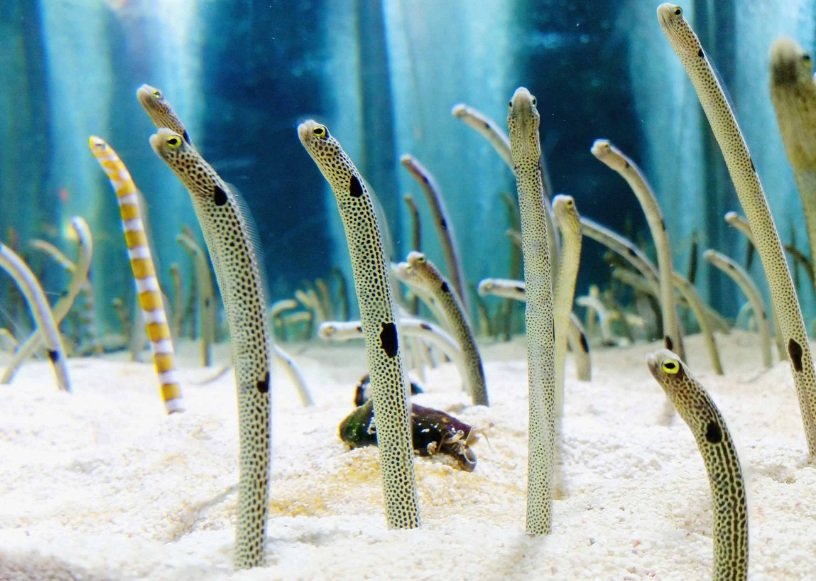
These eels are often found in large groups or colonies, with hundreds of individuals living closely together on the seabed.
3. They have a unique feeding behavior
Spotted Garden Eels feed by extending their heads out of their burrows to capture plankton and small invertebrates that pass by.
4. They are shy and reclusive
When threatened, Spotted Garden Eels retreat into their burrows for safety, making them difficult to observe in the wild.
5. They have a distinctive appearance
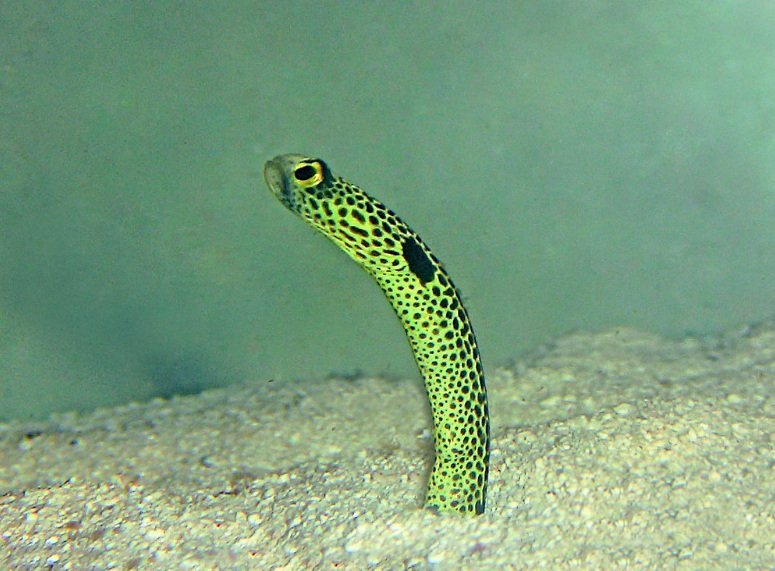
Spotted Garden Eels are characterized by their long, slender bodies and distinctive black spots on a pale, translucent background.
6. They play a role in their ecosystem
By feeding on plankton and small organisms, Spotted Garden Eels help regulate the populations of microscopic creatures in their environment.
7. They are not aggressive
Despite their somewhat intimidating appearance, Spotted Garden Eels are non-aggressive and are often seen as peaceful animals in their colonies.
8. They prefer calm, shallow waters
These eels are commonly found in calm, shallow waters that are rich in sandy or muddy substrates, often in depths of 10 to 30 meters.
9. They contribute to the biodiversity of coral reefs
Spotted Garden Eels are an important part of the coral reef ecosystem, providing food for predators and contributing to the ecological balance.
10. They are vulnerable to environmental changes
Due to their sensitivity to water quality and habitat disruption, Spotted Garden Eels are vulnerable to the effects of pollution and climate change.
Intriguing Facts about Spotted Garden Eel
Spotted garden eels, fascinating denizens of the ocean floor, captivate enthusiasts with their unique behavior and striking appearance. These intriguing creatures, scientifically known as Heteroconger hassi, inhabit the sandy bottoms of coral reefs in the Indo-Pacific region, including areas like Indonesia, the Philippines, and the Maldives. Their gregarious nature and distinctive spotted patterns make them a subject of interest for researchers and marine enthusiasts alike.
Spotted garden eels exhibit fascinating feeding habits, primarily consuming microscopic plankton and algae particles suspended in the water column. Their sedentary lifestyle, coupled with their reliance on steady water conditions, underscores the importance of preserving their delicate habitats. As conservation efforts continue, understanding the intricate behaviors and ecological roles of spotted garden eels becomes paramount for maintaining the balance of marine ecosystems.
Origin and history of Spotted Garden Eel
Heteroconger hassi, the scientific name for the fascinating Spotted Garden Eel, is found on the sandy ocean bottoms of the Indo-Pacific area. Researchers and marine enthusiasts alike are fascinated by these eels because of their unusual look and fascinating behavior.
Distinctive physical appearance of Spotted Garden Eel
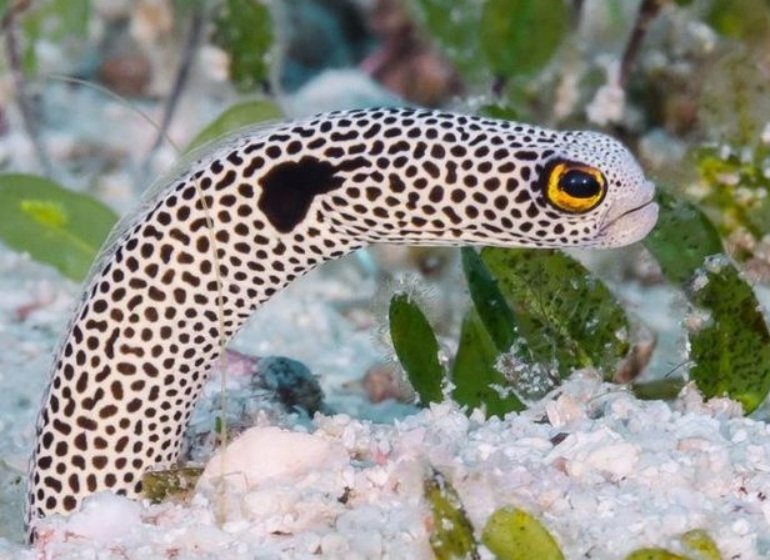
Spotted garden eels have long, snake-like bodies that allow them to grow up to 40 cm in length. Their name is derived from the many tiny black dots that cover their light yellow or white skin, which is their most distinguishing trait. In addition to being visually beautiful, these patches act as a kind of camouflage, helping the eels to fit in perfectly with their sandy environment.
Fascinating Behavior of Spotted Garden Eel
Spotted Garden Eels are well-known for their gregarious behavior; they can establish sizable colonies made up of hundreds or even thousands of members. With the exception of their heads and upper bodies, they are buried under the sand for the majority of their lives. Their unusual behavior acts as a protective strategy, enabling them to flee as soon as danger appears and take cover in the sand. They may also effectively filter feed on plankton and other tiny creatures that float past in the water column because of their vertical posture.
Fascinating facts about Spotted Garden Eels
In the Indo-Pacific area, spotted garden eels are amazing animals that live on the sandy bottoms of coral reefs. They fascinate both experts and marine enthusiasts because of their unusual looks and intriguing behavior. Spotted garden eels are really amazing animals due to their unusual looks and captivating habits. They are distinct from other eel species due to their affinity for sandy bottoms and sluggish lifestyles. By learning more about these intriguing species, we may appreciate the delicate balance of marine ecosystems and strive for their protection. We’ll look at some amazing spotted garden eel facts below:
Behavior and Appearance of spotted garden eels
Heteroconger hassi, also known as spotted garden eels, are small eels that reach an average length of 40 centimeters. They have a long, thin tail and a slim body with a pointed nose. Their body is covered with characteristic spots, which may range in hue from brown to yellow or white, as their name implies. Spotted garden eels’ behavior is one of their most fascinating features.
These eels prefer to dwell in colonies on the sandy bottom, as opposed to other eels that hide in burrows or crevices. They dig holes around the depth of their own bodies, and they only stick their heads over the sand most of the time. Their name derives from the way they behave, which makes them appear like a garden.
Distribution and Habitat of spotted garden eels
The Indo-Pacific area’s warm waters are home to the majority of spotted garden eels. They are often seen in regions including Indonesia, the Philippines, the Maldives, and the Red Sea. These eels prefer moderately flowing waters with sandy bottoms because they provide them with a steady stream of food.
Although they can sometimes be found as deep as 50 meters, their most common depths are between 1 and 20 meters. They choose locations with steady water conditions and few disturbances since they are very sensitive to changes in their surroundings.
Food and Feeding Practices of spotted garden eels
Primarily herbivorous, spotted garden eels consume microscopic plankton and algae particles that float in the water. They have a unique feeding method in which they reach into the water column with their teeth to grab their food. They can eat a lot of food every day and are avid eaters despite their little stature. Spotted garden eels rely on the stream to provide food because they live sedentary lives.
They arrange themselves so that food particles are carried to their burrows by the stream. Thanks to this passive feeding technique, they are still able to receive the nutrients they need to survive while conserving energy.
Life Cycle and Reproduction of spotted garden eels
The way that spotted garden eels reproduce is distinct. Males and females congregate in large groups during the mating season, and they establish enormous colonies with hundreds of individuals. Simultaneously, the males and females discharge their sperm and eggs into the water.
The eggs develop into larvae when fertilization takes place in the water column. Transparent, spotted garden eel larvae spend many weeks floating in the ocean currents. They go through major physical changes throughout this period, and then they settle on the seafloor and become young eels. After that, the young animals burrow into the sand to start living a sedentary existence.
Threats and Status of Conservation of spotted garden eels
As of now, not much is known about the conservation status of the spotted garden eels. Nonetheless, fisheries do not target them, and their economic value is negligible. Coral reefs and their natural environment are in danger because of a number of issues, including pollution, climate change, and irresponsible fishing methods. The existence of many other marine species, as well as spotted garden eels, depends on maintaining these delicate habitats.
FAQ (Frequently Asked Questions) about Spotted Garden Eel
Q: What is a Spotted Garden Eel?
Ans: The Spotted Garden Eel (Heteroconger hassi) is a species of eel found in the Indo-Pacific region. Known for their unique behavior, these eels live in sandy or muddy seabeds, where they burrow into the substrate with only their heads and upper bodies exposed. They are distinguished by their long, thin bodies and small, round black spots on a white or translucent background.
Q: Where does the Spotted Garden Eel live?
Ans: Spotted Garden Eels are typically found in shallow, sandy or muddy areas of the Indo-Pacific, particularly around coral reefs. They are often spotted in depths between 10 and 30 meters (33 to 98 feet), where they create colonies that can number in the thousands of individuals.
Q: What does the Spotted Garden Eel eat?
Ans: Spotted Garden Eels primarily feed on plankton, which they filter from the water. They have specialized teeth that allow them to filter small particles from the water column, including zooplankton and phytoplankton. Their diet consists mainly of tiny organisms that drift by as they remain partially buried in the sand.
Q: How big does the Spotted Garden Eel get?
Ans: Spotted Garden Eels typically grow to a length of about 30 to 40 cm (12 to 16 inches), though some individuals can reach slightly larger sizes. Despite their length, their slender bodies give them a delicate, eel-like appearance.
Q: How does the Spotted Garden Eel defend itself?
Ans: The primary defense mechanism of the Spotted Garden Eel is its ability to burrow into the sand quickly, where it can hide from potential predators. The eels are social and form large colonies, but they are extremely shy and tend to retreat into their burrows if disturbed.
Q: What is unique about the Spotted Garden Eel?
Ans: The Spotted Garden Eel is unique because of its behavior and appearance. Unlike many other eels, which are solitary, the Spotted Garden Eel forms large, dense colonies. Their small, round spots on a translucent body help them blend in with the sandy seabeds where they live. Their unique feeding method, filtering plankton from the water, is also an interesting adaptation.
Q: Are Spotted Garden Eels dangerous?
Ans: No, Spotted Garden Eels are not dangerous to humans. They are peaceful creatures that primarily feed on plankton and are not aggressive. They pose no threat to divers or snorkelers. The eels are more likely to retreat into the sand than to engage with anything around them.
Q: How long do Spotted Garden Eels live?
Ans: Spotted Garden Eels generally live for 6 to 8 years in the wild. Their lifespan can vary depending on environmental conditions, such as water quality and food availability. In aquarium settings, with proper care, they may live slightly longer.
Q: Can Spotted Garden Eels be kept in aquariums?
Ans: Yes, Spotted Garden Eels can be kept in aquariums, but they require a very specific habitat. They need a sandy or muddy substrate for burrowing, as well as plenty of space to filter food from the water. Due to their delicate nature, they can be challenging to care for, and a well-established, stable environment is necessary for their well-being. They are best suited to larger, saltwater aquariums that mimic their natural habitat.
#SpottedGardenEel, #GardenEel, #EelSpecies, #MarineLife, #CoralReefs, #OceanCreatures, #PlanktonFeeder, #ShyEels, #AquariumFish, #MarineEel, #WildlifeConservation
Our sources and references about Spotted Garden Eel
1: Wikipedia – Spotted Garden Eel
2: ReefBase – Spotted Garden Eel
3: Aquatic Community – Spotted Garden Eel
4: MarineBio – Spotted Garden Eel