Quick Top 10 Facts about Water-Walking Lizard
| SCIENTIFIC NAME | Indotyphlops braminus |
| CLASSIFICATION | KINGDOM: Animalia PHYLUM: Chordata CLASS: Reptilia ORDER: Squamata FAMILY: Agamidae GENUS: Indotyphlops |
| SIZE | Length: 7–8 inches (18–20 cm) |
| HABITAT | Typically found in tropical and subtropical regions, particularly in Southeast Asia, parts of India, and the Philippines |
| DIET | Insectivorous; feeds on small insects and arthropods |
| SPECIES | Water-Walking Lizard, also known as the Jesus Lizard or Basilisk Lizard |
| COUNTRY | Native to Central and South America, found in countries like Mexico, Guatemala, and parts of Costa Rica |
| GESTATION PERIOD | Egg-laying species; eggs hatch after about 60–90 days |
| LIFE SPAN | About 4–6 years in the wild |
| CONSERVATION STATUS | Not endangered; common in its native range but may face threats from habitat loss |
Amazing Facts About Water-Walking Lizards
1. They can walk on water!
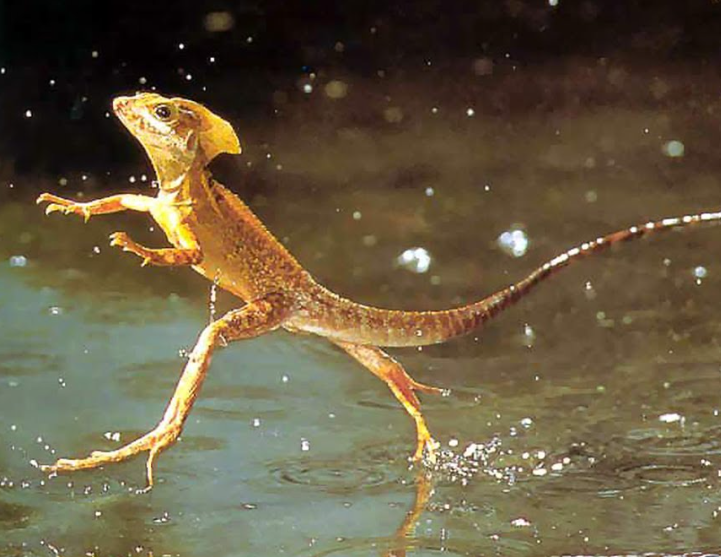
Water-Walking Lizards are famous for their ability to run across the surface of water, using their long toes to create air pockets.
2. They can run up to 5 feet per second
These lizards have incredible speed and agility, allowing them to sprint across water to escape predators.
3. They are excellent climbers
In addition to their water-walking abilities, they can also climb trees and navigate through dense foliage.
4. They have a specialized foot structure
Their feet have unique fringed toes that help them grip surfaces and stay afloat when they run on water.
5. They can leap
Water-Walking Lizards are capable of leaping from one surface to another, especially when fleeing danger.
6. They are territorial
These lizards are often seen defending their territories, especially in areas with abundant water sources.
7. Their diet includes insects and small animals
Water-Walking Lizards primarily feed on small insects, crabs, and other arthropods found near water bodies.
8. They have a specialized tail for balance
Their long, muscular tail helps them maintain balance and stability while running across water or climbing trees.
9. They are fast swimmers
While they are known for their walking on water, they are also capable swimmers and can navigate quickly in water when necessary.
10. They are threatened by habitat loss
Despite being common in their native habitats, these lizards face threats from deforestation and habitat destruction in parts of their range.
Detailed information about water-walking lizards
The interesting water-walking lizard is a unique species with amazing skills. Its ability to walk on water distinguishes it from other lizards. The lizard’s unique feet, with their long, thin toes and fringed scales, let it disperse its weight and produce surface tension on the water, which contributes to its amazing ability. This makes it easy for the lizard to traverse waterways like ponds and streams.
Unique adaptations that contribute to their swimming abilities
Apart from its ability to walk on water, the lizard can swim quite well. It is a superb swimmer, using its long, powerful tail to push itself through the water. This makes it possible for the lizard to hunt prey that could be lurking under the water’s surface and to move easily through its watery environment.
Water-walking lizard species found in different parts of the world
The Jesus Christ Lizard, or water-walking lizard, is a species of basilisk lizard found in South and Central America. Its ability to sprint up to 30 feet over the water’s surface gives it its name. Primarily common in tropical areas, water-wandering lizards may be spotted sunning themselves on river and pond banks.
The role of lizard’s long toes and webbed feet
Unique chemical characteristics of the lizard’s feet make this occurrence feasible. The lizard can “run” over the water’s surface because its feet drive it off the surface when it travels swiftly, and the surface’s water tension keeps it afloat. It is a very extraordinary animal, demonstrating the amazing variety and adaptability of nature through its unique adaptations and activities.
Water-walking lizards behaviour in and out of water
Being semi-aquatic, water-walking lizards spend half of their time in the water and the other half on land. These lizards lounge in the sun on rocks and tree trunks when they’re not in the water.
How they obtain food while navigating across water surfaces?
As a carnivore, the water-walking lizard hunts at night in order to surprise and subdue smaller prey. They can seize food with their razor-sharp claws and consume insects like worms and crickets.
The physical features and lifespan of water-walking lizards
Water-walking lizards may grow up to 18 inches long and are often brilliant green in colour. In captivity, their lifespan may reach eight years.
Defence mechanisms and tactics used for survival
The lizards’ heart rates rise and their movements quicken in response to fear or danger. This enables them to locate refuge or flee swiftly. In order to scare off other lizards, water-walking lizards also have a stiff spine crest on their heads.
Interesting and lesser-known facts about water-walking lizards
A unique and fascinating group of animals in the animal realm are water-walking lizards. Scientists and nature lovers alike have been enthralled by them due to their easy ability to glide over water’s surface. We’ll look at some amazing facts about these amazing reptiles below:
1. Adapted Feet
Lizards that can walk on water, often referred to as Jesus lizards or basilisk lizards, have developed unique adaptations that enable them to do so. Their feet have more surface area because of the fringed scales on their long toes, which also produce air pockets when they contact the water’s surface. The lizards are kept from sinking by the cushioning effect of this air.
2. Amazing Speed
These lizards can race over water in addition to being able to walk on it. Using a mix of quick leg movements and their unique feet, they can travel at rates of up to 5 miles per hour when they detect danger. They can escape from predators and capture prey because of their amazing speed.
3. Arboreal Lifestyle
The majority of the time, water-walking lizards are arboreal, meaning they live in trees. Their long tails and powerful hind legs let them climb and balance on trees. They have an adaptation that lets them sprint swiftly across bodies of water to avoid predators: the ability to walk on water.
4. Diet and Hunting
These lizards consume a wide range of insects, spiders, tiny fish, and even plants since they are omnivores. Their acute vision allows them to identify prey from above, at which point they quickly run to capture it. They have an advantage while foraging near bodies of water since they can quickly reach both aquatic and terrestrial prey because of their ability to walk on water.
5. Range and Habitat
Native to Central and South America, water-walking lizards inhabit rivers, marshes, and tropical rainforests. They often sunbathe on rocks or trees close to water sources and are good swimmers. They are vital to the ecology and have good environmental adaptations.
Fascination and uniqueness of water-walking lizards
To sum up, water-walking lizards are really amazing animals. They constitute an intriguing topic of research due to their remarkable speed, ability to walk on water, and unique adaptations. Learning more about these amazing reptiles will help us appreciate the richness and variety of the natural world on a deeper level.
FAQ (Frequently Asked Questions) about Water-Walking Lizard
Q: What is a Water-Walking Lizard?
Ans: The Water-Walking Lizard, also known as the Basilisk Lizard or Jesus Christ Lizard (Basiliscus), is a unique species of lizard famous for its remarkable ability to run across water. Found in Central and South America, this lizard uses its strong hind legs and special adaptations to sprint across the surface of water in short bursts.
Q: Why is it called the Water-Walking Lizard?
Ans: It is called the Water-Walking Lizard due to its ability to run on the surface of water. The lizard uses its large, fringed toes to create a stable platform on the water’s surface, allowing it to move quickly across ponds, streams, and rivers.
Q: Where can the Water-Walking Lizard be found?
Ans: The Water-Walking Lizard is primarily found in Central and South America. It inhabits tropical forests, particularly near streams, rivers, and other bodies of water where it can take advantage of its water-walking ability.
Q: How does the Water-Walking Lizard run on water?
Ans: The Water-Walking Lizard runs on water by using its large, flat feet with fringed toes to create air pockets that help it stay on the water’s surface. It runs in a rapid, bipedal motion, allowing it to take advantage of surface tension to keep from sinking.
Q: How fast can a Water-Walking Lizard run on water?
Ans: The Water-Walking Lizard can run on water at speeds of up to 5 meters per second (about 18 kilometers per hour or 11 miles per hour). This speed is critical for escaping predators, such as birds of prey and larger mammals.
Q: Is the Water-Walking Lizard dangerous?
Ans: The Water-Walking Lizard is not dangerous to humans. While it is capable of defending itself with sharp claws and strong jaws, it is more likely to flee than fight. Its primary defense mechanism is its ability to escape by running across the water to safety.
Q: What does the Water-Walking Lizard eat?
Ans: The Water-Walking Lizard is an omnivore. It feeds on a variety of foods, including insects, small vertebrates, fruits, and leaves. It uses its sharp vision to spot prey and often hunts in the trees or on the ground near water.
Q: How big does the Water-Walking Lizard get?
Ans: Adult Water-Walking Lizards can grow up to 3 feet (about 90 cm) in length, including their tail. They have long, slender bodies and strong limbs, which help them both run on water and climb trees.
Q: Can a Water-Walking Lizard swim?
Ans: Yes, the Water-Walking Lizard is an excellent swimmer. Despite its ability to run on water, it is also capable of swimming well when it needs to. It can dive under the water to avoid predators or to hunt for food.
Q: How long does a Water-Walking Lizard live?
Ans: The Water-Walking Lizard typically lives for about 7 to 10 years in the wild. In captivity, with proper care, it can live even longer.
#WaterWalkingLizard, #BasiliskLizard, #JesusChristLizard, #WaterRunningLizard, #Lizards, #TropicalLizards, #Wildlife, #Reptiles, #CentralAmerica, #SouthAmerica, #Nature, #UniqueLizards
Our sources and references about Water-Walking Lizard
1: Wikipedia – Basiliscus (Water-Walking Lizard)
2: National Geographic – Basilisk Lizard
3: Reptiles Magazine – Basilisk Lizard Facts
4: Britannica – Basilisk Lizard