One of the largest snake species in the world, native to South America. Known for its immense size, anacondas are powerful constrictors that prey on large mammals and aquatic creatures.
Quick Top 10 Facts about Anaconda Snake
| SCIENTIFIC NAME | Eunectes |
| CLASSIFICATION | KINGDOM: Animalia PHYLUM: Chordata CLASS: Reptilia ORDER: Squamata FAMILY: Boidae GENUS: Eunectes |
| SIZE | Can reach lengths of up to 29 feet (8.8 meters), with a weight of around 500 pounds (227 kg) |
| HABITAT | Rainforests, swamps, and marshes in South America, particularly in the Amazon and Orinoco basins |
| DIET | Carnivorous, preying on fish, birds, mammals, and sometimes even large animals like caimans and capybaras |
| SPECIES | The four known species of Anaconda are the Green Anaconda, Yellow Anaconda, Dark-Spotted Anaconda, and Beni Anaconda |
| COUNTRY | Primarily found in South America, including countries like Brazil, Colombia, Venezuela, and Ecuador |
| GESTATION PERIOD | Approximately 6-7 months for live births (as Anacondas give live birth rather than laying eggs) |
| LIFE SPAN | Average life span of 10 to 30 years in the wild |
| CONSERVATION STATUS | Not currently endangered but are threatened by habitat destruction and illegal hunting for their skin |
Amazing Facts About Anaconda Snake
1. The largest snake in the world by weight
Anacondas, specifically the Green Anaconda, are considered the largest snakes by weight, sometimes reaching over 500 pounds (227 kg).
2. Excellent swimmers
Anacondas are aquatic snakes and are incredible swimmers, often found in rivers and swamps, where they move with surprising speed and agility in the water.
3. Constrictors
Anacondas are constrictors, meaning they kill their prey by wrapping around it and squeezing until it suffocates, before swallowing it whole.
4. Mostly nocturnal
Anacondas tend to be more active at night, which helps them hunt more efficiently without the intense heat of the day.
5. Carnivorous diet
Anacondas can eat a wide range of prey, including fish, birds, mammals, and even other reptiles. They are opportunistic feeders and will consume whatever is available.
6. Live birth
Unlike many other snake species, Anacondas give birth to live young, with a litter ranging from 20 to 40 baby snakes at a time.
7. Camouflage experts
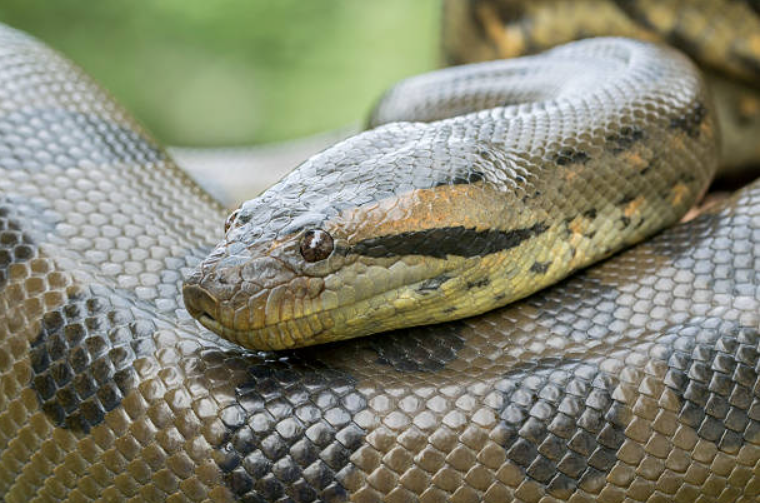
With their dark green coloration and blotchy markings, Anacondas blend seamlessly into their swampy, marshy environments, making them hard to spot by both predators and prey.
8. Slow on land, fast in water
On land, Anacondas are relatively slow-moving, but in the water, they are fast and agile hunters, thanks to their streamlined bodies and muscular tails.
9. Long lifespan
Anacondas can live up to 30 years in the wild, although the average lifespan tends to be closer to 10-15 years in their natural habitat.
10. Sometimes mistaken for boa constrictors
Though both Anacondas and Boa Constrictors share similar behaviors and appearance, Anacondas are much larger and more aquatic in their lifestyle compared to the more terrestrial Boa Constrictors.
Distribution across South America, particularly in countries like Brazil, Venezuela, and Colombia
Large snakes like the anaconda may be found throughout South America. Some of these snakes may grow to be as long as twenty feet, making them among the biggest in the world. As non-venomous constrictor snakes, anacondas crush and eventually kill their victims before consuming them whole. They can eat fish, birds, and reptiles, but their main food source is big animals like deer and wild pigs.
Anaconda’s physical appearance, including its size, weight, and length
Anacondas are renowned for their remarkable strength and size. Their head is huge, and their body is robust and strong. They reside in deep jungles, and their dark green scales on their skin allow them to blend in with their environment. Anacondas spend a lot of time in the water and are proficient swimmers. They use their large bodies to move through wetlands and rivers.
Unique feeding strategy of anacondas involves swallowing prey whole
Even though they have a frightening look, anacondas usually pose little harm to people. They are elusive, timid beings that would rather stay out of trouble. Rarely, however, have anacondas attacked people; these attacks generally occur when the animals feel trapped or threatened. As apex predators, anacondas contribute significantly to their environment by preserving the equilibrium of the food chain in their natural habitat.
Muscular body and the adaptations that make it an efficient predator
Anacondas are members of the boa constrictor family and are among the biggest snakes in the world. One of the largest reptiles on the continent, they are found throughout tropical South America. The slow-moving freshwater rivers, wetlands, and marshes of the tropical rainforest are the main habitats for anacondas. They love to live in trees or near water, and they are quite good swimmers.
Interesting Facts Regarding Anacondas Snake
The Magnificent Anaconda: Few animals in the animal realm inspire as much wonder and fascination as the anaconda. People all throughout the globe have been captivated by this enormous snake, which is well-known for its power and sheer size.
The largest snakes in the world are anacondas
When it comes to size, the anaconda is the biggest. These are the biggest snakes on Earth, reaching lengths of up to 30 feet and weights exceeding 550 pounds. In their native environment, they are fierce predators due to their enormous size and extraordinary power.
They can swim very well
Anacondas’ aquatic lifestyle is well suited to them. They have strong tails and muscular bodies that let them glide through the water with ease. They may dive for up to ten minutes before coming to the surface to breathe. Their ability to swim covertly aids in their ability to surprise their victim.
Non-Venomous Constrictors Are Anacondas
Anacondas kill their victims by squeezing them until they die, unlike poisonous snakes. Their powerful muscles enable them to tightly stifle their prey with great power. When its victim is rendered motionless, the anaconda consumes it completely, often headfirst.
Their hunger is unquenchable.
It is well known that anacondas have a huge appetite. Their pliable jaws and supple ligaments allow them to eat prey much bigger than their own heads. They mostly eat fish, birds, caimans, and sometimes even deer. They may not eat for weeks or even months, after a substantial meal.
Anacondas Use a Special Method for Reproduction
The reproductive mechanism of anacondas is one of their most fascinating features. Anacondas are known to give birth to live offspring as opposed to eggs, as do most other snake species. Up to 80 young snakes, who are already completely autonomous and able to survive on their own, may be born to a mother anaconda.
Fascinating facts about the Anaconda snake
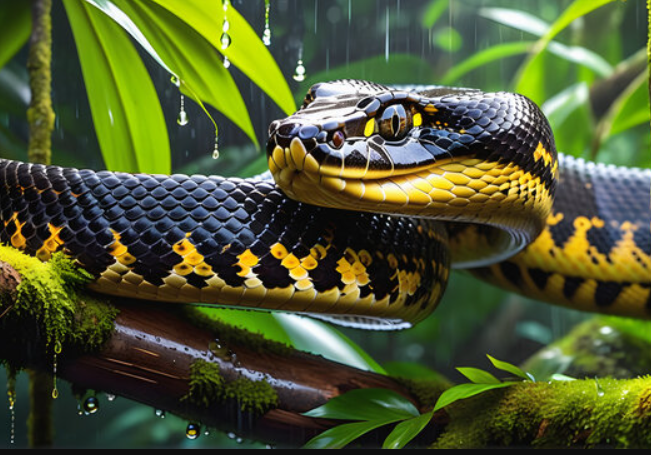
People’s minds have been captured by the amazing monsters known as anacondas for millennia. They make intriguing research subjects because of their enormous size, amazing strength, and distinctive qualities. Even though they could evoke awe and terror, it’s essential to recognize the crucial function they serve in their ecosystems. The following are some fascinating anaconda facts:
1: Anacondas have the potential to reach lengths of 30 feet and weights of 550 pounds.
2: As ambush predators, anacondas would wait for their victims to walk by, lying in wait. They suffocate their victim until it is unable to breathe by using their lengthy, muscular bodies.
3: Anacondas seldom go outside of the water and are mostly nocturnal animals. Despite not being venomous, anacondas may bite with great force and have sharp fangs.
4: Unlike most other reptiles, anacondas have the ability to establish monogamous couples in captivity and mate soon after they lose their skin.
5: Female anacondas may lay up to 40 eggs and are often bigger than males.
6: Because of their very powerful jaws, anacondas can break through the hardest of prey.
7: With few predators of their own, anacondas dominate South America’s rivers as top predators.
8: In the wild, anacondas may live for 15 to 20 years, but in captivity, they can live up to 100 years.
9. Anacondas and their ability to swim and hunt in aquatic environments.
10. Their ability to stay submerged for long periods and their unique respiratory system.
FAQ (Frequently Asked Questions) about Anaconda Snake
Q: What is an Anaconda Snake?
Ans: The Anaconda is a large, non-venomous snake belonging to the boa family (Boidae). It is one of the largest snakes in the world, known for its massive size and strength. Anacondas are primarily found in tropical rainforests and swamps of South America, particularly in the Amazon and Orinoco basins. There are four recognized species of anaconda, with the Green Anaconda (Eunectes murinus) being the largest.
Q: Where can you find Anaconda Snakes?
Ans: Anacondas are native to South America, particularly in tropical regions. They are commonly found in countries like Brazil, Venezuela, Colombia, and Guyana. They prefer freshwater habitats, such as slow-moving rivers, swamps, marshes, and lakes, where they can easily hunt and hide.
Q: How big do Anaconda Snakes get?
Ans: The Green Anaconda is the largest species, capable of reaching lengths of up to 29 feet (8.8 meters) and weighing up to 550 pounds (250 kg). Other species of anaconda, such as the Yellow Anaconda and the Beni Anaconda, are smaller but still very large, with lengths typically ranging from 10 to 15 feet (3 to 4.5 meters).
Q: What do Anaconda Snakes eat?
Ans: Anacondas are carnivorous and are opportunistic predators. They feed on a variety of prey, including fish, birds, mammals, and even reptiles like caimans and turtles. They are known to hunt large animals, such as capybaras, deer, and even jaguars in some cases. Anacondas use constriction to subdue their prey, wrapping around it and squeezing until the prey suffocates.
Q: Are Anaconda Snakes dangerous to humans?
Ans: While Anaconda snakes are powerful predators, attacks on humans are extremely rare. They are not venomous, but their size and strength allow them to overpower large prey. They typically avoid human contact, and there have been very few documented cases of them attacking humans. However, due to their strength, an encounter could potentially be dangerous, especially for small children or people in the water.
Q: How do Anaconda Snakes hunt?
Ans: Anacondas are ambush predators, waiting for their prey to come close before striking. They are excellent swimmers and often hunt underwater, where they can use their stealth to approach unsuspecting prey. Anacondas use their powerful constriction to subdue their catch before swallowing it whole. They can go without food for weeks or even months after a large meal due to their slow metabolism.
Q: How long do Anaconda Snakes live?
Ans: Anacondas typically live for about 10 to 30 years in the wild, depending on the species and environmental conditions. In captivity, where they are free from predators and have regular food sources, they can live even longer.
Q: Can Anaconda Snakes be kept in captivity?
Ans: Yes, Anacondas can be kept in captivity, but they require a large, specialized habitat to accommodate their size and needs. Many fascinating pet owners, however, find it challenging to provide the proper care for anacondas, and they are best suited to wildlife sanctuaries, zoos, or experienced reptile handlers. Proper diet, space, and a controlled environment are essential for their well-being.
Q: Are Anaconda Snakes endangered?
Ans: The Green Anaconda is not currently considered endangered, but its habitat is threatened by deforestation, water pollution, and human encroachment. Some other species of anaconda, such as the Yellow Anaconda, face more significant threats from habitat destruction and hunting for their skins. Conservation efforts are necessary to preserve these majestic reptiles and their ecosystems.
#Anaconda, #GreenAnaconda, #Snake, #Reptiles, #Wildlife, #AmazonRainforest, #TropicalSnakes, #Constrictor, #WildlifeConservation, #SouthAmericanWildlife, #SnakeFacts, #BiggestSnakes, #ReptileLovers
Our sources and references about Anaconda Snake
1: Wikipedia – Anaconda Snake
2: National Geographic – Anaconda Snake
3: IUCN Red List – Anaconda Snake
4: Encyclopaedia Britannica – Anaconda Snake