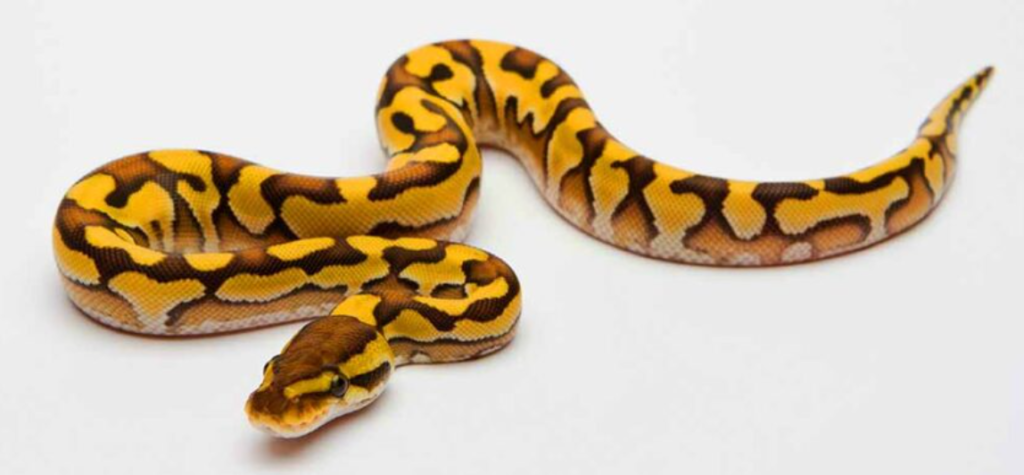
The Yellow Belly Ball Python is a color morph of the popular Ball Python species. This variety features a yellowish belly pattern, which makes it a highly sought-after pet in the reptile community. These pythons are non-venomous constrictors and are known for their docile nature, making them a popular choice for first-time snake owners.
Quick Top 10 Facts about Yellow Belly Ball Python
| SCIENTIFIC NAME | Python regius (Yellow Belly Morph) |
| CLASSIFICATION | KINGDOM: Animalia PHYLUM: Chordata CLASS: Reptilia ORDER: Squamata FAMILY: Pythonidae GENUS: Python SPECIES: P. regius |
| SIZE | Length: 3–5 feet (0.9–1.5 meters) |
| HABITAT | Grasslands, open forests, and agricultural areas in West and Central Africa |
| DIET | Carnivorous; primarily eats small mammals like mice and rats |
| SPECIES | Yellow Belly is a color morph of the Ball Python, prized in the reptile pet trade for its subtle golden belly pattern |
| COUNTRY | Native to sub-Saharan Africa; widely bred in captivity worldwide |
| REPRODUCTION | Oviparous (egg-laying); females lay clutches of 3–11 eggs which hatch in 55–60 days |
| LIFE SPAN | 20–30 years in captivity with proper care |
| CONSERVATION STATUS | Least Concern; stable wild populations, but heavily traded and captive-bred for pets |
Amazing Facts About Yellow Belly Ball Pythons
1. It’s a morph, not a separate species
The Yellow Belly is a genetic variation of the standard Ball Python, bred for its unique coloration and belly pattern.
2. Popular in breeding projects
Yellow Belly Ball Pythons are often used to create other morphs like Ivory, Super Stripe, and Highway morphs.
3. Subtle but beautiful patterns
Their patterns are not as flashy as some morphs but include golden undertones and bright, clean belly scales.
4. Non-venomous constrictors
They kill their prey by coiling around and constricting it before swallowing whole.
5. Great for beginners
Yellow Belly Ball Pythons are docile, easy to handle, and relatively low-maintenance, making them great pet snakes.
6. Named for defensive posture
Ball Pythons get their name from their tendency to curl into a tight ball when threatened.
7. Nocturnal creatures
They are most active at night and prefer to hide during the day.
8. Thrive in captivity
With proper care, they live long, healthy lives and are commonly kept by reptile enthusiasts.
9. Shed regularly
Like all snakes, they shed their skin periodically, often before a growth spurt.
10. Easy to feed
They accept pre-killed or frozen-thawed rodents readily, especially in captivity.
A Complete Guide to the Distinct Yellow Belly Ball Python Species
The Yellow Belly Ball Python (Python regius), a highly sought-after variation of the well-known Ball Python, stands out due to its unique temperament and colour patterns. This morph has captured the attention of both novice and experienced herpetologists, making it one of the most popular pet snakes in the reptile world. The Yellow Belly Ball Python is an excellent choice for snake enthusiasts of all skill levels because of its stunning colours, gentle temperament, and manageable size. This article provides a comprehensive guide to understanding and caring for this fascinating species, covering its physical traits, genetics, habitat, nutrition, care needs, and reproductive habits.
Features of the Yellow Belly Ball Python’s Body
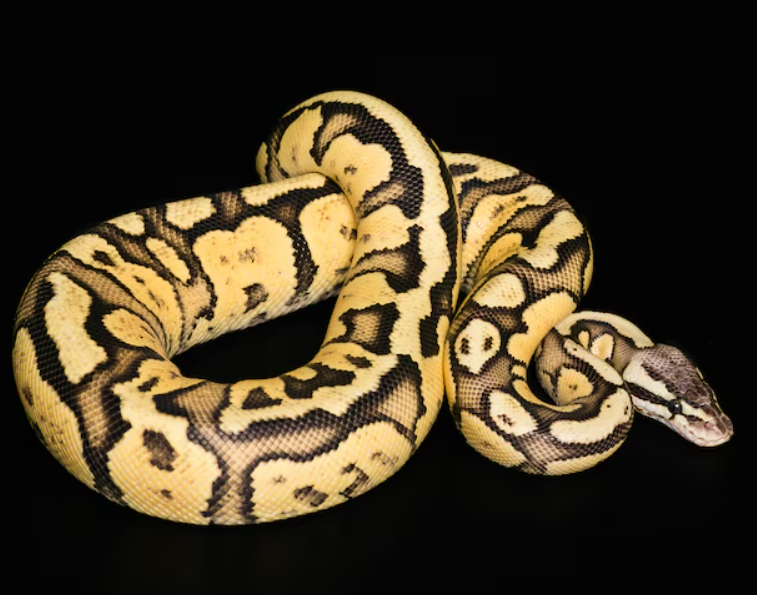
The Yellow Belly The Ball Python is a genetic variation of the Ball Python, native to West and Central Africa. Its name comes from the distinctive yellow or gold colouring on its belly, which contrasts with the darker, more subdued colours on its back and sides. While individual snakes may display subtle differences in these colour patterns, the overall appearance combines brown, black, and yellow tones.
Important Physical Characteristics:
Colouration:
The back of the Yellow Belly Ball Python is typically dark brown or black, with lighter, gold-yellow patterns running down the belly and flanks. The bright golden belly of the Yellow Belly morph is its most striking feature, sharply contrasting with the darker body. This colouration is a recessive genetic trait inherited from the snake’s parents.
Length and Size:
The Yellow Belly Ball Python has similar body measurements to the regular Ball Python. Adult yellow-bellies usually range from 3 to 5 feet (0.9 to 1.5 metres) in length. While females tend to grow larger, males are typically smaller. Despite their length, they are strong and robust due to their muscular build.
Skull and Eyes:
Like other Ball Pythons, the Yellow Belly Ball Python has a rounded skull. Its eyes, usually black and widely spaced, give it a calm, non-threatening appearance. Like other pythons, the Yellow Belly Ball Python can detect the presence of warm-blooded prey using heat-sensing pits located on its upper lip.
Tail and Behaviour:
When threatened or stressed, the Yellow Belly Ball Python, like other Ball Pythons, has a tendency to coil into a tight ball, one of its most characteristic behaviours. This protective behaviour helps shield the snake from potential predators. The Yellow Belly’s tail often blends into its body because it is darker in colour.
The Yellow Belly Ball Python’s Genetic Makeup
As a morph, the Yellow Belly Ball Python’s appearance results from selective breeding. Its yellow belly colour is a recessive genetic trait passed down from its parents. Although Yellow Belly Ball Pythons may also carry other genetic morphs, the Yellow Belly morph occurs when both parents possess the recessive gene for this trait.
Colour Variations and Genetic Morphs
Breeding the Yellow Belly morph with other morphs can create intriguing colour patterns and traits. Yellow Belly Ball Pythons may be combined with the following common morphs:
Piebald:
The piebald morph creates a striking contrast by producing asymmetrical white and coloured patches on the yellow belly.
Ghost:
When bred with a Ghost morph, the Yellow Belly Ball Python may exhibit a more muted colour scheme that resembles pastel shades.
Lesser:
This morph may result in a more pronounced colour pattern, with a lighter, brighter yellow belly and distinctive markings.
Yellow Belly Ball Pythons are highly popular among breeders and collectors due to their stunning colouration and the numerous possible combinations. As breeding continues, new morphs and colour variants are frequently created, making the Yellow Belly Ball Python a captivating species in the herpetoculture industry.
Natural Range and Habitat
The Yellow Belly Ball Python is native to West and Central Africa, where it inhabits various environments. Ball pythons can be found in tropical regions of countries such as Ghana, Togo, Cameroon, and Nigeria.
Habitat
Yellow Belly Ball Pythons prefer savannas, grasslands, and areas with minimal forest cover. As ground-dwelling snakes, they usually hide in burrows, crevices, or other protected areas, rather than climbing trees. They are typically nocturnal, spending much of their time in cool, dark locations where they can avoid predators.
Temperatures
Yellow-belly ball pythons thrive in warm, humid conditions. The typical daytime temperature in their native habitat ranges from 80°F to 90°F (27°C to 32°C), with lower nighttime temperatures. To maintain the snake’s health and comfort in captivity, these conditions should be replicated.
Substrate
Providing an appropriate substrate in captivity is essential to keep the snake comfortable. Aspen shavings, coconut husk, or reptile carpet are commonly used to maintain humidity levels and provide secure burrowing environments.
Nutrition and Feeding Practices
The Yellow Belly Ball Python, like other Ball Pythons, is a carnivorous snake that primarily feeds on rodents and other small animals in the wild. In captivity, these snakes are typically fed frozen-thawed mice or rats, with prey size adjusted to the snake’s size.

Feeding Timetable
Young Yellow Belly Ball Pythons usually consume smaller prey, such as fuzzies or pinkie mice, every five to seven days. Adult Yellow Belly Ball Pythons are typically fed larger prey, such as adult mice or small rats, every 10 to 14 days. To prevent the snake from associating food with its primary habitat, it is important to feed it in a separate cage or feeding dish. This also helps maintain cleanliness and reduce food-related aggression.
Requirements for Yellow Belly Ball Python Maintenance
Maintaining a Yellow Belly Ball Python involves setting up an environment that closely resembles its natural habitat while also meeting its specific needs for space, humidity, and temperature. Key care considerations include the following:
Humidity and Temperature
Thermal Gradient:
One side of the enclosure should be warmer than the other, creating a thermal gradient. The warm side should be about 90°F (32°C), while the cool side should range from 75°F to 80°F (24°C to 27°C).
Basking Area:
Set up a basking area with a heat source, such as an under-tank heater or heat lamp. The temperature in the basking area should be around 95°F (35°C).
Humidity:
Ball pythons thrive in environments with 50% to 60% relative humidity. Using a humidity box or spraying the enclosure can help maintain the appropriate levels.
The Enclosure
Adult Yellow Belly Ball Pythons do best in enclosures that are at least 40 gallons in size, providing ample space to move around. The enclosure should also include climbing branches, water bowls, and shelters with a tight-fitting lid to prevent escape.
Shedding
Yellow-bellied ball pythons shed their skin periodically, and this process requires sufficient humidity. Low humidity can cause issues with shedding, such as skin retention. To aid shedding, ensure the snake has access to a moist hide during this time.
Breeding Practices
Yellow Belly Ball Pythons can be bred in captivity, usually during the winter months. Male snakes begin courting females by placing their chin on the female’s back and performing various courtship behaviours. The couple mates when the female is receptive, and 30 to 50 days later, the female will lay a clutch of 4 to 10 eggs.
Egg Incubation
After the female lays her eggs, they should be incubated at around 88°F (31°C) in a humid environment. The eggs will hatch in approximately 60 to 70 days, and the hatchlings will be ready to start feeding.
FAQ (Frequently Asked Questions) about Yellow Belly Ball Python
Q: What is a Yellow Belly Ball Python?
Ans: The Yellow Belly Ball Python is a morph of the Ball Python (Python regius), known for its subtle but distinctive yellow or golden coloration along the sides and belly. It is a non-venomous constrictor and one of the many morphs bred for unique patterns and colors in the reptile pet trade.
Q: Where does the Yellow Belly Ball Python come from?
Ans: Ball Pythons are native to sub-Saharan Africa, where they inhabit grasslands and open forests. The Yellow Belly morph, however, is a captive-bred variation developed by breeders for its genetic traits and appearance.
Q: What does the Yellow Belly Ball Python eat?
Ans: Like other Ball Pythons, Yellow Belly morphs are carnivorous and typically eat small rodents such as mice and rats. In captivity, they are commonly fed pre-killed or frozen-thawed prey.
Q: How big does a Yellow Belly Ball Python get?
Ans: Yellow Belly Ball Pythons typically reach lengths of 3 to 5 feet (0.9 to 1.5 meters). Males are generally smaller than females. Their manageable size is one of the reasons they are popular as pet snakes.
Q: Are Yellow Belly Ball Pythons dangerous?
Ans: No, Yellow Belly Ball Pythons are not dangerous. They are non-venomous and known for their docile and calm temperament. They are one of the most beginner-friendly pet snakes available.
Q: How does the Yellow Belly Ball Python defend itself?
Ans: Ball Pythons, including the Yellow Belly morph, are known for curling into a tight ball with their head tucked inside when they feel threatened—hence the name “Ball Python.” They rarely bite unless extremely stressed or mishandled.
Q: What does the Yellow Belly Ball Python look like?
Ans: The Yellow Belly morph has a slightly brighter pattern than normal Ball Pythons, with increased contrast and often a yellow or gold hue along the sides and belly. It may also have a flaming effect on the lower sides and a clear belly, distinguishing it from standard Ball Pythons.
Q: How long do Yellow Belly Ball Pythons live?
Ans: In captivity, Yellow Belly Ball Pythons can live 20 to 30 years with proper care. Their longevity makes them a long-term commitment as pets.
Q: Can you keep a Yellow Belly Ball Python as a pet?
Ans: Yes, Yellow Belly Ball Pythons are commonly kept as pets and are favored for their temperament and unique appearance. They require appropriate humidity, temperature gradients, hiding spots, and a secure enclosure.
Q: Are Yellow Belly Ball Pythons rare?
Ans: While they were once considered a unique morph, Yellow Belly Ball Pythons are now widely available due to breeding programs. However, they are still valued for their genetic potential in producing other morphs when bred.
#YellowBellyBallPython, #BallPythonMorphs, #PetSnake, #ReptileLovers, #SnakeCare, #PythonRegius, #ReptileEnthusiasts, #SnakeFacts, #BallPythonLife, #ExoticPets
Our sources and references about Yellow Belly Ball Python
1: MorphMarket – Yellow Belly Ball Python
2: Reptile Guide – Yellow Belly Ball Python
3: World of Ball Pythons – Yellow Belly
4: The Spruce Pets – Ball Python Care