Quick Top 10 Facts about Black Wasp Insect
| SCIENTIFIC NAME | Sphex pensylvanicus (commonly known as the Great Black Wasp) |
| CLASSIFICATION |
KINGDOM: Animalia PHYLUM: Arthropoda CLASS: Insecta ORDER: Hymenoptera FAMILY: Sphecidae GENUS: Sphex SPECIES: S. pensylvanicus |
| SIZE | Approximately 1 to 1.5 inches (2.5 to 3.8 cm) in length |
| HABITAT | Fields, gardens, open woods, meadows, and near human settlements across North America |
| DIET | Adults feed on nectar; larvae feed on paralyzed insects (often katydids or grasshoppers) |
| SPECIES | Part of a larger group of solitary wasps, with many regional variations |
| COUNTRY | Native to North America – especially in the U.S., Canada, and Mexico |
| GESTATION PERIOD | Eggs hatch within days; complete development (egg to adult) takes a few weeks |
| LIFE SPAN | Several weeks to a few months during warm seasons |
| CONSERVATION STATUS | Not endangered; populations are stable and widespread |
Amazing Facts About Black Wasp Insect
1. They’re solitary hunters
Unlike social wasps, the Great Black Wasp lives and hunts alone, building its own underground nest.
2. Paralyzes prey for its young
Females sting and paralyze prey like grasshoppers, then drag them into nests for their larvae to feed on.
3. Females do all the work
Female Black Wasps dig burrows, hunt, lay eggs, and provide food—males mainly exist to mate.
4. Despite size, they are not aggressive
These wasps look intimidating but are generally non-aggressive toward humans unless provoked.
5. Their sting is painful but rare
Stings can hurt but occur infrequently since Black Wasps avoid confrontation.
6. Important pollinators
While hunting is key, adults also feed on nectar and help pollinate flowers like milkweed and goldenrod.
7. Recognized by their size and color
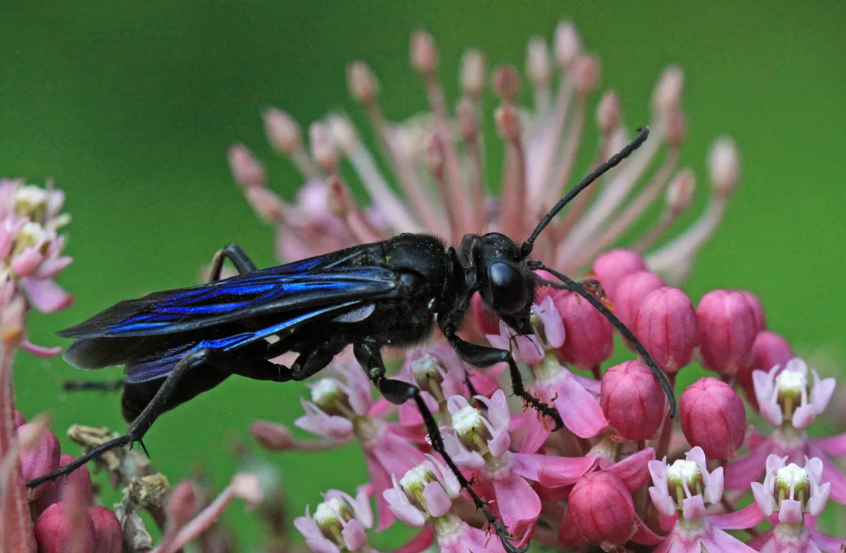
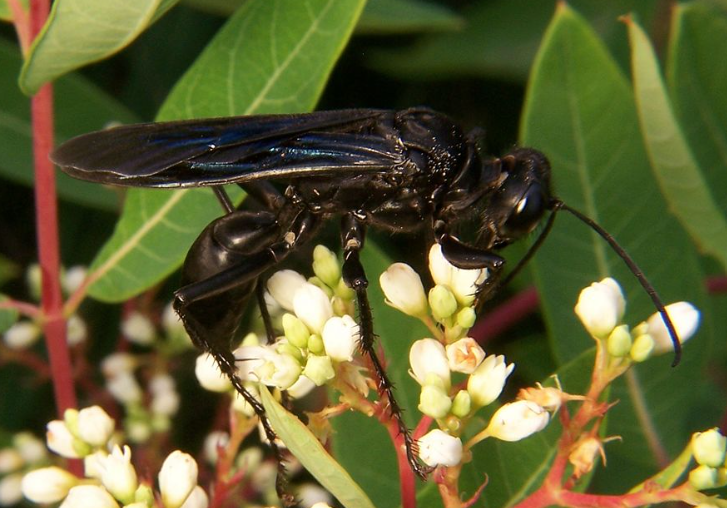
They have a sleek, shiny black body and large wings with a bluish tint—easy to spot in gardens.
8. Excellent navigators
Black Wasps can memorize landmarks around their nest entrances to help them return home accurately.
9. Males do not sting
Only females have stingers, as the stinger is a modified ovipositor used for laying eggs.
10. Found buzzing in summer
These wasps are most active in warm months, especially late summer when food sources are plentiful.
Taxonomy and classification of the Black Wasp insect
Black wasps, also called the giant black wasp or Sphex pensylvanicus, are amazing animals that are members of the solitary wasp family. These wasps, which go by the moniker of “black wasps,” are often seen across North America. Males are somewhat smaller than females, which may reach a length of 1.5 inches. Overall, they are really huge creatures.
Behaviour patterns of the Black Wasp
The solitary behaviour of black wasps is an intriguing feature. Black wasps do not reside in colonies, in contrast to social wasps like hornets or yellow jackets. Rather, every wasp female constructs her own nest, which is usually a ground burrow. The mother wasp builds these nests out of dirt and plant material, and she supplies them with paralysed insects for her young.
Unique predatory behaviours or adaptations that aid in capturing prey
The way that black wasps hunt is another fascinating feature about them. These wasps are renowned for their superb hunting abilities since they mostly pursue big insects like katydids and grasshoppers. The female wasp paralyses its victim with a sting, which she uses to carry it back to her nest. Entering the nest, she deposits one egg on top of the paralysed bug so that when her young hatches, it will have access to fresh nourishment.
Unique facts about the Black Wasp insect
Black wasps are amazing animals with distinctive traits. For entomologists and nature lovers alike, their solitary existence, remarkable hunting skills, and striking black appearance make them an intriguing topic of study.
Around the globe, black wasps—also referred to as black hornets or black wasp bees—are often seen. These insects, which are members of the Vespidae family, are distinguished by their stunning black hue. Despite their frightening appearance, black wasps are vital to ecology.
The black wasp fits into the broader classification of insects:
Black wasps are a broad class of insects, of which there are more than 100,000 species recognised globally. Their size, form, and behaviour may all differ. Although the majority of black wasps are black or dark brown, certain species may have white or yellow patterns on their bodies.
Alone Nest Building:
Black wasps are solitary insects, in contrast to gregarious wasps like paper wasps and yellow jackets. This indicates that every black wasp female constructs her own nest and nurtures her young by herself. Usually made of mud or plant fibres, the nests are located in protected spots like cracks in trees or other nooks.
Preferred prey and hunting techniques:
As predators, black wasps are essential in managing the numbers of other insects. Their main food source is other insects, including flies, spiders, and caterpillars. Strong stingers are a characteristic of black wasps, which they use to immobilise their victims. After that, they transport the paralysed victim back to their nests, where they deposit their eggs. The paralysed prey is fed upon by the growing larvae, guaranteeing their survival.
Farmers and gardeners may also benefit from black wasps, as they naturally reduce insect populations without the need for artificial pesticides.
The process of pollination:
Black wasps aid in pollination, even though their primary function is as predators. While they eat, several species of black wasps unintentionally spread pollen from one bloom to another because they consume nectar and pollen from flowers. This aids in the process of fertilisation and promotes the growth of different kinds of plants.
Retaliatory Actions:
Generally speaking, black wasps are not aggressive and will only strike if they perceive a danger. However, they have the ability to sting severely if provoked or if their nest is disrupted. A black wasp’s sting might result in localised discomfort, swelling, and redness. It’s crucial to keep your distance from their nests and be cautious around these insects.
Winterization:
Black wasps overwinter, or go into hibernation, during the colder months. Only the females that have been fertilised live; the adult wasps perish. These females go for cover in places that are safe, such as tree bark or leaf litter, where they hibernate until the next spring. They come out of concealment to start the cycle of constructing nests and laying eggs as soon as the weather warms.
Ecological significance
Fascinating insects that support natural equilibrium are black wasps. They are an essential component of the ecology due to their solitary nesting habits, prowess in hunting, and function in pollination. Despite their menacing appearance, it’s crucial to recognise their ecological value and live in harmony with them.
FAQ (Frequently Asked Questions) about Black Wasp Insect
Q: What is a Black Wasp?
Ans: The Black Wasp, commonly known as the Great Black Wasp (Sphex pensylvanicus), is a large, solitary wasp known for its glossy black body and impressive size. It is a non-aggressive insect that plays an important role in controlling pest populations and pollinating plants.
Q: What does a Black Wasp look like?
Ans: Black Wasps have a sleek, shiny black appearance with long wings and a slender waist. They can grow up to 1.5 inches (3.8 cm) in length. Their wings often have a smoky or iridescent tint. Despite their intimidating look, they are generally non-aggressive to humans.
Q: Where do Black Wasps live?
Ans: Black Wasps are found throughout North America, particularly in gardens, meadows, and open fields. They are solitary and usually build their nests in the ground or in soft soil, often near plants where they can find prey and nectar.
Q: What do Black Wasps eat?
Ans: Adult Black Wasps primarily feed on nectar from flowers. However, females hunt and paralyze insects like grasshoppers and katydids to feed their larvae. The wasp drags the paralyzed prey to her underground nest, where she lays an egg on it to provide nourishment for the developing larva.
Q: Are Black Wasps dangerous?
Ans: Black Wasps are not typically dangerous to humans. They are solitary and not aggressive like social wasps (e.g., yellowjackets). While they can sting if provoked or handled, they generally avoid human interaction and focus on hunting insects or gathering nectar.
Q: Do Black Wasps sting?
Ans: Yes, female Black Wasps can sting, but they rarely do unless threatened. The sting is used to paralyze prey rather than for defense. Males do not have stingers. If stung, a person might experience pain, swelling, or irritation, but stings are not considered medically significant unless the person is allergic.
Q: Are Black Wasps beneficial?
Ans: Yes, Black Wasps are considered beneficial insects. They help control populations of other insects by hunting them to feed their larvae. Additionally, adult wasps are important pollinators, visiting a variety of flowering plants as they feed on nectar.
Q: How do Black Wasps reproduce?
Ans: The female Black Wasp constructs a burrow in the soil where she places paralyzed prey along with an egg. Once the egg hatches, the larva feeds on the paralyzed insect. After developing, the larva pupates and eventually emerges as an adult wasp, continuing the life cycle.
Q: How long do Black Wasps live?
Ans: The lifespan of a Black Wasp varies, but most adults live for several weeks during the summer. Their lifecycle from egg to adult may take a few weeks to a couple of months, depending on environmental conditions.
Q: Can I get rid of Black Wasps?
Ans: Since Black Wasps are not aggressive and offer ecological benefits, it’s usually best to leave them alone. However, if they nest in inconvenient locations, gently discouraging nesting by disturbing the area or using natural repellents may help. Avoid using harsh chemicals unless absolutely necessary.
#BlackWasp, #GreatBlackWasp, #Pollinators, #InsectFacts, #GardenInsects, #SolitaryWasp, #BeneficialInsects, #NatureLovers, #GroundNestingWasp, #EcoFriendlyPestControl
Our sources and references about Black Wasp Insect
1: Wikipedia – Great Black Wasp
2: Insect Identification – Great Black Wasp
3: University of Maryland Extension – Great Black Wasp
4: UF Entomology – Great Black Wasp