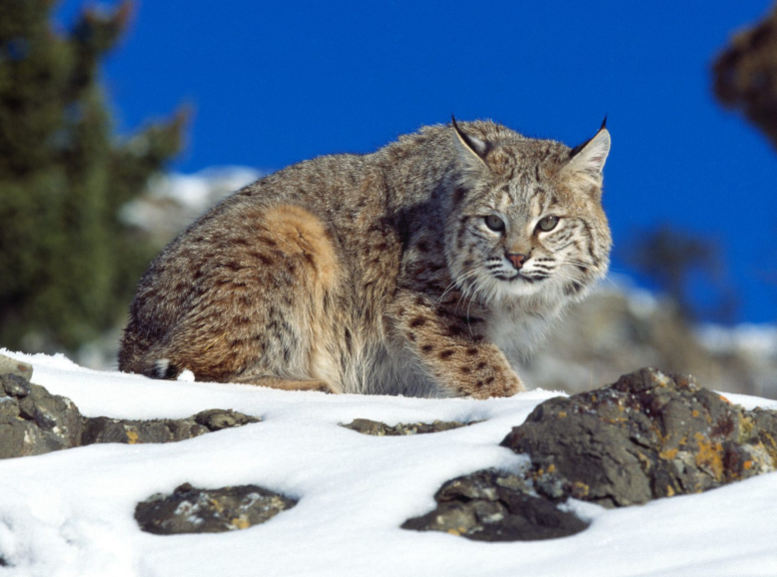
A wild cat native to North America, recognizable by its short tail and tufted ears. Bobcats are solitary hunters, preying on small mammals, birds, and reptiles. They are highly adaptable and thrive in diverse habitats.
Quick Top 10 Facts about Bobcats
| SCIENTIFIC NAME | Lynx rufus |
| CLASSIFICATION | KINGDOM: Animalia PHYLUM: Chordata CLASS: Mammalia ORDER: Carnivora FAMILY: Felidae GENUS: Lynx SPECIES: L. rufus |
| SIZE | Length: 18–49 inches (46–125 cm), Weight: 11–30 pounds (5–14 kg) |
| HABITAT | Forests, swamps, deserts, and suburban areas across North America |
| DIET | Carnivorous; eats rabbits, rodents, birds, and occasionally deer |
| SPECIES | Bobcat, a North American wildcat with distinctive short tail and tufted ears |
| COUNTRY | Native to North America; found from southern Canada to northern Mexico |
| GESTATION PERIOD | About 60–70 days |
| LIFE SPAN | 7–10 years in the wild; up to 15 years in captivity |
| CONSERVATION STATUS | Least Concern; population stable and widespread |
Amazing Facts About Bobcats
1. Bobcats are solitary and territorial
They prefer to live and hunt alone, marking their territory with scent markings and claw marks.
2. They have a “bobbed” tail
Their name comes from their short, “bobbed” tails, which are around 5–6 inches long.
3. Bobcats are expert hunters
They use stealth and patience to ambush prey, often leaping up to 10 feet to catch it.
4. They adapt to many habitats
Bobcats can thrive in forests, deserts, swamps, and even near urban areas, as long as there is enough prey.
5. They are mostly nocturnal
Bobcats are most active during dawn and dusk (crepuscular), but often hunt at night.
6. They communicate through sounds and scent
Bobcats yowl, hiss, and growl, especially during mating season, and use urine or feces to mark territory.
7. Bobcat kittens are born in spring
A typical litter consists of 2–4 kittens, born in dens made in hollow logs, rock crevices, or dense brush.
8. They have excellent eyesight and hearing
These senses help them detect prey even in low-light conditions or under cover.
9. Bobcats can swim and climb
Though not often seen swimming, they are capable of doing so, and are skilled climbers as well.
10. Bobcats play an important role in ecosystems
As predators, they help control populations of small mammals and contribute to ecological balance.
Intriguing facts about Bobcats
Native to North America, bobcats are small to medium-sized wild cats. They are readily recognisable by their tufted ears, short tails, and ruff of fur around their cheeks. Bobcats are strong, nocturnal creatures with keen eyesight and retractable claws. They are ideal for hunting as well.
Natural habitats of bobcats and flexibility of bobcats
Most of these solitary, territorial animals belong to secretive species. Their varied habitats include deserts, marshes, woods, and suburbia. If there is adequate food and shelter for them to hunt and hide, bobcats may thrive in a broad variety of settings due to their extraordinary flexibility.
Hunting techniques and strategies employed by bobcats
Bobcats are opportunistic hunters who eat a range of small animals, including rabbits, squirrels, and mice. In addition, they have been seen hunting birds, reptiles, and sometimes larger animals like deer. Skilled hunters, or bobcats, use their speed and stealth to silently pursue their target before launching a swift and devastating assault. Despite their small size, they possess the strength to combat monsters far larger than themselves.
Reproductive behavior and mating rituals of bobcats
Late winter or early spring is often the time of year when bobcats reproduce. Females give birth to a litter of one to six kittens, which they rear in caves hidden among dense foliage or rocky nooks. The kittens spend several months learning the basics of hunting and survival from their mother before venturing out on their own.
Unique characteristics and conservation efforts about bobcats
Despite the fact that they seldom hurt humans, bobcats are elusive and seek to avoid human contact. However, if they find themselves encircled or in danger, they can defend themselves. It’s important to give them space and stay far away from them. Conservation efforts are conducted to protect bobcats and their habitats because they are vital to maintaining the balance of the ecosystems in which they reside.
Fascinating facts about Bobcats
North American bobcats are amazing animals that live in many different areas. Numerous wildlife enthusiasts are intrigued by them due to their unique look and elusiveness.
Physical attributes of male and female Bobcats
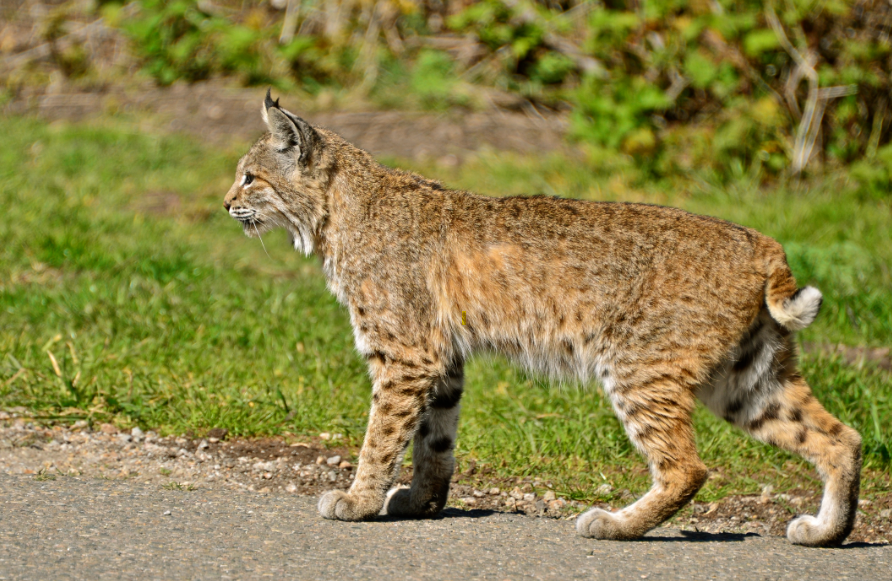
Male bobcats are usually bigger than female bobcats, and they are medium-sized wild cats. Their physique is compact and strong, and they have noticeable cheek ruffs and a short tail. Their typical tawny or brown fur has black streaks or dots, which helps them blend in well with their natural surroundings.
Habitat and distribution of Bobcats
Due to their adaptability, bobcats can live in a wide range of environments, including suburbs, wetlands, woodlands, and even deserts. They are indigenous to North America and are mostly found in Mexico and the United States.
Diet and Hunting patterns of Bobcats
Expert hunters, bobcats mostly seek tiny to medium-sized animals for their prey. They eat squirrels, birds, rabbits, hares, and sometimes bigger animals like deer. Being solitary predators, they find their prey by using their keen hearing and eyesight.
Behavior and nature of Bobcats
Being solitary creatures, bobcats are most active around dawn and dusk. They may communicate by using a variety of vocalisations, like screams, growls, and hisses. Being a territorial species, they leave urine and claw traces in their area.
Reproduction patterns of Bobcats
Bobcats reproduce in the winter, when the female gives birth to a litter of one to six kittens following a gestation period of around sixty to seventy days. The kittens live with their mother until they are around nine months old, at which point they go to find their own places.
Threats and conservation Status of Bobcats
Although they are not officially classified as endangered, habitat degradation and fragmentation have an impact on bobcat numbers. In some areas, their population is threatened by the fact that they are also targeted for their fur. To guarantee the long-term viability of bobcat populations, efforts are being made to preserve and protect them.
Significance to Culture or Ecological importance of Bobcats
In several Native American cultures, bobcats are symbolic of qualities like stealth, independence, and flexibility. They are often portrayed as the untamed and wild spirit of the natural world in folklore and traditional art.
Humans and Bobcats interaction
Bobcats are not thought to pose a serious danger to people since they typically avoid human contact. Still, interactions may happen in the suburbs and turn into disputes. It’s crucial to respect their personal space and refrain from approaching or feeding them.
importance of Bobcats to ecosystems
Bobcats are amazing animals that are essential to preserving ecosystems’ equilibrium. They are an interesting species to study and enjoy because of their distinctive physical traits, hunting prowess, and adaptability. We can support bobcat conservation efforts and guarantee their survival in the wild by increasing our knowledge about these animals.
FAQ (Frequently Asked Questions) about Bobcats
Q: What is a Bobcat?
Ans: The Bobcat (Lynx rufus) is a medium-sized wild cat native to North America. Recognized by its tufted ears, short “bobbed” tail, and spotted fur, it is a solitary and elusive predator that is well adapted to a variety of habitats.
Q: Where do Bobcats live?
Ans: Bobcats are found throughout North America, from southern Canada to central Mexico. They inhabit forests, deserts, swamps, and even suburban areas. They are very adaptable and can survive in many different environments.
Q: What do Bobcats eat?
Ans: Bobcats are carnivores and primarily hunt small mammals such as rabbits, hares, squirrels, and rodents. They also eat birds, reptiles, and occasionally larger prey like deer, especially fawns or weakened animals.
Q: Are Bobcats dangerous to humans?
Ans: Bobcats are generally not dangerous to humans. They are shy, elusive, and prefer to avoid contact. However, they may become aggressive if cornered or if they feel threatened, particularly if they are sick or rabid.
Q: How big do Bobcats get?
Ans: Adult bobcats typically weigh between 15 to 35 pounds (7 to 16 kg) and measure about 18 to 24 inches (46 to 61 cm) tall at the shoulder. Males are usually larger than females.
Q: What is the lifespan of a Bobcat?
Ans: In the wild, bobcats live around 7 to 10 years on average, though some may reach 12 years or more. In captivity, they can live up to 20 years with proper care and diet.
Q: Are Bobcats nocturnal?
Ans: Yes, bobcats are mostly nocturnal and crepuscular, meaning they are most active at dawn and dusk. They use their excellent hearing and vision to hunt under low light conditions.
Q: Do Bobcats make sounds?
Ans: Bobcats are usually quiet, but they can make a variety of vocalizations including growls, hisses, screams, and meows, especially during the mating season. Their calls can sometimes sound like a crying baby or a person screaming.
Q: Are Bobcats endangered?
Ans: No, bobcats are not currently endangered. They are listed as a species of Least Concern by the IUCN. Their populations are stable or increasing in most parts of their range, although habitat loss and hunting may affect some local populations.
Q: Can Bobcats be kept as pets?
Ans: Keeping a bobcat as a pet is not recommended and is illegal in many areas. They are wild animals with natural instincts and specific needs that are difficult to meet in a domestic setting. Special permits are often required for ownership.
#Bobcat, #WildCats, #NorthAmericanWildlife, #LynxRufus, #Carnivores, #NatureFacts, #WildlifeEducation, #Predators, #ElusiveAnimals, #WildlifePhotography
Our sources and references about Bobcats
1: Wikipedia – Bobcat
2: National Geographic – Bobcat
3: US Forest Service – Bobcat
4: Encyclopedia Britannica – Bobcat