Quick Top 10 Facts about Brown Hyena
| SCIENTIFIC NAME | Parahyaena brunnea |
| CLASSIFICATION | KINGDOM: Animalia PHYLUM: Chordata CLASS: Mammalia ORDER: Carnivora FAMILY: Hyaenidae GENUS: Parahyaena SPECIES: P. brunnea |
| SIZE | Height: 24–30 inches (61–76 cm) at the shoulder, Length: 3–4.5 feet (90–135 cm), Weight: 70–90 pounds (32–41 kg) |
| HABITAT | Found in arid regions, primarily in southern Africa, including deserts and scrublands |
| DIET | Carnivorous; primarily scavenges, but also hunts small mammals and birds |
| SPECIES | Brown Hyena, a smaller species of hyena known for its shaggy coat and solitary nature |
| COUNTRY | Native to southern Africa, particularly in Namibia, Botswana, and South Africa |
| GESTATION PERIOD | About 90–92 days, with litters typically containing 1–4 cubs |
| LIFE SPAN | Up to 12–15 years in the wild |
| CONSERVATION STATUS | Near Threatened (IUCN); populations are declining due to habitat loss and human-wildlife conflict |
Amazing Facts About Brown Hyenas
1. They have a distinctive, shaggy appearance
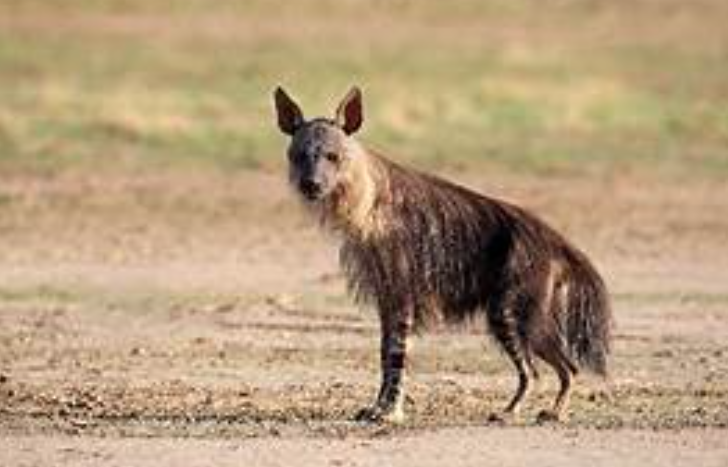
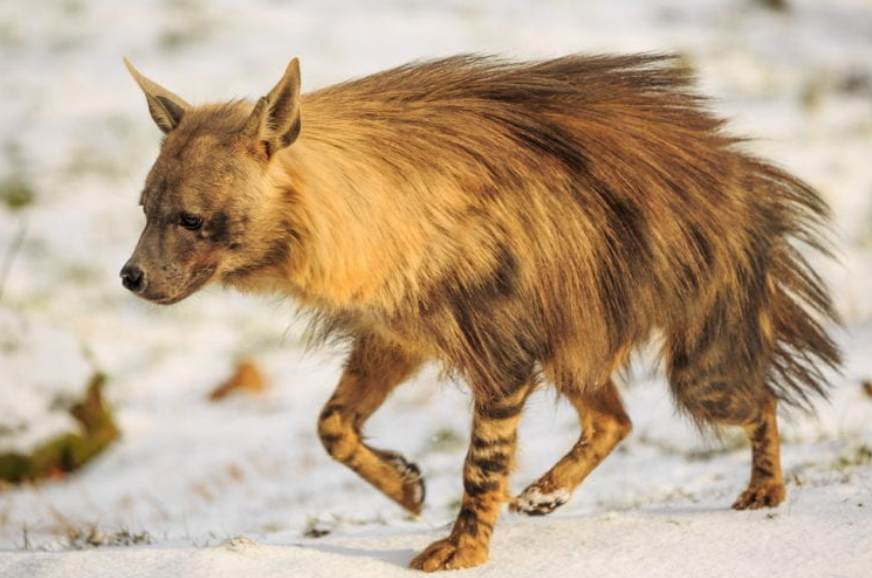
Brown Hyenas are easily recognizable by their long, shaggy fur and unique mane, giving them a more “wild” look compared to other hyena species.
2. They are primarily scavengers
Although they occasionally hunt small animals, Brown Hyenas are mostly scavengers, feeding on the remains of carcasses left by other predators.
3. They have strong jaws and teeth
Brown Hyenas possess powerful jaws and teeth that allow them to break open bones and eat tough hides and other materials other animals can’t digest.
4. They are solitary animals
Unlike the more social spotted hyena, Brown Hyenas tend to live alone or in small family groups and are not known for large clan structures.
5. They have an excellent sense of smell
Brown Hyenas use their acute sense of smell to locate carcasses and potential food sources, often traveling long distances to find them.
6. They are nocturnal
Brown Hyenas are mainly active at night, when they search for food and avoid daytime predators and human activity.
7. They have a low reproductive rate
Females usually give birth to only one to four cubs per litter, and the cubs are dependent on their mothers for a long period.
8. They live in harsh environments
Brown Hyenas are well adapted to living in arid regions, often in desert-like habitats with little rainfall or vegetation.
9. They are not a threat to humans
Brown Hyenas are shy and avoid human contact. They are not dangerous to people unless threatened.
10. Their populations are in decline
Due to habitat destruction, human-wildlife conflict, and hunting, Brown Hyenas are classified as Near Threatened, and their numbers are decreasing across their range.
Origin and Background of Brown Hyenas
A member of the hyena family, the interesting brown hyena is also known as the strandwolf. South Africa, Namibia, and Botswana are the majority of these southern African countries. These strange animals are distinguished by their shaggy brown coat, sloping back, and powerful build. Compared to their spotted relatives, brown hyenas have fewer spots and resemble bears more.
Body and Physical structure of Brown Hyenas
One interesting aspect of brown hyenas is their social structure. They live in small family groups called clans, consisting of a dominant female, her young, and maybe a few adult males. These animals identify their territory using vocalisations and smell markers, demonstrating how fiercely they guard it. Within the clan, there is a strict hierarchy, with the dominant female holding the highest rank and making decisions that have an impact on the whole group.
Diet and favourite foods consumed by Brown Hyenas
Brown hyenas vary from other hyena species in what they eat. Similar to their relatives, who are opportunistic scavengers, they also eat a lot of fruits, plants, and invertebrates. They can break apart bones and get the nutrient-rich marrow within thanks to their strong jaws and teeth. Their ability to adapt their diet in response to changing food sources is critical to their survival in the arid regions in which they reside.
Distinct appearance, social structure, and dietary patterns of Brown hyenas
Brown hyenas are intriguing creatures because of their distinct appearance, social structure, and dietary patterns. Their unique social structure, shaggy brown coat, and ability to adapt to different diets make them an intriguing animal to study. When we are aware of these facts about brown hyenas, we may better appreciate the diversity and complexity of the animal kingdom.
Fascinating Facts about brown hyenas
Brown hyenas, an intriguing member of the hyena family, are sometimes referred to as strandwolves or bruinhyenas. The following are some fascinating facts regarding brown hyenas:
Physical Characteristics of Brown hyenas
Brown hyenas are medium-sized carnivores with a distinctive look. Compared to other hyena species, their brown coat is longer and coarser, with a shaggy texture. Because their front legs are longer than their rear legs, they appear to be sloping. They also possess a strong jaw, tiny ears, and a big skull.
Habitat and distribution of brown Hyenas
Native to southern Africa, these hyenas inhabit a variety of environments, such as semi-arid areas, savannas, and deserts. They may live in places with few water sources, as they are well suited to these hostile conditions.
Group dynamics and hierarchy of brown Hyenas
Brown hyenas have an intricate social hierarchy. Their tiny family units, known as clans, are made up of a dominant female, her young, and perhaps a few adult males. As the group’s leader and primary provider, the dominant female is essential to protecting the group’s territory.
Social Structure and relationships of Brown hyenas
Brown hyenas do not follow a rigid dominance-based hierarchy as other hyena species do. Rather, their social structure is more egalitarian and cooperative. They share meals with other clan members, and they often hunt together.
Specialised teeth of Brown hyenas
Brown hyenas, as scavengers, primarily consume carrion and the remains of other carnivores. They can break bones and eat their prey whole, down to the hair and hooves, because of their powerful jaws and specialised teeth.
Hunting techniques and strategies of Brown hyenas
But they are also opportunistic hunters, and when the chance presents itself, they will take down small vertebrates like birds, reptiles, and rodents. They may feed on bigger animals, like antelopes, and have been known to attack cattle.
Communication through Vocalisation by Brown hyenas
Brown hyenas can make a wide range of sounds to communicate with one another and have a sophisticated vocal repertoire. They are capable of making a variety of sounds, including whoops, growls, and chuckles. These vocalisations are essential for indicating territory borders and preserving social ties within the clan.
Brown Hyenas use scent to communicate with each other
Scent marking is another way that hyenas interact with one another. They use smell glands near their anus to identify their territory and leave messages for other members of their family.
Threats and Conservation considerations for Brown hyenas
The IUCN Red List of Threatened Species presently lists the brown hyena as near-threatened. Due to a number of issues, including habitat degradation, human persecution, and competition from other predators, their population is dropping.
Conservation efforts to protect Brown Hyenas
To preserve these rare animals and their habitats, conservation measures are being taken. More knowledge about their ecology and behaviour is being gathered via research and monitoring initiatives, which will assist with their protection.
Importance of protecting Brown Hyenas
Brown hyenas are amazing creatures with distinct social structures and adaptations. They are worthy of our attention and conservation efforts because they are vital to the ecosystems in which they live. We may endeavour to ensure the survival of these intriguing species in the wild by learning more about them.
FAQ (Frequently Asked Questions) about Brown Hyena
Q: What is a Brown Hyena?
Ans: The Brown Hyena, scientifically known as Parahyaena brunnea, is a species of hyena native to Southern Africa. It is distinguishable by its long, shaggy brown fur, and it is smaller and less social than its more well-known relatives, the spotted and striped hyenas.
Q: Where do Brown Hyenas live?
Ans: Brown Hyenas primarily inhabit the arid regions of Southern Africa, including Namibia, Botswana, and South Africa. They are typically found in desert or semi-desert environments, such as the Kalahari Desert, where they make their dens in caves, rock crevices, or dense scrubland.
Q: What do Brown Hyenas eat?
Ans: Brown Hyenas are omnivorous scavengers, and their diet mainly consists of carrion, or the remains of dead animals. They are also known to eat fruits, insects, and small mammals. Unlike other hyenas, they do not often hunt live prey, relying instead on scavenging food sources.
Q: Are Brown Hyenas dangerous to humans?
Ans: Brown Hyenas are generally shy and elusive animals that do not pose a significant threat to humans. They tend to avoid contact with people and are more likely to flee when encountered. However, like all wild animals, they can be dangerous if threatened or cornered.
Q: How big do Brown Hyenas get?
Ans: Brown Hyenas are relatively medium-sized, with males typically weighing between 40 to 55 kilograms (88 to 121 pounds), while females are slightly smaller. They stand about 30 to 35 inches (75 to 90 cm) at the shoulder and have a body length of approximately 4 to 5 feet (1.2 to 1.5 meters), including their tail.
Q: Are Brown Hyenas endangered?
Ans: Brown Hyenas are classified as Near Threatened by the International Union for Conservation of Nature (IUCN). Their population is declining due to habitat loss, human-wildlife conflict, and the illegal killing of hyenas. Efforts are being made to protect their habitats and reduce human conflict with these animals.
Q: How do Brown Hyenas communicate?
Ans: Brown Hyenas communicate through a variety of vocalizations, including growls, grunts, and high-pitched calls. They also use scent-marking to communicate with other hyenas and establish territories. Their social structure is relatively solitary, though they occasionally form small groups for hunting or socializing.
Q: Do Brown Hyenas live in groups?
Ans: Brown Hyenas are typically solitary animals but may occasionally form small family groups or clans. These groups are often composed of a female and her offspring, and they may share food sources or denning sites. Unlike spotted hyenas, Brown Hyenas do not live in large, complex social structures.
Q: How long do Brown Hyenas live?
Ans: Brown Hyenas can live up to 12 to 15 years in the wild, although many face threats that can shorten their lifespan. In captivity, where they are protected from natural threats, they may live a little longer. Their life expectancy depends on environmental factors and human-induced dangers.
#BrownHyena, #Hyena, #Wildlife, #Africa, #Savanna, #Carnivore, #EndangeredSpecies, #Conservation, #HyenaFacts, #AnimalProtection, #WildlifeConservation
Our sources and references about Brown Hyena
1: Wikipedia – Brown Hyena
2: IUCN Red List – Brown Hyena
3: SANParks – Brown Hyena Information
4: Britannica – Brown Hyena