Quick Top 10 Facts about Bullsnake
| SCIENTIFIC NAME | Pituophis catenifer sayi |
| CLASSIFICATION | KINGDOM: Animalia PHYLUM: Chordata CLASS: Reptilia ORDER: Squamata FAMILY: Colubridae GENUS: Pituophis SPECIES: P. catenifer sayi |
| SIZE | Length: 4–6 feet (1.2–1.8 meters), occasionally up to 8 feet (2.4 meters) |
| HABITAT | Grasslands, prairies, and open woodlands in North America, primarily in the central and western United States |
| DIET | Carnivorous; primarily preys on small mammals, birds, eggs, and reptiles |
| SPECIES | Bullsnake, a non-venomous constrictor known for its resemblance to the rattlesnake |
| COUNTRY | Native to North America, specifically the United States |
| GESTATION PERIOD | Egg-laying species; females lay eggs in early summer, and they hatch in the fall |
| LIFE SPAN | 10–15 years in the wild |
| CONSERVATION STATUS | Least Concern; although some populations are declining due to habitat loss, the species is not currently endangered |
Amazing Facts About Bullsnakes
1. Bullsnakes are non-venomous
Despite their resemblance to rattlesnakes, Bullsnakes are completely harmless to humans, relying on constriction to subdue their prey.
2. They are excellent constrictors
Bullsnakes use their powerful coils to constrict and suffocate their prey, which typically consists of small mammals, birds, and reptiles.
3. Bullsnakes are known for their loud hiss
When threatened, Bullsnakes can emit a loud hissing sound, which is often mistaken for a rattlesnake’s rattle.
4. They have an impressive camouflage
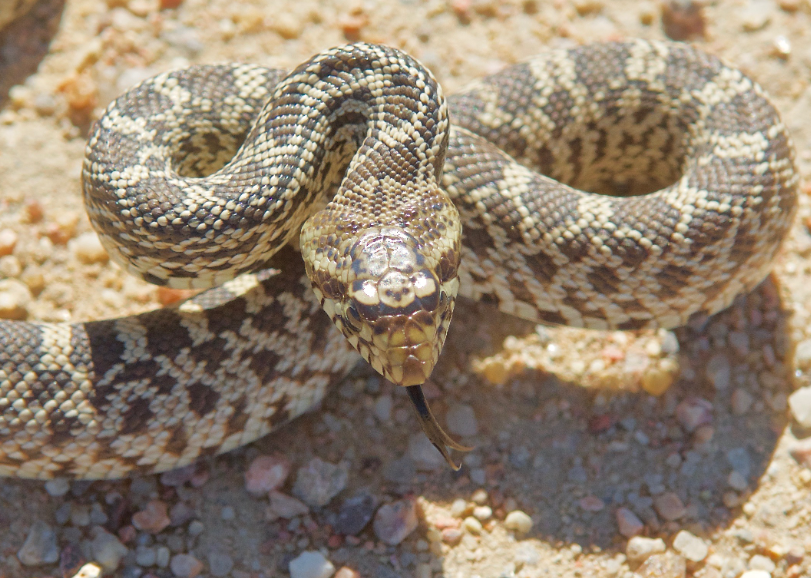
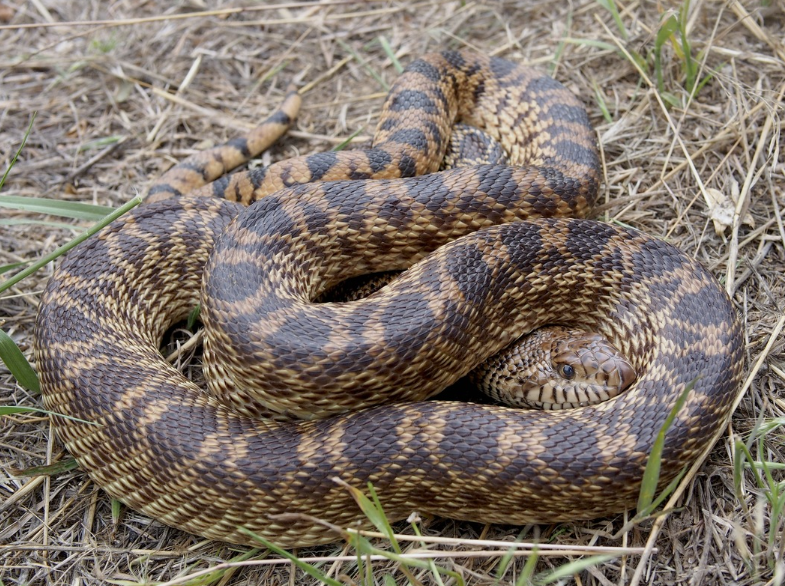
The coloration of a Bullsnake, which features a light-colored body with dark spots, helps it blend into its natural environment, making it an excellent ambush predator.
5. Bullsnakes are good climbers
In addition to their impressive burrowing skills, Bullsnakes are also known to climb shrubs and trees in search of food.
6. They are important for controlling rodent populations
As efficient predators, Bullsnakes help regulate the populations of rodents, particularly in agricultural and rural areas.
7. Bullsnakes are not aggressive
Despite their fierce appearance and defensive behaviors, Bullsnakes are generally not aggressive and will usually attempt to flee if given the opportunity.
8. They have a long life span
Bullsnakes can live up to 10–15 years in the wild, although their life span can be influenced by predation and environmental conditions.
9. Bullsnakes can reach impressive sizes
Bullsnakes can grow up to 8 feet in length, making them one of the largest snakes in North America.
10. They play an important role in their ecosystem
As both predator and prey, Bullsnakes contribute to the balance of their ecosystem, controlling small animal populations and serving as food for larger predators.
Origin and habitats of bullsnakes
Pituophis catenifer sayi, often referred to as bullsnakes, are non-venomous snakes belonging to the Colubridae family. Native to North America, they are mostly found in the west and centre of the continent. Bullsnakes are amazing animals with unusual traits and habits. Bullsnakes deserve our awe and respect because of their amazing size, clever defence mechanisms, and significant contribution to ecosystems.
Physical appearance and color variations of Bullsnakes
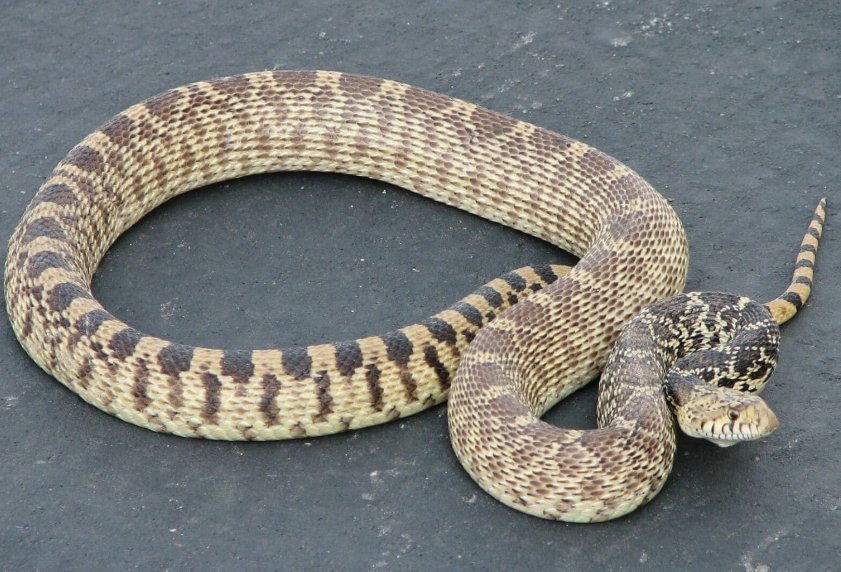
These snakes are well known for their enormous size, growing up to six feet in length, and some of them may even reach eight feet. One thing that makes bullsnakes unique is their colour. Their fundamental tint, which ranges from yellow to light brown, is emphasised by the dark brown or black speckles on their bodies. Their colour pattern allows them to blend in with their surroundings and efficiently conceal themselves from prying eyes. Bullsnakes also have a triangular-shaped head and keeled scales, which give them a rough feel.
Defense Mechanisms of Bullsnakes
Bullsnakes are known to mimic the actions of rattlesnakes when they feel threatened. They may flatten their heads, hiss loudly, and vibrate their tails to make a noise similar to a rattlesnake’s. The defensive reaction of the bullsnake typically deters potential predators who mistakenly assume that it is a venomous snake. But it’s important to keep in mind that, in their natural environments, bullsnakes are beneficial since they keep rodent populations in check and are harmless for humans.
Intriguing facts about bullsnakes
The bullsnake is one of the most misunderstood snakes. Its remarkable size and protective tendencies. We’ll look at some intriguing facts about bullsnakes below, which will help you recognise and comprehend these amazing animals.
Physical Characteristics of bullsnake
One of the biggest snakes in North America is the bullsnake. It may reach a maximum length of six feet, and some people can grow considerably longer. These snakes have a triangular-shaped head and a robust body. Although they may have a variety of colours, they usually have light brown or yellow bodies with patches of black or dark brown throughout.
Habitat and distribution of Bullsnakes
Bullsnakes inhabit a diverse array of ecosystems in North America. They are found in woods, meadows, and even deserts. Although they may be found all the way from Canada to Mexico, the central and western regions of the United States are home to these snakes most often.
Diet and prey preferences for bullsnakes
Rats are the main food source for bullsnakes, which are strong constrictors. They are skilled hunters who can eat creatures larger than their own heads. It is known that these snakes consume small birds as well as mice, rats, and rabbits. In their native environments, they are crucial in keeping rodent populations under control.
Unique defence system of bullsnakes: Rattling tail mimicry
Bullsnakes have a few unique defence systems that they use when threatened. They often imitate rattlesnake behaviour by hissing loudly, puffing up their bodies, and vibrating their tails. Usually, this kind of bluffing is sufficient to scare off predators. If the danger persists, they could bite or attack as a final option.
Reproduction cycle and lifespan of bullsnakes
When compared to other snake species, bullsnakes have a rather long lifespan. In the wild, they may live up to 20 years, and in captivity, much longer. These snakes mature sexually between the ages of three and four. Throughout the mating season, males will fight for the privilege of mating with females. Females deposit a clutch of eggs after mating, which they must incubate for around sixty days.
The importance of Bullsnakes in maintaining balance in ecosystems
Bullsnakes are essential to keeping their habitats in balance. Because they are effective rodent predators, they aid in the management of pest populations that have the potential to harm crops and transmit illness. Bullsnakes maintain the general health and stability of their environments by controlling rodent populations.
Threats and conservation efforts for Bullsnake
The bullsnake is currently not considered a threatened or endangered species. Their numbers are threatened by habitat loss and harassment by humans, however. To guarantee the survival of these amazing snakes, it is crucial to preserve and maintain their native habitats. We can help conserve these amazing reptiles and guarantee their existence for future generations by learning about and coming to appreciate them.
FAQ (Frequently Asked Questions) about Bullsnake
Q: What is a Bullsnake?
Ans: The Bullsnake (Pituophis catenifer sayi) is a large, non-venomous snake native to North America. It is a subspecies of the Gopher Snake and is known for its size, striking appearance, and defensive behavior. Bullsnakes are often mistaken for rattlesnakes due to their similar coloration and behavior, but they are completely harmless to humans.
Q: Where does the Bullsnake live?
Ans: Bullsnakes are found primarily in the central United States, particularly in the Midwest and Great Plains regions. They prefer open grasslands, prairies, and dry, sandy areas where they can find burrows to inhabit. They can also be found in rocky areas and agricultural fields.
Q: What does the Bullsnake eat?
Ans: Bullsnakes are carnivorous and primarily feed on small mammals, birds, and eggs. They are excellent hunters and use their keen sense of smell to track down prey. Bullsnakes often hunt rodents such as mice, rats, and rabbits, and they will also consume birds and their eggs when available.
Q: How big does a Bullsnake get?
Ans: Bullsnakes are among the largest non-venomous snakes in North America. They typically grow to lengths of 4 to 6 feet (1.2 to 1.8 meters), but some individuals can reach up to 8 feet (2.4 meters) in length. Their large size makes them formidable predators in their environment.
Q: Are Bullsnakes dangerous?
Ans: Bullsnakes are not dangerous to humans. They are non-venomous constrictors and rely on their strength to subdue their prey. However, they can exhibit defensive behavior when threatened. Bullsnakes may hiss loudly, puff their bodies, and even strike in self-defense, but their bites are generally not harmful and do not pose a significant threat.
Q: How does a Bullsnake defend itself?
Ans: When threatened, Bullsnakes often mimic the behavior of venomous rattlesnakes to scare off predators. They will hiss loudly, vibrate their tails (though they don’t actually have rattles), and coil their bodies to appear more threatening. This mimicry is an effective defense mechanism that helps them avoid predators.
Q: What does the Bullsnake look like?
Ans: Bullsnakes have a distinct appearance with a tan or light brown body adorned with dark brown or black markings. These markings often form irregular patterns along their back, and their belly is typically pale with dark spots. Bullsnakes also have a pointed snout, which they use to burrow in the ground.
Q: How long do Bullsnakes live?
Ans: Bullsnakes typically live for 15 to 20 years in the wild, although their lifespan can be shorter if they face significant threats such as habitat loss, predation, or accidents. In captivity, they can live even longer with proper care.
Q: Can you keep a Bullsnake as a pet?
Ans: Yes, Bullsnakes can be kept as pets, and they are popular among reptile enthusiasts due to their calm temperament and striking appearance. However, they require a suitable enclosure with proper heat, humidity, and space to move around. It is also important to note that keeping a Bullsnake requires knowledge and responsibility, as with any reptile pet.
Q: Are Bullsnakes endangered?
Ans: Bullsnakes are not currently listed as endangered, but their populations are at risk due to habitat destruction, agricultural development, and the illegal pet trade. In some areas, they are considered a species of concern, and conservation efforts are underway to protect their natural habitats.
#Bullsnake, #NonVenomousSnake, #GopherSnake, #SnakeLovers, #Wildlife, #Herpetology, #NorthAmericanSnakes, #ReptileCare, #SnakeFacts, #BullsnakePet, #WildlifeConservation, #NatureLovers, #ReptileEnthusiasts
Our sources and references about Bullsnake
1: Wikipedia – Bullsnake
2: ARKive – Bullsnake
3: National Geographic – Bullsnake
4: Arizona-Sonora Desert Museum – Bullsnake