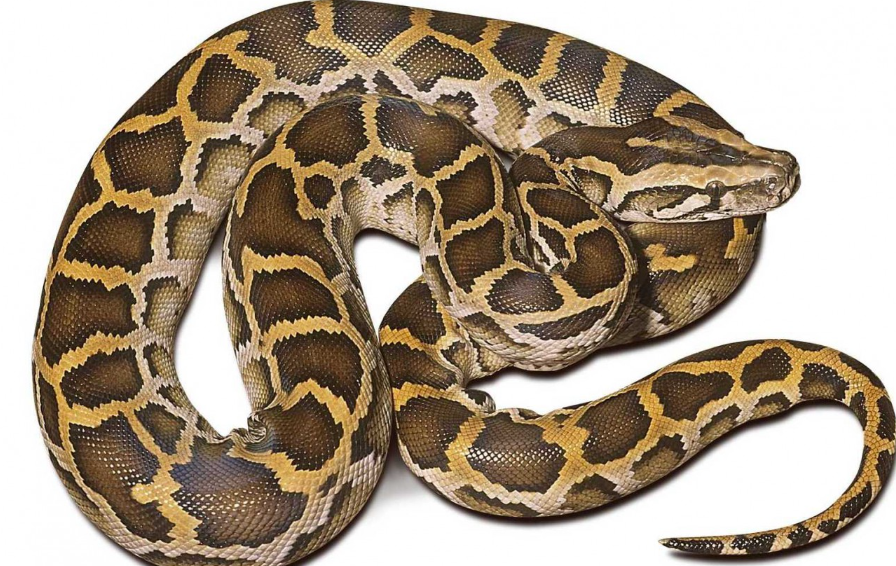
Quick Top 10 Facts about Burmese Python
| SCIENTIFIC NAME | Python bivittatus |
| CLASSIFICATION | KINGDOM: Animalia PHYLUM: Chordata CLASS: Reptilia ORDER: Squamata FAMILY: Pythonidae GENUS: Python SPECIES: P. bivittatus |
| SIZE | Length: Up to 5–7 meters (16–23 feet), Weight: Up to 90 kg (200 lbs) |
| HABITAT | Tropical and subtropical forests, swamps, marshes, and grasslands across Southeast Asia |
| DIET | Carnivorous; eats birds, mammals, and reptiles—sometimes as large as deer and alligators |
| SPECIES | One of the largest snake species in the world, known for its strength and constricting method of predation |
| COUNTRY | Native to Southeast Asia, including Myanmar, Thailand, Vietnam, and Indonesia; invasive in Florida, USA |
| GESTATION PERIOD | Egg-laying; female lays 30–80 eggs and incubates them by coiling around them for about 2 months |
| LIFE SPAN | 20–25 years in the wild; can live longer in captivity |
| CONSERVATION STATUS | Vulnerable in native range due to habitat loss and hunting; invasive and ecologically harmful in Florida |
Amazing Facts About Burmese Pythons
1. Burmese Pythons are among the world’s largest snakes
They can grow over 20 feet long and weigh more than 200 pounds, making them one of the heaviest snake species on Earth.
2. They kill by constriction
Instead of venom, Burmese pythons wrap around their prey and squeeze until the animal suffocates.
3. They are excellent swimmers
These snakes are comfortable in water and can stay submerged for up to 30 minutes.
4. Females are attentive mothers
After laying eggs, the female coils around them and shivers to generate heat, keeping them warm until they hatch.
5. They have a slow metabolism
A Burmese python can go weeks or even months without eating after consuming a large meal.
6. They can eat very large prey
Their jaws can stretch to swallow animals as large as pigs, deer, and even alligators in rare cases.
7. They are invasive in the U.S.
Released or escaped pets have led to an established and destructive population in Florida’s Everglades.
8. Burmese Pythons are solitary creatures
They usually live and hunt alone, coming together only for mating.
9. They use heat-sensing pits
Like many pythons, they have special pits along their jaws that detect the body heat of warm-blooded prey.
10. They are threatened in their native habitat
Despite being invasive elsewhere, in Southeast Asia they face threats from habitat destruction and illegal wildlife trade.
Intriguing facts about Burmese pythons as a species
The scientific name for these large snakes, which are native to Burma, is Python bivittatus. They are found all over Southeast Asia. It is one of the largest snake species on earth, with adults reaching lengths of up to 23 feet and weights exceeding 200 pounds. These pythons’ distinctive pattern of dark brown or black spots on a light tan or yellow background makes them easy to identify in their natural habitat.
Southeast Asian habitat and distribution of Burmese pythons
Southeast Asian tropical rainforests, grasslands, and marshes—which include countries like Myanmar, Thailand, and Indonesia—are the main habitats of Burmese pythons. They are often found near areas of water, such as lakes, rivers, and swamps, and they are rather proficient swimmers. These snakes are known to be able to adapt to a variety of environments, which has led to the establishment of populations all over the world.
Burmese pythons hunting techniques and defensive nature
Burmese pythons, like constrictor snakes, suffocate their prey under pressure until death. They consume a variety of foods, including small animals, birds, and reptiles. These pythons are ambush predators; they wait for their prey to get close before launching a surprise attack. When they catch their prey, they use their powerful muscles to compress and swallow it whole. Large-sized deer and alligators have been seen to be eaten by Burmese pythons.
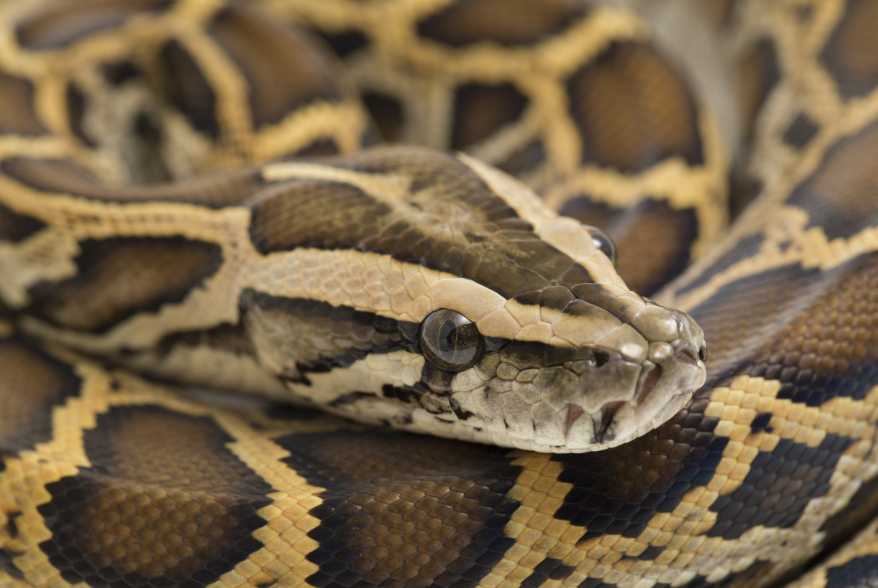
invasive species status of Burmese Pythons in USA
In recent years, Burmese pythons have become an invasive species in the United States, particularly in the Florida Everglades. It is said that the owners of these pythons released them into the wild when they became too large for them to handle. Because of Florida’s perfect climate and lack of natural predators, the state’s python population has increased, putting the state’s native wildlife in jeopardy. They are making an effort to contain their population and prevent it from growing.
Fascinating facts about Burmese pythons
Burmese pythons, scientifically referred to as Python bivittatus, are among the world’s largest snake species. They are indigenous to Southeast Asia, most especially to nations like Indonesia, Thailand, and Myanmar. These magnificent reptiles’ size, power, and distinctive features have drawn a lot of attention. We’ll look at some amazing facts about Burmese pythons below:
The average size and length of Burmese pythons
Massive Burmese pythons are well-known for their size. They are among the biggest snake species on earth, with a maximum length of 23 feet and a weight of over 200 pounds. Their capacity to devour huge amounts of food, including birds, animals, and even alligators, is thought to be the reason for their enormous size. These snakes may suffocate and consume their victims whole by constricting them with their powerful bodies.
Burmese pythons have unique color patterns and scales
The skin of Burmese pythons is characterised by a pattern of dark brown spots surrounded by lighter hues. They are superb ambush predators because of their ability to blend effortlessly into their environment because of this pattern. They can find prey using their excellent sense of smell, then attack with amazing precision and speed. The python coils around its victim, strengthening its hold until the animal suffocates after it has been caught.
The importance of understanding and respecting Burmese pythons
One of the most concerning facts about Burmese pythons is that they are an invasive species in the Florida Everglades. These pythons are thought to have entered the area via the extensive pet trade. A population boom resulted from some people escaping or being released into the wild over time. The introduction of Burmese pythons has led to a decrease in the number of native mammals in Florida.
The reproductive behavior of Burmese pythons
The technique by which Burmese pythons reproduce is remarkable. They lay eggs because they are oviparous. The female python will look for a good place to deposit her eggs, such as a hollow log or burrow. She then gently presses down on the clutch of eggs to provide it with warmth and protection while she coils around it. After the eggs hatch and produce a brood of young pythons, the incubation period lasts around two to three months.
The lifespan and longevity of Burmese pythons
In comparison to other snake species, the lifetime of Burmese pythons is quite lengthy. They can live up to twenty or twenty-five years in captivity; in the wild, however, they may not survive that long. Their lifespan may be influenced by variables including the state of their environment, the accessibility of prey, and their general health. These snakes may flourish and have happy lives in captivity with the right maintenance and handling.
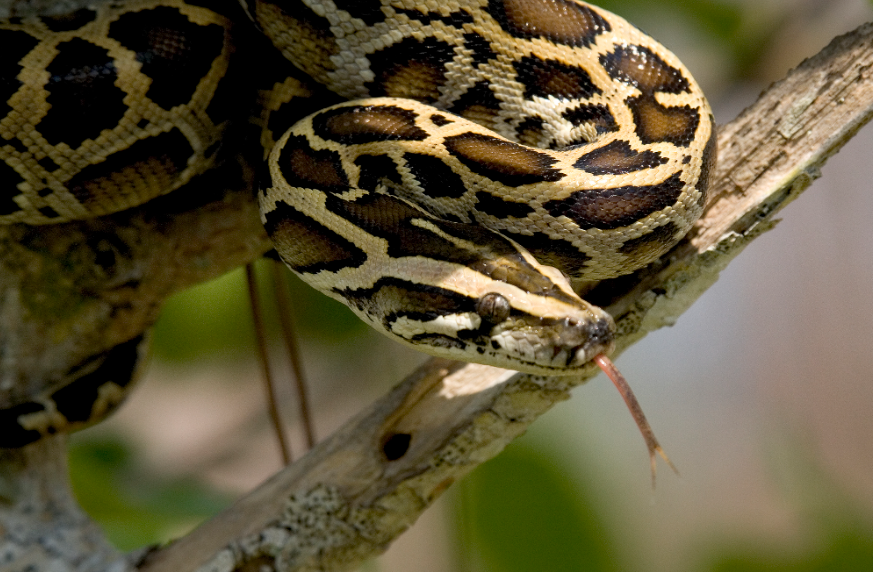
Burmese pythons significance and popularity
Burmese pythons are really amazing animals due to their enormous size, unusual hunting methods, and fascinating reproductive cycle. Even though many people find them fascinating, their existence as an invasive species in certain areas creates serious problems for the local ecosystems. We can better understand their natural history and the value of ethical pet keeping when we are aware of these facts about them.
FAQ (Frequently Asked Questions) about Burmese Python Snake
Q: What is a Burmese Python?
Ans: The Burmese Python (Python bivittatus) is a large, non-venomous snake native to Southeast Asia. Known for its impressive size and strength, it is one of the largest snakes in the world and a member of the constrictor family.
Q: How big do Burmese Pythons get?
Ans: Burmese Pythons are known for their enormous size. They can grow up to 16 feet (4.9 meters) in length, although the average size is around 12 feet (3.7 meters). The heaviest recorded Burmese Python weighed over 200 pounds (90 kg).
Q: Where can Burmese Pythons be found?
Ans: Native to Southeast Asia, Burmese Pythons are found in countries like India, Myanmar, Thailand, and Laos. They typically inhabit forests, grasslands, and wetlands, where they can find suitable prey and cover.
Q: What do Burmese Pythons eat?
Ans: Burmese Pythons are carnivorous and have a diet that includes small to medium-sized mammals, birds, and reptiles. They kill their prey by constricting, wrapping around it, and suffocating it before swallowing it whole.
Q: Are Burmese Pythons dangerous to humans?
Ans: While they are capable of killing large prey due to their constricting ability, Burmese Pythons generally pose little threat to humans. However, large pythons in captivity have been known to pose risks if not handled properly. In their native habitat, they avoid human contact.
Q: How do Burmese Pythons reproduce?
Ans: Burmese Pythons are oviparous, meaning they lay eggs. Female pythons lay between 12 and 100 eggs, depending on their size and health. The mother guards the eggs until they hatch, a unique behavior among snakes.
Q: Are Burmese Pythons endangered?
Ans: While Burmese Pythons are not currently endangered, their populations are threatened in some parts of their natural range due to habitat loss and poaching. In areas like Florida, they are considered invasive species and pose a threat to local wildlife.
Q: How are Burmese Pythons a threat in non-native regions?
Ans: In places like Florida, Burmese Pythons are an invasive species. They have a significant impact on local ecosystems, preying on native wildlife and competing with other predators. Their rapid reproduction and ability to thrive in the wild have made them a major conservation concern in these regions.
Q: How long do Burmese Pythons live?
Ans: In the wild, Burmese Pythons can live up to 20-25 years, though in captivity they may live even longer with proper care, often reaching up to 30 years.
#BurmesePython, #PythonBivittatus, #LargeSnakes, #ConstrictorSnakes, #InvasiveSpecies, #WildlifeConservation, #SnakeFacts, #Herpetology, #Reptiles, #SnakeLovers, #NonVenomousSnakes, #SnakeWildlife
Our sources and references about Burmese Python
1: Wikipedia – Burmese Python
2: National Geographic – Burmese Python
3: IUCN Red List – Burmese Python
4: Florida Museum – Burmese Python