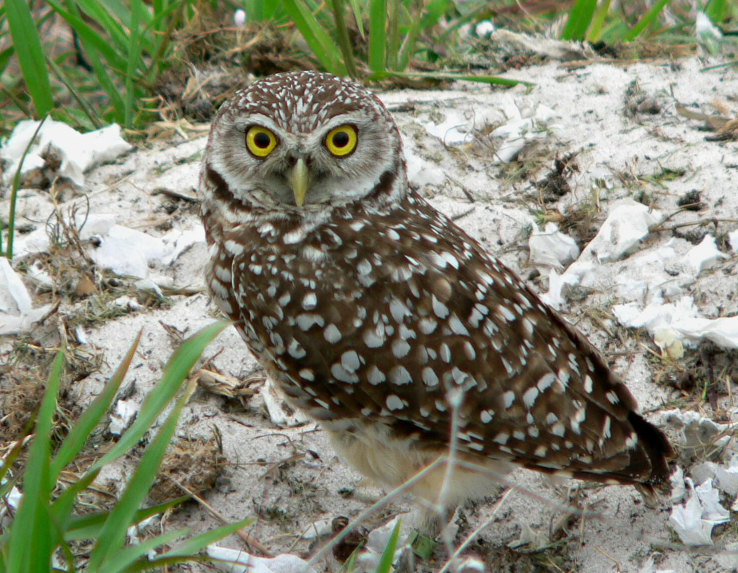
A small owl species known for nesting in burrows underground. Burrowing Owls are found in grasslands and open fields, where they use abandoned animal burrows for shelter. They are unique among owls for their diurnal behavior, being active during the day.
Quick Top 10 Facts about Burrowing Owl
| SCIENTIFIC NAME | Athene cunicularia |
| CLASSIFICATION | KINGDOM: Animalia PHYLUM: Chordata CLASS: Aves ORDER: Strigiformes FAMILY: Strigidae GENUS: Athene SPECIES: A. cunicularia |
| SIZE | Height: 7.5–11 inches (19–28 cm), Wingspan: 20–24 inches (51–61 cm), Weight: 5–8.5 oz (150–240 g) |
| HABITAT | Open landscapes like grasslands, deserts, and agricultural fields, often in burrows dug by other animals |
| DIET | Omnivorous; primarily eats insects and small mammals, occasionally birds and reptiles |
| SPECIES | Burrowing Owl, a small, long-legged owl known for nesting in underground burrows |
| COUNTRY | Found across the Americas, from Canada and the U.S. to Central and South America |
| GESTATION PERIOD | Incubation lasts about 28–30 days; chicks fledge in 40–50 days |
| LIFE SPAN | 6–8 years in the wild; longer in captivity |
| CONSERVATION STATUS | Least Concern globally, though threatened or endangered in parts of North America due to habitat loss |
Amazing Facts About Burrowing Owls
1. They live underground!
Unlike most owls, Burrowing Owls nest and roost in burrows dug by prairie dogs, ground squirrels, or sometimes dig their own.
2. They’re active during the day
While most owls are nocturnal, Burrowing Owls are diurnal and can often be seen hunting and perching in daylight.
3. They use dung to attract insects
These clever owls line their burrow entrances with animal dung, which attracts insects for them to eat.
4. They’re small but fierce
Despite their petite size, Burrowing Owls are bold hunters and can take down prey their own size or larger.
5. They bob their heads as a warning
If threatened, Burrowing Owls often bob their heads up and down rapidly to scare off predators or alert others.
6. Long legs for running
Their long legs help them sprint on the ground—useful for chasing prey and escaping threats.
7. They make interesting sounds
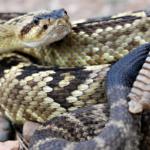
They don’t just hoot—they chirp, scream, and even mimic rattlesnakes when threatened inside burrows.
8. Burrowing Owls migrate
Northern populations often migrate south for winter, while others in warmer climates remain year-round.
9. They’re excellent parents
Both males and females take care of the young, and the chicks can be heard calling from within the burrow.
10. They’re declining in some areas
Habitat destruction and the decline of burrowing mammals have caused population drops in certain regions, especially in North America.
Intriguing facts about Burrowing Owl
The burrowing owl is a remarkable creature distinguished by its unique characteristics and behaviours. Large grasslands, deserts, and agricultural areas are the main habitats of these little owls in North and South America. They may either dig their own burrows to construct their nests or wrest them from other animals like ground squirrels or prairie dogs, which is how they got their moniker.
Unique features of the Burrowing Owl species
One of the most distinctive features of the burrowing owl is its enormous legs, which are appropriate for its terrestrial environment. Unlike other owl species, they spend a lot of time on the ground hunting insects, small mammals, and reptiles. Their legs enable them to run rapidly, making them nimble predators. These owls have a wingspan of around 20 inches and weigh between 5 and 8 ounces.
The various vocalizations and calls of Burrowing Owls
Excavating owls’ calls are easily identifiable. They produce various sounds, including a series of hisses, chattering noises, and cooing notes. Numerous purposes are served by these vocalisations, including communication between mates, warning calls to intruders, and territorial displays. Additionally, they have large, expressive eyes that are ideal for having strong vision, especially in low light.
The physical appearance and origin of Burrowing Owls
The Burrowing Owl is a very intriguing species with its long legs, distinctive vocalisations, and burrowing activities. Their unique physical characteristics and ability to adapt to their surroundings make them a fascinating subject for study and observation. Native to both North and South America, burrowing owls (Athene cunicularia) are small, ground-dwelling owls. Researchers and bird lovers. The following are some amazing details regarding burrowing owls:
The preferred habitats of Burrowing Owls
The main habitats of burrowing owls are agricultural regions, open grasslands, and deserts. They are well-known for their unusual nesting habits because they prefer to build their young in tunnels that other animals, like ground squirrels or prairie dogs, have dug. The owls are protected by these burrows from both harsh weather and predators.
Fascinating facts about Burrowing owls
Burrowing owls are diurnal, which means they are active both during the day and at night, in contrast to other owl species. They frequently sit close to their burrows and watch the area for possible predators or threats.
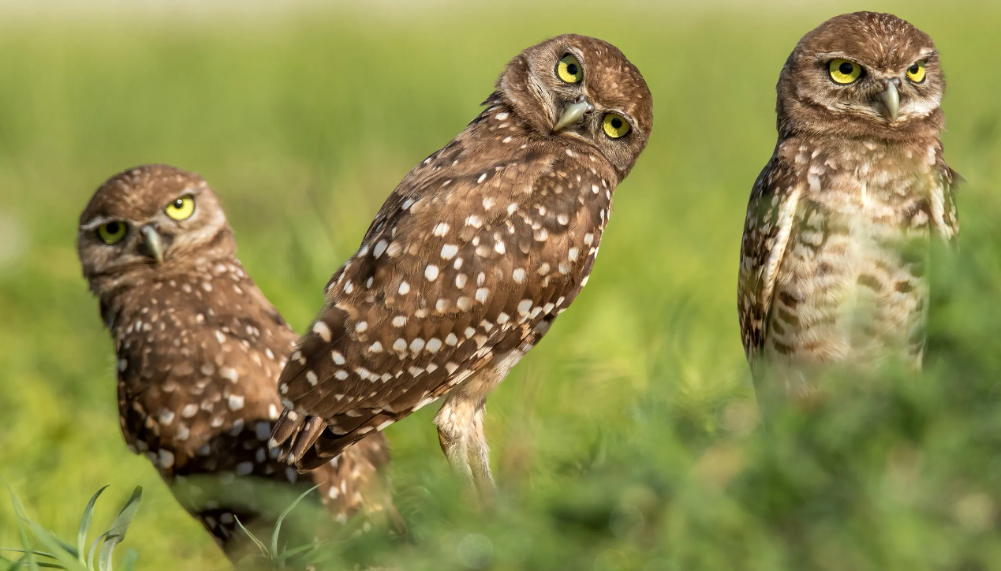
Burrowing owls have unique behaviors
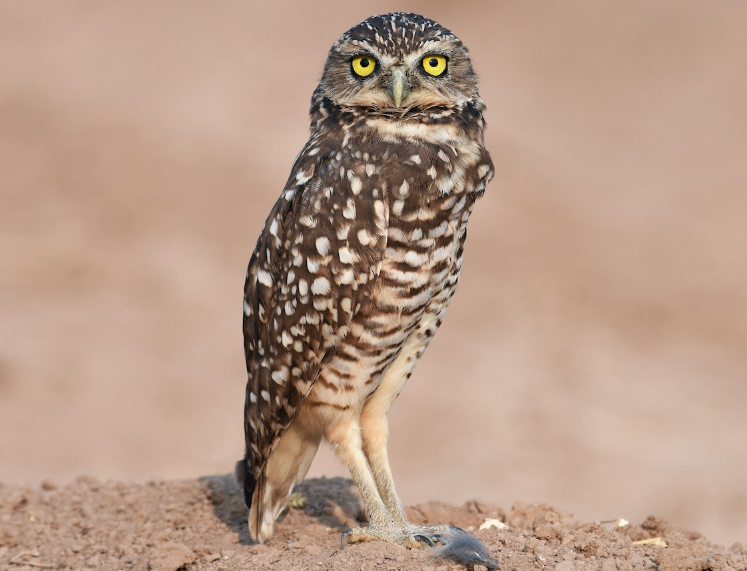
Considering that they are smaller than other owl species, burrowing owls typically stand 7 to 10 inches tall. They can run and walk on the ground, thanks to their long legs. Because of their brown and speckled plumage, they blend in well with their natural surroundings.
Notable features, such as their bright yellow eyes
The vivid yellow eyes of burrowing owls are one of their most characteristic traits. Not only do these remarkable eyes contribute to their distinct look, but they also enable them to see well both during the day and at night.
The diet of Burrowing Owls
The varied diet of burrowing owls includes insects, birds, reptiles, amphibians, and small mammals. They are skilled hunters who locate prey with their acute hearing and vision. They frequently perch on low branches or fence posts during hunting, waiting for a chance to swoop down and capture their prey.
Lesser-known facts about Burrowing Owls
Burrowing owls are known to display unusual eating habits in addition to their hunting habits. They have been seen using pieces of paper, bottle caps, or other artificial objects as decoys to draw insects. Their actions reveal their intelligence and flexibility.
vocalizations to communicate with their mates, offspring, and other members of their community
Owls that burrow use a range of vocalisations to communicate. A variety of sounds, such as gentle coos, whistles, and trills, can be produced by them. These vocalisations serve a variety of functions, including courtship, territory defence, and raising their young.
Distinctive sounds produced by these owls
It’s interesting to note that burrowing owls are recognised for their distinct hissing sound, which they employ as a defence mechanism when faced with danger. They alert potential predators with their hissing sound, fierce posture, and raised feathers.
The threats faced by Burrowing Owls
Throughout their range, burrowing owls have differing levels of conservation. Due to habitat loss, urbanisation, and agricultural practices, their populations are declining in some areas while remaining stable in others. Their natural burrowing locations have been destroyed as a result of these factors, and the amount of available prey has decreased.
The conservation efforts in place to protect these owls
Burrowing owls are the subject of conservation and protection efforts, including artificial burrow construction and the preservation of their natural habitats. Programs for education and public awareness are also aiding in the promotion of the significance of these unusual birds and their function in preserving the equilibrium of the ecosystem.
Interesting Facts and Trivia about Burrowing owls
Burrowing owls are incredibly amazing birds because of their distinctive vocalisations, diurnal habits, and nesting behaviour. Their resilience and intelligence are demonstrated by their ability to adapt to various environments and employ creative hunting strategies. To guarantee their survival in the wild, conservation efforts are necessary. By learning about and respecting these amazing animals, we can help in the conservation of their habitats.
FAQ (Frequently Asked Questions) about Burrowing Owl
Q: What is a Burrowing Owl?
Ans: The Burrowing Owl is a small, long-legged owl found throughout North and South America. Unlike most owls, it lives in burrows in the ground, often using abandoned holes dug by prairie dogs or other animals.
Q: Where do Burrowing Owls live?
Ans: Burrowing Owls inhabit open landscapes such as grasslands, deserts, agricultural areas, and prairies. They are commonly found in parts of the western United States, Florida, Central America, and South America.
Q: Why are they called Burrowing Owls?
Ans: They are named for their unusual nesting behavior — instead of nesting in trees, they nest and roost in underground burrows. They often dig these themselves or take over burrows made by animals like prairie dogs or ground squirrels.
Q: What do Burrowing Owls eat?
Ans: Burrowing Owls are carnivores and feed on insects, small mammals, reptiles, and birds. Their diet includes beetles, grasshoppers, mice, lizards, and small snakes. They are active both day and night, making them unique among owls.
Q: Are Burrowing Owls endangered?
Ans: In some regions, Burrowing Owls are considered threatened or endangered due to habitat loss, agricultural development, and human activity. Conservation efforts are in place to protect their nesting areas and restore prairie ecosystems.
Q: What does a Burrowing Owl look like?
Ans: Burrowing Owls are small, standing about 9–11 inches (23–28 cm) tall. They have brown and white mottled feathers, bright yellow eyes, and a flat facial disk. Their long legs give them a distinct, upright posture on the ground.
Q: Do Burrowing Owls hoot like other owls?
Ans: Burrowing Owls produce a variety of sounds, including a two-note “coo-coooo” used in mating, as well as chatters, screeches, and a distinctive rattling or hissing sound when alarmed — which can mimic a rattlesnake to deter predators.
Q: Do Burrowing Owls migrate?
Ans: Some Burrowing Owls are migratory, especially those in colder climates. They travel south in winter to Central or South America, while others, particularly in warmer regions, are year-round residents.
Q: Can Burrowing Owls be kept as pets?
Ans: No, Burrowing Owls are wild animals and are protected by law in many areas. It is illegal to keep them as pets. They require specific habitats and diets that are best provided in the wild or by licensed wildlife rehabilitators.
#BurrowingOwl, #Owls, #WildlifeConservation, #BirdWatching, #GroundNestingBirds, #OwlFacts, #NatureLovers, #GrasslandWildlife, #BurrowBirds, #BirdOfPrey
Our sources and references about Burrowing Owl
1: Wikipedia – Burrowing Owl
2: Audubon – Burrowing Owl
3: Cornell Lab – All About Birds: Burrowing Owl
4: National Wildlife Federation – Burrowing Owl