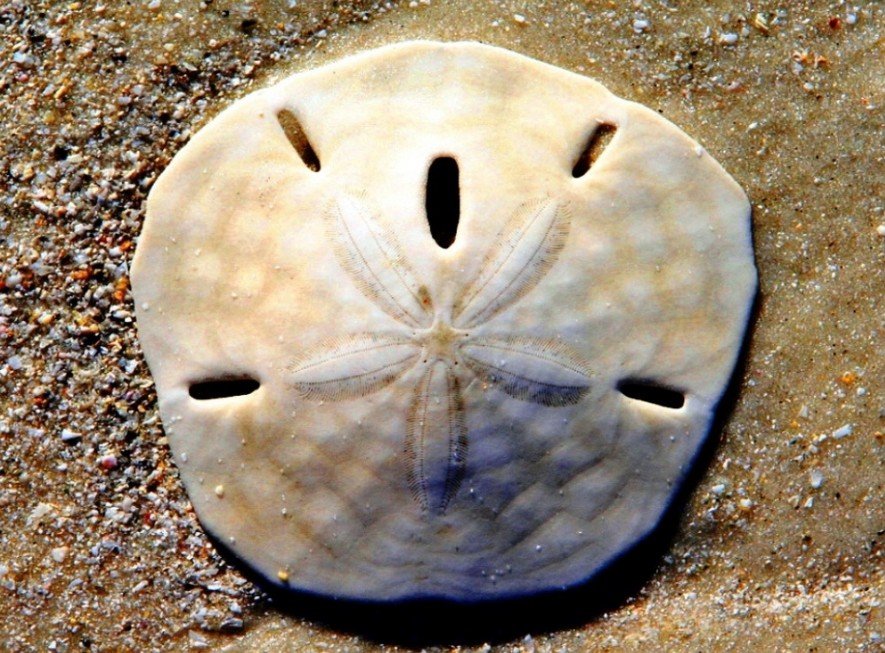
The Sand Dollar is a fascinating marine creature belonging to the class Echinoidea, commonly found along coastlines and shallow waters. Known for their distinctive, flattened, disk-shaped bodies, Sand Dollars are often seen on sandy beaches, where they burrow into the sand for protection. Despite their appearance, they are closely related to sea urchins and play an essential role in marine ecosystems by feeding on plankton and detritus.
This flattened, disc-shaped sea animal features an intricate star-shaped pattern that captivates beachgoers and marine life enthusiasts worldwide. As a member of the echinoderm group, which also includes sea cucumbers, starfish, and sea urchins, the sand dollar belongs to the order Clypeasteroida and is classified as a living marine invertebrate rather than a shell. Below are some amazing facts about this remarkable creature.
Sand Dollar Scientific Classification
| SCIENTIFIC NAME | Echinarachnius parma |
| CLASSIFICATION | KINGDOM: Animalia PHYLUM: Echinodermata CLASS: Echinoidea ORDER: Clypeasteroida FAMILY: Echinarachniidae GENUS: Echinarachnius |
| SIZE | Diameter: 5–10 cm (2–4 inches) |
| SPECIES | There are several species of Sand Dollar, with Dendraster excentricus being one of the most commonly known. |
| APPEARANCE | Sand Dollars are round, flat, disk-shaped creatures with a hard, calcareous exoskeleton. Their surface is covered in tiny spines, and the underside features five distinct petal-like markings. |
| LIFE SPAN | Typically 6 to 10 years, though this can vary based on environmental factors. |
| HABITAT | Shallow sandy or muddy bottoms of oceans, usually in coastal areas, often buried just beneath the surface of the sand. |
| DIET | Sand Dollars are filter feeders, consuming plankton, algae, and detritus that they sift through the sand using their tiny spines and tube feet. |
| NATURAL PREDATORS | Fish, birds, and some invertebrates prey on Sand Dollars. However, they are well-protected by their hard exoskeletons and ability to burrow quickly in the sand. |
| COUNTRY | Found along coastal regions of North America, particularly in the Pacific Ocean, as well as parts of South America and Asia. |
| CONSERVATION STATUS | Least Concern, but local populations may face threats due to pollution and habitat degradation in certain coastal areas. |
Sand Dollar Facts
1. Natural Filters of the Ocean
Sand Dollars play an important role in maintaining ocean health as they are filter feeders, consuming detritus and plankton, which helps maintain water clarity and ecosystem balance.
2. Unique Skeletons
The exoskeleton of a Sand Dollar, known as its “test,” is made of calcium carbonate and is often collected by beachgoers. When alive, the test is covered with small spines, but after death, it turns white and smooth.
3. They Can Burrow in the Sand
Sand Dollars use their spines and tube feet to burrow into the sand for protection from predators and harsh conditions. They typically remain just beneath the surface, with only their top visible.
4. Distinctive Star Shape
When flipped over, Sand Dollars reveal a pattern resembling a star or a flower, which is the outline of their internal organs. This feature gives them a distinctive and recognizable look.
5. Short-Lived Creatures
Despite their widespread presence, Sand Dollars have relatively short lifespans, typically living only 6 to 10 years. Environmental factors and predation can impact their survival.
6. They Are Echinoderms
Sand Dollars belong to the class Echinoidea, making them relatives of sea urchins and sea stars. They share the same fivefold radial symmetry, a hallmark of echinoderms.
7. Reproductive Strategy
Sand Dollars reproduce by releasing eggs and sperm into the water, where fertilization occurs externally. They produce large numbers of offspring to ensure species survival.
8. Found in Shallow Waters
Sand Dollars typically inhabit shallow coastal waters, often buried in the sand just a few feet beneath the surface, where they feed on plankton and detritus.
9. Play a Role in Coastal Ecosystems
Sand Dollars help maintain the health of coastal ecosystems by feeding on plankton and detritus, thus supporting the balance of marine food webs and water quality.
10. Not Just for Decoration
While often collected for their beautiful skeletons, living Sand Dollars are an important part of marine ecosystems, and their shells should be left undisturbed on beaches to help preserve local populations.
Species Overview
Sand dollars are burrowing sea urchins with flattened, disc-shaped bodies adapted for life on sandy seabeds. They are commonly found in shallow coastal waters with gentle wave action, where they remain partially buried in sand or mud. As members of the class Echinoidea and family Echinarachniidae, living sand dollars exhibit complex behaviours and specialised biological traits that support survival in dynamic marine environments.
Globally, sand dollars inhabit temperate and tropical coastal waters, where they burrow into sediment and feed on microscopic organisms. Through this feeding activity, sand dollars contribute to sediment turnover and overall marine ecosystem health.
Physical Traits
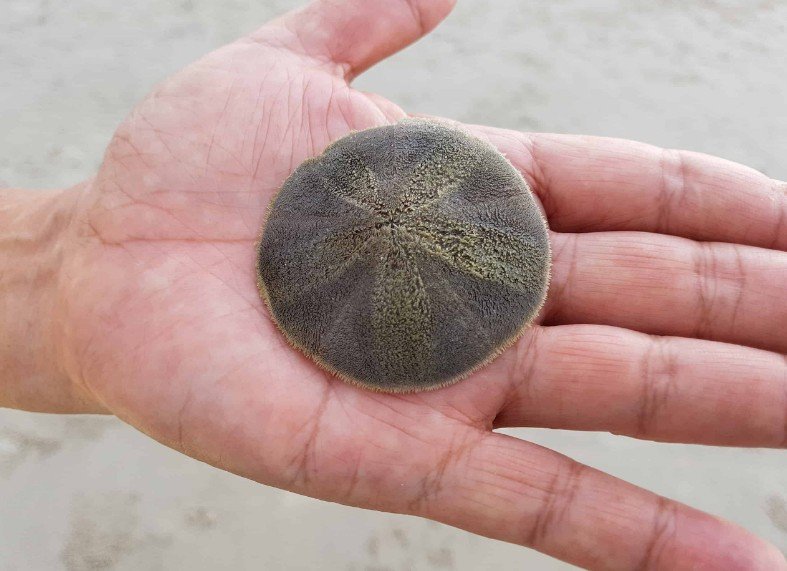
Sand dollars are easily identified by their unique body structure and surface patterns. They possess a rigid, smooth exoskeleton known as a test, which is typically light grey, brown, or greenish in colour and often covered with fine, velvety spines when alive.
Size and Form
- Adult sand dollars usually measure 7–10 cm (3–4 inches) in diameter and display a flattened, rounded disc shape.
- This body form allows efficient burrowing, aiding feeding efficiency and protection from strong currents and predators.
Spines and Feet
- Fine, velvety spines assist with movement, burrowing, and collecting food particles from sand.
- Tube feet located on the underside support locomotion and help sense changes in the surrounding environment.
- Spines also serve as a defensive adaptation, reducing vulnerability to predators such as fish and seabirds.
Star Pattern
- The distinctive five-petalled star pattern, often called the “flower of life” or “daisy petal” design, appears on the upper surface of the sand dollar.
- This pattern marks the ambulacral regions, which house tube feet used for respiration and radial movement.
- Live sand dollars display the pattern subtly through active tube feet, while dead tests become white, brittle, and porous.
Range and Habitat
Sand dollars inhabit shallow coastal waters in temperate and tropical regions around the world. They typically burrow into sandy or muddy seabeds to access microscopic food particles. Most species occur at depths of 3–9 metres (10–30 feet), although some sand dollar species inhabit deeper offshore zones.
Coastal Zones
- Commonly found in mudflats, sandbars, and gently sloping beaches with soft substrates.
- Stable, low-energy environments allow effective burrowing and consistent access to plankton-rich sediments.
- Sand dollars occur along coastlines of North America, South America, Europe, Africa, and Australia.
Feeding Behaviour
Sand dollars are specialised filter feeders that sift organic particles from sand and water. They consume diatoms, plankton, and organic detritus, using coordinated movements of spines and tube feet to transport food to the mouth located on the underside of the body.
Feeding Process
- Cilia on tube feet capture food particles carried by water currents.
- Captured particles are transported along grooves towards the mouth for ingestion.
- Feeding efficiency adjusts according to tides, wave strength, and water quality.
Diet Profile
- Sand dollars feed primarily on plankton, detritus, and microscopic organic matter.
- This feeding behaviour supports nutrient recycling and helps maintain coastal food web balance.
Life Cycle
Sand dollars reproduce through external fertilisation, releasing eggs and sperm into the surrounding water. Fertilised eggs develop into free-swimming larvae, which later settle onto the seabed and undergo metamorphosis into juvenile sand dollars.
Larval Stage
- Larvae drift within plankton communities, carried by ocean currents until suitable habitats are located.
- Juveniles adopt radial symmetry, begin burrowing, and feed within sandy or muddy substrates.
- Sexual maturity occurs after two to three years, completing the reproductive cycle.
Ecological Role
Sand dollars play a vital role in marine ecosystems by regulating plankton populations and recycling nutrients. Their burrowing activity aerates seabed sediments, promoting microbial activity and supporting marine plant growth. They also serve as an important food source for fish, seabirds, and sea stars, helping maintain ecological balance on the ocean floor.
Threats Faced
- Pollution: Plastics, oil spills, and chemical contaminants degrade sediment quality and harm sand dollar populations.
- Habitat loss: Coastal development, dredging, and beach tourism disrupt feeding grounds and reproductive areas.
- Climate change: Rising sea temperatures and ocean acidification alter sediment composition and threaten long-term survival.
Sand Dollar FAQ (Frequently Asked Questions)
Q: What is a Sand Dollar?
Ans: A Sand Dollar is a flat, disk-shaped marine echinoderm closely related to sea urchins and starfish. They are typically found buried in sand along coastlines, where they feed on plankton and detritus.
Q: How do Sand Dollars feed?
Ans: Sand Dollars are filter feeders that use their tiny spines and tube feet to sift plankton, algae, and detritus from the water or sand.
Q: What does a Sand Dollar look like?
Ans: Sand Dollars have a round, flattened body with a hard calcareous skeleton. When alive, they have tiny spines covering their surface, which eventually fall off after they die, leaving a smooth, white skeleton.
Q: Are Sand Dollars endangered?
Ans: Sand Dollars are not considered endangered, but their populations may face local threats from pollution and habitat destruction, particularly in coastal areas.
Q: How long do Sand Dollars live?
Ans: Sand Dollars typically live 6 to 10 years, though they are subject to predation and environmental conditions that can affect their lifespan.
Q: What do Sand Dollar shells symbolize?
Ans: Sand Dollar shells, often collected for decoration, are said to symbolize peace and are sometimes linked to various cultural beliefs, including the notion of “the star of Bethlehem.”
Q: How do Sand Dollars reproduce?
Ans: Sand Dollars reproduce sexually by releasing eggs and sperm into the water, where fertilization takes place externally, producing large numbers of offspring.
Q: Where can I find Sand Dollars?
Ans: Sand Dollars are found in coastal regions, particularly along the Pacific coasts of North America, as well as parts of South America and Asia.
Q: Are Sand Dollars harmful to humans?
Ans: No, Sand Dollars are not harmful to humans. They are peaceful filter feeders and do not pose a threat to people.
Q: Can I take a Sand Dollar shell home?
Ans: While it’s common to find Sand Dollar shells on beaches, it’s best to leave them in their natural environment to preserve the ecosystem. If you do take a shell, make sure it’s already empty.
#SandDollar #MarineLife #Echinoderms #OceanCreatures #CoastalEcosystems #BeachFinds #MarineConservation #MarineLifeFacts
Our sources and references about Sand Dollar
1: Wikipedia – Sand Dollar
2: National Geographic – Sand Dollar
3: Britannica – Sand Dollar