Quick Top 10 Facts about Bush Dog
| SCIENTIFIC NAME | Speothos venaticus |
| CLASSIFICATION | KINGDOM: Animalia PHYLUM: Chordata CLASS: Mammalia ORDER: Carnivora FAMILY: Canidae GENUS: Speothos SPECIES: S. venaticus |
| SIZE | Height: 12–16 inches (30–40 cm), Weight: 11–18 pounds (5–8 kg) |
| HABITAT | Native to South America, especially in dense tropical forests and wetland regions |
| DIET | Carnivorous; primarily hunt small mammals, birds, and reptiles |
| SPECIES | Bush Dog, a small, social species of wild dog native to the rainforests and wetlands of South America |
| COUNTRY | Found in the wild in Brazil, Colombia, Venezuela, and other parts of South America |
| GESTATION PERIOD | Approximately 60–65 days |
| LIFE SPAN | 10–15 years in the wild |
| CONSERVATION STATUS | Endangered; populations are declining due to habitat loss and fragmentation |
Amazing Facts About Bush Dogs
1. Bush Dogs are excellent swimmers
Bush Dogs are highly adapted to wet environments and are skilled swimmers, often hunting near water or in swampy areas.
2. They are socially cohesive
Unlike many other canid species, Bush Dogs are extremely social and live in small, tight-knit packs, often hunting cooperatively.
3. They have a unique appearance
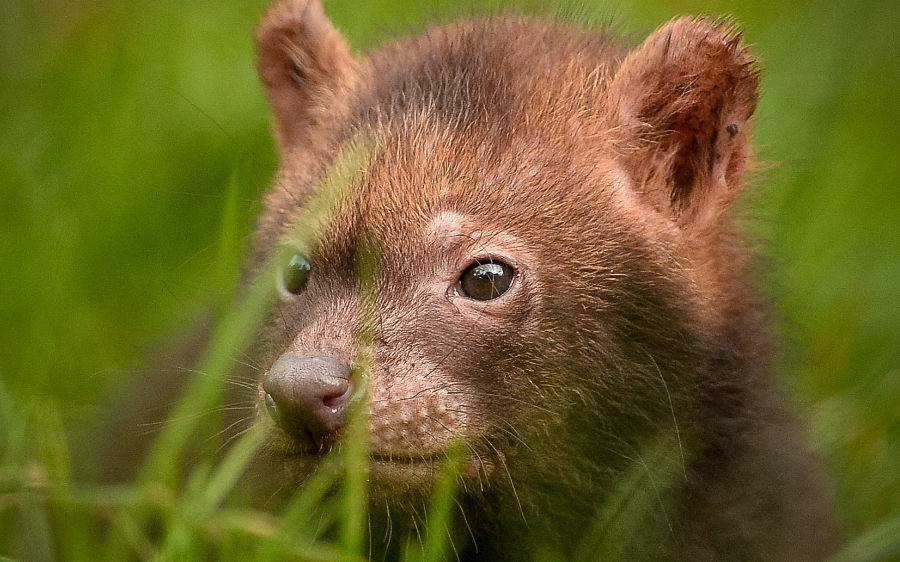
Bush Dogs have a distinct, compact body with a short coat, making them look like a cross between a wild dog and a fox.
4. They are primarily nocturnal
Bush Dogs are active mainly at night, using the cover of darkness to hunt and avoid predators.
5. They are good at hunting in dense vegetation
Adapted to life in dense forests, Bush Dogs use their agility and stealth to catch prey in thick undergrowth.
6. Bush Dogs communicate using various vocalizations
These wild dogs have a complex range of vocalizations, including howls, barks, and whistles to communicate within their pack.
7. They have webbed feet
The Bush Dog’s webbed feet help them swim efficiently through water, making them well-suited for their wetland habitat.
8. They are rarely seen in the wild
Due to their elusive nature and preference for dense forests, Bush Dogs are rarely spotted in the wild, contributing to their mysterious reputation.
9. They are endangered in the wild
Bush Dog populations are at risk due to habitat loss, hunting, and fragmentation of the tropical forests they rely on for shelter and food.
10. They are closely related to domestic dogs
Despite being a wild species, Bush Dogs are part of the Canidae family and share a genetic link with domestic dogs, wolves, and other wild canids.
Origin of the bush dog as a unique species
The bush dog is a small, reticent canid species native to Central and South America. Speothos venaticus is its scientific name. This unique and fascinating species fascinates scientists and wildlife enthusiasts alike.
The physical appearance of the bush dog: size and weight
The bush dog, unlike other canids like wolves or foxes, is built stocky and compact, like a little bear or a weasel. Its short snout, short legs, and rich reddish-brown hair allow it to fit in well with the forest environment. Its usual weight ranges from 11 to 15 pounds, making it about the same size as a large domestic cat.
Bush dog’s hunting techniques, including their ability to chase prey
The majority of the time, bush dogs dwell in small groups of six to twelve individuals. These packs, which work together to hunt and defend their territory, are often led by a dominant breeding pair. They communicate by making a variety of vocalisations, including growls, whines, and barks. Despite their small size, bush dogs are known for their bravery and have been seen chasing much larger prey, such as capybaras and peccaries.
The reproductive behavior of bush dogs
One of the most interesting aspects of the behaviour of the bush dog is its unique breeding system. Bush dogs reproduce year-round, in contrast to most canids that have a mating season. A litter typically contains two to six pups, all of whom are helpless and blind when they are born. Both parents actively assist in raising the pups, although the male often regurgitates food for them until they are mature enough to eat solid food.
The main threats faced by bush dogs
Unfortunately, there are several threats to the wild Bush Dog population. The area that these creatures may inhabit is limited because of habitat loss brought on by deforestation and human encroachment, which is a major issue. In addition, livestock clashes and fur hunting sometimes result in their deaths. Conservation efforts are crucial to protecting this endangered species and ensuring its existence for future generations to study and enjoy.
Fascinating facts about Bush Dogs
Speothos venaticus, often known as the Bush Dog, is an interesting and little-known canid species. The jungles of Central and South America are home to this little, stocky mammal. The Bush Dog is not closely related to domestic dogs or wolves, despite its name. It is truly the only specimen of its kind, belonging to the rare species Speothos.

The size and appearance of Bush Dogs
The Bush Dog is a small, powerful dog that ranges in length from 60 to 75 centimetres and weighs from 5 to 8 kg. Its legs are quite small in relation to its body size, and it has short, reddish-brown hair. The short, bushy tail of the bush dog, which is often kept erect, is one of its most characteristic traits.
Preferred habitats and distribution of Bush dogs
The primary habitats of bush dogs are the marshes and tropical rainforests of Central and South America. Among other places, they have been reported in Brazil, Peru, Colombia, and Argentina. These elusive animals are often found close to bodies of water, such as rivers and swamps, and they enjoy thick foliage.
Cooperative breeding method used by the Bush dogs
Bush dogs are gregarious creatures who live in small groups of six to twelve members. The remaining pack members are often the progeny of a dominant breeding pair that leads these groups. They use a cooperative breeding method in which all pack members assist in caring for the pups.
Specific prey species Bush dogs commonly target
The Bush Dog is predominantly a carnivorous animal, consuming small animals, including pacas, agoutis, and mice, for food. They have also been seen consuming insects, reptiles, and birds as food. To capture their prey, these expert hunters employ their keen sense of smell and pointed fangs.
The current conservation status of Bush Dogs
Bush dogs are courageous and have been seen taking down bigger creatures despite their diminutive stature.Status of Conservation: The International Union for Conservation of Nature now lists the Bush Dog as “near threatened” (IUCN). The primary factors endangering their number are poaching, habitat fragmentation brought on by deforestation, and habitat loss. Their numbers have declined due to the degradation of their natural habitat; thus, it is imperative that conservation measures be put in place to save this rare species.
Unique features of Bush dogs
Bush dogs have partly webbed feet, which helps them swim more effectively and travel through marshes more easily than most other canids. They have a distinctive vocalisation known as a “huff-quack,” which combines the sounds of a quack with a huff. Strong scent-marking behaviour is a characteristic of bush dogs, which use their anal glands to create smell trails that are used for communication. Crepuscular creatures are most active at dawn and twilight.

The social structure and conservation efforts for Bush Dogs
The Bush Dog, a fascinating and little-known species of canid, is an exceptional digger who can build intricate tunnels for refuge despite its small size. Its distinct physical traits, social interactions, and environment make it an intriguing research topic. To secure this species’ existence in the face of mounting threats, conservation efforts are crucial. We can help preserve the future of the Bush Dog and other endangered animals by spreading knowledge and implementing practical conservation strategies.
FAQ (Frequently Asked Questions) about Bush Dog
Q: What is a Bush Dog?
Ans: The Bush Dog (Speothos venaticus) is a small, carnivorous mammal native to the forests and grasslands of South America. It is known for its unique appearance, with a stocky body, short legs, and large paws, which help it navigate dense underbrush. Bush dogs are highly specialized hunters and are often found in packs.
Q: Where does the Bush Dog live?
Ans: The Bush Dog is found in the dense forests and lowland areas of South America, particularly in regions of the Amazon Basin, including parts of Brazil, Venezuela, Bolivia, and Colombia. They prefer environments with dense vegetation, such as rainforests and tropical wetlands, which provide both food and cover.
Q: What does the Bush Dog eat?
Ans: The Bush Dog is a carnivore that primarily preys on small mammals, birds, and reptiles. They are known to hunt in groups and often target medium-sized animals, such as capybaras, peccaries, and agoutis. They also hunt in water, where they can catch fish and amphibians. Their small size allows them to move through dense vegetation and catch prey in narrow spaces.
Q: How does the Bush Dog hunt?
Ans: Bush Dogs are social animals and typically hunt in packs. They use teamwork and coordinated strategies to corner and catch prey. Their small, compact size and excellent endurance make them well-suited for chasing prey through dense vegetation. They also have webbed feet, which help them swim and hunt in water.
Q: Are Bush Dogs endangered?
Ans: Yes, the Bush Dog is considered to be vulnerable and is at risk of becoming endangered due to habitat loss, fragmentation, and hunting. Their population is decreasing, and they are threatened by human encroachment and the destruction of their natural habitat. Conservation efforts are needed to protect these animals and their ecosystems.
Q: How do Bush Dogs communicate?
Ans: Bush Dogs communicate with each other using vocalizations, body language, and scent marking. They have a variety of sounds, including high-pitched whistles, growls, and barks, which help them coordinate with pack members while hunting. They also use scent marking to establish territory and communicate their presence to other members of their species.
Q: How big do Bush Dogs get?
Ans: Bush Dogs are relatively small compared to other canids. They typically weigh between 10 to 15 kilograms (22 to 33 pounds) and have a body length of about 50 to 60 cm (20 to 24 inches), with a tail length of 20 to 25 cm (8 to 10 inches). Their short, muscular build and webbed feet make them excellent swimmers and navigators of dense forests.
Q: Are Bush Dogs solitary or social animals?
Ans: Bush Dogs are social animals and live in small, tight-knit packs. These packs typically consist of a few individuals, usually a dominant male and female, along with their offspring. The pack works together to hunt, defend territory, and care for the young. Their cooperative hunting behavior and social bonds are crucial for their survival in the wild.
Q: Can Bush Dogs be kept as pets?
Ans: Bush Dogs are not commonly kept as pets due to their wild nature and specific habitat needs. They are best suited for their natural environment, where they can hunt, roam, and thrive in packs. In addition, they are difficult to domesticate and may not be compatible with human lifestyles. Conservation efforts focus on protecting them in the wild rather than domesticating them.
#BushDog, #WildDogs, #CarnivorousMammals, #SouthAmericanWildlife, #RainforestWildlife, #AmazonBasin, #PackHunting, #Conservation, #EndangeredSpecies, #Mammals, #TropicalWildlife, #WildlifeProtection
Our sources and references about Bush Dog
1: Wikipedia – Bush Dog
2: IUCN Red List – Bush Dog
3: Britannica – Bush Dog