Quick Top 10 Facts about Bushmaster Snake
| SCIENTIFIC NAME | Lachesis muta |
| CLASSIFICATION | KINGDOM: Animalia PHYLUM: Chordata CLASS: Reptilia ORDER: Squamata FAMILY: Viperidae GENUS: Lachesis SPECIES: L. muta |
| SIZE | Length: 2–3 meters (6.5–10 feet), can occasionally exceed 4 meters (13 feet) |
| HABITAT | Found in rainforests and tropical regions of Central and South America, including countries like Colombia, Ecuador, and Venezuela |
| DIET | Carnivorous; primarily feeds on small mammals, birds, and amphibians |
| SPECIES | The Bushmaster is a highly venomous pit viper and the largest viper species found in the Americas |
| COUNTRY | Native to Central and South America, primarily in rainforests and tropical ecosystems |
| GESTATION PERIOD | Viviparous; gives birth to live young, typically 8–15 offspring |
| LIFE SPAN | 15–20 years in the wild |
| CONSERVATION STATUS | Vulnerable; facing threats from habitat destruction, human encroachment, and illegal collection |
Amazing Facts About Bushmaster Snakes
1. The Bushmaster is the largest pit viper in the Americas
It can grow up to 10 feet in length, making it the largest viper species in the Americas.
2. They are highly venomous
Bushmasters have potent venom that contains hemotoxins, which can cause severe tissue damage and bleeding.
3. They are solitary creatures
Bushmasters are typically solitary, coming together only for mating. They prefer to stay hidden in their natural habitats.
4. Bushmasters are excellent ambush predators
They often lie in wait for prey, using their cryptic coloration to blend into the leaf litter of the rainforest floor.
5. They have a distinctive look
Bushmasters are characterized by their large size, broad triangular heads, and heavy bodies, which help them appear intimidating.
6. They are nocturnal
Bushmasters are most active at night, using their heat-sensing pits to detect warm-blooded prey in the darkness.
7. They are viviparous
Unlike many snakes, Bushmasters give birth to live young rather than laying eggs, with litters typically consisting of 8–15 offspring.
8. Bushmasters can live for decades
These snakes can live for 15–20 years in the wild, depending on environmental conditions and threats.
9. They are endangered due to habitat loss
The Bushmaster is facing threats from deforestation and human encroachment, which are contributing to its vulnerability.
10. They are an important part of their ecosystem
As apex predators, Bushmasters play a crucial role in controlling populations of small mammals, birds, and amphibians in their habitat.
Information about the scientific classification of the Bushmaster Snake
Lachesis muta, formally known as the Bushmaster Snake, is a poisonous pit viper species that is located in the tropical jungles of Central and South America. Its length is 1091 characters, and its word count is 176. At up to 12 feet in length and more than 15 pounds in weight, the adult form of this snake is among the most poisonous snakes in the world.
Physical appearance of the Bushmaster Snake
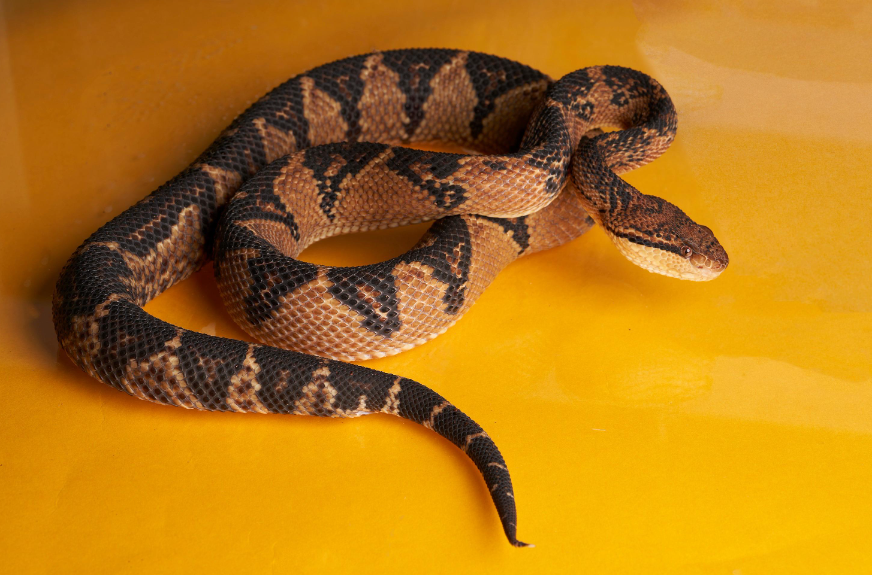
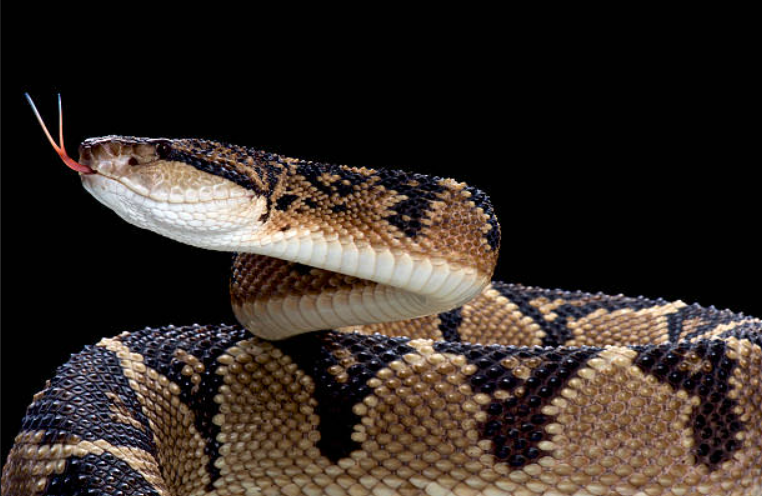
This snake is distinguished by its unique look, which is comprised of a triangular-shaped head and a body covered in dark brown or black diamond-shaped patterns. Because of its keeled and rough scales, it may blend in well with its natural surroundings.
Strong and unique defensive actions performed by Bushmaster snake
The Bushmaster snake is a nocturnal predator that mostly eats birds, reptiles, and small mammals. It finds food in the dark by using heat-sensing holes between its nose and eyes. Its large, hollow fangs are used to inject a strong venom that quickly paralyses and kills its victim. The Bushmaster snake is poisonous, yet it is normally not aggressive; it will only bite if it feels threatened or provoked. In order to avoid being seen, it would rather depend on its camouflage and stay still.
Interesting facts about the Bushmaster Snake
The Bushmaster Snake: A Lethal Rainforest Predator Lachesis muta, the scientific name for the Bushmaster snake, is one of the world’s most dangerous and poisonous snakes. This reptile, which is mostly found in the jungles of Central and South America, is well-known for both its enormous size and strong venom.
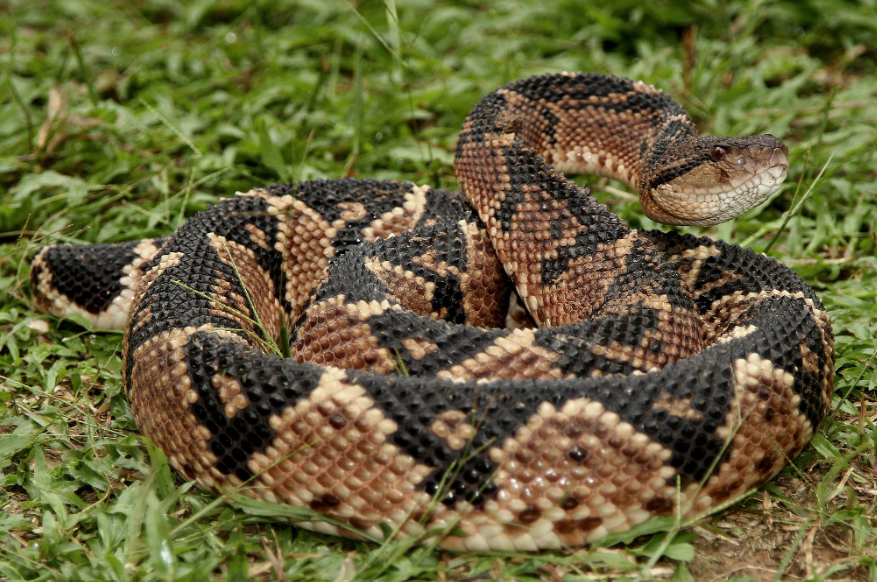
The Bushmaster Snake’s distinctive characteristics are:
Some Bushmaster snakes may grow up to 12 feet in length, making them the biggest poisonous snakes in the Americas. It has a strong body and a typical pit viper-shaped triangle for a head. Although its colour might vary, it usually has black patterns and is brown or olive in colour. The Bushmaster snake’s rough scales let it blend in well with its surroundings in the deep jungle.
How Bushmaster Snake capture its prey
The enormous heat-sensing pits that the Bushmaster snake has between its nose and eyes are one of its most distinguishing characteristics. The snake is a very effective predator because of these pits, which enable it to feel the body heat of its victim.
Distribution and habitat of Bushmaster Snake
The Central and South American rainforests, which include those in Costa Rica, Panama, Colombia, Ecuador, Peru, and Brazil, are home to the Bushmaster snake. It favours thick, humid woodlands with plenty of foliage and several kinds of prey.
Owing to their exceptional camouflage and elusive nature, people seldom come into contact with Bushmaster snakes. It uses its ambush hunting technique to capture gullible prey, spending much of its time concealed in the underbrush.
Behavior and diet of Bushmaster Snake
The Bushmaster snake is a lone, nocturnal animal. It has a strong hemotoxic venom and is very poisonous. Its venom includes enzymes that cause significant tissue damage and inhibit blood coagulation in its target. If treatment for the Bushmaster snake’s venom is delayed, it may be fatal to humans.
Interesting or unique feeding behaviours of Bushmaster Snake
The Bushmaster snake is an ambush predator that waits to strike its victim, which is mostly small mammals, birds, and reptiles. It attacks with rapid speed as soon as a suitable target is in range, injecting its venom and rendering its victim unconscious. The snake then uses its keen sense of smell to hunt down its meal and devour it completely.
The Bushmaster snake, despite its terrifying reputation, seldom bites people and will only do so if it feels trapped or threatened. However, any contact with this snake should be handled very carefully because of how strong its venom is.
Status of Conservation of Bushmaster Snake
The International Union for Conservation of Nature presently lists the Bushmaster snake as a species of least concern (IUCN). However, the population of this snake is decreasing in certain locations as a result of habitat loss and fragmentation brought on by deforestation. Its existence is also threatened by illicit collecting for the fascinating pet trade.
The Bushmaster snake lives in rainforest settings that are being preserved. Local populations are also being educated about the value of these ecosystems and the need to safeguard their fauna.
Intriguing facts about the Bushmaster Snake
An interesting and dangerous predator of the jungle is the Bushmaster snake. It is a very powerful venomous creature that is a superb mimic due to its enormous size and concealment. Even though these snake encounters are uncommon, they serve as a reminder of the remarkable intricacy and variety of the natural world.
FAQ (Frequently Asked Questions) about Bushmaster Snake
Q: What is a Bushmaster Snake?
Ans: The Bushmaster is a large, venomous snake belonging to the genus Lachesis, native to Central and South America. It is known for being one of the longest pit vipers and the largest venomous snake in the Americas, with some species growing over 12 feet (3.6 meters) long.
Q: Where does the Bushmaster Snake live?
Ans: The Bushmaster is primarily found in tropical forests of Central and South America, particularly in countries like Costa Rica, Panama, Colombia, Venezuela, and Brazil. They tend to inhabit lowland rainforests, but they are also found in higher altitudes depending on the species.
Q: What does the Bushmaster Snake eat?
Ans: The Bushmaster is an ambush predator and primarily preys on small mammals, birds, amphibians, and lizards. It uses its powerful venom to immobilize its prey before swallowing it whole. This snake hunts at night, using its camouflaged appearance to remain undetected by its prey.
Q: How dangerous is the Bushmaster Snake?
Ans: The Bushmaster is highly venomous. Its bite can be lethal to humans if not treated promptly with antivenom. The venom contains a mixture of enzymes that can cause severe tissue damage, paralysis, and blood clotting. Despite its dangerous nature, Bushmasters are generally not aggressive and will usually avoid humans if given the chance.
Q: How large does the Bushmaster Snake grow?
Ans: Bushmaster snakes can grow up to 12 feet (3.6 meters) long, with some individuals recorded at lengths greater than 10 feet (3 meters). They are known for their thick bodies and large heads, which help them capture and subdue prey.
Q: What does the Bushmaster Snake look like?
Ans: The Bushmaster has a large, stocky body covered in distinctive, reddish-brown or tan scales with dark, irregular crossbands. The pattern helps it blend into the forest floor, where it hides and waits for prey. Its head is large and triangular, and it has heat-sensing pits that help it detect warm-blooded prey.
Q: Is the Bushmaster Snake endangered?
Ans: Yes, the Bushmaster is considered to be at risk due to habitat loss, hunting, and the illegal pet trade. The deforestation of its natural habitat and human encroachment into the rainforest has significantly reduced its population in some areas. Conservation efforts are needed to protect this unique species.
Q: How does the Bushmaster Snake hunt?
Ans: The Bushmaster is an ambush predator. It lies in wait, often curled up on the forest floor, where its camouflage allows it to remain hidden. When prey comes too close, it strikes with remarkable speed and accuracy. The snake then waits for the venom to take effect before swallowing its prey whole.
Q: Can a Bushmaster Snake be kept as a pet?
Ans: While some people keep Bushmaster snakes in captivity, it is not recommended due to their venomous nature and specialized care requirements. They are best appreciated in their natural habitats by those trained to handle them. Owning a venomous snake like the Bushmaster requires special permits and experience in reptile care.
#Bushmaster, #BushmasterSnake, #VenomousSnakes, #PitVipers, #SnakeSpecies, #CentralAmerica, #SouthAmerica, #WildlifeConservation, #DangerousSnakes, #Reptiles, #SnakeLovers, #RainforestAnimals, #VenomousSnakes
Our sources and references about Bushmaster Snake
1: Wikipedia – Bushmaster Snake
2: National Geographic – Bushmaster Snake
3: Venomous Reptiles – Bushmaster
4: Reptiles Magazine – Bushmaster Snake