
The Satanic Leaf-Tailed Gecko (Uroplatus phantasticus) is a remarkable species of gecko native to Madagascar, famous for its striking appearance and incredible camouflage abilities. These nocturnal reptiles have evolved to mimic dead leaves, making them nearly invisible in their natural habitat. The Satanic Leaf-Tailed Gecko is often found in the dense rainforests of Madagascar, where it uses its unique tail and body shape to blend into the forest floor and avoid predators. It is a carnivorous insectivore, feeding on various insects and small arthropods. Despite its frightening name, the Satanic Leaf-Tailed Gecko is not dangerous to humans and is considered a marvel of evolutionary adaptation.
Quick Top 10 Facts about Satanic Leaf-Tailed Gecko
| SCIENTIFIC NAME | Uroplatus phantasticus |
| CLASSIFICATION | KINGDOM: Animalia PHYLUM: Chordata CLASS: Reptilia ORDER: Squamata FAMILY: Gekkonidae GENUS: Uroplatus SPECIES: Uroplatus phantasticus |
| SIZE | Length: 25–30 cm (9.8–11.8 inches), including the tail |
| SPECIES | Uroplatus phantasticus is the only known species in its genus that displays the unique “leaf-tailed” feature. |
| APPEARANCE | Known for its flattened, leaf-shaped tail, this gecko has a body color and texture that closely resembles dry leaves, providing camouflage in its natural environment. |
| LIFE SPAN | Typically 10–15 years in captivity, though their lifespan in the wild may vary. |
| HABITAT | Found exclusively in the rainforests of Madagascar, where it inhabits the forest floor, blending in with the leaf litter. |
| DIET | Insects, small invertebrates, and other arthropods, which it hunts at night. |
| NATURAL PREDATORS | Birds, larger reptiles, and mammals are potential predators of the Satanic Leaf-Tailed Gecko. |
| COUNTRY | Madagascar, specifically the rainforests of the island. |
| CONSERVATION STATUS | Listed as “Near Threatened” due to habitat loss, especially from deforestation and human encroachment on Madagascar’s rainforests. |
Amazing Facts About Satanic Leaf-Tailed Gecko
1. Perfect Camouflage
The Satanic Leaf-Tailed Gecko’s most remarkable feature is its ability to mimic dead leaves, helping it blend seamlessly into the forest floor and avoid predators.
2. Nocturnal Creatures
These geckos are nocturnal, hunting insects and small arthropods under the cover of darkness, where their camouflage is most effective.
3. Fascinating Tail
The gecko’s tail is shaped like a dry leaf, which helps it remain undetected by predators. The tail also serves as a balance aid while climbing.
4. Master of Stealth
When threatened, the Satanic Leaf-Tailed Gecko will remain motionless to avoid detection, utilizing its incredible camouflage to stay hidden.
5. Endemic to Madagascar
This species is native exclusively to the rainforests of Madagascar and is found nowhere else in the world.
6. Diet of Insects
As an insectivore, the Satanic Leaf-Tailed Gecko feeds primarily on insects, small invertebrates, and other arthropods, using its speed and stealth to catch prey.
7. Small But Mighty
Despite its small size, the gecko is a highly efficient predator in its ecosystem, contributing to the control of insect populations in the rainforest.
8. Reproductive Behavior
Satanic Leaf-Tailed Geckos lay eggs that hatch into miniature versions of the adults, requiring no parental care after hatching.
9. Low Activity Levels During the Day
During the day, these geckos are inactive, hiding among the leaves and debris of the forest floor, making them nearly impossible to spot.
10. Threatened by Habitat Loss
The Satanic Leaf-Tailed Gecko is currently listed as “Near Threatened” due to the destruction of its rainforest habitat, primarily caused by logging and agriculture.
The Master of Camouflage in Nature: The Satanic Leaf-Tailed Gecko
One of the most amazing and intriguing reptiles in the world, the Satanic Leaf-Tailed Gecko (Uroplatus phantasticus) is distinguished by its exceptional camouflage and distinctive look. This elusive gecko, which is indigenous to Madagascar’s jungles, is a remarkable example of evolutionary adaptation since it blends in seamlessly with its surroundings to evade predators. It gets its creepy moniker from its beautiful leaf-like tail and mysterious colour patterns that enable it to blend in perfectly with fallen leaves and tree bark.
1. The Satanic Leaf-Tailed Gecko: An Overview
Understanding the Uroplatus Genus
The Uroplatus genus, which includes the Satanic Leaf-Tailed Gecko, is a group of leaf-tailed geckos that have some of the most amazing camouflage techniques in the animal realm. The Satanic Leaf-Tailed Gecko has a mysterious look and has developed the ability to imitate dead leaves, which gives it an almost otherworldly likeness to its environment. Being arboreal and nocturnal, this reptile spends a large portion of its time lurking in the shadows of Madagascar’s thick woods, making it a challenging species to identify in the field.
2. Physical Attributes
Unique Appearance of the Satanic Leaf-Tailed Gecko
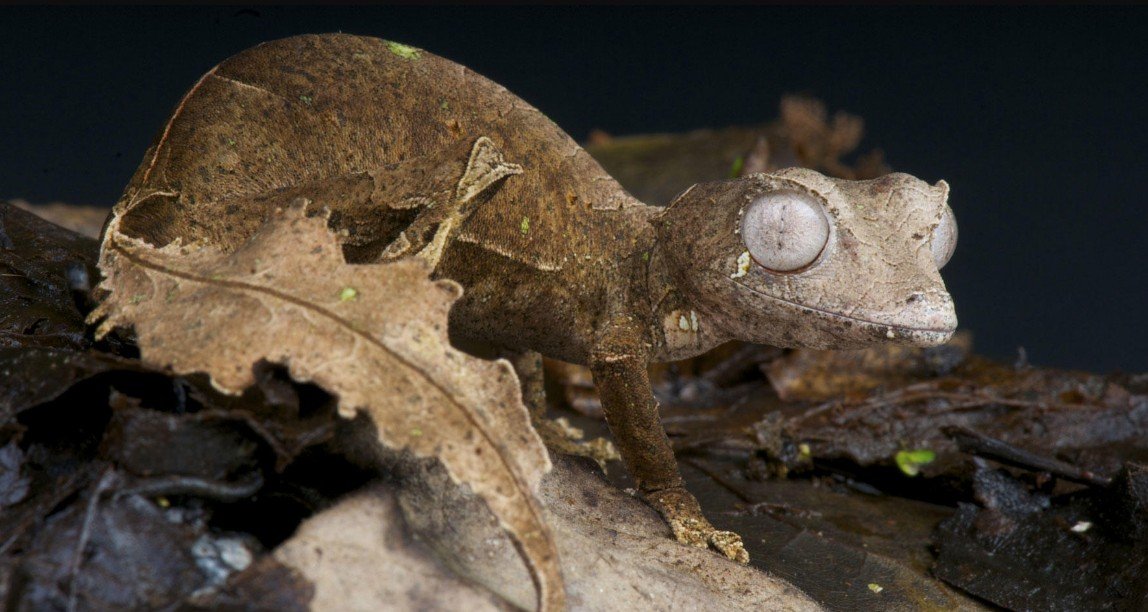
The Satanic Leaf-Tailed Gecko is one of the most fascinating reptiles on the earth because of its remarkable look. The gecko’s tail, which resembles a dead leaf, is its most distinguishing characteristic, but it also has additional adaptations that help it blend in with its surroundings.
Dimensions and Form
- Length: From head to tail, the Satanic Leaf-Tailed Gecko normally reaches a length of 10 to 12 inches (25 to 30 cm). This includes the tail, which resembles a leaf and may grow to be as long as the body.
- Body: The gecko can remain hidden beneath fallen leaves and tree bark because to its slim body and small, flat head. Built for a life of stealth, it is a tiny, nimble gecko.
The Leaf-Like Tail as a Camouflage Masterpiece
The Satanic Leaf-Tailed Gecko’s most distinctive characteristic is its tail, which has developed to resemble a dead leaf. The tail resembles the form and feel of the dried leaves that cover the forest floor nearly exactly because it is broad, flat, and has a jagged, uneven edge. The gecko’s ability to blend in with its environment is further enhanced by the brown and grey colours of its tail. In addition to being an essential defence mechanism, the tail is also a means of communication or signalling during territorial displays and courting.
Coloration and Natural Patterns for Concealment
Particularly in Madagascar’s lush, humid jungles, the Satanic Leaf-Tailed Gecko’s body may blend in with its surroundings because to its usual mixture of brown, grey, and greenish tones. Its overall concealment is aided by the uneven patterns of spots and mottles on its skin. Though they are not very noticeable at night in its native environment, the gecko’s huge, yellow-orange eyes stand out in contrast to the rest of its body.
Camouflage Behavior in the Wild
The gecko usually folds its body and tail to lay flat against a tree limb or the forest floor while it is at rest. With its tail serving as the leaf’s stem, it may precisely mimic a dead leaf in this posture. Since it is almost invisible to the untrained sight, this natural camouflage is essential for avoiding predators.
3. Distribution and Habitat
Natural Habitat of the Satanic Leaf-Tailed Gecko
Madagascar is an island off the southeast coast of Africa, and the jungles there are home to the Satanic Leaf-Tailed Gecko. The Satanic Leaf-Tailed Gecko is one of the numerous unusual animals that can be found in Madagascar, which is renowned for its amazing biodiversity and high number of endemic species.
Rainforest Ecosystems and Their Importance
Madagascar’s montane and lowland rainforests are home to the majority of Satanic Leaf-Tailed Geckos. Dense foliage, high humidity, and a profusion of fallen leaves are characteristics of these environments that are critical to the survival and concealment of the gecko. These geckos utilise the leaves and branches to hide from predators and seek prey, and the forest floor and lower canopy provide plenty of hiding places.
Altitude Range and Geographic Spread
The island’s eastern and central regions are home to the gecko, which lives in both main and secondary woods. Although it is often found at lower altitudes, it has also been seen in regions with the same thick vegetation at higher elevations. Studying Satanic Leaf-Tailed Geckos in the field is challenging because of their elusiveness and the isolated locations of their habitats.
4. Diet and Behaviour
Nocturnal Lifestyle and Solitary Nature
As nocturnal and solitary creatures, Satanic Leaf-Tailed Geckos spend the most of their days sleeping in concealed locations where they don’t move, depending on their superior camouflage to keep predators at bay. Although they feed on the forest floor, they are arboreal in nature, spending a large portion of their time in trees or on bushes.
Diet and Hunting Techniques
Since Satanic Leaf-Tailed Geckos are insectivores, tiny insects like crickets, moths, beetles, and other invertebrates make up the majority of their food. Being opportunistic predators, they usually ambush their prey instead of pursuing it. The gecko has an advantage while foraging at night because of its long tail, which helps it balance when traversing trees and branches.
Adaptations for Night Hunting
They are very skilled at hunting insects that fly at night and are drawn to the dark light of the forest floor since they are nocturnal. They can more easily identify prey in the dark hours of the day because to their huge, yellow-orange eyes, which have exceptional night vision.
Defensive Behavior and Predator Evasion
The Satanic Leaf-Tailed Gecko will stay still and use its camouflage to evade discovery if it feels threatened. It may, however, quickly run away if startled or divert predators with its tail, creating a false target. Predators may mistake the gecko’s tail for a non-living item because of its leaf-like appearance, which would enable it to escape.
5. Procreation
Reproduction in the Satanic Leaf-Tailed Gecko
Like many other reptiles, the Satanic Leaf-Tailed Gecko lays eggs and reproduces sexually. Usually, breeding takes place during the warmer months when there is an abundance of food and more favourable climatic circumstances.
Egg Laying and Incubation Process
A few leathery eggs will be laid by the female Satanic Leaf-Tailed Gecko in secret locations, including under fallen leaves or in crevices in tree bark. The rainforest’s warm, humid climate is where these eggs are allowed to incubate. The mother does not give parental care after laying the eggs, and the hatchlings are left on their own after emerging.
6. Status of Conservation
Conservation Status and Threats
Because to habitat damage, the consequences of deforestation, and the illicit pet trade, the Satanic Leaf-Tailed Gecko is presently placed on the International Union for Conservation of Nature’s (IUCN) Red List as Near Threatened. The existence of the gecko is seriously threatened by the destruction of Madagascar’s rainforests, which is mostly caused by mining, logging, and agricultural growth.
Environmental Sensitivity and Vulnerability
Due to its limited rate of reproduction and dependence on certain environments, the gecko is especially susceptible to population decreases. Furthermore, the Satanic Leaf-Tailed Gecko’s conservation issues are made worse by the fact that, because of its unusual look, it is sometimes caught for the fascinating pet trade.
Conservation Efforts and Protective Measures
Conservation groups and local governments have prioritised habitat preservation and sustainable land management techniques in order to save Madagascar’s endangered species, including the Satanic Leaf-Tailed Gecko. Maintaining the gecko’s native habitat depends on initiatives to stop illicit logging and preserve rainforests by establishing protected zones.
FAQ (Frequently Asked Questions) about Satanic Leaf-Tailed Gecko
Q: What is a Satanic Leaf-Tailed Gecko?
Ans: The Satanic Leaf-Tailed Gecko (Uroplatus phantasticus) is a species of gecko native to Madagascar, known for its remarkable leaf-shaped tail and camouflage abilities.
Q: How does the Satanic Leaf-Tailed Gecko hide from predators?
Ans: The gecko’s body and tail resemble dead leaves, allowing it to blend in perfectly with the leaf litter on the forest floor, making it almost invisible to predators.
Q: Where can I find a Satanic Leaf-Tailed Gecko?
Ans: This gecko is found exclusively in the rainforests of Madagascar, where it resides in the leaf litter and branches of the forest floor.
Q: What do Satanic Leaf-Tailed Geckos eat?
Ans: They primarily eat insects, small invertebrates, and other arthropods that they catch at night.
Q: How long do Satanic Leaf-Tailed Geckos live?
Ans: In captivity, they can live up to 10–15 years, though their lifespan in the wild may be shorter due to natural threats and predators.
Q: Are Satanic Leaf-Tailed Geckos dangerous to humans?
Ans: No, these geckos are not dangerous to humans. They are small, non-venomous, and generally avoid human contact.
Q: Are Satanic Leaf-Tailed Geckos endangered?
Ans: Yes, they are listed as “Near Threatened” due to habitat loss caused by deforestation and human activity in Madagascar’s rainforests.
Q: Can Satanic Leaf-Tailed Geckos change color?
Ans: No, the Satanic Leaf-Tailed Gecko does not change color. Its camouflage is due to the natural leaf-like pattern and texture of its body and tail.
Q: How do Satanic Leaf-Tailed Geckos reproduce?
Ans: They lay eggs, which hatch into miniature versions of the adults. The young geckos are independent and do not receive parental care.
Q: Why are Satanic Leaf-Tailed Geckos so hard to spot?
Ans: Their leaf-shaped tail and leaf-like body coloration allow them to blend perfectly with their surroundings, making them nearly impossible to see when stationary.
#SatanicLeafTailedGecko #MadagascarGeckos #LeafTailedGecko #CamouflageExperts #GeckoFacts #RainforestAnimals #ReptileCamouflage #WildlifeConservation #UroplatusPhantasticus
Our sources and references about Satanic Leaf-Tailed Gecko
1: Wikipedia – Satanic Leaf-Tailed Gecko
2: Reptiles Magazine – Satanic Leaf-Tailed Gecko
3: Arkive – Satanic Leaf-Tailed Gecko
4: National Geographic – Satanic Leaf-Tailed Gecko