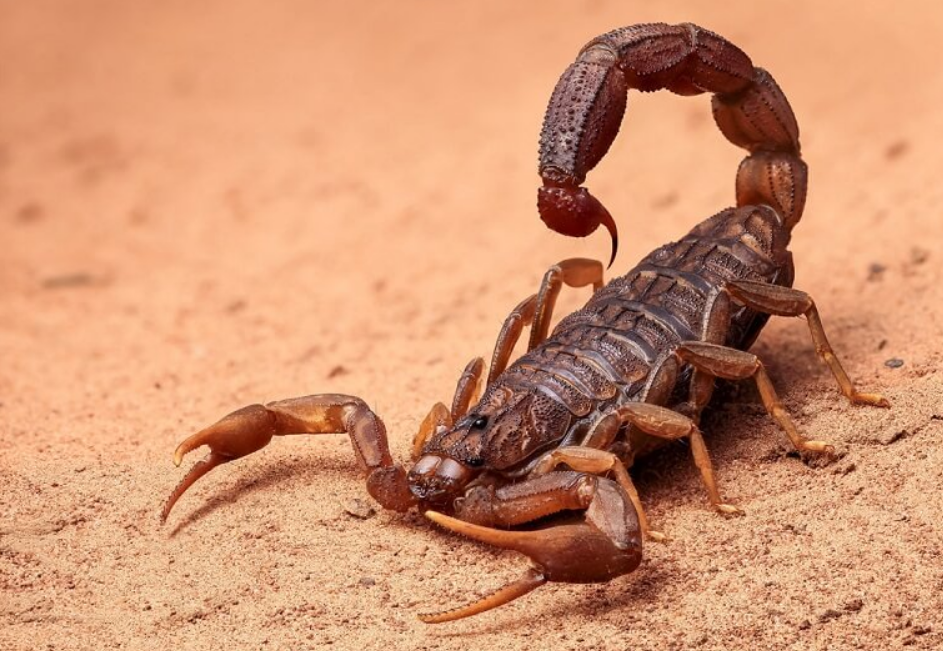
Scorpions are arachnids known for their distinctive curved tails with venomous stingers. These ancient creatures have been around for over 400 million years and inhabit diverse environments across every continent except Antarctica. Scorpions are nocturnal predators that feed on insects and small animals, using their pincers to catch prey and their stingers to inject venom. Though feared for their sting, most scorpion species pose little danger to humans.
Quick Top 10 Facts about Scorpion
| SCIENTIFIC NAME | Scorpiones (order) |
| CLASSIFICATION | KINGDOM: Animalia PHYLUM: Arthropoda CLASS: Arachnida ORDER: Scorpiones |
| SIZE | Length: 1–21 cm (0.4–8 inches), depending on species |
| SPECIES | Over 2,000 known species across deserts, forests, grasslands, and caves |
| APPEARANCE | Eight-legged arthropods with segmented bodies, large pincers (pedipalps), and a tail ending in a venomous stinger |
| LIFE SPAN | 3–8 years in the wild; some species can live over 10 years in captivity |
| HABITAT | Deserts, tropical rainforests, savannas, grasslands, caves, and mountains |
| DIET | Insects, spiders, small vertebrates such as lizards and mice |
| NATURAL PREDATORS | Birds, lizards, mammals, centipedes, and other scorpions |
| COUNTRY | Found on every continent except Antarctica |
| GESTATION PERIOD | Gestation varies by species: 5–18 months; live birth |
| CONSERVATION STATUS | Most species are not endangered; some are threatened by habitat loss and collection |
Amazing Facts About Scorpion
1. Glows Under UV Light
Scorpions have a unique trait — they glow a bluish-green under ultraviolet light due to chemicals in their exoskeleton.
2. Ancient Survivors
Scorpions have existed for hundreds of millions of years, predating even the dinosaurs.
3. Venom Varies by Species
While all scorpions have venom, only about 25 species have venom potent enough to be dangerous to humans.
4. Live Birth
Unlike most arthropods, scorpions give birth to live young, which ride on the mother’s back until their first molt.
5. Pincers Before Stinger
Scorpions typically use their strong pincers to subdue prey before using their stinger as a last resort.
6. Can Survive Extreme Conditions
Many scorpions can survive extreme temperatures and even go up to a year without food.
7. Night Hunters
Scorpions are nocturnal and hunt by sensing vibrations and using specialized hairs to detect prey.
8. Territorial and Solitary
Scorpions are solitary and often territorial, interacting mainly during mating or in competition.
9. Tail Curl is a Defense Mechanism
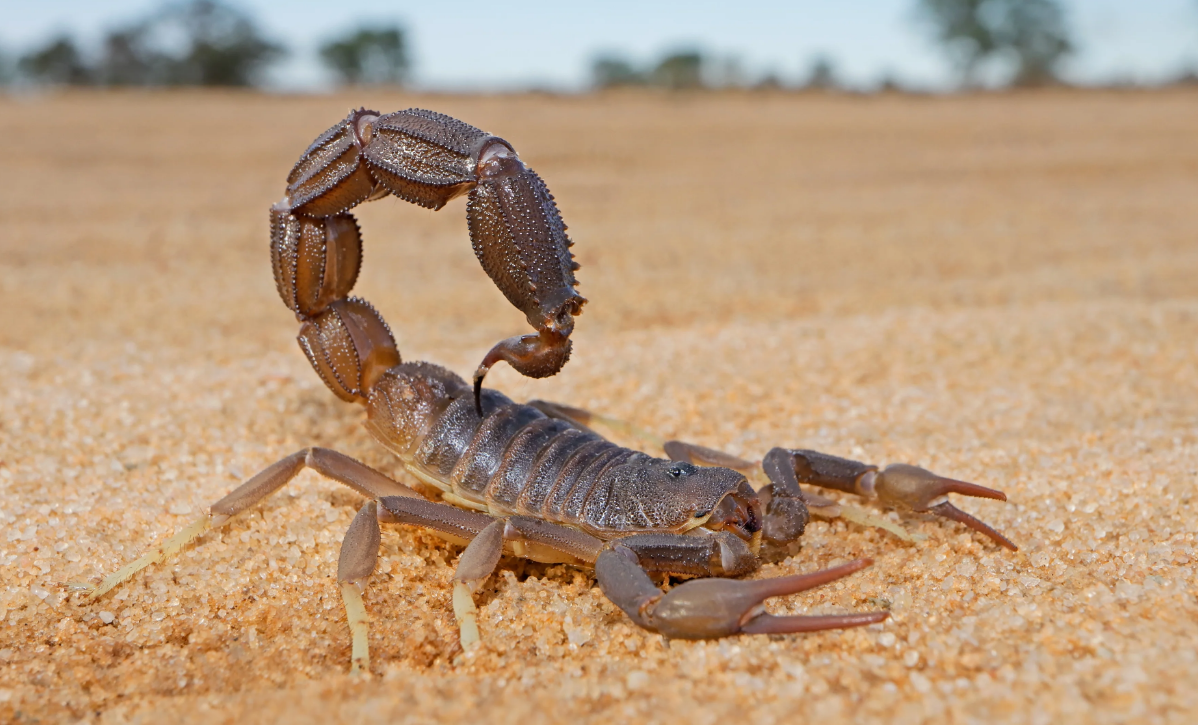
The upward curl of a scorpion’s tail is both a defensive and offensive posture to warn predators or strike prey.
10. Used in Medicine
Scorpion venom is studied for potential medicinal uses, including painkillers and cancer treatment.
Understanding Scorpions: Ancient Predators of the Earth
Scorpion Classification and Evolutionary Background
One of the oldest terrestrial predators still in existence, scorpions are animals that belong to the class Arachnida and have flourished on Earth for 400 million years. With over 1,500 species recognised worldwide, these amazing critters are categorised under the order Scorpiones.
Scorpion Habitats and Global Distribution
Although they may live in meadows, woodlands, and even caverns, scorpions are mostly found in warm, arid areas, particularly in deserts and tropical climes.
Unique Body Structure and Anatomy of Scorpions
The structure of scorpions is very distinct. The cephalothorax and the abdomen are usually the two primary components of their segmented body structure. Their eyes, which may range from two to twelve depending on the species, are one of their many sensory organs located in the cephalothorax.
Scorpion Pincers and Stingers: Tools for Survival
At the front of their bodies are long, strong pincers called pedipalps, which are used for mating rituals and to seize and immobilise prey. One characteristic that sets scorpions apart is their curled tail, which ends with a poisonous stinger. Using a powerful venom injection that paralyses or kills tiny animals, this specialised appendage is employed for defence and to subjugate its prey.
Scorpions as Nocturnal Predators in Ecosystems
Scorpions are hardy animals and have remarkable adaptability to a wide range of conditions. Despite being mostly nocturnal hunters, insects and arachnids are the majority of their food. By keeping their habitats in balance, managing insect populations, and acting as food for bigger species, these ancient predators are essential to the environment. Their capacity to endure harsh environments adds to their ecological value and demonstrates the extraordinary flexibility of life on Earth.
Debunking Scorpion Myths and Misconceptions
Common Misbeliefs About Scorpion Danger to Humans
False beliefs and misconceptions For a very long time, people have been fascinated by and afraid of scorpions, who are sometimes surrounded by superstitions that overstate how dangerous they are to people. The idea that all scorpions are lethal and seriously dangerous to human life is among the most widespread myths. This is not at all the case, however. The majority of scorpion species are safe for humans, while some, like the Arizona bark scorpion, have potentially dangerous venom.
Scorpion Venom and Human Risk
Actually, only around 30 of the 1,500 or so species of scorpions that are known to exist generate venom that is fatal to humans, according to scientific research. A prevalent dislike of these intriguing animals has resulted from this misperception, which has caused unwarranted anxiety.
Scorpions Avoid Human Contact
The idea that scorpions attack people violently is another common misconception. In actuality, scorpions usually only sting in self-defence and are inherently predisposed to avoid human contact. Their preference for hiding in shadowy nooks or behind boulders is essential to their survival in the wild.
Ecological Importance of Scorpions
Because they prey on insects and tiny animals rather than people, they have a crucial ecological function in preserving the equilibrium of the food chain. Moreover, scorpion venom is often believed to be a powerful weapon used just for hunting. In addition to this function, scorpion venom aids in digestion, enabling the animals to immobilise and devour their prey. Their effectiveness as predators is highlighted by this special adaptation.
Educating the Public About Scorpion Facts
By dispelling these illusions, we may develop a better knowledge of scorpions and recognise their vital roles in the natural world while reducing unjustified anxieties about them. Our appreciation of these prehistoric predators’ importance in our environment grows as we learn more about them.
Scorpions in History, Culture, and Belief Systems
Historical Significance of Scorpions in Ancient Civilisations
Throughout history, scorpions have captured people’s attention and influenced many civilisations worldwide. Their deadly sting and intimidating look have often represented strength, mystery, and danger. Scorpions were both feared and respected in ancient Egypt. The dual nature of scorpions as dangers and guardians is shown by the goddess Serqet, who was portrayed as a scorpion or a lady with a scorpion on her head and was thought to shield the dead from evil forces.
Scorpions in Mythology and Astrology
Scorpions are often associated with stories about the heavens in mythology. In Greek mythology, for example, themes of revenge and the balance of power in nature are reflected in the scorpion sent by the goddess Artemis to slay the powerful hunter Orion. The constellation Scorpius, which has continued to be used in astrological interpretations, was further inspired by this tale. As the eighth sign of the zodiac, scorpions are linked to passion, intensity, and metamorphosis in astrology. People born under this sign are often strong and resilient, exhibiting the mysterious traits associated with their namesake.
Folklore and Protective Symbolism of Scorpions
The fact that scorpions appear in folktales further highlights their cultural significance. They represent resilience and protection in cultures. For example, scorpions are often included in protective amulets because they are revered as protectors against bad spirits in several Indigenous civilisations of the Americas. Additionally, people’s perceptions of scorpions may differ greatly; some may see them as a sign of danger, while others may see them as lucky charms, which highlights the complicated connection between humans and these prehistoric predators.
Modern Symbolism of Scorpions in Culture
As symbols and motifs that still retain resonance in modern depictions of strength, safety, and the natural environment, scorpions have generally played a variety of functions in human culture and belief systems.
Scorpion Conservation and Scientific Research
Ecological Role of Scorpions in the Environment
Scorpions are important for preserving ecological balance, yet they are often disregarded in debates about animal protection. Their existence in many habitats is a sign of a healthy ecology, yet these amazing animals have many obstacles to overcome.
Threats to Scorpion Populations
Globally, scorpion populations are seriously threatened by habitat loss brought on by urbanisation and agricultural growth. Furthermore, their native habitats are changing due to climate change, which has an impact on their behaviour and ability to survive. The stability of scorpion populations, which in turn maintains the habitats they live in, depends on conservation initiatives.
Medical Potential of Scorpion Venom
Fascinating new information about these ancient predators has been uncovered by ongoing studies into the physiology and behaviour of scorpions. Their venom is of special interest to scientists because of its intricacy and potency. According to recent research, the venom of scorpions includes substances that may have therapeutic uses, such as the treatment of cancer and pain. The potential advantages of scorpion venom might lead to revolutionary medical breakthroughs as researchers continue to investigate these possibilities, highlighting the need to protect these animals.
Importance of Public Awareness in Conservation
Additionally, increasing public knowledge of scorpions’ ecological importance might boost support for conservation efforts. It is crucial to educate people about their dual roles in the food chain as predators and prey. We promote a deeper awareness of biodiversity and the need to protect all species, regardless of their perceived worth, by cultivating an appreciation for scorpions. Promoting a change in public opinion that views scorpions as complex and essential parts of our ecosystems rather than as simple pests is imperative.

FAQ (Frequently Asked Questions) about Scorpion
Q: Are all scorpions venomous?
Ans: Yes, all scorpions have venom, but only a small number have venom that is dangerous to humans.
Q: Where do scorpions live?
Ans: Scorpions live in diverse habitats including deserts, forests, grasslands, and even caves.
Q: How do scorpions reproduce?
Ans: Scorpions give birth to live young after a gestation period, and the young climb onto the mother’s back.
Q: What do scorpions eat?
Ans: Scorpions primarily eat insects and spiders, but larger species can take down small lizards and mammals.
Q: Can scorpions kill humans?
Ans: Only a few species have venom strong enough to kill a human; most stings cause pain and swelling.
Q: How do scorpions hunt?
Ans: They detect prey through vibrations and ambush or grab it with pincers before stinging.
Q: How long do scorpions live?
Ans: Scorpions live 3–8 years in the wild and up to 10+ years in captivity.
Q: Why do scorpions glow under UV light?
Ans: The exact reason is unclear, but it may help them detect light levels or signal maturity.
Q: Are scorpions social animals?
Ans: No, they are mostly solitary except during mating.
Q: Are scorpions endangered?
Ans: Most are not endangered, but habitat destruction and collection may threaten certain species.
#Scorpion #ArachnidFacts #VenomousCreatures #DesertAnimals #UVGlow #AncientSurvivors #Invertebrates #Predators
Our sources and references about Scorpion
1: Wikipedia – Scorpion
2: National Geographic – Scorpion
3: Britannica – Scorpion
4: Arizona State University – Ask A Biologist