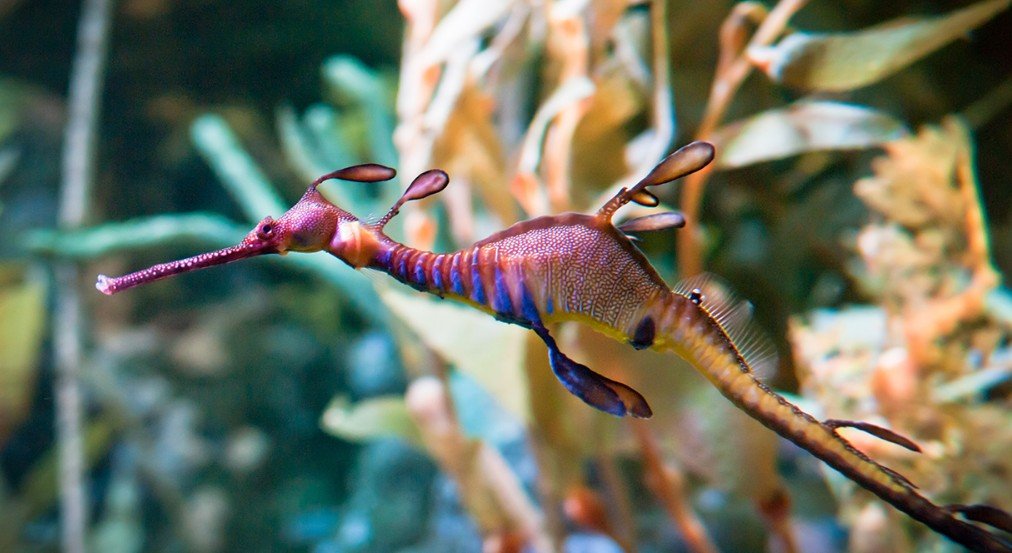
Sea dragons are fascinating, marine creatures related to seahorses. They are known for their extraordinary appearance, with elongated bodies and unique, leaf-like appendages that help them blend into their underwater environment. Found primarily in the coastal waters of southern and western Australia, sea dragons are expert camouflagers, using their color and shape to hide from predators. They are gentle, slow-moving creatures that rely on their camouflage and small size to avoid threats. Despite their beauty and unique adaptations, sea dragons are considered vulnerable due to habitat loss and overfishing.
Quick Top 10 Facts about Sea Dragon
| SCIENTIFIC NAME | Phyllopteryx species, such as Phyllopteryx taeniolatus (Leafy Sea Dragon) and Phyllopteryx dewysea (Weedy Sea Dragon) |
| CLASSIFICATION | KINGDOM: Animalia PHYLUM: Chordata CLASS: Actinopterygii ORDER: Syngnathiformes FAMILY: Syngnathidae |
| SIZE | Length: 30–45 cm (12–18 inches), depending on species |
| SPECIES | Leafy Sea Dragon (Phyllopteryx taeniolatus), Weedy Sea Dragon (Phyllopteryx dewysea) |
| APPEARANCE | Sea dragons have long, slender bodies with intricate, leaf-like appendages that help them blend seamlessly into their kelp and seagrass habitats. Their bodies are usually a combination of green, yellow, and brown, helping them stay camouflaged. |
| LIFE SPAN | Typically 5–7 years, depending on environmental factors |
| HABITAT | Shallow coastal waters, kelp forests, and seagrass meadows along the southern and western coast of Australia |
| DIET | Primarily small crustaceans, plankton, and small fish. They feed using their elongated snouts to suck up their prey. |
| NATURAL PREDATORS | Large fish, seabirds, and other marine predators may prey on young sea dragons, although adults have few natural predators due to their excellent camouflage. |
| COUNTRY | Primarily found in Australia, particularly along the southern and western coasts |
| GESTATION PERIOD | Male sea dragons carry the fertilized eggs in a brood pouch, where they are protected until hatching. The gestation period lasts for about 4–6 weeks. |
| CONSERVATION STATUS | Vulnerable due to habitat loss, illegal collection for the aquarium trade, and environmental changes. They are protected under Australian law. |
Amazing Facts About Sea Dragon
1. Masters of Camouflage
Sea dragons are experts at blending into their surroundings, thanks to their leaf-like appendages and color patterns. These adaptations help them stay hidden from predators and allow them to ambush small prey.
2. Closely Related to Seahorses
Sea dragons are part of the same family as seahorses (Syngnathidae). Like seahorses, male sea dragons carry the fertilized eggs in a brood pouch until they hatch.
3. Slow Movers
Sea dragons are slow swimmers, relying on their camouflage and stillness to avoid predators rather than speed. They use small fins along their bodies to propel themselves gracefully through the water.
4. Male Carry the Eggs
In sea dragon reproduction, it is the male that carries the fertilized eggs in a brood pouch. Once the eggs hatch, the tiny sea dragon larvae are released into the water.
5. Mostly Herbivores
Sea dragons primarily feed on small plankton, crustaceans, and small fish, sucking them into their long, tubular snouts. They are highly specialized in their feeding habits, often grazing on microscopic organisms in seagrass meadows.
6. Vulnerable Species
Due to their limited range and threats like habitat loss, pollution, and illegal collection, sea dragons are considered vulnerable and are protected by conservation laws in Australia.
7. Shy and Solitary Creatures
Sea dragons are generally solitary and shy, spending most of their time hiding in the kelp or seagrass beds. They prefer to stay out of sight to avoid predators and are not typically found in large groups.
8. Unique Reproductive Strategy
Male sea dragons play a key role in reproduction, carrying the eggs in a specialized brood pouch. After about 4–6 weeks, the young hatch and are left to fend for themselves in the open water.
9. Long-Lasting Relationships
Sea dragons typically mate for life. Once a pair forms a bond, they remain together throughout their lives, and their mating rituals are intricate and important to the species’ survival.
10. Rarely Seen in the Wild
Due to their excellent camouflage, sea dragons are rarely seen in the wild. Even when they are spotted, they often appear motionless, making it hard to distinguish them from the plants they mimic.
An Intriguing Marine Animal: The Sea Dragon
One of the most amazing and unearthly animals that live in the waters is the sea dragon. Because of their remarkable appearance, sea dragons are sometimes referred to be magical or mythological animals because of their long, flowing bodies and leaf-like appendages. These aquatic creatures are members of the Syngnathidae family, which also contains pipefish and seahorses. Sea dragons are similar to seahorses, but they are distinguished by their remarkable camouflage skills and distinctive body shape. The southern Australian coast is home to the two main species of sea dragons: the weedy sea dragon and the leafy sea dragon.
Understanding Sea Dragons and Their Marine Significance
The biological traits, habitat, feeding patterns, and significance of sea dragons in marine environments will all be covered in this article. We’ll also look at the conservation issues they encounter and the initiatives being taken to save these amazing animals.
1. Describe a Sea Dragon
What Are Sea Dragons?
The closest relatives of sea dragons, which are marine fishes of the genus Phycodurus, are seahorses. Because of their leafy appendages, which mimic seaweed and aquatic plants, they are renowned for their amazing ability to blend in with their surroundings. They can successfully ambush prey thanks to their camouflage, which also helps shield them from predators.
Unique Appearance and Body Structure of Sea Dragons
Although sea dragons and seahorses have several characteristics in common, sea dragons are distinguished by their long bodies and massive, leafy protuberances that give them a dragon-like look. Additionally, certain species may grow up to 45 cm (18 inches) in length, making them far bigger than seahorses.
Species of Sea Dragons Found in Australia
The leafy sea dragon (Phycodurus eques) and the weedy sea dragon (Phyllopteryx taeniolatus) are the two main species of sea dragons. Both species are indigenous to southern Australian seas, where they may be found in seagrass meadows, kelp forests, and other marine environments.
2. Sea Dragons’ Physical Attributes
Distinctive Physical Features and Adaptations
One of the most striking aspects of sea dragons is their physical characteristics. Over time, they have developed the ability to blend in with their environment, making it difficult for both predators and prey to identify them.
Leafy Sea Dragon (Phycodurus eques)
The most well-known species, the leafy sea dragon, is distinguished by its remarkable leaf-like appendages. It resembles floating kelp or seaweed because of these leafy projections that sprout from its body. The sea dragon can stay concealed from predators and attack smaller fish because to these appendages’ ability to blend in with the underwater flora.
Depending on its location, the leafy sea dragon’s body colour may vary from a transparent yellow to a greenish brown. This enables the organism to mix in with kelp and other underwater vegetation by matching the colours of its surroundings.
Like the nose of a seahorse, the leafy sea dragon’s snout is long and tube-like. They can precisely suck in food, such plankton and tiny crustaceans, because to their morphology.
Weedy Sea Dragon (Phyllopteryx taeniolatus)
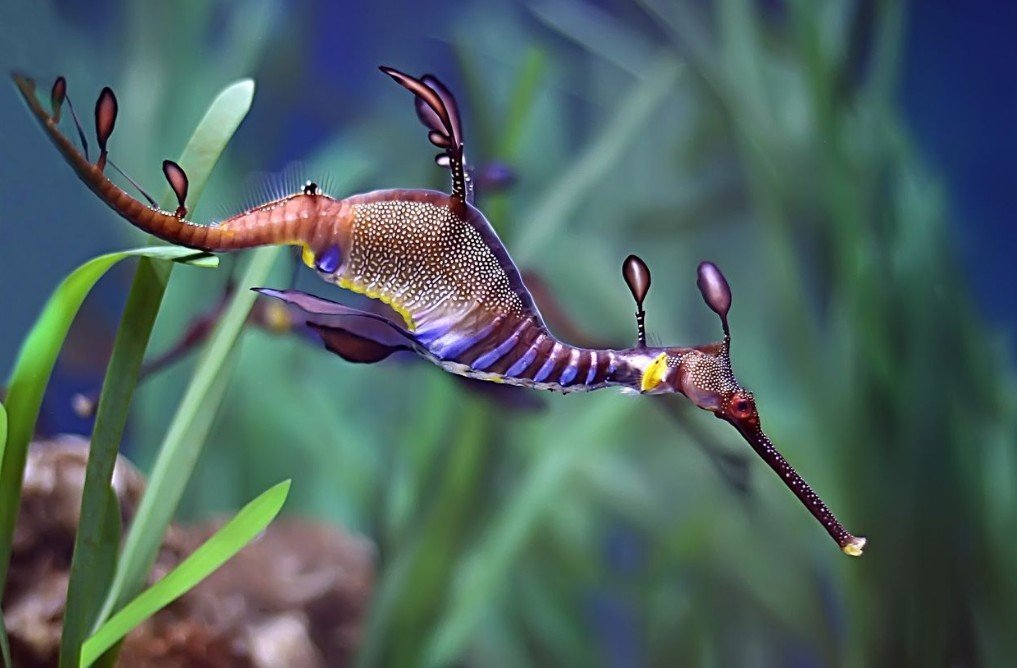
Despite having fewer leaf-like projections throughout its body and fins, the weedy sea dragon is quite similar to the leafy sea dragon. Compared to the leafy sea dragon, they are less noticeable, giving it a more spindly and weedy appearance—thus the term “weedy.”
The weedy sea dragon’s greenish or reddish-brown colouring helps it blend in with the seaweed and kelp forests where it lives.
Similar to the leafy sea dragon, it feeds on tiny invertebrates such as prawns, plankton, and crabs with its long nose.
With bodies that seem almost frail and fins that resemble seaweed fronds, both kinds of sea dragons are renowned for their delicate and exquisite look. Nonetheless, these animals have adapted successfully to their surroundings, and their physical traits enable them to flourish in their particular settings.
3. Sea Dragon Habitat and Distribution
Natural Habitat of Sea Dragons
The southern shores of Australia are home to the majority of sea dragons, which live in shallow marine environments such as seagrass meadows, kelp forests, and coastal seas. Because they provide the required protection and food supplies, these habitats are critical to their existence.
Habitat of Leafy Sea Dragons
- Typically, the leafy sea dragon inhabits Australia’s southern and western coastal areas, especially the Yorke Peninsula, the Neptune Islands, and the Gulf of St. Vincent.
- They are often found in regions with depths ranging from 5 to 50 meters (16 to 164 feet), and they like temperate waters. The abundance of undersea vegetation in these waters, including seagrass and kelp, helps the sea dragons blend in well.
Habitat of Weedy Sea Dragons
- Australia’s southeast and southern shores, particularly those of Victoria, New South Wales, and Tasmania, are home to the weedy sea dragon.
- They live in places like kelp forests, seagrass beds, and shallow reefs that are comparable to those of the leafy sea dragon. The usual depth range for the weedy sea dragon is 1–50 meters (3–164 ft).
As long as the environment is sufficient, both species are non-migratory and often spend their whole lives in the same broad locations.
4. Sea Dragon Feeding Behaviours
Diet and Feeding Patterns of Sea Dragons
As carnivores, sea dragons consume tiny invertebrates, mainly small fish, zooplankton, and crabs. They utilise their tiny, tubular lips atop their long snouts to precisely suck in their meal. Key information on their eating habits is as follows:
Suction Feeding Technique
- Shrimp, copepods, amphipods, and other small aquatic creatures are among the small food that the sea dragon sucks in using its tube-like nose.
Dietary Preferences
- They mostly eat zooplankton and tiny crustaceans. They get the nutrition they require from this diet to live in their environment, which is normally devoid of bigger fish.
Feeding Strategy and Hunting Behaviour
- The sea dragon’s eating habits are greatly influenced by its ability to blend in with its surroundings. It is a very successful predator in its environment because it may ambush anything that swims too near by blending in with the surrounding flora.
5. Sea Dragon Lifespan and Reproduction
Unique Reproduction Process of Sea Dragons
- Similar to seahorses, sea dragons fertilise externally. The male carries the fertilised eggs until they hatch after the female deposits them on his tail.
- The eggs are carried by the male sea dragon in a brood pouch on his tail. The baby sea dragons come out of the pouch after a few weeks, fully grown and prepared to start their lives in the water.
- In a single reproductive cycle, sea dragons may lay up to 250 eggs, and the reproductive season usually takes place during the warmer months.
Average Lifespan in the Wild
In the wild, sea dragons typically live between five and seven years, however this may vary according on the habitat and the likelihood of predators.
6. Threats and Conservation Status of Sea Dragons
Major Threats to Sea Dragon Populations
- Habitat Destruction: The delicate ecosystems that sea dragons depend on for existence are being threatened by pollution, coastal development, and deterioration of marine habitat.
- Climate Change: The delicate balance of sea dragon habitats, especially kelp forests and seagrass meadows, may be upset by rising ocean temperatures and shifting weather patterns.
- Illegal Trade: The aquarium trade sometimes targets sea dragons because of their eye-catching look. Their populations are still under risk from unlawful capture, even if laws in certain places protect them.
Conservation Status and Protective Measures
On the International Union for Conservation of Nature’s (IUCN) Red List, the leafy and weedy sea dragons are both classified as near threatened. To preserve the survival of these amazing animals, conservation activities must continue.
FAQ (Frequently Asked Questions) about Sea Dragon
Q: What is a Sea Dragon?
Ans: A Sea Dragon is a type of marine fish closely related to the seahorse. They are known for their unique appearance, with leaf-like appendages and long bodies that allow them to blend into their environment.
Q: What do Sea Dragons eat?
Ans: Sea Dragons primarily feed on small crustaceans, plankton, and small fish, which they suck up using their elongated snouts.
Q: Where are Sea Dragons found?
Ans: Sea Dragons are found in the coastal waters of southern and western Australia, where they live in kelp forests and seagrass meadows.
Q: How long do Sea Dragons live?
Ans: Sea Dragons typically live 5–7 years in the wild, though their lifespan can vary depending on environmental conditions and threats.
Q: Are Sea Dragons endangered?
Ans: Yes, Sea Dragons are considered vulnerable due to habitat loss, illegal collection, and other environmental pressures. They are protected under Australian conservation laws.
Q: How do Sea Dragons reproduce?
Ans: Male Sea Dragons carry the fertilized eggs in a specialized brood pouch until they hatch. The young are then released into the water as tiny larvae.
Q: How fast do Sea Dragons swim?
Ans: Sea Dragons are slow swimmers, using small fins to maneuver through the water. They rely on their camouflage and stillness to avoid predators rather than speed.
Q: Can Sea Dragons fly?
Ans: No, Sea Dragons cannot fly. However, they can glide through the water gracefully, relying on their leaf-like appendages to move and blend in with their environment.
Q: How big do Sea Dragons get?
Ans: Sea Dragons can grow up to 45 cm (18 inches) long, depending on the species.
Q: How do Sea Dragons defend themselves?
Ans: Sea Dragons defend themselves by blending into their environment. Their excellent camouflage helps them evade predators, and they are rarely seen due to their stillness and ability to mimic their surroundings.
#SeaDragon #LeafySeaDragon #WeedySeaDragon #MarineLife #EndangeredSpecies #OceanCreatures #UnderwaterWonders #MarineConservation
Our sources and references about Sea Dragon
1: Wikipedia – Leafy Sea Dragon
2: National Geographic – Leafy Sea Dragon
3: Britannica – Sea Dragon
4: Australian Museum – Leafy Sea Dragon