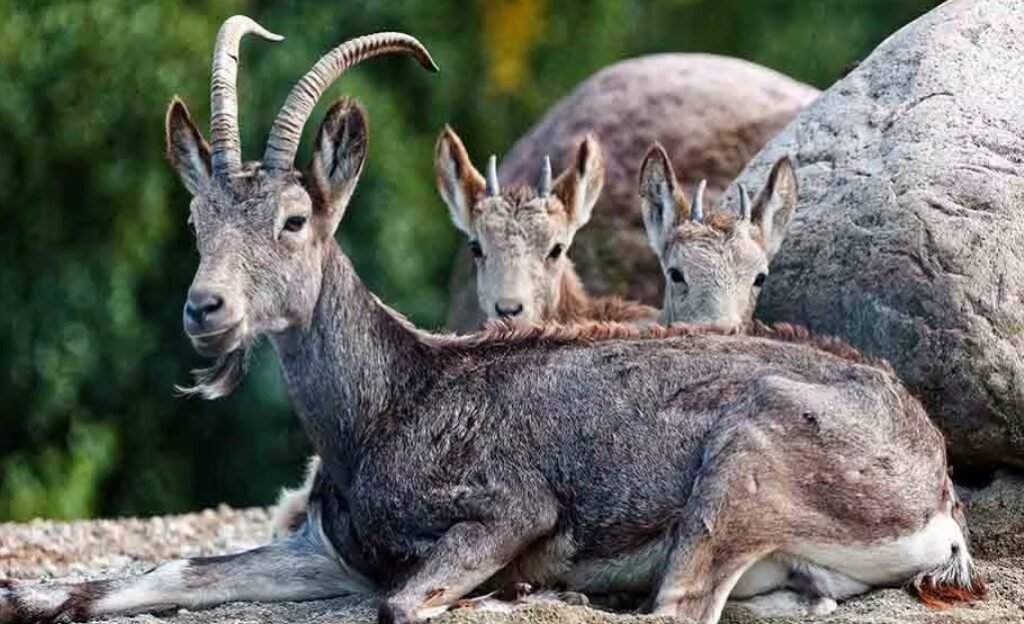
The Siberian Ibex is a hardy wild goat species found in the mountainous regions of Central Asia, including Siberia, Mongolia, and northern China. Known for their impressive curved horns and strong climbing abilities, these animals thrive in rugged terrain and cold environments. Males are much larger than females and use their large horns to compete during mating season. These ibexes are herbivores and rely on steep cliffs and high elevations to avoid predators. Though not endangered, they face threats from hunting and habitat fragmentation.
Quick Top 10 Facts about Siberian Ibex
| SCIENTIFIC NAME | Capra sibirica |
| CLASSIFICATION | KINGDOM: Animalia PHYLUM: Chordata CLASS: Mammalia ORDER: Artiodactyla FAMILY: Bovidae |
| SIZE | Height: 80–115 cm (2.6–3.7 ft) at the shoulder; Weight: 60–130 kg (130–290 lbs) |
| SPECIES | Wild goat species native to Central and South Asia |
| APPEARANCE | Stocky build with thick fur, long beard, and massive curved horns (especially in males) |
| LIFE SPAN | Up to 17 years in the wild |
| HABITAT | Steep, rocky mountains at elevations between 500 and 5,000 meters |
| DIET | Grasses, shrubs, herbs, lichens, and other mountain vegetation |
| NATURAL PREDATORS | Snow leopards, wolves, lynxes, and large birds of prey (for young) |
| COUNTRY | Russia, Mongolia, China, Kazakhstan, Kyrgyzstan, and surrounding Central Asian nations |
| GESTATION PERIOD | Approximately 5.5 to 6 months; typically gives birth to 1–2 kids |
| CONSERVATION STATUS | Least Concern (IUCN Red List) |
Amazing Facts About Siberian Ibex
1. Record-Setting Horns
Males can have horns up to 140 cm (55 inches) long, which are used in dominance fights.
2. Master Climbers
Siberian Ibex are excellent climbers, able to scale steep cliffs and rocky slopes with ease.
3. Thick Winter Coats
They grow a dense coat to survive the harsh winters of Central Asia.
4. Sexually Dimorphic
Males are significantly larger than females and have much longer horns.
5. Solitary or Small Groups
While females and young live in groups, adult males often roam alone except during the rut.
6. Ancient Survivors
Ibexes have existed for thousands of years and are well adapted to alpine life.
7. Vigilant and Wary
They use their elevated habitats to spot predators early and escape with agility.
8. Keystone Prey Species
They are a key prey item for endangered predators like the snow leopard.
9. Culturally Significant
In many Central Asian cultures, the ibex is a symbol of strength and mountain spirit.
10. Adaptable Feeders
Though primarily grazers, they can browse woody plants when grass is scarce.
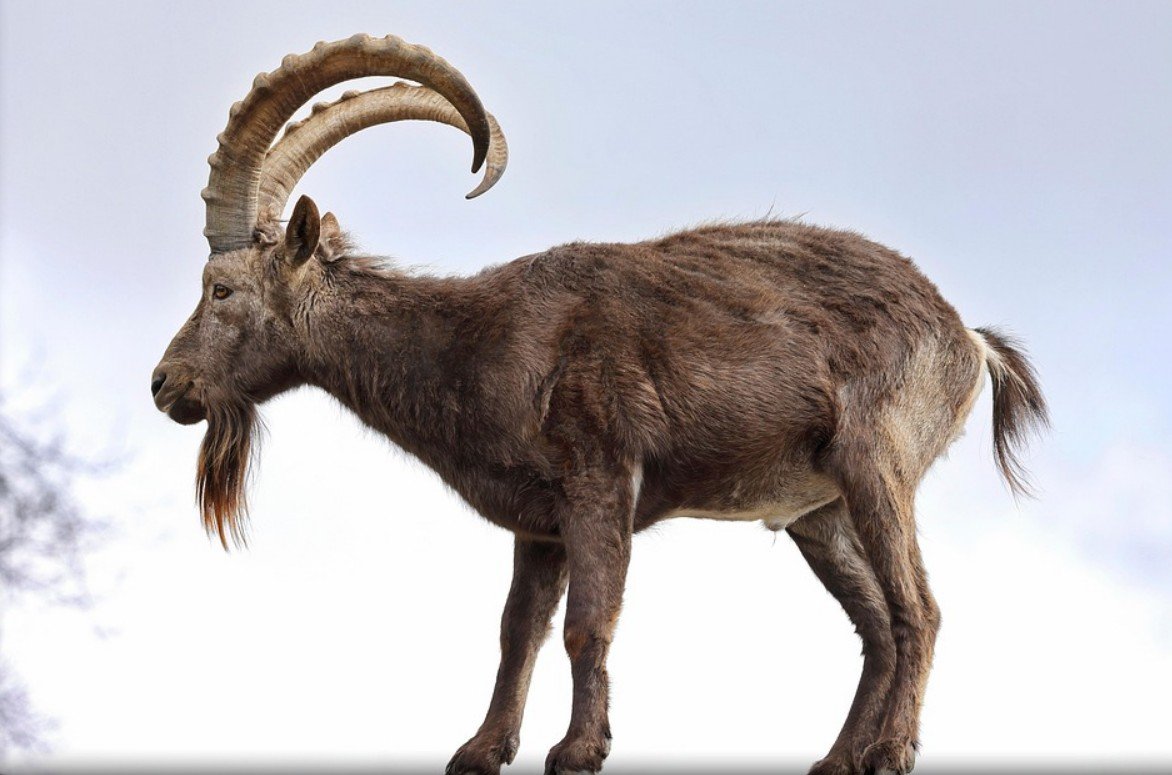
Siberian Ibex: The Hardy Mountain Animal
The wild goat species known as the Siberian ibex (Capra sibirica) is indigenous to the untamed, mountainous areas of Central Asia, including Siberia, Mongolia, and portions of China. The Siberian ibex, a remarkable mountain inhabitant that flourishes in arid conditions and rugged, rocky environments, is renowned for its power and agility. Below we will explore the Siberian ibex’s physical traits, habitat, behaviour, nutrition, and conservation status, illuminating how this amazing animal has adapted to live in one of the harshest settings on Earth.
Physical Attributes of the Siberian Ibex: Horns & Body Features
The remarkable physical characteristics of the Siberian ibex, especially its long, curving horns, make it an imposing animal that is easy to identify. Both men and females have these horns, however males have them much more prominently. The anatomy of the Siberian ibex is well adapted to its rough, alpine environment.
Siberian Ibex Weight & Body Structure and Size
Siberian ibexes range in size from medium to giant goats. Adult males may weigh anywhere from 200 to 300 pounds (90 to 136 kilogrammes), while females normally weigh between 120 and 200 pounds (55 to 90 kilogrammes). Males are considerably bigger than females. They have powerful limbs, a short, thick coat that insulates them from the cold, and stocky bodies.
Siberian Ibex Curved Horns and Mating Battles
The Siberian ibex is primarily distinguished by its huge, curving horns. These horns, which curve outward in a sickle form, may grow up to 3 feet (1 metre) in length in males. Males often engage in headbutting fights to demonstrate their power during mating season, using the horns mostly for defence and domination. Ibex females still have a similar curving form, but their horns are thinner and more slender.
Siberian Ibex Fur & Winter Protection
The thick, dark brown to greyish-brown coat of the Siberian ibex aids in its ability to blend in with the rocky, hilly terrain. Their fur, which is short in the summer, becomes longer and heavier in the winter, offering superior protection from chilly conditions.
Siberian Ibex Vision & Senses
The Siberian ibex’s almond-shaped, keen eyes provide it exceptional vision and aid in seeing potential threats from a distance. Despite having tiny ears, they are well-suited to detecting high-pitched noises, such the cries of other ibex in the herd or predators.
Siberian Ibex Natural Habitat & Range
Native to Central Asia’s mountainous highlands, Siberian ibexes live in among of the world’s roughest and most challenging environments. These goats are usually found in high-altitude regions, alpine meadows, and steep, rocky cliffs. They flourish in areas that have severe winters with sharp drops in temperature.
Siberian Ibex Location in Siberia, Mongolia & China
Siberia, Mongolia, and portions of northwest China are home to the Siberian ibex. They may be found from the Himalayas to the Altai and Tian Shan mountains. Although they have been seen at even greater heights, they are most often found in regions with elevations between 3,000 and 4,500 meters (9,800 and 14,800 feet).
Siberian Ibex Survival in Harsh Mountains
The Siberian ibex is well suited to the frigid and mountainous areas in which it lives. Their powerful, pointed hooves let them to easily traverse the steep, rocky terrain, and their thick fur protects them from the severe winters. Even in the most difficult environments, they are able to evade predators because to their excellent vision and mobility.
Siberian Ibex Diet & Foraging Habits
As herbivores, Siberian ibexes mostly eat the grasses, bushes, and other plants that grow in their mountainous environment. As they use the many plants that grow in their surroundings, their eating patterns change with the seasons.
Siberian Ibex Winter Food & Survival
The Siberian ibex depends on woody plants, lichen, and bark to survive during the colder months when food is in short supply. Additionally, they have been seen to graze on evergreen vegetation that are still available in spite of the snow.
Siberian Ibex Summer Grazing & Plants
Siberian ibexes consume a range of grasses, herbs, and leafy plants during the summer months when there is a greater abundance of flora. In the high-altitude meadows, they also graze on various plants, including alpine flowers.
Siberian Ibex Feeding & Salt Licking Habits
During the winter, these ibexes are expert foragers, utilising their powerful, pointed hooves to sift through snow or debris in search of food. In order to add vital minerals to their diet, they are also known to participate in salt licking, which involves licking rocks and dirt that are rich in minerals.
Siberian Ibex Herd Behavior & Reproduction
Social creatures, Siberian ibexes usually reside in herds. Adult females and their offspring make up the basis of the herd, which is often organised according to a matriarchal system. With the exception of mating season, when they will join the females for reproduction, males are often more solitary.
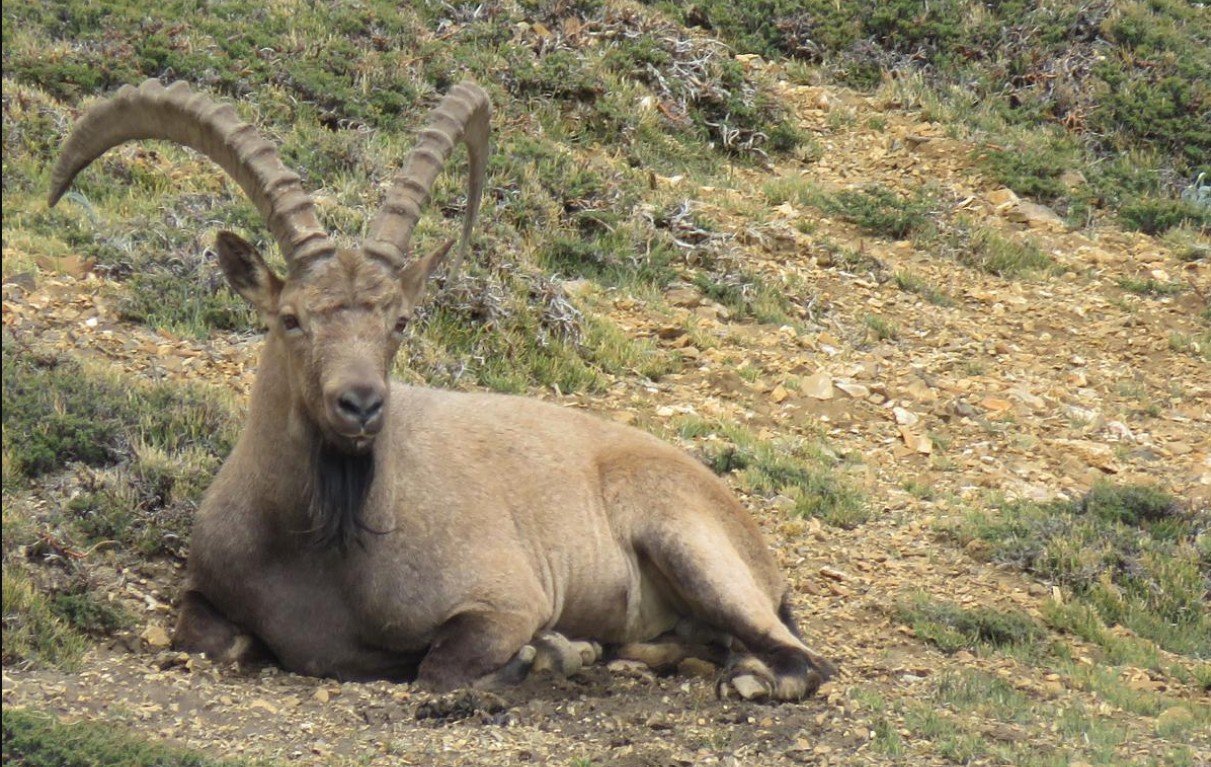
Siberian Ibex Group Size & Matriarchal Structure
In the wild, Siberian ibex herds may be as small as a few individuals or as large as more than fifty, especially in regions with an abundance of food. Strong social ties exist throughout the herd, and females often assist one another in caring for their young. After reaching adulthood, male ibexes often depart from the herd and lead more solitary lives, only engaging with females during the breeding season.
Siberian Ibex Breeding & Offspring
In order to demonstrate dominance and get the right to mate with females, males participate in dramatic headbutting competitions throughout the mating season. These conflicts are usually won by the bigger, more powerful males, who then get to mate with the females. Females often give birth to one or two children in the spring after mating. The juvenile ibexes can walk soon after birth and have their eyes open at birth.
Siberian Ibex Vocalisations & Body Language
Siberian ibexes use body language and vocalisations like grunts and bleats to communicate with one another. In order to attract females and maintain supremacy over other males, males will also make low, guttural noises during the breeding season.
Threats and the Status of Conservation | Siberian Ibex Conservation & IUCN Status
According to the International Union for Conservation of Nature’s (IUCN) Red List, the Siberian ibex is now classified as Least Concern. Although there aren’t any urgent concerns to the species’ survival right now, it is nonetheless susceptible to several hazards.
Siberian Ibex Habitat Destruction & Human Impact
The ibex’s native habitat has been encroached upon by humans, resulting in environmental deterioration. The growth of agricultural practices, mining, and logging have all led to the loss and fragmentation of habitat.
Siberian Ibex Hunting & Illegal Trade
In areas where they are considered a source of revenue for local populations, Siberian ibexes are also targeted for their meat, horns, and skins. In certain places, illegal hunting is a serious danger to their numbers.
Siberian Ibex Threats from Global Warming
Concern about climate change is also developing because it may have an impact on the ibex’s high-altitude habitat by altering plant patterns and food sources due to rising temperatures and shifting weather patterns.
Siberian Ibex Reserves & Conservation Programs
To maintain the habitat of the Siberian ibex, a number of wildlife reserves and protected areas have been created in spite of these challenges. Local groups and towns are also fighting poaching and spreading the word about how important it is to preserve these amazing creatures.
FAQ (Frequently Asked Questions) about Siberian Ibex
Q: What is a Siberian Ibex?
Ans: The Siberian Ibex is a wild goat species known for its large horns and mountain-dwelling lifestyle in Central Asia.
Q: Where do Siberian Ibex live?
Ans: They inhabit the mountainous regions of Siberia, Mongolia, northern China, and parts of Central Asia.
Q: How big is a Siberian Ibex?
Ans: Males can reach up to 130 kg (290 lbs) and have horns over 1 meter long.
Q: Are Siberian Ibex endangered?
Ans: No, they are currently listed as Least Concern by the IUCN, but local populations may be at risk from overhunting.
Q: What do Siberian Ibex eat?
Ans: They primarily eat grasses, herbs, and shrubs found in alpine and rocky environments.
Q: What are their main predators?
Ans: Snow leopards, wolves, and lynxes are their main natural predators.
Q: Can Siberian Ibex be domesticated?
Ans: No, they are wild animals not suited for domestication.
Q: How long do they live?
Ans: They typically live up to 17 years in the wild.
Q: What are their horns used for?
Ans: Male ibexes use their horns to fight for dominance and mates during the rutting season.
#SiberianIbex #MountainGoats #WildlifeAsia #CapraSibirica #SnowLeopardPrey #RockyHabitat #IbexFacts #WildGoats
Our sources and references about Siberian Ibex
1: Wikipedia – Siberian Ibex
2: IUCN Red List – Capra sibirica
3: Wildlife Asia News – Siberian Ibex
4: Animal Diversity Web – Capra sibirica