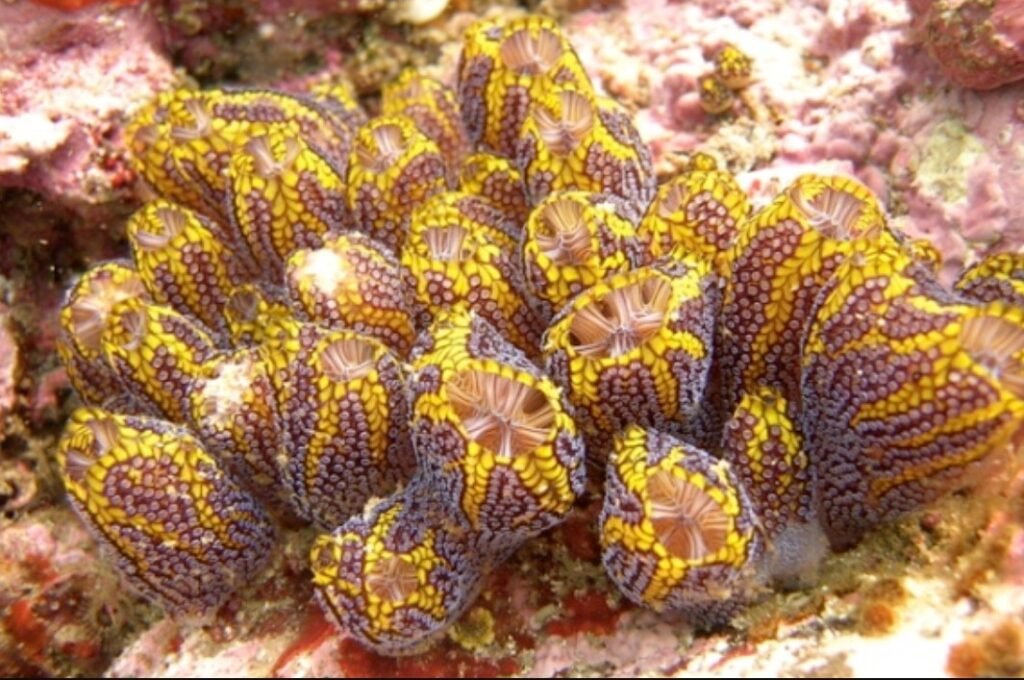
Sea squirts, also known as tunicates, are marine invertebrates that belong to the phylum Chordata, the same phylum that includes vertebrates. They are named for their ability to squirt water when disturbed. Sea squirts are found in a wide range of marine environments, from shallow coastal waters to deeper ocean floors. They are filter feeders, using their siphons to draw in water and filter out plankton and other small organisms. Though they might appear simple, sea squirts play an important role in marine ecosystems by contributing to water filtration and serving as food for various predators.
Quick Top 10 Facts about Sea Squirt
| SCIENTIFIC NAME | Ascidiacea (for the class that includes all sea squirts) |
| CLASSIFICATION | KINGDOM: Animalia PHYLUM: Chordata CLASS: Ascidiacea ORDER: Various orders within Ascidiacea |
| SIZE | Typically 1–30 cm (0.4–12 inches), depending on the species |
| SPECIES | There are over 3,000 known species of sea squirts |
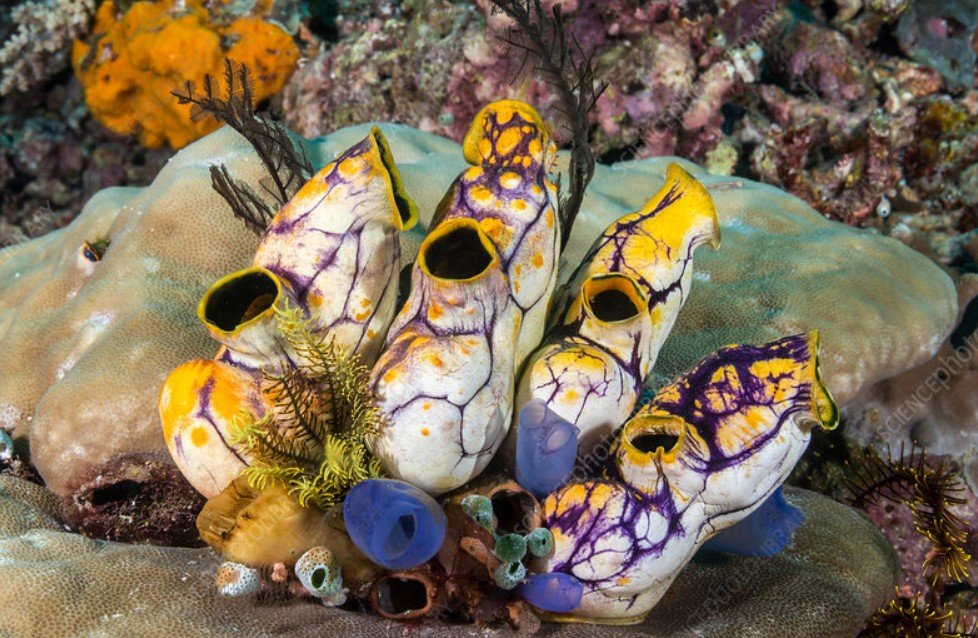
| APPEARANCE | Sea squirts have a sac-like, tubular body with two siphons—one for drawing in water and one for expelling it. They often have a leathery or gelatinous texture and can come in various colors, including red, orange, and purple. |
| LIFE SPAN | Typically 1–2 years, but some species can live longer |
| HABITAT | Sea squirts are found in marine environments, from shallow coastal waters to deep ocean floors. They attach themselves to rocks, piers, or other submerged surfaces. |
| DIET | Sea squirts are filter feeders, drawing in water through one siphon and filtering out plankton and small particles to eat. |
| NATURAL PREDATORS | Various marine animals, such as fish, sea stars, and crabs, prey on sea squirts. |
| COUNTRY | Sea squirts can be found in oceans around the world, from temperate to tropical regions. |
| GESTATION PERIOD | Sea squirts reproduce sexually, with internal fertilization, and typically have a larval stage before settling onto surfaces. |
| CONSERVATION STATUS | Most species of sea squirts are not currently endangered, but habitat destruction and pollution could threaten their populations. |
Amazing Facts About Sea Squirt
1. Filter Feeders
Sea squirts are filter feeders that draw in large amounts of water through one siphon, extract plankton and small particles, and expel the filtered water through another siphon.
2. Water-Squirting Defense
The name “sea squirt” comes from their ability to squirt water from their siphons when disturbed. This mechanism is a form of defense against predators.
3. Simplified Anatomy
Although sea squirts are classified under the phylum Chordata, they have a very simple anatomy. Adult sea squirts do not retain a spinal cord, a characteristic that most other animals in Chordata have.
4. Key Role in Ecosystems
Sea squirts contribute to marine ecosystems by filtering water, helping to maintain water clarity and contributing to the overall health of the marine environment.
5. Larval Stage
The larvae of sea squirts are motile, meaning they can swim, and they possess a notochord (a early spine) for a short period of time. As they mature, they settle and lose their notochord, becoming sessile adults.
6. Diverse Species
There are over 3,000 species of sea squirts, and they come in a wide variety of shapes, sizes, and colors, from soft and translucent to brightly colored and hard-shelled.
7. Habitat Attachment
Sea squirts typically attach themselves to solid surfaces such as rocks, piers, and ship hulls. They can form dense colonies, especially in areas with strong currents.
8. Can Regenerate
Some species of sea squirts have remarkable regenerative abilities. They can regenerate lost body parts and even reproduce asexually by budding.
9. Used in Research
Sea squirts have been used in scientific research due to their relatively simple biology, which provides insight into the evolution of chordates and the development of vertebrates.
10. Short Lifespan
Although some species of sea squirts can live for several years, many have relatively short lifespans, typically ranging from one to two years.
The Amazing Marine Invertebrate, the Sea Squirt
The intriguing aquatic invertebrates known as sea squirts, or tunicates, are members of the phylum Chordata’s subphylum Tunicata. Sea squirts are not related to squids or other cephalopods, despite their name. Biologists and academics who study the evolution of chordates are particularly interested in these fascinating animals since they are among the simplest members of the phylum Chordata, which also contains vertebrates like humans. Around the globe, sea squirts may be found in waters ranging from shallow coastal locations to deeper, less well-known oceanic regions. They are crucial to marine ecosystems and provide essential information on the complexity of life on Earth as well as evolution and development.
Introduction about Sea Squirts
Marine invertebrates known as sea squirts are members of the phylum Chordata’s subphylum Tunicata. When these organisms are agitated, they release water from their bodies, which is why they are called “sea squirts.” The outer layer of these animals, known as the tunic, is leathery or gelatinous and is made of proteins and materials that resemble cellulose. The sea squirt’s name originates from the water squirt that emerges from its tunic when it is disturbed.
The appearance of sea squirts varies greatly; some species have more intricate, branching structures, while others resemble tiny, transparent sacks. Usually immobile, these creatures often cling to rocks, piers, shells, and other submerged objects.
Sea squirts are crucial to marine ecosystems despite their unassuming look. They are a vital source of food for many marine species and filter-feed on plankton and other small particles. Furthermore, because of their distinct biological traits, sea squirts provide light on the evolution of vertebrates.
Physical Attributes of Sea Squirts
There are many different sizes, forms, and colours of sea squirts. Despite their seemingly straightforward look, they have developed to be well suited to their aquatic habitats.
Body Composition
- Tunic: The sea squirt’s outer layer, known as the tunic, is composed of a material that resembles cellulose. This tunic acts as an outer layer of protection and may be either rigid or flexible, depending on the species. Because the tunic is often transparent, the animal’s internal organs may be seen. The tunics of some species are more colourful and might be crimson, orange, or purple in hue.
- Body: The body of a sea squirt is soft and shaped like a bag. Usually fashioned like a sac, they have two holes: one for letting water in and one for letting it out. Water enters via the oral syphon and leaves through the atrial syphon.
- Dimensions: The size of sea squirts may vary from a few millimetres to several centimetres. Some species may reach the size of a human fist or more, while others are tiny and unnoticeable. The two apertures that are necessary for the feeding procedure are syphons. Plankton and other organic particles are drawn in by the mouth syphon, and the filtered water is released by the atrial syphon. By enabling water to flow through their bodies and draw out food, this syphoning motion aids sea squirts in filter-feeding.
Internal Structure
- Pharynx and Gill Slits: Water passes via the huge pharynx (throat) found within sea squirts’ bodies. The sea squirt can filter food thanks to a number of gill openings along its throat that let water through. The evolutionary connection between sea squirts and vertebrates is also largely attributed to these gill slits.
- Endostyle: This specialised gland in the throat helps filter food particles from entering water by secreting mucus. Their filter-feeding mechanism depends on this property.
Distribution and Habitat
The world’s waters are home to sea squirts. Although several species may survive at deeper depths, they are more prevalent in shallow coastal waters. They can flourish in a range of habitats, from stony seabeds and muddy ocean bottoms to coral reefs and kelp forests, thanks to their capacity to adapt to different marine settings.
Preferences for Habitat
- Shallow Coastal Waters: A wide variety of sea squirt species are found in protected, shallow waters where they cling to hard surfaces like rocks and shells. Their main food source is plankton, which is abundant in these habitats.
- Sea squirts may also be found on coral reefs and kelp forests, where they filter-feed on the abundant planktonic species that are a part of these biodiverse environments.
- Deep-Sea Habitats: Certain sea squirt species have evolved to survive at very deep depths. In order to survive the harsh circumstances of low light, high pressure, and frigid temperatures, these deep-sea animals often develop highly specialised tunics and feeding strategies.
Worldwide Distribution
From the balmy seas of the Caribbean and Pacific to the icy Arctic and Antarctic, sea squirts may be found in temperate and tropical oceans around the planet. Although they may colonise artificially like shipwrecks and pier pilings, they are usually found in protected maritime habitats.
Diet and Feeding
As filter feeders, sea squirts get their food by removing tiny particles from the water. Organic debris, algae, and plankton make up the majority of their food.
Feeding System
- Filter Feeding: To remove minute planktonic creatures from the water, sea squirts utilise their throat and gill slits. The endostyle produces a sticky mucus that traps the particles when water passes through their bodies. Following their transportation, the food particles are broken down and absorbed by the sea squirt’s digestive tract.
- Water Circulation: The oral syphon allows water to enter the sea squirt, starting the process. It passes via the gill openings in the throat, where the mucus traps plankton and other tiny creatures. The atrial syphon is then where the purified water leaves the body.
Nutrition
- Plankton: Phytoplankton, zooplankton, and other minute creatures floating in the water are the main food source for sea squirts. These microscopic organisms provide sea squirts the nourishment they need to live and develop.
- Organic Detritus: Dead plant stuff, algae, and other organic debris floating in the water may be eaten by sea squirts.
Life Cycle and Reproduction
Depending on the species, sea squirts may reproduce asexually or sexually, which makes it an interesting process.
Asexual Procreation
Certain sea squirt species reproduce asexually via budding, in which a new individual develops from the parent’s body and finally separates to become a separate entity. As a result, sea squirts may swiftly establish colonies or clusters in a given region.
Sexual Reproduction
Additionally, a lot of sea squirts reproduce sexually. Since each of them has both male and female reproductive organs, they are intersex. Sea squirts discharge their eggs and sperm into the ocean during the mating season, when external fertilisation takes place.
The eggs become larvae after fertilisation, which have a notochord—a rod-like structure that distinguishes chordates—and a tail. The free-swimming larvae vary greatly from the adult sea squirts in appearance.
The larvae undergo a remarkable transformation after landing on a suitable surface, shedding their notochord and tail to become the immobile adult sea squirt.
Ecological Function and Significance
Because of their filter-feeding habits, sea squirts are vital to marine ecosystems. They contribute to the control of microscopic creature populations and the preservation of the nutritional balance in the water column by eating plankton and organic materials. Additionally, their feeding activity supports the general well-being of marine food webs.
Source of Food
Many aquatic creatures, such as fish, crabs, and sea stars, eat sea squirts. Larger predators that prey on filter-feeding creatures often eat them.
Creation of Habitat
In order to create thick colonies that may serve as refuge for other marine species, sea squirts often cling to rocks, piers, and other submerged objects. Small fish, crabs, and invertebrates use these colonies as homes, forming intricate ecosystems that sustain a wide variety of species.
A Bioindicator
Sea squirts are often used as bioindicators of environmental health due to their sensitivity to temperature and water quality variations. Population fluctuations may indicate changes in the environment, including pollution, rising water temperatures, or other disruptions.
Threats and Conservation
Despite not being listed as endangered, sea squirts are threatened by pollution, ocean acidification, and climate change, among other environmental factors. Their numbers and distribution may be adversely affected by changes in the salinity, temperature, and nutrient levels of the water.
Sea squirt populations may also be harmed by the introduction of invasive species and habitat damage brought on by human activities like overfishing and coastal development. The survival of sea squirts and the many other species that depend on them for food and shelter depends on the preservation of healthy marine environments.
FAQ (Frequently Asked Questions) about Sea Squirt
Q: What is a sea squirt?
Ans: A sea squirt is a marine invertebrate animal that belongs to the class Ascidiacea. It has a sac-like body and is a filter feeder.
Q: Where do sea squirts live?
Ans: Sea squirts are found in marine environments worldwide, from shallow coastal waters to deep ocean floors. They typically attach to solid surfaces such as rocks or piers.
Q: What do sea squirts eat?
Ans: Sea squirts are filter feeders, drawing in water and filtering out plankton and other small particles to eat.
Q: Are sea squirts dangerous to humans?
Ans: No, sea squirts are harmless to humans. They do not pose any direct threat but can squirt water when disturbed.
Q: How do sea squirts reproduce?
Ans: Sea squirts reproduce sexually, with internal fertilization. Their larvae are free-swimming, and once they find a suitable surface, they settle and mature into adults.
Q: Can sea squirts regenerate?
Ans: Yes, some species of sea squirts can regenerate lost body parts and reproduce asexually by budding.
Q: Do sea squirts play a role in the marine ecosystem?
Ans: Yes, sea squirts play an important role in marine ecosystems by filtering large amounts of water, which helps to maintain water quality and supports other marine organisms.
Q: Are sea squirts endangered?
Ans: Most species of sea squirts are not endangered, but habitat destruction and pollution could pose a threat to their populations.
Q: How long do sea squirts live?
Ans: The lifespan of sea squirts varies by species, but most live for 1–2 years.
Q: Can sea squirts be kept as pets?
Ans: Sea squirts are marine organisms that are not suitable as pets. They are typically found in the wild and play a crucial role in marine ecosystems.
#SeaSquirt #MarineInvertebrates #Tunicates #FilterFeeders #MarineEcosystem #MarineLife #WaterFilter #SeaSquirts #WildlifeConservation
Our sources and references about Sea Squirt
1: Wikipedia – Sea Squirt
2: Britannica – Sea Squirt
3: National Geographic – Sea Squirt
4: MarineBio – Sea Squirt