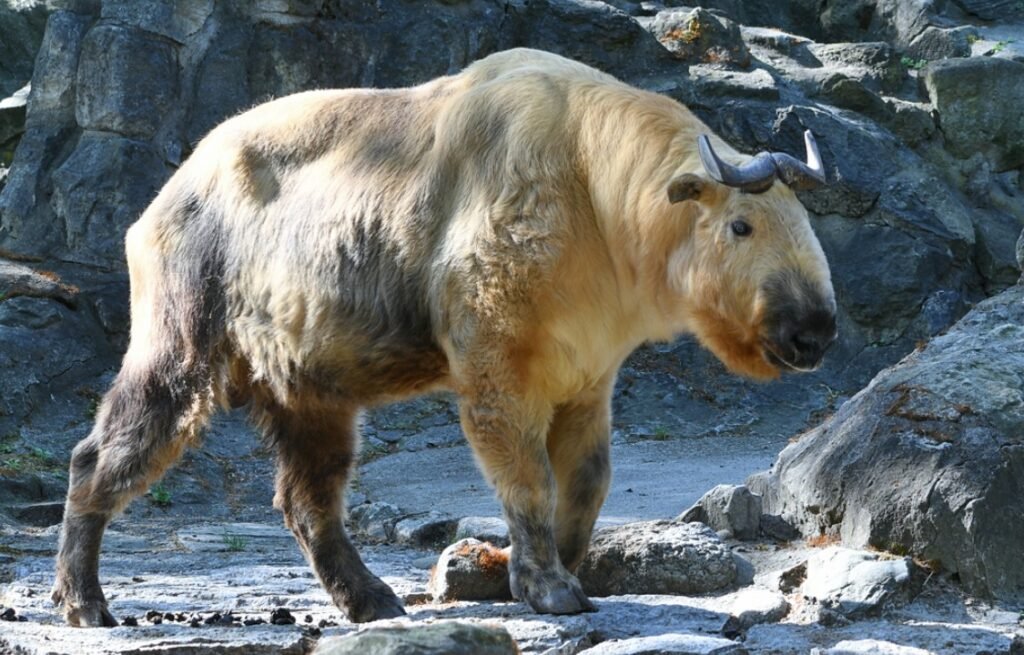
The Sichuan Takin, also known as the Tibetan Takin, is a large, muscular ungulate native to the eastern Himalayas and mountainous regions of China, including Sichuan, Gansu, and the Tibetan Plateau. This unique species is closely related to goats and sheep but has the bulky appearance of a moose. Well-adapted to cold, rugged environments, the Sichuan Takin sports a thick, oily coat that insulates it against chilly mountain weather. It is the national animal of Bhutan and is considered a vulnerable species due to habitat loss and hunting pressures. These herd-dwelling animals are herbivores and are known for their agility in rocky terrains.
Sichuan Takin Scientific Classification
| SCIENTIFIC NAME | Budorcas taxicolor tibetana |
| CLASSIFICATION | KINGDOM: Animalia PHYLUM: Chordata CLASS: Mammalia ORDER: Artiodactyla FAMILY: Bovidae |
| SIZE | Height: 3.5–4.5 ft at shoulder (105–140 cm) Weight: 300–450 kg (660–990 lbs) |
| SPECIES | One of four subspecies of Takin: others include the Mishmi, Bhutan, and Golden Takin |
| APPEARANCE | Stocky body with a large head, prominent Roman nose, and strong limbs. Coat is thick, oily, and yellowish to dark brown, depending on the season. |
| LIFE SPAN | 12–15 years in the wild; up to 20 years in captivity |
| HABITAT | Mountainous forests, bamboo thickets, and alpine meadows at elevations of 1,000–4,500 meters |
| DIET | Herbivorous; feeds on grasses, leaves, bamboo shoots, and twigs |
| NATURAL PREDATORS | Tigers, leopards, and bears; juveniles are also vulnerable to eagles and wild dogs |
| COUNTRY | Native to China (Sichuan, Gansu, and Tibet regions), with close relatives in Bhutan and India |
| GESTATION PERIOD | Approximately 7–8 months; usually gives birth to a single calf |
| CONSERVATION STATUS | Vulnerable (IUCN); population threatened by habitat destruction and poaching |
Sichuan Takin Facts
1. National Animal of Bhutan
Though native to China, the Takin is revered in Bhutan and is its official national animal, symbolizing strength and uniqueness.
2. Adapted to Harsh Climates
The Sichuan Takin’s dense, oily fur provides excellent insulation against the cold, wet mountain environment.
3. Related to Goats and Sheep
Despite its moose-like appearance, the Takin is more closely related to goats and sheep in the Bovidae family.
4. Agile Climbers
Takin are remarkably agile for their size, able to traverse rocky slopes and steep forest trails with ease.
5. Group Living
They are social animals that live in small to medium-sized herds, especially during the summer months.
6. Summer and Winter Migrations
Takin migrate between elevations depending on the season—higher in summer and lower in winter.
7. Distinctive Scent
They have a strong, musky body odor caused by secretions from their skin, which may help with waterproofing and communication.
8. Protected by Law
The Takin is protected under Chinese wildlife conservation laws and listed in CITES Appendix II.
9. Ancient Lineage
Fossil evidence suggests the Takin has existed for millions of years and is a relic of ancient megafauna.
10. Featured in Chinese Folklore
In local legends, the Takin is considered a mystical beast, often associated with mountain spirits and gods.
History and Locations
The Sichuan Takin, also known as the Tibetan Takin, is a unique and uncommon wild goat-antelope species. Native to the mountainous regions of central and eastern Asia, particularly the Himalayas and Sichuan Province in China, the Sichuan Takin is one of the largest and most recognisable members of the Bovidae family. This species plays a critical role in the local ecology, zoology, and culture. Its distinctive appearance, ability to thrive in high-altitude conditions, and conservation status make it a fascinating creature.
The Sichuan Takin is one of two subspecies of the Tibetan Takin, scientifically known as Budorcas tibetana. The other subspecies, the Northeastern Takin (Budorcas taxicolor), is found in the eastern Himalayas. The Sichuan Takin is the larger of the two and is primarily found in western China’s Sichuan province. It roams alpine meadows and hilly forests at elevations of up to 4,500 meters (14,764 feet). The scientific name, Budorcas tibetana, reflects its Tibetan origins and mountain-dwelling lifestyle.
As an herbivore, the Sichuan Takin is equipped with robust physical traits that allow it to thrive in harsh, high-altitude conditions. It belongs to the Caprinae subfamily, which includes sheep, goats, and other mountain-dwelling species. Despite its similarities with other mountain animals, the Takin’s unique features make it one of Asia’s most intriguing and lesser-known creatures.
Physical Characteristics
The Sichuan Takin possesses several distinctive physical features that allow it to survive in its challenging alpine environment. These traits are a testament to its adaptation to life at high altitudes.
Size and Weight
The Sichuan Takin is a large, robust animal. It stands about 1.2 to 1.3 meters (3.9 to 4.3 feet) at the shoulder and weighs between 250 and 350 kilograms (550 to 770 pounds). Adult males tend to be larger and heavier, often reaching the upper end of this weight range. Their size enables them to navigate the rugged mountain terrain with ease.
Coat and Colouration
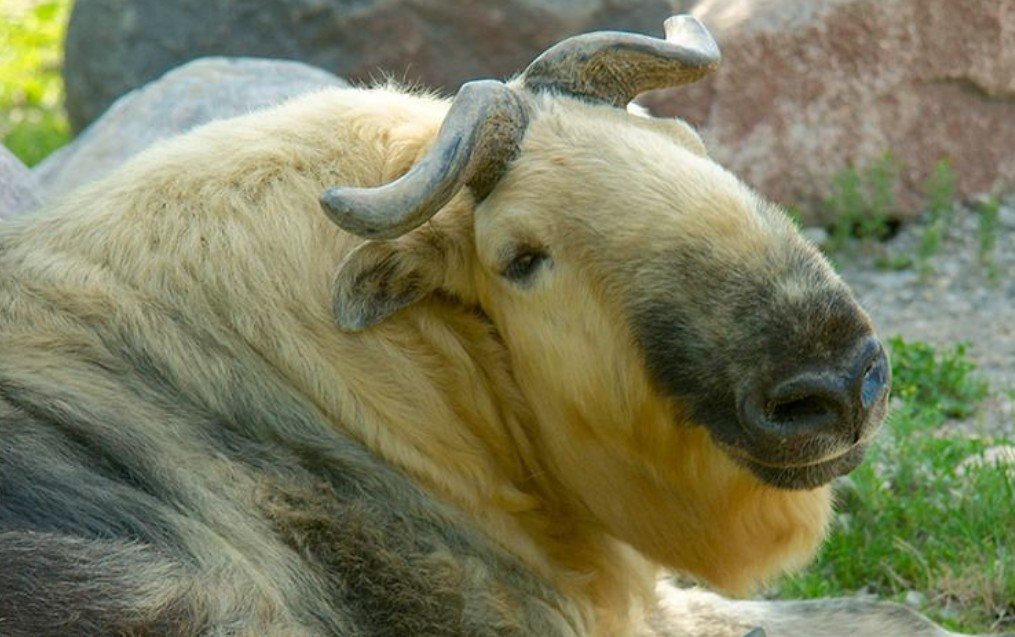
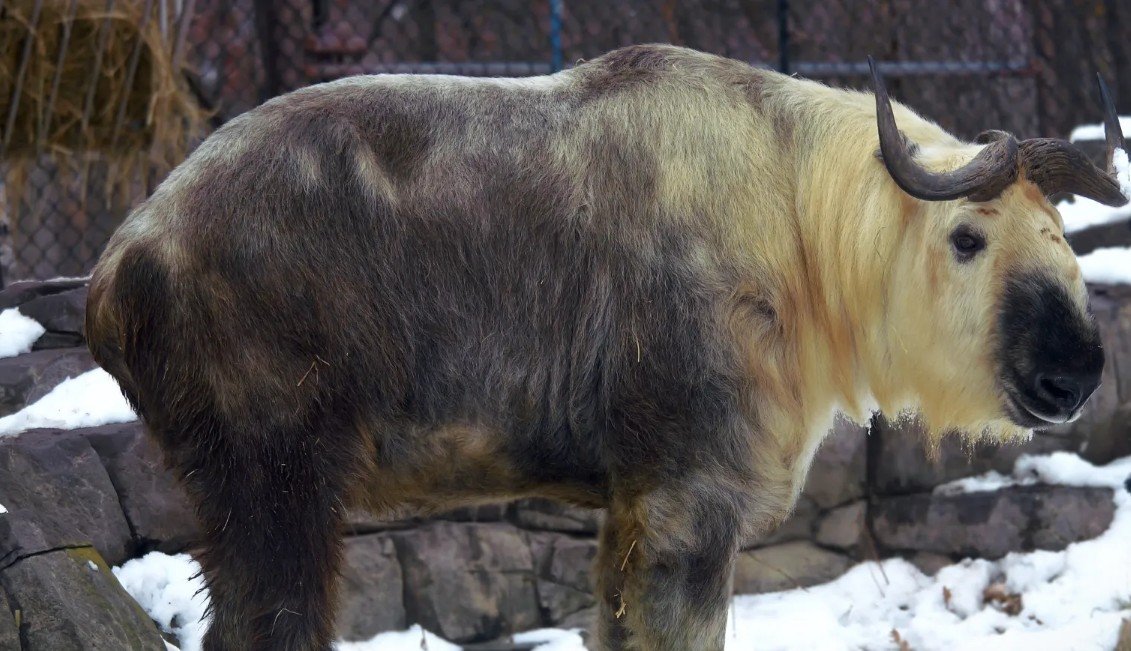
The most striking feature of the Sichuan Takin is its thick, dense coat. This coat provides much-needed protection against the extreme cold temperatures of its high-altitude habitat. The coat can vary in colour, ranging from golden yellow to dark brown, with some individuals exhibiting reddish-brown hues, particularly during the warmer months. The fur around the shoulders and neck is longer and coarser, giving the Takin its distinctive, powerful appearance.
Head and Horns
The Takin’s head is large and strong, with curved horns that can grow up to 25 centimeters (10 inches) in length. Both males and females have horns, but the males’ are typically more prominent. The Takin’s face is unique, with wide-set eyes and a bulbous snout, which help enhance its sense of smell—an essential tool for detecting predators and foraging in the rugged mountain terrain.
Hooves and Legs
The Takin’s stout legs and wide hooves are perfectly designed for climbing steep and rocky slopes. Its hooves provide excellent stability and traction, enabling it to move smoothly over rough terrain despite its large size and weight.
Nature and Behaviour
Despite its large size, the Sichuan Takin is surprisingly agile. It can easily navigate steep cliffs and challenging landscapes, thanks to its powerful legs and well-adapted hooves. These animals tend to live in herds of up to 30 individuals, with a calm and docile nature. The herd structure is typically matriarchal, with females leading the group to food and water sources.
Activity Patterns: Nocturnal and Crepuscular
The Sichuan Takin is primarily nocturnal or crepuscular, meaning it is most active during dawn and dusk. To avoid the midday heat, the Takin spends a significant portion of the day resting in high-altitude meadows or dense woodlands. It is often seen grazing or moving in groups during the cooler hours, using its sharp sense of smell to locate food sources across vast, open areas.
Diet and Feeding Habits
As an herbivore, the Sichuan Takin feeds on a wide range of plants found in its mountainous habitat. It typically consumes grasses, shrubs, leaves, and herbs, with a preference for low shrubs and tender grasses.
Teeth Structure
The Takin’s strong jaws and molars are ideal for browsing. These specialized teeth allow it to crush and break down tough plant material, while its lips help pull plants into its mouth for easier consumption. This diet ensures that the Takin receives the nutrients it needs to thrive in its challenging environment.
Winter Feeding and Adaptations
During the winter months, when vegetation is scarce, the Sichuan Takin may resort to eating bark and branches in addition to its usual plant diet. Many of these plants are rich in fats, which help the Takin build up energy reserves to survive the harsh winter temperatures.
Distribution and Habitat
The Sichuan Takin is native to the high-altitude regions of the Tibetan Plateau and the Himalayas, particularly within Sichuan Province in central China. The rugged terrain of steep cliffs, dense forests, and alpine meadows provides the ideal habitat for this elusive species.
Preferred Altitudes and Environment
The Sichuan Takin prefers to live at altitudes between 2,500 and 4,500 meters (8,200 to 14,700 feet) above sea level. These high-altitude areas offer a refuge from natural predators like snow leopards and wolves. The thin air and harsh conditions also help protect the Takin, enabling it to thrive in this extreme environment.
Conservation Status
The Sichuan Takin is currently classified as a vulnerable species by the International Union for Conservation of Nature (IUCN). The primary threats to its population include poaching, habitat destruction, and the expansion of human settlements. Illegal hunting and deforestation have significantly impacted the Takin’s population in recent decades.
Conservation Efforts
To safeguard the Sichuan Takin, the Chinese government has established protected areas and national parks in Sichuan and other regions. Conservation organizations are also working to restore the Takin population in the wild while addressing illegal hunting and preserving its natural habitat. Strict laws governing hunting and trade are essential in preserving this unique species.
Captive Breeding and Restoration Programs
Breeding programs in captivity have been successful in stabilising the Sichuan Takin population. These programs, run by zoos and nature reserves, aim to ensure the species’ long-term survival by supporting its reintroduction into the wild. Such efforts play a critical role in the conservation of this extraordinary species.
Sichuan Takin FAQ (Frequently Asked Questions)
Q: What is a Sichuan Takin?
Ans: The Sichuan Takin is a large, goat-antelope-like mammal found in mountainous regions of China and known for its thick fur and stocky build.
Q: Where can you find Sichuan Takin?
Ans: They are found in the eastern Himalayas, particularly in Sichuan, Gansu, and the Tibetan Plateau.
Q: Is the Sichuan Takin endangered?
Ans: It is considered Vulnerable due to habitat loss and hunting, though protected areas exist for its conservation.
Q: What do Sichuan Takin eat?
Ans: Their diet consists of grasses, leaves, twigs, and bamboo shoots.
Q: How do they survive cold climates?
Ans: They have a thick, oily coat that insulates them and helps repel moisture in cold, mountainous environments.
Q: Are they dangerous to humans?
Ans: They are generally shy and not dangerous unless threatened or cornered.
Q: How long do they live?
Ans: In the wild, they can live up to 15 years; longer in captivity.
Q: How many subspecies of Takin are there?
Ans: Four: Sichuan (Tibetan), Golden, Mishmi, and Bhutan Takin.
Q: What makes them unique?
Ans: Their unusual appearance, strong musk scent, and goat-antelope traits make them a rare and fascinating species.
#SichuanTakin #TibetanTakin #MountainWildlife #EndangeredSpecies #GoatAntelope #HimalayanAnimals #WildlifeFacts #TakinConservation #Nature
Sichuan Takin information sources and references
1: Wikipedia – Takin
2: IUCN Red List – Budorcas taxicolor
3: Animal Diversity Web – Sichuan Takin
4: World Atlas – Sichuan Takin