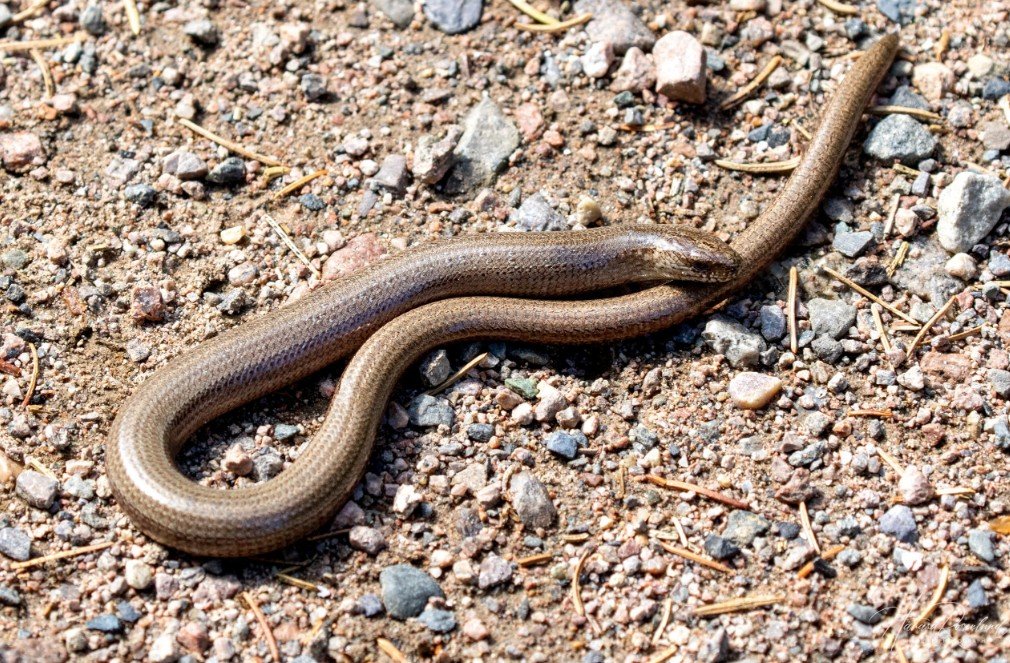
The slow worm, also known as the blind worm or legless lizard, is a species of reptile found in Europe and parts of Asia. Despite its snake-like appearance, the slow worm is actually a type of lizard, belonging to the family Anguidae. It is characterized by its long, cylindrical body, smooth scales, and relatively slow movements. Slow worms are often found in grassy habitats, woodland edges, and under rocks or logs. They are not venomous and primarily feed on small invertebrates, such as slugs and insects. Although they may look intimidating, they are harmless to humans and play a key role in controlling pest populations.
Slow Worm Scientific Classification
| SCIENTIFIC NAME | Anguis fragilis |
| CLASSIFICATION | KINGDOM: Animalia PHYLUM: Chordata CLASS: Reptilia ORDER: Squamata FAMILY: Anguidae |
| SIZE | Typically 30–50 cm (12–20 inches) in length |
| SPECIES | Several subspecies exist, including the European slow worm (Anguis fragilis fragilis) and the eastern slow worm (Anguis fragilis colchica) |
| APPEARANCE | Slow worms have a cylindrical body with smooth, shiny scales. Their color can vary from brown or gray to golden or olive, with a distinctive dark stripe running along the back in some individuals. |
| LIFE SPAN | Typically 20–40 years, depending on environmental factors and predation |
| HABITAT | Slow worms are commonly found in temperate areas, including grasslands, heathlands, woodland edges, and gardens. They prefer moist, sheltered environments with plenty of cover. |
| DIET | Slow worms primarily feed on small invertebrates, including slugs, worms, insects, and spiders. |
| NATURAL PREDATORS | Slow worms are preyed upon by birds of prey, larger mammals, and some reptiles. |
| COUNTRY | Slow worms are found across much of Europe, including the UK, and parts of western Asia. |
| GESTATION PERIOD | Slow worms lay eggs in the summer, and the eggs incubate for several weeks before hatching, typically in late summer or early autumn. |
| CONSERVATION STATUS | While not endangered, slow worms are classified as a species of “least concern” due to habitat destruction and predation pressures in some areas. |
Amazing Facts About Slow Worm
1. Not a Snake
Despite their snake-like appearance, slow worms are actually legless lizards, closely related to other lizards like skinks and sand lizards.
2. Slow but Steady
Slow worms are named for their relatively slow and cautious movements, especially when compared to more agile reptiles like snakes.
3. Shiny, Smooth Scales
The smooth, shiny scales of the slow worm help them glide effortlessly through grass and soil, making them well-suited for life under rocks and logs.
4. A Master of Camouflage
Slow worms are excellent at blending into their surroundings, often looking like sticks or pieces of bark, which helps them avoid predators.
5. No Need for Speed
Unlike other reptiles that rely on speed to escape danger, slow worms often rely on their ability to remain still and hidden to avoid detection.
6. Live Long Lives
Slow worms can live for many years, with some individuals reaching an impressive lifespan of 40 years, depending on their environment and level of predation.
7. Hermaphroditic Reproduction
Slow worms are intersex, meaning each individual possesses both male and female reproductive organs, allowing them to mate with any other slow worm of the another sex.
8. A Prized Pest Controller
By feeding on pests like slugs and worms, slow worms help keep the population of undesirable invertebrates in check, benefiting both gardens and natural ecosystems.
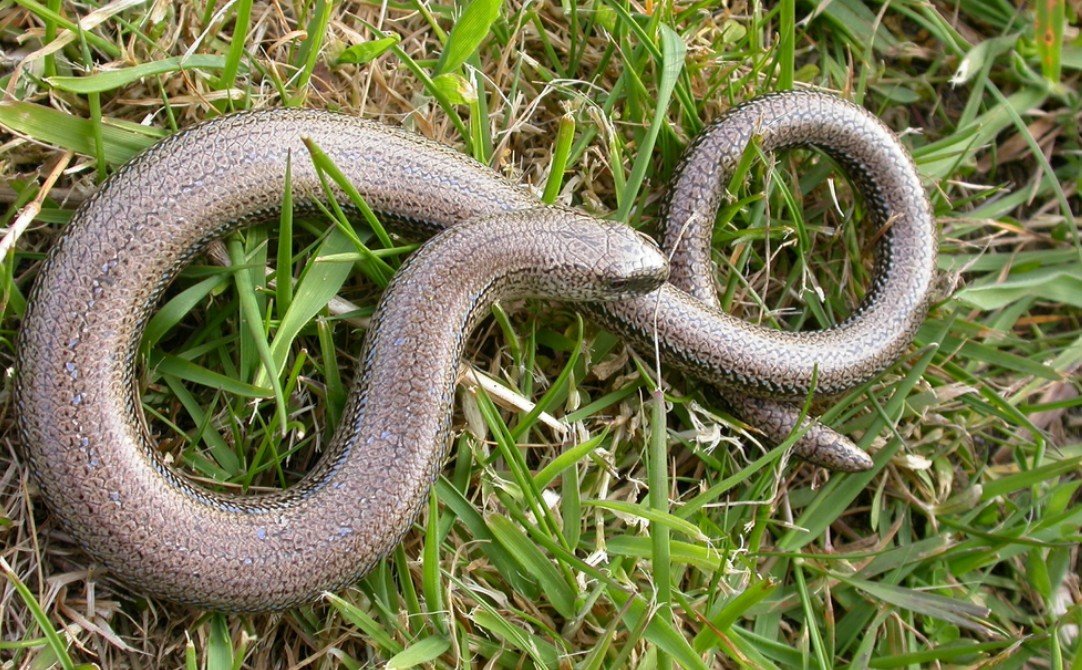
9. Predators of the Night
Slow worms are nocturnal, emerging at night to hunt for their prey. They use their sense of smell to track down slugs and other small invertebrates.
10. A Rare but Beautiful Sight
Due to their elusive nature, slow worms are not often seen, making encounters with them a rare and special occasion for wildlife enthusiasts.
Slow Worm
Species Introduction
Anguis fragilis, commonly known as the slow worm, is a fascinating legless lizard that often confuses people due to its strong resemblance to snakes. Despite its snake-like appearance, the slow worm belongs to the Anguidae family and is a true lizard with distinct anatomical features. This harmless, non-venomous reptile is widely distributed across Europe and parts of Asia, where it thrives in gardens, grasslands, and woodland edges. Known for its calm behaviour and secretive lifestyle, the slow worm plays an important ecological role as a natural pest controller.
Species Overview
Basic Identity
The slow worm is a legless lizard rather than a snake, sharing several traits with reptiles while retaining unique characteristics. Its elongated, cylindrical body, smooth scales, and forked tongue often lead to misidentification as a small snake species. However, key differences such as visible eyelids and external ear openings clearly distinguish slow worms from true snakes, making identification easier upon close inspection.
Size Appearance
Slow worms typically display brown, grey, or bronze colouring with a smooth, glossy surface that provides excellent camouflage in leaf litter and soil. Adults usually measure between 18 and 24 inches (45–60 cm) in length, making them smaller than most native snakes found in similar habitats.
Physical Traits
Body Structure
Despite their appearance, slow worms are reptiles adapted for a ground-dwelling lifestyle. Several physical features define this unique legless lizard species.
Dimensions and Form: The long, flexible body of the slow worm allows it to move efficiently through dense vegetation, soil, and narrow spaces. Most adults reach lengths of 18–24 inches, though some individuals may grow slightly longer under favourable conditions.
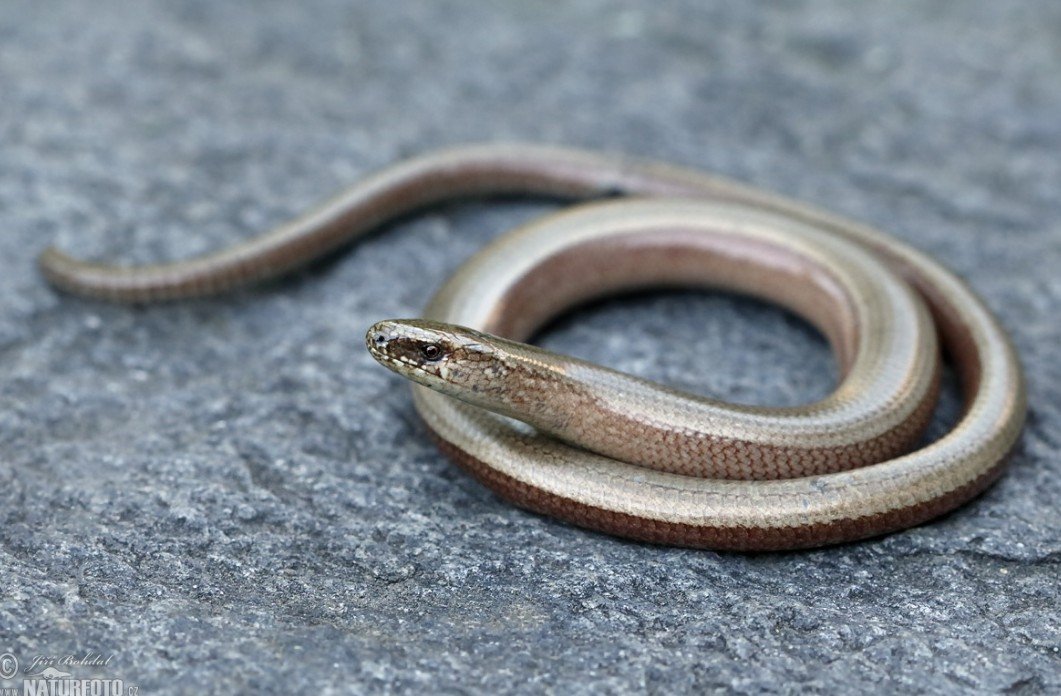
Unlike snakes, slow worms possess movable eyelids and visible ear openings, which appear as small holes near the head. These traits are reliable identifiers when distinguishing slow worms from similar-looking reptiles.
Their smooth, metallic-looking skin reduces friction during movement and enables them to navigate underground spaces with ease.
Colour Patterns
Slow worms exhibit a range of natural colour variations, including shades of brown, grey, olive, and copper. Many individuals display uniform colouring, while others may show subtle lighter or darker markings that enhance camouflage.
A dark stripe running along the spine from head to tail is a common feature in some slow worm populations and is especially noticeable in juveniles.
Sensory Features
The slow worm has a small, slightly pointed head that blends smoothly into its body, giving it a streamlined shape for burrowing.
One of the most important identifying traits is the presence of eyelids, which are visible when the animal blinks—something snakes cannot do.
Although their eyesight is limited, slow worms rely heavily on scent detection and vibration sensing to locate prey and avoid predators in low-visibility environments.
Diet Behaviour
Feeding Habits
The slow worm is a slow-moving, ground-dwelling reptile that spends much of its time hidden beneath stones, logs, compost heaps, and leaf litter. While generally sluggish, it can move with surprising speed when threatened.
Natural Diet: Slow worms are insectivorous reptiles that help control garden pests by feeding on a variety of invertebrates.
- Insects: Beetles, ants, caterpillars, and larvae are common food sources.
- Worms: Earthworms are frequently consumed, especially in damp soil.
- Other Invertebrates: Slugs and snails form an important part of their diet.
Using chemical cues and ground vibrations, slow worms locate prey efficiently and swallow it whole without chewing.
Daily Activity
Slow worms use serpentine movement to travel, forming gentle S-shaped curves to propel themselves forward.
They are primarily crepuscular reptiles, becoming most active during early morning and late evening when temperatures are moderate. During hotter periods, they remain concealed to prevent dehydration and overheating.
Habitat Range
Preferred Habitats
Slow worms are widely distributed across temperate regions of Europe and Asia, where suitable shelter and moisture are available.
- Woodlands: Leaf litter and decaying organic matter provide cover and food.
- Grasslands: Dense vegetation protects them from predators.
- Gardens: Compost piles, rocks, and logs create ideal microhabitats.
Geographic Range
The slow worm occurs throughout much of Europe, including the United Kingdom, Scandinavia, and Eastern Europe, extending into parts of western Asia. Habitat fragmentation caused by modern land use has led to isolated populations in some regions.
Life Cycle
Reproduction
Slow worms reproduce through ovoviviparity, meaning females give birth to live young rather than laying eggs.
Mating usually takes place in spring and early summer. After fertilisation, the female carries the developing young internally until birth, offering protection during early development.
Lifespan
Slow worms are among the longest-living small reptiles, with lifespans reaching up to 20 years in the wild. In protected environments or captivity, some individuals may live even longer when threats are minimal.
Conservation Status
Population Threats
Although not currently endangered, slow worms face increasing pressure from habitat loss, urban expansion, intensive agriculture, and changes in land management practices.
The use of pesticides and fertilisers also reduces insect and earthworm populations, indirectly affecting slow worm survival.
Protection Efforts
Slow worms are legally protected in many countries under wildlife conservation laws. Conservation strategies focus on habitat preservation, wildlife-friendly gardening, and sustainable land use to support stable slow worm populations and long-term biodiversity.
FAQ (Frequently Asked Questions) about Slow Worm
Q: What is a slow worm?
Ans: A slow worm is a legless lizard species that resembles a snake, though it is actually a member of the lizard family. It is found throughout Europe and parts of Asia.
Q: How do slow worms move?
Ans: Slow worms move slowly and steadily, using their smooth, cylindrical bodies to glide over the ground. Their slow movements help them remain hidden from predators.
Q: Are slow worms dangerous?
Ans: No, slow worms are harmless to humans. They are not venomous and do not pose any significant threat.
Q: What do slow worms eat?
Ans: Slow worms primarily feed on small invertebrates, such as slugs, worms, insects, and spiders.
Q: Where can I find slow worms?
Ans: Slow worms are found in a variety of habitats, including grasslands, woodland edges, heathlands, and gardens, throughout Europe and parts of Asia.
Q: How do slow worms reproduce?
Ans: Slow worms are intersex and can mate with any other slow worm. They lay eggs in the summer, and the eggs hatch later in the year.
Q: Do slow worms have predators?
Ans: Yes, slow worms are preyed upon by birds of prey, larger mammals, and some reptiles.
Q: How long do slow worms live?
Ans: Slow worms can live up to 40 years, though their average lifespan is typically between 20 and 40 years, depending on their environment.
Q: Are slow worms endangered?
Ans: Slow worms are not endangered but face threats from habitat destruction and predation pressures in some areas.
Q: How can I protect slow worms in my garden?
Ans: To protect slow worms, provide a natural, sheltered environment with plenty of cover like logs, rocks, and leaf piles. Avoid using pesticides that can harm these helpful reptiles.
#SlowWorm #LeglessLizard #Reptiles #Wildlife #PestControl #Nature #Anguidae #EuropeanReptiles #InvertebrateEaters
Our sources and references about Slow Worm
1: Wikipedia – Slow Worm
2: Britannica – Slow Worm
3: Wildlife Trusts – Slow Worm
4: Reptiles Magazine – Slow Worms