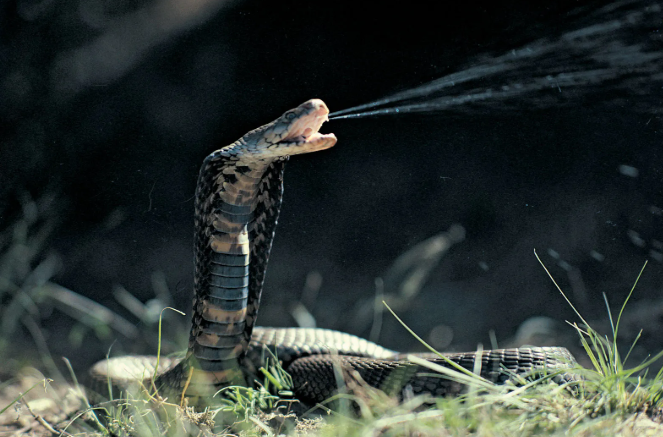
The Zebra Spitting Cobra is a venomous snake found in parts of Africa. It is known for its ability to spit venom from a distance, which it uses to deter predators and threats. The zebra-like pattern on its body makes it easily identifiable. The venom of this cobra can cause blindness and is dangerous to humans.
Quick Top 10 Facts about Spitting Cobra
| SCIENTIFIC NAME | Naja spp. |
| CLASSIFICATION | KINGDOM: Animalia PHYLUM: Chordata CLASS: Reptilia ORDER: Squamata FAMILY: Elapidae GENUS: Naja |
| SIZE | Length: 1.2–2.4 meters (4–8 feet) |
| HABITAT | Savannas, forests, grasslands, and arid regions across Africa and parts of Asia |
| DIET | Carnivorous; feeds on small mammals, birds, amphibians, and other reptiles |
| SPECIES | Spitting Cobra, known for its ability to eject venom as a defense mechanism |
| COUNTRY | Found in countries across sub-Saharan Africa, parts of North Africa, and Southeast Asia |
| GESTATION PERIOD | Oviparous; lays eggs that hatch in 60–80 days |
| LIFE SPAN | 10–20 years in the wild |
| CONSERVATION STATUS | Least Concern; although some species are threatened by habitat destruction and human conflict |
Amazing Facts About Spitting Cobras
1. Venom spitting defense
Spitting Cobras can accurately eject venom from their fangs toward the eyes of a threat, potentially causing temporary or permanent blindness.
2. Not all cobras spit
Only certain cobra species in the genus Naja possess the ability to spit venom, a unique adaptation among snakes.
3. Precise aim
These snakes can aim their venom up to 2–3 meters away with impressive accuracy, targeting the eyes of predators.
4. Venom is mostly for defense
While they use venom to subdue prey, spitting cobras mainly use their spitting behavior as a defense mechanism against larger animals and humans.
5. Hood flare warning
Like other cobras, they flare their hoods as a warning before spitting or striking.
6. Diverse habitats
Spitting Cobras inhabit a wide range of environments, from tropical rainforests to arid savannas.
7. Nocturnal hunters
Most spitting cobras are active at night, preying on small mammals, amphibians, and other reptiles.
8. Fast and agile
These snakes are surprisingly quick and agile, especially when threatened or hunting.
9. Eggs over live birth
Spitting Cobras are oviparous, meaning they lay eggs rather than giving birth to live young.
10. Important ecological role
As predators, they help control populations of rodents and other pests, maintaining balance in their ecosystems.
Spitting Cobra: An Exceptional Predator of the Serpent World
The spitting cobra stands out as one of the most fascinating and dangerous snakes in the world. It is known for its unique ability to project venom with remarkable accuracy. The spitting cobra belongs to the genus *Naja*, which includes several cobra species. Primarily, this snake is found in Africa and Asia. In this article, we will explore the spitting cobra’s physical characteristics, venomous capabilities, behaviour, habitat, and its role in the ecosystem. We will also discuss the threats this remarkable snake faces.
Physical Characteristics of the Spitting Cobra
Spitting cobras share many characteristics typical of other cobras. However, they also possess distinctive features that make them stand out. These snakes are venomous and can spit venom to defend themselves or capture prey. Let’s take a deeper look at their physical features:
Size and Shape
Spitting cobras are medium to large-sized snakes. They typically range in length from 1 to 2 metres (3 to 6 feet), depending on the species. Some species, such as the black-necked spitting cobra (*Naja nigricollis*), can grow even larger, reaching lengths of up to 2.5 metres (8 feet). They have long, slender bodies, which allow them to move quickly and efficiently across the ground. Their shape also helps them hide in burrows or crevices, making them elusive predators.
Hood and Venomous Teeth
Like all cobras, spitting cobras possess a hood, which forms when the snake flares the ribs behind its head. This display serves as a defence mechanism to make the cobra appear larger and more intimidating. When the hood expands, the snake’s neck becomes more pronounced, and it can present a striking display, especially when threatened. Spitting cobras have venomous fangs that are specially adapted for spitting venom. These fangs are long and hollow, enabling the snake to inject venom into prey. In defence situations, these fangs allow the snake to spray venom with remarkable precision.
Colouration
Spitting cobras display a wide range of colouration, from the dark, blackish tones of the black-necked spitting cobra to the yellowish or brownish hues of species like the Sierra Leone spitting cobra (*Naja melanoleuca*). Some species have distinctive markings, such as banding or spotting, which help them blend into their environment.
The Unique Venom of the Spitting Cobra
One of the most fascinating aspects of the spitting cobra is its ability to spit venom. While many snakes inject venom through biting, the spitting cobra has evolved a unique method of defence and hunting.
Venom Composition
The venom of a spitting cobra is neurotoxic. It affects the nervous system of its prey, causing paralysis and death. The venom is fast-acting, and once injected, it can shut down the nervous system of small mammals, birds, and other animals. This renders them immobile and helpless. The venom contains a mixture of proteins and enzymes that attack the nervous tissue and disrupt normal biological processes. However, the primary purpose of the venom is not for hunting but to deter predators or potential threats.
Spitting Mechanism
Unlike other cobras that rely on bites to inject venom, spitting cobras have developed a spitting mechanism. This allows them to project venom up to 2 to 3 metres (6 to 10 feet) away with high accuracy. This unique adaptation serves as a defensive strategy to deter predators or incapacitate prey. The spitting cobra aims and spits venom toward the eyes or face of the threat. The venom is delivered with high pressure, and the snake can hit the eyes or face of the attacker with precision. The venom acts as an irritant, causing intense pain, swelling, and, in some cases, blindness if it comes into direct contact with the eyes.
Spitting Venom and Its Purpose
The venomous spray is not initially lethal but causes enough discomfort to discourage predators from continuing their attack. The venom is especially dangerous when it enters the eyes of an attacker, causing pain, irritation, and potential permanent blindness if untreated. Spitting cobras will often follow up with a series of spits if they feel threatened. This can further blind or incapacitate the attacker, giving the snake time to retreat. 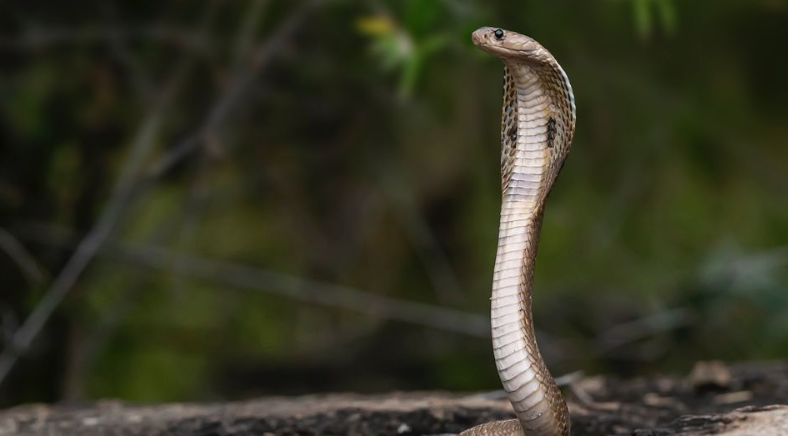
Habitat and Distribution of the Spitting Cobra
Spitting cobras inhabit a variety of environments across Africa and Asia. These include savannas, grasslands, forests, and even desert-like regions. Their versatility in selecting habitats is one reason why they are such a widespread species.
Geographic Range
The black-necked spitting cobra (*Naja nigricollis*) is one of the most common and widespread species. It is found in sub-Saharan Africa, particularly in countries such as Kenya, Tanzania, and South Africa. Other species of spitting cobras, such as the Sierra Leone spitting cobra and the Indian spitting cobra, are found in West Africa and parts of Asia. The Indian spitting cobra (*Naja naja*) is commonly found in India, Sri Lanka, Pakistan, and Bangladesh.
Habitat Preferences
Spitting cobras prefer areas where they can easily access both land and water. They are often found near streams, rivers, wetlands, and other bodies of water, where they hunt for prey and seek shelter. These snakes take refuge in burrows, rock crevices, and tree hollows. These locations offer protection from the elements and predators.
Behaviour and Social Structure of Spitting Cobras
Spitting cobras are solitary animals. Each individual typically occupies its own territory. They are generally nocturnal or crepuscular, meaning they are most active during the night or at dawn and dusk.
Hunting and Feeding
As carnivores, spitting cobras hunt small vertebrates such as mammals, birds, and amphibians. They use their venom to immobilise and subdue their prey. The snakes rely on their acute sense of smell and vision to locate potential meals. Once prey is spotted, they strike quickly and inject venom into the victim. Their ability to spit venom is also useful when defending their kill or protecting their nests from threats. This allows them to keep predators at bay while feeding or resting.
Reproduction and Lifespan
Spitting cobras are oviparous, meaning they lay eggs. After mating, the female lays a clutch of 10 to 30 eggs in a safe, secure location, such as a burrow or leaf litter. The eggs incubate for 2 to 3 months before hatching. The baby snakes, known as hatchlings, are capable of venomous defence shortly after birth. Spitting cobras can live for 10 to 15 years in the wild, with some species living longer in captivity under optimal conditions.
Threats to the Spitting Cobra
Although spitting cobras are highly capable predators, they face various threats in the wild, mainly due to human activities.
Habitat Destruction
Urbanisation, deforestation, and agriculture pose major threats to the spitting cobra’s natural habitat. As forests and grasslands are cleared for development, these snakes are forced into smaller, fragmented territories. This makes it difficult for them to find food, shelter, and mates.
Human-Wildlife Conflict
Due to their venomous nature and ability to defend themselves by spitting venom, spitting cobras are often killed by humans who fear them. Snakebites and venomous spitting incidents can cause injuries or deaths. This leads to retaliatory killings of these snakes by local populations.
FAQ (Frequently Asked Questions) about Spitting Cobra
Q: What is a Spitting Cobra?
Ans: A Spitting Cobra is a type of venomous snake known for its unique defensive behavior of ejecting venom from its fangs as a spray. This venom can be accurately aimed at the eyes of predators, causing pain and temporary or even permanent blindness if not treated. They belong to the genus *Naja* and are found in Africa and parts of Asia.
Q: Where does the Spitting Cobra live?
Ans: Spitting Cobras inhabit a variety of environments including savannas, forests, arid regions, and farmlands. They are found across sub-Saharan Africa and Southeast Asia. Some species adapt well to human settlements and can sometimes be encountered in rural villages and farms.
Q: What does the Spitting Cobra eat?
Ans: Spitting Cobras are carnivorous and feed primarily on small mammals, birds, lizards, frogs, and other snakes. They use their venom to immobilize prey before swallowing it whole. They are active hunters but may also lie in wait to ambush their prey.
Q: How big is a Spitting Cobra?
Ans: Spitting Cobras vary in size depending on the species, but most range from 3 to 6 feet (0.9 to 1.8 meters) in length. Some individuals may grow slightly larger. Despite their moderate size, they are highly agile and accurate with their venom spray.
Q: What does the Spitting Cobra look like?
Ans: Spitting Cobras typically have slender bodies, rounded hoods, and smooth scales. Their coloration varies widely by species and can include shades of brown, black, gray, or reddish tones, often with bands or markings. They raise their hoods and hiss loudly when threatened.
Q: Are Spitting Cobras dangerous?
Ans: Yes, Spitting Cobras are dangerous due to their potent venom and unique ability to project it at potential threats. While they usually aim for the eyes to deter predators, they can also bite if cornered. Their venom can cause tissue damage and requires immediate medical attention if it enters the eyes or bloodstream.
Q: How does a Spitting Cobra defend itself?
Ans: When threatened, a Spitting Cobra raises its body, expands its hood, and spits venom toward the attacker’s eyes. The venom is sprayed through specially adapted fangs and can travel up to 6-10 feet (2-3 meters). If this fails to deter the threat, it may strike or flee.
Q: How long do Spitting Cobras live?
Ans: In the wild, Spitting Cobras typically live between 10 to 15 years, though in captivity, they may live longer with proper care. Their lifespan is influenced by environmental factors, predation, and access to food.
Q: Can Spitting Cobras be kept as pets?
Ans: Due to their venomous nature and the risks involved, Spitting Cobras are not suitable as pets for the general public. They require specialized handling, secure enclosures, and are typically kept only by licensed herpetologists or in zoological institutions for research and education.
Q: Are Spitting Cobras endangered?
Ans: Most species of Spitting Cobra are not currently considered endangered, but they face threats such as habitat destruction, human persecution, and illegal wildlife trade. Conservation efforts are important to ensure their continued survival in the wild.
#SpittingCobra, #VenomousSnakes, #Wildlife, #SnakeFacts, #Herpetology, #AnimalDefense, #CobraBehavior, #ReptileEnthusiast, #SnakeConservation, #DangerousAnimals
Our sources and references about Spitting Cobra
1: Wikipedia – Spitting Cobra
2: Britannica – Spitting Cobra
3: National Geographic – Cobra
4: NIH – Effects of Spitting Cobra Venom