Quick Top 10 Facts about Belted Kingfisher Bird
| SCIENTIFIC NAME | Ceryle alcyon |
| CLASSIFICATION | KINGDOM: Animalia CLASS: Aves ORDER: Coraciiformes FAMILY: Alcedinidae PHYLUM: Chordata GENUS: Ceryle |
| SIZE | Length: 11–14 inches (28–36 cm); Wingspan: 18–22 inches (46–56 cm); Weight: 3.5–4.5 oz (100–130 g) |
| HABITAT | Found near rivers, lakes, ponds, and coastal waters, primarily in North America |
| DIET | Fish, small aquatic invertebrates, and occasionally insects |
| SPECIES | One of the most widespread kingfisher species in North America |
| COUNTRY | Native to North America, but can also be found in parts of Central America |
| GESTATION PERIOD | Egg incubation lasts for about 24–26 days |
| LIFE SPAN | 5–10 years in the wild, but many do not survive their first year |
| CONSERVATION STATUS | Least Concern – stable population |
Amazing Facts About Belted Kingfishers
1. Distinctive appearance
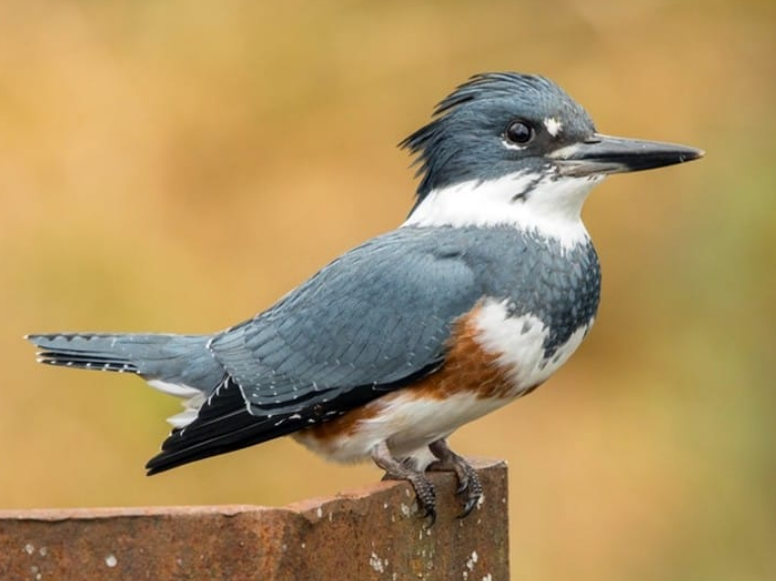
Belted Kingfishers are easily recognized by their striking blue plumage and large crest on top of their head.
2. Skilled hunters
They dive into the water from a perch to catch fish with incredible precision.
3. Unique call
Their call is a loud rattle, often heard when they fly overhead.
4. Strong territorial behavior
Male and female Belted Kingfishers defend their territories aggressively, especially during breeding season.
5. Impressive eyesight
Kingfishers have excellent vision, which helps them spot fish from high above the water.
6. Nest in burrows
They dig burrows in sandy riverbanks or dirt cliffs, where they lay their eggs.
7. Primarily fish eaters
Their diet consists mainly of small fish and aquatic invertebrates, such as crayfish and tadpoles.
8. Migratory behavior
Some Belted Kingfishers migrate south for the winter, particularly in colder regions of North America.
9. Play a vital role in ecosystems
As skilled hunters, they help maintain healthy fish populations and aquatic ecosystems.
10. Excellent flyers
They are fast and agile in flight, often seen darting back and forth along rivers and lakes.
Overview of the Belted Kingfisher bird
The Belted Kingfisher is an interesting bird species that may be found all throughout North America. Because of its unique activities and eye-catching appearance, it is well-liked by nature enthusiasts and bird watchers. One of the Belted Kingfisher’s most striking features is its bright blue and white plumage. The males have a blue-grey head and back, while the females have a reddish-coloured stripe across their belly. Their colouring helps them blend in better with their surroundings, especially when they are perched on branches near the water.
Hunting behaviour of Belted kingfishers
Belted kingfishers are thought to be exceptionally proficient hunters. They have excellent diving abilities and outstanding eyesight, which allow them to catch fish accurately. When they find their prey from a perch, they plunge headfirst into the water and use their sharp beaks to grab fish below the surface. They’re capable of catching fish larger than themselves!
Communication methods of Belted Kingfishers
Another feature that makes these birds famous is their loud, rattling call, which echoes throughout their habitat. The scream is often used to indicate territory and entice partners. Belted Kingfishers notonly vocalise but also utilise a range of body language, such as bobbing their heads and flicking their tails.
Information on seasonal movements of Belted Kingfishers
Belted Kingfishers like to live near bodies of water, such as lakes, rivers, and streams. They dig tunnels in the sand or gravel on the banks to build their nests. These tunnels may be many feet long and are often located along the water’s edge. The female lays a clutch of five to eight eggs, which are then alternatively incubated by the parents.
Diet and nutrition for Belted Kingfishers
Belted Contrary to their name, kingfishers are not only fish eaters. They also consume frogs, insects, and other aquatic creatures like crayfish. Their appetite is so great that they may consume up to 20% of their body weight in a single day. To maintain their active lifestyle and their great hunting skills, they need a lot of energy.
Threats to Belted Kingfisher populations
Conservation efforts are necessary for the survival of Belted Kingfishers. Pollution, human disturbance, and habitat loss may all have a negative impact on them. By protecting their nesting sites, preserving the water’s purity, and promoting suitable recreational activities near their habitats, we can help ensure that these beautiful birds remain in healthy numbers for the benefit of future generations.
Relationship with humans of belted kingfisher
North and Central America are home to the intriguing belted kingfisher (Megaceryle alcyon). Birdwatchers and environment lovers love the belted kingfisher because of its unique look and outstanding hunting abilities. We will look at some fascinating information about this amazing bird in this post.
Description of physical characteristics of belted kingfisher
The medium-sized belted kingfisher has a big head and a stocky body. Its length is around 11–14 inches (28–36 cm), and its wingspan is roughly 19–23 inches (48–58 cm). The brilliant blue-gray plumage of the belted kingfisher, which is enhanced by a white collar around its neck and a noticeable shaggy crest on its head, is its most remarkable characteristic.
The term “belted kingfisher” refers to the characteristic of both male and female birds that has a wide blue-grey band across their breast and a white belly. But behind the blue-grey band, the female bird has another band that is rusty.
Nesting habits of belted kingfishers
Because of their remarkable adaptability, belted kingfishers may be found in both freshwater and saltwater settings. They are often seen close to lakes, ponds, rivers, streams, and coastal regions. These birds’ principal food source is fish; hence, they like locations with plenty of fish and clean water.
Description of nesting sites of belted kingfishers
The best places for belted kingfishers to nest are on earthen banks, such as cliffs or riverbanks, where they build tunnels. These burrows often feature a little inclination to assist water drainage, and they may reach several feet in length. At the end of the burrow, the female deposits her eggs and incubates them until they hatch.
Unique hunting techniques of belted kingfisher
An expert fisherman is the belted kingfisher. It plunges into the water headfirst to capture its meal after using its acute vision to identify fish swimming close to the surface. The belted kingfisher has powerful jaws and a long, pointed beak that allow it to precisely take fish out of the water.
Belted kingfishers consume a wide range of aquatic animals in addition to fish, such as crabs, amphibians, insects, and tiny reptiles. Tadpoles, tiny snakes, and dragonflies have all been seen to be consumed by them.
Types of calls and sounds made by Belted Kingfishers
The characteristic vocalisations of Belted Kingfishers are well-known and often described as a loud, rattling call. When perched close to their nesting grounds or when in flight, their sounds may be heard. Both communication and territorial defence are served by these calls.
Intriguing facts about the behaviour of Belted Kingfishers
These birds are lone individuals who are often seen sitting on tree branches or power lines next to bodies of water. They hunt in a distinctive way, floating above the water and then plunging in to get their meal. They catch a fish and then go back to their perch to eat it.
Migration patterns of belted kingfishers
Some belted kingfishers migrate seasonally, while others are permanent birds that spend the whole year on their nesting grounds. In order to locate locations with open water and enough food, belted kingfishers in North America that nest in the northern regions often move south during the winter.
Belted kingfishers have been known to migrate across great distances, sometimes even over vast bodies of water. They can fly up to 40 miles per hour (64 km per hour), which is a fast pace.
Quirky behaviours or characteristics of belted kingfisher
With its eye-catching appearance, formidable hunting abilities, and distinctive vocalisations, the belted kingfisher is an incredible bird. Meeting a belted kingfisher is an unforgettable experience, regardless of whether you see it sitting along a riverbank or observe its amazing diving skills. These birds serve as a reminder of both the amazing variety of nature and the marvels right in our own backyards.
FAQ (frequently asked questions) about Belted Kingfisher Bird
Q: What is a Belted Kingfisher?
Ans: The Belted Kingfisher is a striking bird known for its large, spiky crest and its loud, distinctive call. It is found across North America and is recognized for its fishing abilities, often seen perched near bodies of water.
Q: Where do Belted Kingfishers live?
Ans: Belted Kingfishers are found throughout North America, especially near rivers, lakes, ponds, and coastal areas. They prefer habitats with clear water that provides easy access to fish and other aquatic prey.
Q: What do Belted Kingfishers eat?
Ans: The primary diet of the Belted Kingfisher consists of fish, which they catch by diving from perches. They also eat aquatic insects, crustaceans, and occasionally small amphibians.
Q: How do Belted Kingfishers catch their food?
Ans: Belted Kingfishers are skilled hunters, using their sharp vision to spot fish from a perch. Once they identify a target, they dive into the water to catch their prey with their sharp beaks.
Q: What are the physical characteristics of a Belted Kingfisher?
Ans: Belted Kingfishers are medium-sized birds with a distinctive crest, a large bill, and a chunky body. They have blue-gray feathers with a white belly and a characteristic ruff around the neck. Males typically have a single band of rust on their chest, while females have two.
Q: Do Belted Kingfishers migrate?
Ans: Yes, Belted Kingfishers are migratory. In the winter, those living in northern areas will migrate to more temperate regions, while others may remain in their habitats if water bodies do not freeze.
Q: How do Belted Kingfishers communicate?
Ans: Belted Kingfishers communicate through loud calls that are often heard before they are seen. Their calls are sharp, rattling, and serve as a warning or a means to communicate with others in their territory.
Q: Are Belted Kingfishers endangered?
Ans: No, Belted Kingfishers are not considered endangered. They are relatively common and are found in a wide range of habitats across North America. However, like many birds, they are susceptible to habitat loss and pollution.
Q: How do Belted Kingfishers build their nests?
Ans: Belted Kingfishers build their nests in burrows, which they dig into riverbanks or sandy soil. The female usually lays a few eggs in the nest, and both parents take turns incubating and protecting them.
Q: Are Belted Kingfishers social birds?
Ans: Belted Kingfishers are generally solitary birds. They are territorial and tend to keep to themselves, especially when it comes to hunting. However, they may sometimes be seen in small groups during migration or in areas with abundant food.
#BeltedKingfisher, #KingfisherBird, #BirdPhotography, #WildlifePhotography, #BirdWatching, #NatureLovers, #BirdLovers, #WildlifeConservation, #WaterBirds, #BirdsOfInstagram, #NaturePhotography, #KingfisherLove, #AvianBeauty, #FeatheredFriends, #BirdsInFlight
Our sources and references about Belted Kingfisher Bird
1: Wikipedia – Belted Kingfisher
2: All About Birds – Belted Kingfisher
3: Audubon – Belted Kingfisher
4: The Nature Conservancy – Belted Kingfisher