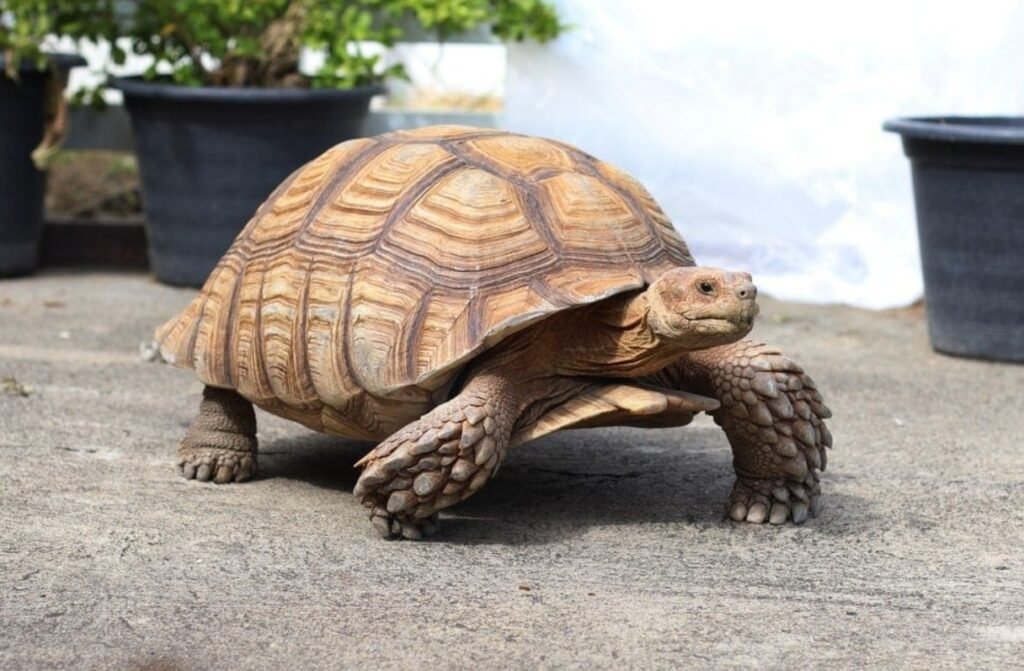
The Sulcata Tortoise, also known as the African Spurred Tortoise, is one of the largest species of tortoises in the world. Native to the Sahara Desert and parts of the Sahel region in Africa, they are known for their impressive size, longevity, and distinctive appearance. Sulcata Tortoises have a thick, sturdy shell with distinctive scutes that give them a unique look. These tortoises are herbivores, mainly feeding on grasses and plants, and require a lot of space to roam. Due to their size and specialized care needs, they are more suited to experienced reptile owners.
Quick Top 10 Facts about Sulcata Tortoise
| SCIENTIFIC NAME | Centrochelys sulcata |
| CLASSIFICATION | KINGDOM: Animalia PHYLUM: Chordata CLASS: Reptilia ORDER: Testudines FAMILY: Testudinidae GENUS: Centrochelys SPECIES: C. sulcata |
| SIZE | Length: 24–30 inches (61–76 cm) Weight: 70–200 pounds (32–90 kg) |
| SPECIES | The Sulcata Tortoise, also known as the African Spurred Tortoise, is the third-largest tortoise species in the world. They are native to the Sahara Desert and the Sahel region of Africa. Known for their large size and long lifespan, Sulcata Tortoises are herbivorous and require a lot of space to roam and graze. |
| APPEARANCE | Sulcata Tortoises have a large, domed shell that is tan or light brown with a pattern of prominent, raised scutes. Their legs are sturdy and have large, spurred scales on the thighs, giving them a distinctive appearance. The shell can grow up to 30 inches in length, and they can weigh up to 200 pounds. |
| LIFE SPAN | Typically 50–150 years |
| HABITAT | Native to the Sahara Desert and the Sahel region of Africa, Sulcata Tortoises live in arid and semi-arid environments. They dig extensive burrows to escape the intense heat, and they require a warm, dry habitat with access to sunlight to thrive in captivity. |
| DIET | Sulcata Tortoises are herbivores, feeding primarily on grasses, leaves, and some fruits and vegetables. Their diet should be high in fiber and low in protein, as this helps prevent shell deformities and other health issues. |
| NATURAL PREDATORS | As young tortoises, they are vulnerable to predation by animals such as jackals, birds of prey, and hyenas. However, adult Sulcata Tortoises are generally safe from predators due to their large size and protective shells. |
| COUNTRY | Native to the Sahara Desert and the Sahel region of Africa |
| GESTATION PERIOD | Typically 90–120 days. Female Sulcata Tortoises lay a clutch of 15-30 eggs, which hatch after the incubation period. The young tortoises are highly independent once they emerge from their eggs. |
| CONSERVATION STATUS | Vulnerable (VU) – The Sulcata Tortoise is listed as vulnerable due to habitat loss and the pet trade. They are increasingly being exported from their native range, which has led to a decline in their wild populations. |
Amazing Facts About Sulcata Tortoises
1. Third-Largest Tortoise Species
The Sulcata Tortoise is the third-largest tortoise species in the world, after the Galápagos and Aldabra tortoises. They can grow up to 30 inches in length and weigh up to 200 pounds.
2. Incredible Longevity
Sulcata Tortoises have an incredible lifespan, often living for 50 to 150 years, which makes them one of the longest-living animals in the world.
3. Herbivores
These tortoises are herbivores and eat a diet consisting primarily of grasses and other plant materials. Their diet needs to be high in fiber to ensure their health.
4. Amazing Burrowers
Sulcata Tortoises are excellent diggers. They dig deep burrows to escape the extreme heat of their desert habitat. Their burrows can be several feet deep and offer protection from predators and the harsh sun.
5. Strong Shells
Sulcata Tortoises have extremely strong, hard shells that provide protection from predators. These shells are also useful for retaining moisture in their arid environment.
6. High Maintenance Pets
Due to their large size and specific environmental needs, Sulcata Tortoises require a lot of care. They need large, secure enclosures with access to sunlight and a diet tailored to their herbivorous needs.
7. Vulnerable in the Wild
Sulcata Tortoises are considered vulnerable in the wild due to habitat destruction, overharvesting for the pet trade, and loss of food sources in their native range.
8. Social Creatures
While solitary in the wild, Sulcata Tortoises can tolerate other tortoises in captivity, especially when given enough space to roam and forage.
9. Native to Africa
The Sulcata Tortoise is native to the Sahara Desert and the Sahel region of Africa. They thrive in warm, dry climates and can survive with very little water.
10. Threatened by the Pet Trade
The Sulcata Tortoise is one of the most commonly kept pet tortoises, but the pet trade has significantly impacted their wild population. Many are captured and sold, leading to population decline in their native regions.
The Magnificent Giant of the Desert: The Sulcata Tortoise
One of the biggest kinds of tortoises in the world, the Sulcata tortoise (Centrochelys sulcata), also called the African spurred tortoise, is a popular exotic pet among reptile aficionados. The Sulcata tortoise is a well-known and intriguing animal to watch because of its remarkable size, long longevity, and distinct personality. This tortoise, which is native to the arid, dry parts of Africa, has evolved to live in the hard desert conditions and is a genuine survivor in the wild.
Understanding the Sulcata Tortoise: Traits, Habitat, Diet, and Care
The physical traits, native habitat, nutrition, maintenance needs, and conservation status of the Sulcata tortoise will all be covered in this article. Anyone who is interested in learning more about this amazing species or who is thinking about keeping one as a pet must have a solid understanding of the biology and requirements of this magnificent reptile.

Sulcata Tortoise Physical Characteristics
Size and Weight of the Sulcata Tortoise
After the Aldabra giant tortoise and the Galápagos tortoise, the Sulcata tortoise is the third biggest species of tortoise in the world. Adult Sulcata tortoises may weigh 80–110 pounds (36–50 kg) and reach lengths of 24–30 inches (61–76 cm). Some people may, however, weigh more than these averages; some have been known to weigh as much as 200 pounds (90 kg). They need plenty of room to walk about since they are so big, particularly when kept in captivity.
Shell Appearance and Function
The thick, domed shell of the Sulcata tortoise is one of its most remarkable characteristics. The shell has characteristic orange or yellow patterns and is tan or brown in colour. The tortoise’s shell, which is composed of bone plates called scutes, is very protective and grows with age. Because of the shell’s strong heat-regulating properties, the tortoise can withstand the intense heat of its desert environment. When the tortoise is resting or travelling over the ground, the flattened scutes on the bottom of the shell provide support.
Leg and Foot Structure for Digging
The Sulcata tortoise’s strong, muscular legs are ideal for digging and supporting its bulky body weight. Its powerful, broad claws are utilised for burrowing, and its hind legs are strongly scuted (armoured). The tortoise can traverse rough terrain with the aid of these claws. The tortoise’s feet have sharp claws that help in burrowing and foraging, and its front legs are strong and designed to propel its body forward.
Head, Eyes, and Jaw Structure
The Sulcata tortoise’s eyes are big and expressive, and its head is comparatively short and wide. The eyes are ideally suited to seeing in the bright desert. The tortoise’s herbivorous diet depends on its powerful jaw, which can break through resistant plants.
Natural Habitat and Distribution
Native Regions in Sub-Saharan Africa
Native to sub-Saharan Africa, the Sulcata tortoise is often found in semi-arid and desert areas of the continent. Its native range consists of arid shrublands, savannas, and grasslands with little flora but enough to sustain the tortoise’s herbivorous diet.
Adaptation to Arid Environments
The Sulcata tortoise has evolved to withstand the severe desert climate in Africa. It can withstand temperatures as high as 100°F (37°C) during the day and as low as even lower temperatures at night. The tortoise’s burrowing habit offers cover during the day, and its thick shell helps shield it from the extreme heat. In order to avoid the drastic temperature swings in the outdoors, tortoises may excavate burrows. Depending on the time of day, they will use the subterranean chambers to stay warm or cold.
Importance and Structure of Burrows
The burrowing behaviours of Sulcata tortoises are well-known. They are able to excavate intricate, deep tunnels that shield them from the sun, predators, and harsh weather. The tortoises may share these tunnels with other individuals, and they may be as long as 10 feet (3 meters). In addition to helping them retain moisture in their bodies, the burrow system is essential to their survival in the wild.
Natural Diet and Foraging Strategies
Grass, leaves, and bushes make up the majority of the Sulcata tortoise’s natural food. It consumes a wide range of plants, including hardy, drought-tolerant ones that can survive in the hostile desert climate. Being herbivores, their digestive systems are designed to break down plants with a high fibre content and little water. The tortoise’s existence depends on its capacity to locate food in arid environments.
Nutrition and Feeding Guidelines
Wild Feeding Habits
During the warmer months, Sulcata tortoises eat on a wide range of grasses and plants in their natural environment. They are opportunistic eaters in the wild, meaning they will consume any available plant, including shrub and bush leaves. In times of drought, they also consume cactus, which provide vital hydration.
Feeding Sulcata Tortoises in Captivity
Sulcata tortoises in captivity need a diet that reflects their natural herbivorous tendencies. This contains grass, hay, and various fruits in moderation, along with a range of leafy greens including mustard, dandelion, and collard greens.
- Avoid high-protein foods like meat and dairy
- Steer clear of processed tortoise pellets
- Maintain a fibre-rich, calcium-balanced diet
Foods high in protein, such meat, dairy, or pellets, should be avoided since they might cause obesity or renal problems. In order to maintain healthy development and avoid metabolic bone disease, caretakers of tortoises must make sure that their food is low in fat, rich in fibre, and low in calcium.
Hydration Needs and Water Access
Despite their adaptation to live in dry climates, Sulcata tortoises still need access to fresh water. They should always have access to a little dish of water while in captivity. They will drink water when it is available, but they may survive in the wild with little water by getting moisture from the plants they consume.
Behaviour and Social Structure of Sulcata Tortoises
Solitary and Territorial Nature
In the wild, Sulcata tortoises are solitary creatures that seldom exist in big social groups. They are renowned for their slow, methodical movements and sensitive disposition. However, if given the right care and attention, they may develop a strong attachment for one another while in captivity.
Independent Lifestyle in the Wild
Sulcata tortoises live solitary lives in the wild, each having a separate area where they burrow and feed. When there is enough room and supplies, they will live in harmony with other tortoises since they are often not territorial. But sometimes, especially during mating season or when they feel threatened, they may act aggressively.
Movement and Interaction Tendencies
It is well known that Sulcata tortoises move slowly. They are among the slowest-moving animals on land, with an average speed of around 0.2 miles per hour (0.3 km/h). However, if needed, they may cover large distances in a single day, particularly when looking for food or new homes.
Though they move slowly, Sulcata tortoises are very bright and inquisitive animals. They are known to investigate their surroundings and will interact with people, things, and even other animals if they are introduced in a regulated and safe setting. When maintained as pets, they need a safe, escape-proof habitat since their curiosity often encourages them to explore new surroundings.
Captive Care Requirements for Sulcata Tortoises
Space and Habitat Needs
Although Sulcata tortoises are resilient and long-lived, they still need special attention to survive in captivity. Potential owners should be ready for a long-term commitment since they may live for 50 to 150 years, and some have even been known to live up to 200 years in the wild.
Sulcata tortoises need a lot of room to move about because of their size. For a single tortoise, at least 100 square feet (9.3 square meters) of outdoor area is needed. They like wandering, grazing, and exploring, so the more room they have, the better.
Lighting and Temperature Requirements
If the environment is not conducive to outdoor life, they may need a sizable, safe space inside in addition to outside enclosures. To survive, Sulcata tortoises need a warm habitat. To aid with calcium metabolism and avoid shell deformities, they need access to UVB lighting while in captivity. The ideal temperature range is 80°F to 90°F (27°C to 32°C) during the day and around 70°F (21°C) at night. The tortoise needs a basking area that is between 95°F and 100°F (35°C and 38°C) in order to control its body temperature.
Enrichment and Digging Substrate
Burrowing possibilities are crucial for Sulcata tortoises. To dig and build burrows in captivity, they will need a deep base of sand, soil, or a combination of the two. They may stay cognitively engaged by engaging in enrichment activities like concealing food or erecting challenges for them to overcome.
Conservation Status and Environmental Threats
Habitat Loss from Human Activity
Despite not being on the endangered list at the moment, the Sulcata tortoise is threatened in the wild by a number of factors. The Sulcata tortoise’s existence in the wild is seriously threatened by the degradation of its native habitat brought on by agriculture and human expansion.
Impact of the Illegal Pet Trade
The illegal wildlife trade often captures and sells Sulcata tortoises as pets, which leads to a reduction in population. To combat these dangers and save the species, conservation initiatives are under progress.
FAQ (Frequently Asked Questions) about Sulcata Tortoise
Q: What is a Sulcata Tortoise?
Ans: The Sulcata Tortoise, also known as the African Spurred Tortoise, is a large species native to the Sahara Desert and parts of Africa. It is known for its impressive size, longevity, and distinctive appearance.
Q: How big do Sulcata Tortoises get?
Ans: Sulcata Tortoises can grow up to 30 inches (76 cm) in length and weigh between 70 and 200 pounds (32–90 kg), making them one of the largest tortoise species in the world.
Q: How long do Sulcata Tortoises live?
Ans: Sulcata Tortoises have a very long lifespan, typically living between 50 and 150 years, with proper care and habitat conditions.
Q: Are Sulcata Tortoises good pets?
Ans: Sulcata Tortoises can make great pets for experienced reptile owners, but they require large enclosures, a proper diet, and a warm environment to thrive.
Q: What do Sulcata Tortoises eat?
Ans: Sulcata Tortoises are herbivores and primarily eat grasses, leaves, and some fruits and vegetables. They need a high-fiber, low-protein diet to maintain their health.
Q: Where are Sulcata Tortoises found in the wild?
Ans: Sulcata Tortoises are native to the Sahara Desert and the Sahel region of Africa, where they inhabit arid and semi-arid environments.
Q: Are Sulcata Tortoises endangered?
Ans: Sulcata Tortoises are listed as vulnerable due to habitat loss, the pet trade, and the destruction of food sources in their native range.
Our sources and references about Sulcata Tortoise
1: Wikipedia – Sulcata Tortoise
2: Reptiles Magazine – Sulcata Tortoise Care
3: Turtle Forum – Sulcata Tortoise Facts
4: Turtle Care – Sulcata Tortoise Care