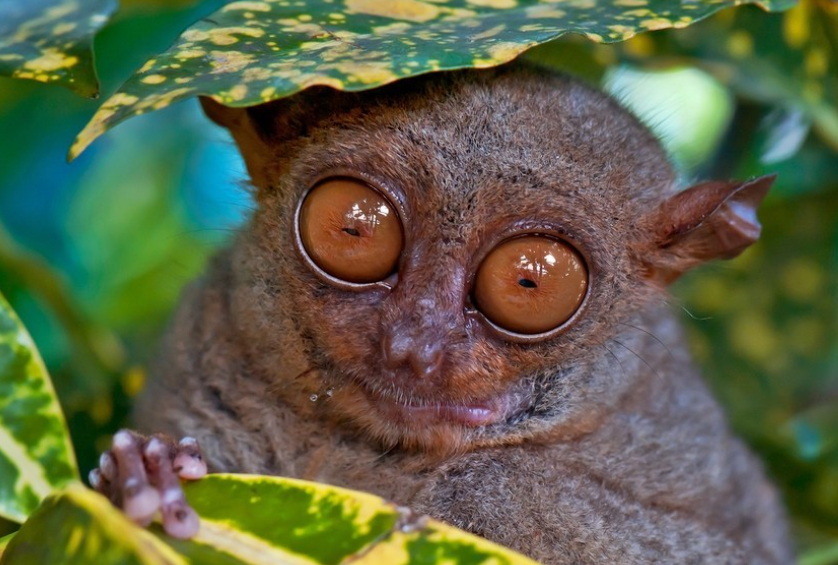
Tarsiers are small, nocturnal primates found in Southeast Asia. They are known for their enormous eyes and ability to leap from tree to tree in search of insects. Tarsiers are primarily insectivores and are one of the smallest primates, weighing less than a pound.
Quick Top 10 Facts about Tarsier
| SCIENTIFIC NAME | Tarsius tarsier |
| CLASSIFICATION | KINGDOM: Animalia PHYLUM: Chordata CLASS: Mammalia ORDER: Primates FAMILY: Tarsiidae GENUS: Tarsius SPECIES: T. tarsier |
| SIZE | Body Length: 9–16 cm (3.5–6.3 inches), Tail Length: 20–25 cm (8–10 inches) |
| HABITAT | Tropical rainforests and secondary forests in Southeast Asia, especially the Philippines, Borneo, and Sumatra |
| DIET | Carnivorous; eats insects, small vertebrates, birds, and lizards |
| SPECIES | One of the smallest primates in the world, known for its huge eyes and leaping ability |
| COUNTRY | Native to Southeast Asia — Philippines, Indonesia, and Malaysia |
| GESTATION PERIOD | Approximately 6 months; gives birth to a single offspring |
| LIFE SPAN | Up to 12–20 years in captivity; typically shorter in the wild |
| CONSERVATION STATUS | Vulnerable or Endangered depending on the species; threatened by habitat loss and the pet trade |
Amazing Facts About Tarsiers
1. Tarsiers have enormous eyes
Tarsiers have the largest eyes relative to body size of any mammal. Each eye is as large as their brain!
2. They are strictly carnivorous
Unlike many primates, tarsiers eat only meat—mostly insects, small birds, and lizards.
3. Tarsiers can rotate their heads like owls
They can turn their heads nearly 180 degrees to spot prey or predators due to their fixed eye sockets.
4. They are incredible jumpers
Tarsiers can leap up to 40 times their body length, using their elongated tarsal (ankle) bones—hence the name.
5. Tarsiers are nocturnal
These tiny primates are most active at night and use their incredible night vision to hunt.
6. They are arboreal creatures
Tarsiers spend nearly all of their lives in trees, jumping from branch to branch with great agility.
7. Tarsiers communicate through ultrasound
They can produce and hear high-frequency sounds that are inaudible to humans—useful for avoiding predators and coordinating with mates.
8. They have long fingers and gripping toes
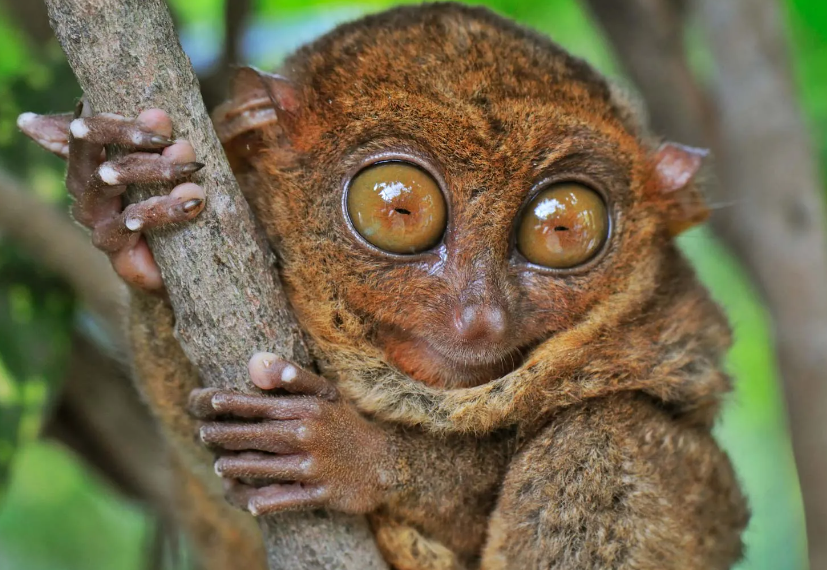
Adapted for clinging to branches, their fingers and toes are extremely long and dexterous.
9. Tarsiers are solitary or live in small groups
They are generally shy and live alone or in small family groups with defined territories.
10. Many tarsier species are threatened
Habitat loss, deforestation, and capture for the fascinating pet trade have put many tarsier species at risk of extinction.
Facts about tarsiers and their incredible abilities
The primate family includes the interesting tarsiers. The unique physical characteristics and fascinating habits of these small primates are well known. Because of their huge eyes, which are about the size of their brains, tarsiers have superb night vision. They can hunt for small animals and insects in the dark because of this adaptation. In order to cling to tree branches and travel quickly through the forest canopy, their lengthy fingers as well as toes are equipped with strong claws. More facts about tarsiers are:
Tarsiers are small primates found in Southeast Asia
Most tarsiers live in Southeast Asia, namely on the islands of Sumatra, Borneo, and the Philippines. They live in several kinds of woods, such as secondary forests and rainforests. These nocturnal animals seldom ever come down to the ground; they spend the majority of their time in trees. Being solitary creatures, tarsiers mark their territory using smell glands. Each individual inhabits a certain area. They use a variety of vocalisations to communicate with one another, including high-pitched calls and ultrasonic noises that are inaudible to humans.
Physical features facts about tarsiers: small size, large eyes, and long tail
1. Tarsiers are small monkeys distinguished by their distinctive physical characteristics and behaviour.
2. Having huge eyes allows these nocturnal creatures to see better in the dark and to gather insects for sustenance.
3. Because of their lengthy fingers and toes, tarsiers can quickly navigate across the forest by gripping tree branches.
4. Southeast Asia is home to them, especially the Philippines, Borneo, and Sumatra.
5. Tarsiers are lonely creatures well-known for their long-distance jumping between trees.
6. Tarsiers have a loud, unique call that they utilise to communicate with one another, despite their diminutive size.
7. Though they have been known to consume small birds and reptiles, their main food source is insects.
8. Because of habitat destruction and the illicit pet trade, tarsiers are regarded as endangered.
9. To preserve these unusual and intriguing creatures, conservation measures are being taken.
Unique physical characteristics and behaviour of tarsiers
The method by which tarsiers grab their prey is unique. They can leap up to 10 feet, and they employ this amazing capacity to pounce on insects or small animals. They can jump with remarkable accuracy and precision because of the length of their hind legs. Another notable feature of tarsiers is their almost 180-degree head rotation, which allows them to see a large area. This aids in their ability to identify possible dangers or prey in their environment. Because of a unique adaptation known as a grooming claw, tarsiers, despite their small size, have a powerful grip and can grasp onto branches even when they are sleeping. They can keep their grasp when they’re sleeping thanks to this claw.
 Ability to leap long distances and catch prey with precision
With their massive eyes, powerful and nimble bodies, and unique hunting techniques, tarsiers are among the most unique creatures in the world. From various regions of Indonesia to the Philippines, these small primates may be found living in tropical woods across Southeast Asia. Like owls, they are able to follow and capture their prey, especially insects, which are their preferred diet, thanks to their enormous eyes. Their heads can rotate 180 degrees, a unique trait that enables them to turn their heads almost entirely behind them. Additionally, they have a unique method of collecting food that they term “lip-smacking.”
Nocturnal nature and their adaptations for night-time activities of tarsiers
Using their specially designed hands, they seize their prey after luring it in with a loud noise. When hunting, tarsiers are very nimble and have a 6-meter vertical leap. They can see insects and other prey up to five meters away because of their sharp eyes. These are nocturnal, mostly solitary creatures; however, they may sometimes form groups. Finally, using their unique, bent feet, they hang on tree branches to sleep.
Interesting facts about tarsiers
Small primates, known as tarsiers, belong to the Tarsiidae family. Their interesting actions and unique physical traits are well known. We’ll look at some fascinating tarsier facts in this post.
1. Dispersion and Environment
Native to Sumatra, Borneo, and the Philippines, tarsiers are found across Southeast Asia. They live in bamboo groves, secondary forests, and rainforests, among other environments. These nocturnal animals are superb jumpers and are well suited to living in the woods.
2. Physical Presentation
Differentiating themselves from other primates, tarsiers have unique physical characteristics. Large eyes, around the size of their brains, are characteristic of them. They can see quite well at night because of this. Their pad-equipped long fingers and toes let them hold onto tree branches more easily. In addition, tarsiers possess a unique feature called a grooming claw that they use to comb through their fur.
3. Behavior at Night
Since tarsiers are predominantly nocturnal, the night is when they are most active. Because of their wide eyes, they can see well in dim light. They collect insects, small birds, and reptiles with their exceptional hearing and agility. In order to evade predators, tarsiers spend the day sleeping in tree holes or thick undergrowth.
4. Accentuations
A variety of vocalisations are used by tarsiers to communicate. They make high-pitched cries to communicate with their young, attract potential mates, and mark territory. Ultrasonic vocalisations from several species of tarsiers are audible to humans but not to them.
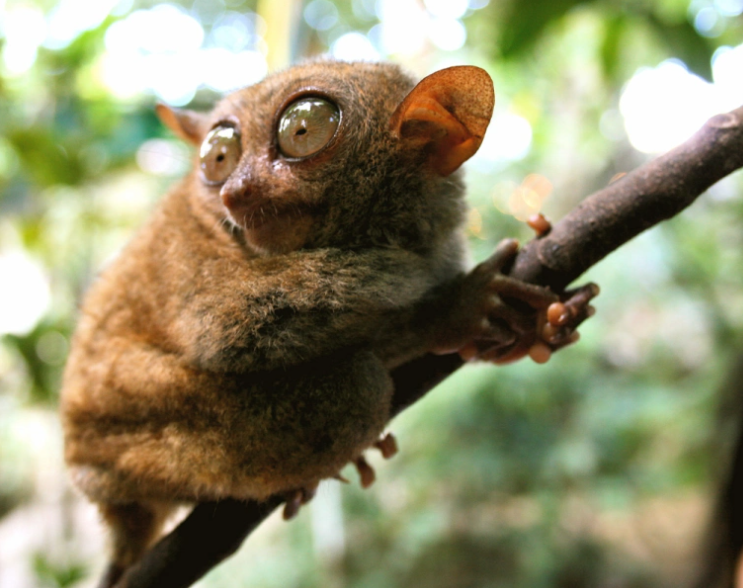
5. Special Modifications
Tarsiers are able to flourish in their habitat because of a number of unique adaptations. They can jump across trees up to ten feet away because of their enlarged ankle bones. To help in hunting and keeping an eye on their surroundings, they can also turn their heads almost 180 degrees.
6. Organizational Social Network
Although certain species have been seen establishing small family groupings, tarsiers are mainly solitary creatures. They vocalise and use scent glands to mark their territories, and they use these markings to communicate with other tarsiers. Male tarsiers are subordinate to females, who are essential in protecting their areas.
7. Conservation Situation
The illicit pet trade and habitat degradation from deforestation are two of the many dangers to tarsiers’ existence. There are many species of tarsiers that are considered fragile or threatened. To preserve their habitats and increase public understanding of the need to conserve these unique primates, conservation measures are now being taken.
FAQ (Frequently Asked Questions) about Tarsier
Q: What is a Tarsier?
Ans: A Tarsier is a small primate known for its enormous eyes, long fingers, and extraordinary leaping ability. Native to Southeast Asia, tarsiers are part of the family Tarsiidae and are among the oldest primates, having existed for around 55 million years.
Q: Where do Tarsiers live?
Ans: Tarsiers are found in the forests of Southeast Asia, particularly in the Philippines, Borneo, and Sumatra. They inhabit dense tropical rainforests and mangrove swamps, where they can cling to tree trunks and leap between branches with agility.
Q: What do Tarsiers eat?
Ans: Tarsiers are entirely carnivorous, feeding mainly on insects, small birds, lizards, and other small animals. They are nocturnal hunters, using their excellent night vision and powerful legs to ambush prey in the dark.
Q: Why do Tarsiers have such big eyes?
Ans: Tarsiers have the largest eyes relative to body size of any mammal. Each eye is as large as their brain! Their large eyes help them see in low light conditions, which is crucial for their nocturnal lifestyle.
Q: Are Tarsiers endangered?
Ans: Yes, many tarsier species are considered threatened or endangered due to habitat loss, deforestation, and human interference. Conservation efforts are ongoing to protect their natural habitats and ensure their survival.
Q: How do Tarsiers move?
Ans: Tarsiers are excellent leapers. They can jump more than 40 times their body length using their long, strong hind limbs. They use this leaping ability to navigate the trees and catch prey mid-air or on the ground.
Q: Are Tarsiers social animals?
Ans: Tarsiers are generally solitary or live in small family groups. They communicate through vocalizations, scent marking, and body language. Despite their small size, they can make loud calls to mark territory or alert others to danger.
Q: Can Tarsiers rotate their heads?
Ans: Yes, since their eyes are fixed in their sockets and cannot move, tarsiers compensate by rotating their heads nearly 180 degrees in each direction. This allows them to look for prey or danger without moving their bodies.
Q: How big are Tarsiers?
Ans: Tarsiers are very small, typically measuring 3.5 to 6 inches (9 to 15 cm) in body length, with tails longer than their bodies. They usually weigh between 80 to 160 grams (2.8 to 5.6 oz).
#Tarsier, #Primates, #NocturnalAnimals, #RainforestWildlife, #EndangeredSpecies, #CuteAnimals, #TreeDwellers, #SoutheastAsiaWildlife, #Tarsius, #WildlifeConservation, #EyesThatSeeInTheDark
Our sources and references about Tarsier
1: Wikipedia – Tarsier
2: National Geographic – Philippine Tarsier
3: World Wildlife Fund – Tarsier
4: Animal Diversity Web – Tarsiidae