Sea anemones are fascinating marine animals known for their colorful appearance and their symbiotic relationships with various marine creatures. They are named after the terrestrial anemone flower because of their resemblance to the flower’s colorful petals. These animals belong to the phylum Cnidaria, and while they may resemble plants, they are actually animals. Sea anemones are predators, using their stinging cells to capture and immobilize prey, such as fish and small invertebrates. Some species have a mutualistic relationship with clownfish, offering protection in exchange for food. Sea anemones are found in oceans worldwide, primarily in shallow coastal waters.
Quick Top 10 Facts about Sea Anemone
| SCIENTIFIC NAME | Actiniaria (various species within this order) |
| CLASSIFICATION | KINGDOM: Animalia PHYLUM: Cnidaria CLASS: Anthozoa ORDER: Actiniaria |
| SIZE | Typically range from 5 cm to 30 cm (2–12 inches), though some species can grow much larger |
| SPECIES | There are over 1,000 species of sea anemones, including the famous sea anemones like the Giant Green Anemone and the Carpet Anemone. |
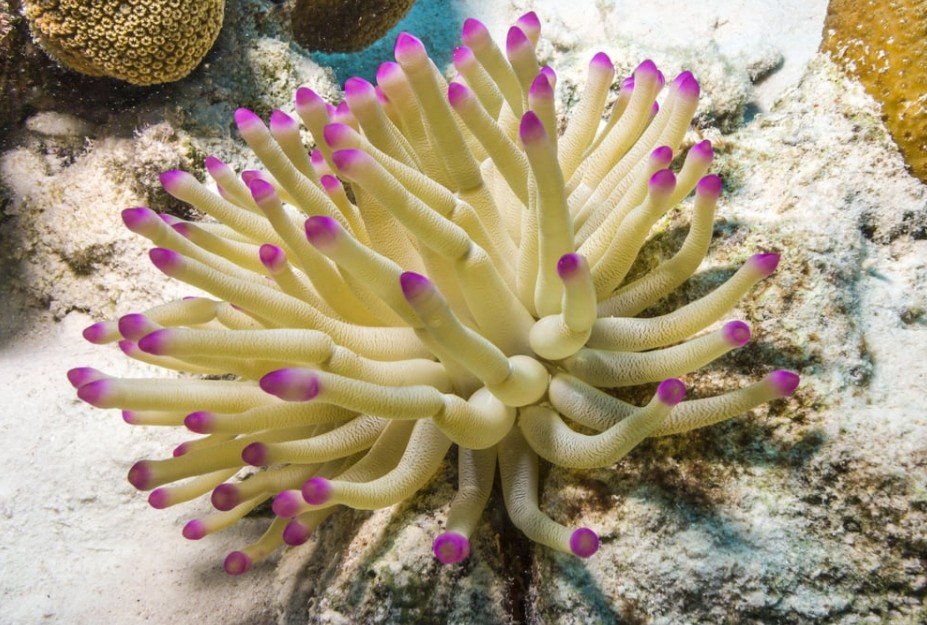
| APPEARANCE | Sea anemones have a soft, cylindrical body with a central mouth surrounded by numerous tentacles. Their tentacles are often brightly colored and can vary in length and shape depending on the species. |
| LIFE SPAN | Typically 3–5 years, though some species can live longer, especially in stable reef environments. |
| HABITAT | Shallow coastal waters, coral reefs, rocky shorelines, and sandy sea floors. Sea anemones are often found in intertidal zones or at depths up to 50 meters. |
| DIET | Sea anemones are carnivorous, feeding on small fish, zooplankton, and other small marine organisms. They use their stinging cells to immobilize prey. |
| NATURAL PREDATORS | Some species of fish, such as the butterflyfish, as well as sea slugs and larger marine creatures, prey on sea anemones. |
| COUNTRY | Found in oceans worldwide, from temperate to tropical regions. They are commonly found in the Mediterranean, Pacific, and Atlantic Oceans. |
| GESTATION PERIOD | Sea anemones do not have a gestation period as they reproduce via external fertilization. Most species release eggs and sperm into the water, where fertilization occurs. |
| CONSERVATION STATUS | Most sea anemones are not endangered, but some species, especially those found in coral reef ecosystems, are vulnerable to threats like ocean acidification and habitat destruction. |
Amazing Facts About Sea Anemone
1. Stinging Cells for Defense and Hunting
Sea anemones are equipped with stinging cells called nematocysts, which they use to capture and immobilize prey. These cells also provide protection from predators.
2. Symbiotic Relationship with Clownfish
One of the most famous relationships in the marine world is that between sea anemones and clownfish. The clownfish is immune to the anemone’s stings and finds protection in its tentacles, while the clownfish defends the anemone from predators.
3. They Can Regenerate
If a sea anemone is damaged or loses part of its body, it has the remarkable ability to regenerate and regrow its tentacles or entire body, depending on the injury.
4. They Move Slowly
While sea anemones are mostly sedentary, they can move slowly by gliding across the ocean floor. Some species can even detach and swim when needed, although this is not typical behavior.
5. They Can Live for Decades
Although many sea anemones have a relatively short lifespan, some species can live for decades if their habitat is stable and conditions are favorable.
6. Brightly Colored Tentacles
Sea anemones are known for their stunning array of colors, from bright greens and reds to purples and oranges. These colors help them attract prey and may also serve as a warning to predators about their venomous nature.
7. Adaptability to Various Environments
Sea anemones can live in a variety of marine environments, including deep-sea ecosystems, shallow coastal areas, and coral reefs. Their adaptability is key to their survival.
8. Some Species Are Venomous
While most sea anemones are not dangerous to humans, some species have venomous stings that can cause a painful reaction. However, their venom is mainly used to capture prey.
9. Used in Medicine
The venom of certain sea anemones contains compounds that are being researched for their potential in developing painkillers and other medical treatments.
10. They Can Live in Symbiosis with Other Organisms
In addition to clownfish, sea anemones form symbiotic relationships with various marine organisms, including certain species of shrimp, crabs, and even some fish that seek protection in their tentacles.
The Vibrant and Intriguing Marine Animal: The Sea Anemone
Sea anemones are colourful, intriguing organisms that may be found in waters all over the world. Along with corals and jellyfish, these marine invertebrates are members of the phylum Cnidaria’s class Anthozoa. Because of their remarkable appearance, wide range of colours, and distinctive behaviours, sea anemones are a popular topic of study and adoration for both divers and marine scientists.
Sea Anemones: Animals, Not Plants
Sea anemones are animals, not plants, despite their flower-like appearance. They use specialised systems to connect with other species, obtain prey, and defend themselves. The main traits, habitat, nutrition, reproductive methods, and ecological function of sea anemones will all be covered in this article.
1. Sea Anemones’ Physical Characteristics
Understanding the Unique Anatomy of Sea Anemones
One of the most unique animals in marine environments, sea anemones have a variety of physical characteristics.
Body Composition of Sea Anemones
- Radial Symmetry: The arrangement of sea anemones’ body components around a central axis is known as radial symmetry. Cnidarians often possess this ability, which allows them to feel their surroundings from any angle.
- Soft, Flexible Body: The digestive system is located in the centre of a sea anemone’s soft body, which often resembles a flower or a cluster of petals. Usually tubular, this column may have a variety of tentacles covering its surface.
- Tentacles: The long, pliable tentacles that envelop the mouth of sea anemones are perhaps its most distinctive feature. Cnidocytes, which are stinging cells found on these tentacles, emit venom to seize food and protect against predators. The anemone’s surroundings and requirements determine whether the tentacles are extended or retracted.
- Basal Disc: The sea anemone utilises its basal disc, which is located at the base of its body, to adhere to objects including rocks, coral reefs, and the ocean bottom. Because of the unique adhesives on the disc, sea anemones may either stay still or move gently as needed.
Sea Anemone Colours and Their Purpose
The colours of sea anemones are diverse, ranging from more subdued browns and whites to vivid reds, greens, and blues. Pigments in their cells or the symbiotic algae they host are often the source of their colours. The visual attraction of several sea anemone species is enhanced by their luminous characteristics.
Sea anemones’ vivid hues may be used for a variety of purposes, including as concealment, luring prey, or alerting predators to their toxicity.
2. Distribution and Habitat of Sea Anemones
Preferred Marine Habitats
Although they may sometimes live in deep-sea habitats, sea anemones are marine organisms that are mostly found in shallow coastal areas. They may flourish in a variety of environments and are very adaptive.
- Coral Reefs: These habitats provide food and shelter for a variety of sea anemones. Coral reefs are the perfect home for these animals because of the variety of marine life and the wealth of prey.
- Rocky and Sandy Bottoms: Other types of sea anemones may be found affixed to rocks or the bottom, where they stay fastened by using their sticky base.
- Symbiosis with Other Organisms: Certain sea anemones coexist harmoniously with other creatures. The interaction between sea anemones and clownfish is the most well-known example of this. While the clownfish feed and clean the anemones, they also take refuge in the stinging tentacles of the anemones, which provide protection from predators.
Global Distribution of Sea Anemones
From the tropical Pacific and Indian Oceans to the cooler Arctic and Antarctic seas, sea anemones may be found in oceans all around the globe. Although the majority of species reside in shallow seas, they may survive at depths of exceeding 3,000 meters (9,800 ft).
The Red Sea, California’s coastline, and Australia’s Great Barrier Reef are popular places to see sea anemones.
3. Nutrition and Feeding Practices of Sea Anemones
What Do Sea Anemones Eat?
As carnivores, sea anemones feed on a wide range of tiny creatures. They have an interesting and effective eating habit, mostly using their stinging cells to seize prey.
- Prey: Small fish, crustaceans, and zooplankton are the usual food sources for sea anemones. Even bigger prey, such tiny sea worms, may be captured by some species.
- Cnidocytes: Sea anemones’ tentacles are coated with specialised cells called cnidocytes, which house microscopic harpoon-like devices known as nematocysts. The nematocysts shoot poison that paralyses or kills the prey when their tentacles touch anything that could be prey.
- Feeding Procedure: Instead of actively hunting, sea anemones usually wait for their prey to come into touch with their tentacles. They may hold still for extended periods of time, ensnaring passing fish or invertebrates with their tentacles. The sea anemone digests its prey in its inner chamber after trapping it, releasing digestive enzymes that break down the meal before it is absorbed.
4. The Process of Sea Anemone Reproduction
Asexual Reproduction in Sea Anemones
Both sexual and asexual reproduction are present in sea anemones, while certain species have unusual ways of reproducing.
- Budding: Asexual reproduction is a common method used by many sea anemones. A new person develops straight from the parent’s body throughout this phase, ultimately separating to live on their own. Because of this mode of reproduction, sea anemones may quickly occupy available areas.
- Fragmentation: Some sea anemone species are capable of reproducing via fragmentation, in which a piece of the animal separates to create a new, genetically identical creature.
Sexual Reproduction in Sea Anemones
- Gametes: Sea anemones are also capable of sexual reproduction. The majority of species are gonochoric, which means that each anemone is either male or female. They discharge their gametes—eggs and sperm—into the water during the reproductive season, when external fertilisation occurs.
- Planula Larvae: Following fertilisation, the eggs mature into free-swimming planula larvae. These larvae ultimately become adult sea anemones after settling on the ocean bottom or other surfaces. In order to facilitate internal fertilisation, several species may also reproduce hermaphroditely, producing both eggs and sperm.
5. Symbiotic Connections of Sea Anemones
Sea Anemones and Clownfish: A Famous Partnership
The capacity of sea anemones to establish symbiotic partnerships with other marine organisms is among its best-known features.
- Mutualism with Clownfish: A well-known example of mutualism is the interaction between sea anemones and clownfish. Clownfish are immune to the venom of the stinging cells of sea anemones. They defend themselves from bigger predators by using the tentacles of sea anemones.
- Benefits of the Relationship: Clownfish provide the sea anemones food in exchange for keeping fish away that could try to steal their meal. By consuming parasites and debris, they also aid in maintaining the cleanliness of the sea anemone. The clownfish is protected by this association, and the anemone gains access to food and cleaning supplies.
Sea Anemones and Algae Symbiosis
Many kinds of sea anemones have zooxanthellae, a kind of photosynthetic algae, in addition to their interactions with animals. Through photosynthesis, these algae provide the sea anemone nourishment while residing within its tissues. The algae get sunshine and a safe habitat from the sea anemone in return.
In shallow tropical seas with plenty of sunshine, this symbiotic interaction is particularly common.
6. The Sea Anemone’s Ecological Function
Ecological Importance in Marine Ecosystems
The equilibrium of marine ecosystems is maintained in large part by sea anemones. Their interactions with other species have an impact on the ecosystem as a whole.
- Predators and Prey: Sea anemones are carnivores that aid in managing the numbers of crustaceans, tiny fish, and other invertebrates. The populations of these species and the animals that prey on them are subsequently impacted. Many marine creatures, such as some fish species, sea stars, and marine snails, eat sea anemones since they are prey themselves.
- Builders of Coral Reefs: Sea anemones are a component of coral reef ecosystems, contributing to the reef’s total biodiversity. Numerous species find refuge in their physical presence, and their interactions with other living things contribute to the reef’s continued vitality.
FAQ (Frequently Asked Questions) about Sea Anemone
Q: What is a Sea Anemone?
Ans: A sea anemone is a marine invertebrate animal that resembles a flower but is actually a predatory animal, known for its stinging cells and vibrant colors.
Q: What do Sea Anemones eat?
Ans: Sea anemones are carnivorous and eat small fish, plankton, and other marine organisms. They capture their prey using their stinging tentacles.
Q: Where are Sea Anemones found?
Ans: Sea anemones are found in oceans worldwide, primarily in shallow coastal areas, coral reefs, and rocky or sandy sea floors.
Q: How do Sea Anemones reproduce?
Ans: Sea anemones reproduce through external fertilization, releasing eggs and sperm into the water for fertilization. Some species can also reproduce through budding or fission.
Q: Are Sea Anemones harmful to humans?
Ans: Most sea anemones are not harmful to humans, but some species have venomous stings that can cause pain or irritation.
Q: How long do Sea Anemones live?
Ans: Depending on the species, sea anemones can live for several years, with some species living for decades in stable environments.
Q: Do Sea Anemones move?
Ans: Sea anemones are typically stationary but can move slowly across the ocean floor. Some species may detach and swim when necessary.
Q: What is the relationship between Sea Anemones and Clownfish?
Ans: Clownfish and sea anemones have a mutualistic relationship, where clownfish are protected by the anemone’s stinging tentacles, and in return, the clownfish provide food for the anemone.
Q: What is the ecological role of Sea Anemones?
Ans: Sea anemones play an important role in marine ecosystems, serving as both predators and habitat providers for other species, such as clownfish and shrimp.
Q: Are Sea Anemones endangered?
Ans: While most sea anemones are not endangered, certain species are threatened by habitat destruction and pollution, especially those living in coral reef ecosystems.
#SeaAnemone #MarineLife #CoralReefs #Clownfish #OceanCreatures #MarineBiology #Invertebrates #SymbioticRelationships
Our sources and references about Sea Anemone
1: Wikipedia – Sea Anemone
2: Britannica – Sea Anemone
3: National Geographic – Sea Anemones
4: Smithsonian – Sea Anemones