Sharks and cartilaginous fish are members of the Chondrichthyes class. Rays, skates, and chimaeras are also included in this category. Sharks have a cartilaginous skeleton, which is composed of cartilage instead of bone, in contrast to bony fish. Their speed and agility in the water are aided by its lightweight construction. Sharks come in more than 500 species, with significant differences in size, form, behaviour, and feeding.
Quick Top 10 Facts about Shark
| SCIENTIFIC NAME | Selachimorpha |
| CLASSIFICATION | KINGDOM: Animalia PHYLUM: Chordata CLASS: Chondrichthyes ORDER: Selachimorpha |
| SIZE | Varies significantly; lengths range from 17 cm (dwarf lanternshark) to over 12 meters (whale shark). |
| SPECIES | More than 500 known species, including the great white shark, hammerhead shark, and whale shark. |
| APPEARANCE | Sharks have elongated, torpedo-shaped bodies designed for fast swimming, with five to seven gill slits on the sides of their heads. Their skin is rough and covered in tiny, tooth-like structures called dermal denticles. |
| LIFE SPAN | Life spans vary; many sharks live between 20 to 30 years, though some species can live much longer, such as the Greenland shark, which can live over 400 years. |
| HABITAT | Sharks inhabit oceans and seas around the world, from shallow coastal waters to deep oceanic trenches. Some species can also be found in freshwater rivers and lakes. |
| DIET | Sharks are carnivorous and their diet includes fish, seals, dolphins, squid, and other marine life. Some species, like the whale shark, are filter feeders, consuming plankton and small fish. |
| NATURAL PREDATORS | Adult sharks have few natural predators, but their young can fall prey to larger fish, orcas, and even other sharks. |
| COUNTRY | Sharks are found in oceans worldwide, from the Arctic and Antarctic to tropical waters. Different species have different distribution ranges. |
| GESTATION PERIOD | Gestation periods in sharks vary by species, typically ranging from 9 months to 2 years, with some species giving birth to live young, while others lay eggs. |
| CONSERVATION STATUS | Many shark species are at risk due to overfishing, habitat destruction, and the shark fin trade. Some species are classified as endangered or vulnerable by the International Union for Conservation of Nature (IUCN). |
Amazing Facts About Shark
1. Apex Predators
Sharks are apex predators, meaning they are at the top of the food chain in their ecosystems. Their hunting abilities help regulate populations of other marine species, maintaining ecological balance.
2. Incredible Speed and Agility
Sharks are fast swimmers, with some species reaching speeds of up to 60 km/h (37 mph). Their streamlined bodies allow them to move efficiently through water, making them expert hunters.
3. Specialized Teeth
Sharks have multiple rows of teeth that are constantly replaced throughout their lives. Depending on the species, shark teeth can be serrated or pointed for capturing and tearing prey.
4. Amazing Senses
Sharks have highly developed senses, including the ability to detect electrical fields produced by other animals. Their sense of smell is also incredibly acute, allowing them to track prey from miles away.
5. Long Lifespan
Some species of shark, such as the Greenland shark, are among the longest-living vertebrates, with life spans exceeding 400 years. Other species typically live between 20 to 30 years.
6. Great White Sharks
The Great White Shark (Carcharodon carcharias) is perhaps the most well-known species. These formidable predators are known for their size, with some reaching lengths of over 6 meters (20 feet).
7. Whale Shark: The Largest Fish
The whale shark (Rhincodon typus) holds the title of the largest living fish species, growing up to 12 meters (40 feet) long. Despite their enormous size, whale sharks are filter feeders, primarily consuming plankton.
8. Migratory Behavior
Many species of shark are migratory and travel vast distances to find food, mate, or give birth. For example, the hammerhead shark can migrate across oceans, traveling thousands of kilometers.
9. Sharks Can Live in Freshwater
While most sharks live in saltwater, a few species, like the bull shark, can thrive in freshwater rivers and lakes. These adaptable creatures can tolerate a wide range of environmental conditions.
10. Threatened by Human Activity
Many shark species are threatened by human activities such as overfishing, habitat destruction, and the shark fin trade. Conservation efforts are ongoing to protect these amazing creatures.
Important Shark Characteristics and Anatomy
- Cartilaginous Skeleton: Sharks’ skeletons are composed of cartilage, a flexible and durable substance that enhances their ability to move and float in the water.
- Scales and Skin Protection: Sharks have little, tooth-like features called denticles in place of the scales seen on conventional fish. These scales shield their skin from harm and reduce drag.
- Teeth Structure: Sharks are known for having teeth that are sharp and serrated. Throughout their lives, they usually have many rows of teeth that are constantly being replaced.
- Gills: Five to seven gill slits on each side of the skull allow sharks to breathe efficiently while swimming.
Shark Evolution and Ancient Fish History
With a genealogy that extends back more than 400 million years, sharks are among the oldest living animals. Long before dinosaurs appeared, the progenitors of current sharks were among the earliest fish to emerge in the ocean. They are very well-adapted to their environs as a result of their evolutionary journey.
Key Evolutionary Milestones of Sharks
- Early Sharks: The first sharks were substantially different from the sharks of today, having originated during the Devonian Period (sometimes referred to as the “Age of Fishes”). Some of these early species had more basic traits and were considerably smaller.
- Jaws and Teeth Adaptation: Sharks’ ability to grab and consume food more effectively was made possible by the development of their jaws, one of their most significant evolutionary adaptations. Shark teeth gradually changed into the pointed, serrated forms that we are familiar with today.
- Predation Adaptations: To become apex predators, sharks have evolved a variety of adaptations, such as remarkable senses including keen eyesight, smell, and the capacity to use electroreception to pick up electrical cues from their food.

Popular Shark Types and Species Guide
The size, form, and behaviour of sharks vary greatly. While some animals are big and strong predators, others are tiny and innocuous. The following are some of the most well-known and intriguing shark species:
Great White Shark (Carcharodon carcharias)
- Perhaps the most well-known shark of all is the great white shark, which is often featured in media and films. It may weigh more than 5,000 pounds (2,268 kg) and reach a maximum length of 20 feet (6 meters).
- As apex predators, great white sharks feed on fish, seals, and lesser sharks. They can identify prey from a great distance because of their keen sense of smell.
Hammerhead Shark Species (Sphyrnidae)
- The distinctive T-shaped heads of hammerhead sharks, which give them a 360-degree range of view, make them easy to identify. This improves their ability to find prey and move through the water.
- Hammerhead sharks come in a variety of kinds, from the tiny bonnethead to the bigger great hammerhead.
Whale Shark (Rhincodon typus)
- With a maximum length of 40 feet (12 meters), the whale shark is the longest shark species and fish on the planet.
- Whale sharks are filter feeders that mostly consume plankton and tiny fish, despite their size. They are gentle giants who don’t threaten anyone.
Tiger Shark (Galeocerdo cuvier)
- As the tiger shark ages, its characteristic striped pattern becomes less noticeable. As opportunistic feeders, these sharks have been seen to consume a diverse range of species, such as fish, sea turtles, birds, and even trash.
- They live in warm coastal waters and may reach a height of 18 feet (5.5 meters).
Mako Shark (Isurus oxyrinchus)
- One of the swiftest shark species is the shortfin mako, which can go up to 60 mph (97 km/h).
- Aggressive predators, mako sharks hunt fish, squid, and other aquatic creatures. They are excellent hunters in the open ocean because of their speed and agility.
Nurse Shark (Ginglymostoma cirratum)
- Shallow waters are home to nurse sharks, which are slow-moving, bottom-dwelling sharks. They often lay on the ocean bottom and have a more submissive disposition.
- Nurse sharks consume tiny fish and crustaceans and may reach a maximum length of 14 feet (4.3 meters).
Shark Senses and Adaptations
Sharks have a remarkable combination of adaptations that enable them to be successful hunters and survival in a range of conditions, making them well suited to life in the ocean.
Shark Sensory Systems and Electroreception
- Electroreception: Sharks can sense the electrical impulses generated by their prey’s movements thanks to specialised organs called ampullae of Lorenzini. This is especially helpful for finding buried or concealed prey, like fish on the sand.
- Smell: Sharks can detect one part per 10 billion of certain substances, including blood, in the water thanks to their exceptional sense of smell. They can find prey from a great distance because of this.
- Vision: Sharks have very good eyesight, particularly in low light. The tapetum lucidum, a layer in their eyes, improves their vision in low light.
- Lateral Line: Sharks use the lateral line system to follow prey and travel through murky seas by detecting pressure changes and vibrations in the water.
Shark Behaviour and Hunting Patterns
Sharks are solitary animals, however certain species—like basking and whale sharks—may temporarily group together when migrating or eating. Their hunting tactics and the kind of prey they seek are often associated with their behaviour.
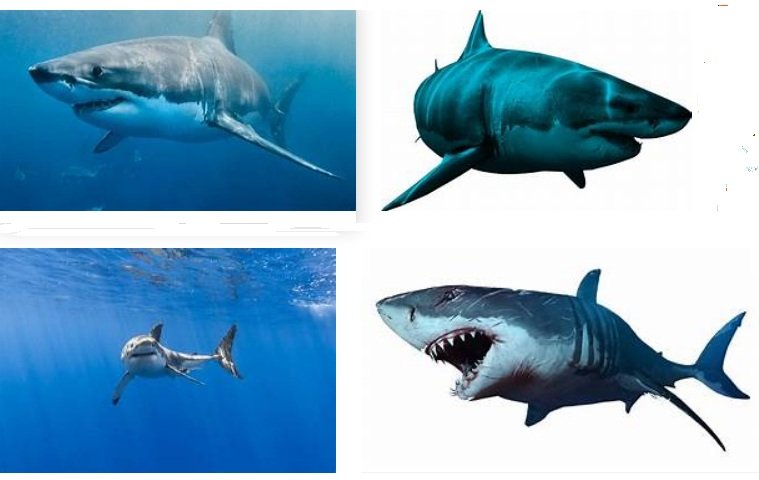
Shark Hunting Techniques and Feeding Strategies
- Ambush Predators: The great white shark is one of several sharks that engage in ambush hunting. They often use their speed and surprise to ambush prey from below.
- Filter Feeding Sharks: Whale sharks and basking sharks are examples of filter feeders, which use their jaws to filter out plankton and tiny fish from enormous volumes of water.
- Opportunistic Feeding: Certain animals, such as tiger sharks, are opportunistic feeders, meaning they will eat almost everything they can capture, including fish, marine mammals, birds, and even inedible things.
Sharks’ Ecological Importance in Marine Environments
In aquatic environments, sharks are at the top of the food chain because they are apex predators. By regulating the numbers of prey species, they play a vital role in preserving the health of these ecosystems.
Sharks Maintain Marine Ecological Balance
- Sharks contribute to the preservation of fish populations’ health and genetic resilience by feeding on sicker or weaker individuals.
- In order to prevent any one species from becoming too dominant and disturbing the ecosystem’s equilibrium, sharks also aid in controlling the numbers of other predators.
Decline in Global Shark Populations
- Shark populations throughout the globe have drastically declined as a result of overfishing, habitat loss, and the demand for shark fins.
- Conservation activities are essential to ensuring the future of these amazing animals, since many shark species are now regarded as vulnerable or endangered.
Shark Conservation and Protection Efforts
There are several risks to sharks, most of them are caused by human activity. Globally, shark populations have drastically declined as a result of overfishing, bycatch, and shark finning. Numerous regional and worldwide organisations are striving to preserve shark habitats and encourage shark conservation in order to save these amazing animals.
Key Shark Conservation Initiatives
- Marine Protected Areas (MPAs): Sharks may flourish in safe areas created by establishing MPAs with fishing restrictions.
- Sustainable Fisheries: Preventing illicit fishing and shark finning by enforcing laws and using sustainable fishing methods.
- Public Awareness Campaigns: Support for shark conservation may be generated by raising knowledge of the significance of sharks in marine ecosystems and encouraging shark-friendly travel.
FAQ (Frequently Asked Questions) about Shark
Q: What is a Shark?
Ans: A shark is a type of cartilaginous fish belonging to the class Chondrichthyes. Sharks are known for their sharp teeth, streamlined bodies, and predatory nature.
Q: Where do sharks live?
Ans: Sharks are found in oceans and seas worldwide, from the shallow coastal waters to the deep oceanic trenches. Some species can also be found in freshwater.
Q: What do sharks eat?
Ans: Sharks are carnivorous and feed on a variety of marine animals, including fish, seals, squid, and even other sharks. Some species are filter feeders and eat plankton.
Q: Are sharks dangerous to humans?
Ans: While sharks are often feared due to their size and teeth, most species are not dangerous to humans. Shark attacks are rare, and sharks are typically not interested in humans as prey.
Q: How long do sharks live?
Ans: The lifespan of sharks varies by species, with many sharks living between 20 to 30 years. Some species, like the Greenland shark, can live over 400 years.
Q: How do sharks reproduce?
Ans: Sharks can reproduce either through internal fertilization, where the female gives birth to live young, or by laying eggs, depending on the species.
Q: Are sharks endangered?
Ans: Some shark species are endangered due to overfishing, habitat loss, and the shark fin trade. Many organizations are working to protect shark populations.
Q: Can sharks survive in freshwater?
Ans: Yes, some species, like the bull shark, can live in both freshwater and saltwater environments, making them highly adaptable.
Q: How fast can sharks swim?
Ans: Sharks are fast swimmers, with some species reaching speeds of up to 60 km/h (37 mph), enabling them to capture prey quickly.
Q: What role do sharks play in the ecosystem?
Ans: Sharks play a critical role in marine ecosystems by controlling the populations of other animals. They help maintain healthy, balanced ecosystems by preying on the weak or sick.
#Sharks #MarineLife #OceanPredators #ApexPredators #SharkConservation #SharkFacts #WildlifeProtection #OceanEcosystems
Our sources and references about Shark
1: Wikipedia – Shark
2: National Geographic – Sharks
3: Sharks.org – Shark Conservation
4: WWF – Sharks