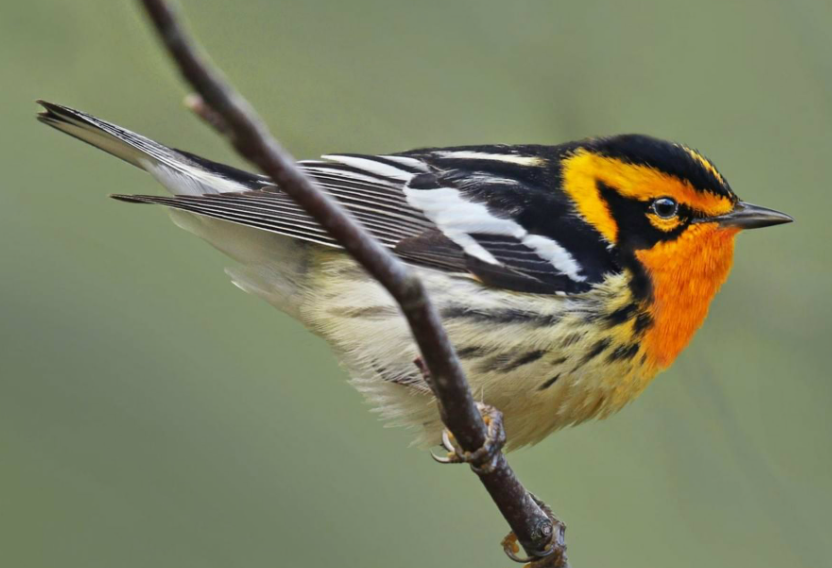
A small, brightly colored songbird found in North and South America. The Blackburnian Warbler is known for its vibrant orange and black plumage and migratory habits, often traveling to Central and South America during the winter months.
Quick Top 10 Facts about Blackburnian Warbler Bird
| SCIENTIFIC NAME | Setophaga fusca |
| CLASSIFICATION | KINGDOM: Animalia PHYLUM: Chordata CLASS: Aves ORDER: Passeriformes FAMILY: Parulidae GENUS: Setophaga SPECIES: S. fusca |
| SIZE | Length: 4.3–5.1 inches (11–13 cm), Wingspan: 7.9–9.4 inches (20–24 cm), Weight: 0.3 oz (8–11 g) |
| HABITAT | Primarily found in coniferous forests in North America, especially during breeding season |
| DIET | Insectivorous, feeding on small insects and spiders found in trees |
| SPECIES | Blackburnian Warbler, a small and brightly colored songbird known for its striking orange and black plumage |
| COUNTRY | Found primarily in North America, particularly in Canada and the northeastern United States |
| GESTATION PERIOD | Incubation lasts around 12–14 days, with chicks fledging in about 9–12 days |
| LIFE SPAN | Average lifespan is 5–10 years, though many may not live beyond their first year |
| CONSERVATION STATUS | Least Concern, although habitat loss and climate change can pose potential risks |
Amazing Facts About Blackburnian Warbler Birds
1. Known for their bright plumage
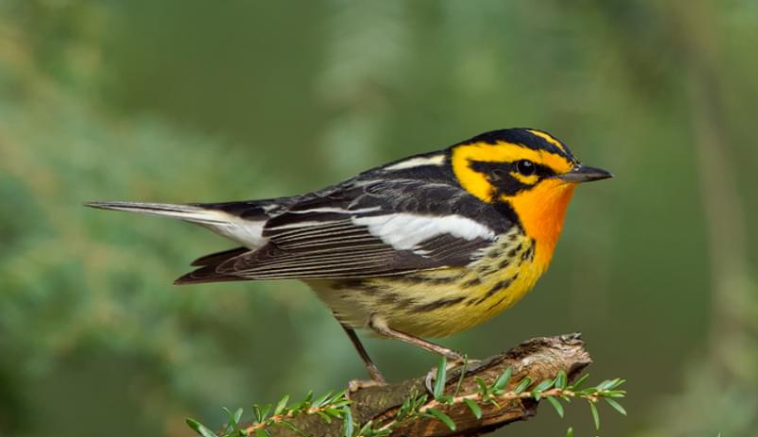
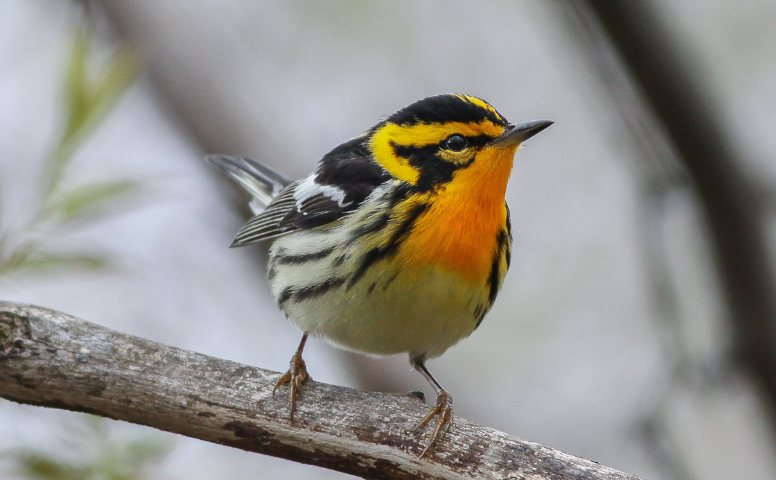
Blackburnian Warblers are easily recognizable by their striking orange throat and face, combined with black upperparts.
2. They have an impressive migration
Blackburnian Warblers are migratory birds, traveling long distances from their breeding grounds in North America to wintering areas in South America.
3. They sing a high-pitched song
Their song is a sharp, high-pitched “tsee-tsee-tsee,” often heard during the breeding season as males defend their territory.
4. They’re skilled insect hunters
These warblers are excellent at foraging for insects, often seen flitting around tree branches and leaves to catch prey.
5. They’re solitary breeders
Blackburnian Warblers generally breed alone, with each male defending its own territory, unlike some other warbler species that form loose colonies.
6. Their migration can be long
They migrate from their breeding grounds in Canada and the northeastern U.S. to wintering sites in South America, making them one of the more distant migrating birds.
7. They nest in coniferous forests
During the breeding season, Blackburnian Warblers prefer to nest in the higher branches of coniferous trees, particularly in forested areas.
8. They are not often seen in urban areas
Blackburnian Warblers prefer forest habitats and are not commonly found in urban or heavily disturbed areas.
9. They are a favorite among birdwatchers
With their vibrant colors and striking appearance, Blackburnian Warblers are highly sought after by birdwatchers, especially during migration seasons.
10. They face challenges due to habitat loss
Although they are not currently endangered, habitat loss due to deforestation in both breeding and wintering grounds poses a threat to their population.
Intriguing facts of the Blackburnian Warbler bird
The Blackburnian Warbler, scientifically known as Setophaga fusca, is a small, migratory songbird that belongs to the Parulidae family of wood warblers. It is mostly found in eastern Canada and the United States, as well as other parts of North America, during mating season. This species is easily identified by its vibrant plumage; the male has a black head and bright orange neck, while the female has more subdued characteristics with golden underparts.
Breeding behavior of the Blackburnian Warbler bird
During the breeding season, Blackburnian Warblers like to live in coniferous and mixed woodlands, particularly those with a large concentration of spruce and fir trees and a dense canopy. They are well known for their peculiar method of foraging; you can often see them aggressively searching the upper branches of trees for insects and spiders. They often collect their meals off of branches and vegetation, making their small, pointed bills perfect for grabbing.
The Blackburnian Warbler’s migration patterns
Blackburnian warblers are highly migratory birds that migrate to the neotropics of Central and South America during the winter. Each year, they travel hundreds of kilometres in the air to reach their wintering grounds. Along the way, they could come across mangroves, deciduous forests, and coffee plantations, among other types of habitats.
The Blackburnian Warbler’s unique song and mating calls
These birds are known for their high-pitched songs, which consist of a series of rising notes that become louder and louder over time. Males establish and defend their territories during the mating season, and their beautiful calls may often be heard echoing across the forest. All things considered, the Blackburnian Warbler is a remarkable species that exquisitely and variedly showcases North America’s bird life.
Fascinating facts about Blackburnian Warbler bird
The wood-warbler family includes the little Blackburnian Warbler (Setophaga fusca). The Blackburnian Warbler is a magnificent migrating songbird whose black and white plumage contrasts with a vivid orange neck. It is well-known for its distinctive singing, for breeding in North America’s boreal woods, and for spending the winter in Central and South America’s highlands. Here are a few fascinating details about this lovely bird:
Physical Characteristics of Blackburnian Warbler bird
With a length of 4.3 to 5.1 inches (11–13 cm) and a weight of 0.3 to 0.4 ounces (9–12 grammes), the Blackburnian Warbler is a little bird. Black upperparts, white underparts, and an eye-catching orange throat characterize the male Blackburnian Warbler. It also has a striking black face mask and white wing bars. Though her colours are duller, the female has a similar pattern.
The preferred habitat of the Blackburnian Warbler bird
In North America’s boreal woodlands, especially in Canada and the northern United States, Blackburnian Warblers breed. They go to the highlands of Central and South America, which include Colombia, Ecuador, Peru, and Venezuela, during the winter. Their preferred habitats are mixed and coniferous woods, where they may find enough insects to eat and appropriate nesting places.
Diet and Feeding Behavior of Blackburnian Warbler bird
The main food source for these warblers is insects, such as spiders, beetles, and caterpillars. They gather food by picking insects off branches and foliage or by hovering and capturing them in midair. It is known that Blackburnian Warblers engage in a behaviour called “sallying,” in which they soar to capture insects midair. On rare occasions, they could also consume nectar and fruit.
Nesting habits, such as building cup-shaped nests in tree branches
Male Blackburnian Warblers mark territory and entice females with unique songs throughout the mating season. The males create cup-shaped nests on tree branches using lichens, moss, and twigs, and they sing a high-pitched, buzzy song that is referred to as “zee-zee-zee-zoo-zee.” During the course of 12–13 days, the female incubates her three to five eggs. For around ten to twelve days, until the chicks fledge, both parents alternately feed the young.
The importance of conserving the Blackburnian Warbler bird
The International Union for Conservation of Nature presently lists the Blackburnian Warbler as a species of least concern (IUCN). However, it suffers risks including habitat loss and degradation from deforestation, much like many other migratory bird species. Climate change may have an impact on their wintering and breeding sites. For this species to survive over the long term, conservation activities are crucial, especially the preservation of its breeding and wintering grounds.
The Blackburnian Warbler’s migration patterns, including its long-distance journeys.
Twice a year, Blackburnian Warblers migrate across great distances. They migrate to their breeding sites in North America in the spring, and they migrate from their wintering habitats in Central and South America. The trip back is made in the autumn. The warblers use their natural sense of direction, landmarks, and astronomical cues to navigate across thousands of kilometres throughout their journeys.
The purpose of vocalization of Blackburnian Warbler bird
In addition to their characteristic song, Blackburnian Warblers make a variety of noises. They employ a keen “chip” or “tsip” cry to alert one another to impending danger. They may also make low-pitched, quiet “seet” cries while they’re foraging or around other people.
The ecological importance of conserving the Blackburnian Warbler bird
Blackburnian warblers are an essential part of the ecosystem’s insect population control system since they are insectivores. They contribute to preserving the natural balance of the woods they live in by preying on insects, especially those that may be pests. They are important environmental quality indicators because their existence also demonstrates how well the forest ecosystem is doing.
Threats and convergence efforts for Blackburnian Warbler bird
To preserve their ecosystems and guarantee their long-term existence, conservation activities are essential. Threats to the species include illicit bird shooting for the pet trade and habitat deterioration from deforestation, much like many other bird species. Its natural habitat is protected, and efforts are being made to increase public awareness of the value of conservation.
FAQ (Frequently Asked Questions) about Blackburnian Warbler Birds
Q: What is a Blackburnian Warbler Bird?
Ans: The Blackburnian Warbler (Setophaga fusca) is a small, brightly colored songbird native to North America. Known for its striking orange and black plumage, it is found primarily in forests of the eastern United States and Canada during breeding season, migrating to South America for the winter.
Q: What does a Blackburnian Warbler eat?
Ans: Blackburnian Warblers primarily feed on insects, especially caterpillars, beetles, ants, and other small invertebrates found in the trees. They are also known to occasionally consume small fruits and berries, particularly during migration.
Q: Where can you find Blackburnian Warblers?
Ans: These birds breed in coniferous and mixed woodlands across parts of North America, particularly in the northeastern United States and Canada. During the winter, they migrate to tropical regions of Central and South America, including countries like Venezuela, Colombia, and Ecuador.
Q: How can you identify a Blackburnian Warbler?
Ans: Blackburnian Warblers are known for their striking plumage, with males displaying bright orange feathers on their throats and faces, bordered by bold black markings. Their backs are olive-green, and they have white undersides with black streaks. Their distinctive song is a high-pitched, trill-like whistle that sounds like “zee-zee-zee-zee-zee-zee-zee.”
Q: Are Blackburnian Warblers endangered?
Ans: The Blackburnian Warbler is currently listed as a species of “Least Concern” by the International Union for Conservation of Nature (IUCN). However, habitat loss, particularly in their breeding grounds, poses a threat to their population. Conservation efforts focus on preserving their forest habitats and migratory routes.
Q: When do Blackburnian Warblers migrate?
Ans: Blackburnian Warblers migrate between North America and South America. Their migration typically occurs in the spring (April-May) and fall (September-October). During this time, they travel long distances to reach their breeding and wintering grounds.
Q: How do Blackburnian Warblers build their nests?
Ans: Blackburnian Warblers build their nests in the branches of coniferous trees, often high up in the canopy. The nest is a small, cup-shaped structure made of twigs, grasses, moss, and spider webs. The female lays 3-5 eggs, and both parents help care for the young.
Q: What are the threats to Blackburnian Warblers?
Ans: The primary threats to Blackburnian Warblers are habitat loss due to logging, urbanization, and deforestation, as well as climate change. Migratory birds are also vulnerable to collisions with glass windows and buildings during their travel.
Q: Can you attract Blackburnian Warblers to your backyard?
Ans: While it can be challenging to attract Blackburnian Warblers directly to your backyard due to their preference for forested habitats, providing native trees and shrubs that attract insects can make your yard more appealing to warblers during migration. Bird feeders with suet and fruit may also attract these colorful visitors.
Q: Are Blackburnian Warblers endangered?
Ans: While Blackburnian Warblers are not currently listed as endangered, their populations face pressures from habitat loss, particularly in their breeding and migratory areas. Conservation efforts are important to protect their forest habitats and migratory routes.
#BlackburnianWarbler, #Warblers, #Songbirds, #Birdwatching, #MigratoryBirds, #BirdConservation, #BirdLovers, #NatureLovers, #BirdWatchingInNorthAmerica, #ConservationEfforts, #BirdingCommunity
Our sources and references about Blackburnian Warblers
1: Wikipedia – Blackburnian Warbler
2: All About Birds – Blackburnian Warbler
3: Audubon – Blackburnian Warbler
4: Britannica – Blackburnian Warbler