Quick Top 10 Facts about Blue Dragon Sea Slug
| SCIENTIFIC NAME | Glaucus atlanticus |
| CLASSIFICATION | KINGDOM: Animalia CLASS: Gastropoda ORDER: Nudibranchia FAMILY: Glaucidae PHYLUM: Mollusca GENUS: Glaucus |
| SIZE | Up to 3 cm (1.2 inches) long |
| HABITAT | Open ocean – usually found floating on the surface in warm waters |
| DIET | Carnivorous – feeds on venomous prey such as Portuguese Man o’ War and other jellyfish |
| SPECIES | Blue Dragon Sea Slug |
| COUNTRY | Found worldwide in temperate and tropical oceans, especially near Australia, South Africa, and the U.S. East Coast |
| GESTATION PERIOD | Lays egg strings; development depends on water temperature (a few days to a week) |
| LIFE SPAN | Approximately 1 year |
| CONSERVATION STATUS | Not evaluated; not currently considered threatened |
Amazing Facts About Blue Dragon Sea Slug
1. Not a dragon, but a nudibranch
Despite its mythical name, the Blue Dragon is actually a type of sea slug known as a nudibranch.
2. Floats upside down
It floats on the water’s surface upside down using a gas-filled sac in its stomach for buoyancy.
3. Stores venom from its prey
It feeds on venomous creatures like the Portuguese Man o’ War and stores their stinging cells to use as a defense mechanism.
4. Beautiful but dangerous
Its striking blue and silver coloring warns predators, and its sting can be painful to humans.
5. Small but mighty
Though it grows to only a few centimeters in length, it packs a powerful punch thanks to its toxic arsenal.
6. Simultaneous Both Sex
Each Blue Dragon has both male and female reproductive organs and can reproduce with any other of its kind.
7. Rarely seen
They live in the open ocean and are usually only seen when strong winds wash them ashore.
8. Effective camouflage
Its coloration helps it blend into both the sky above and the water below, making it harder for predators to spot.
9. Has cerata instead of fins
The Blue Dragon’s appendages are called cerata, which help with respiration and defense.
10. Not suitable as pets
Due to their specific dietary needs and venomous nature, they are not suitable for home aquariums.
Scientific name, Glaucus atlanticus, and its unique characteristics as Blue Dragon Sea Slug
The Blue Dragon Sea Slug, a member of the nudibranch family, is an amazing aquatic animal. Its striking blue colour and distinct morphological characteristics set it apart. Unlike other sea slugs, the Blue Dragon Sea Slug uses a gas-filled sac in its stomach to stay buoyant. This allows it to float upside down on the ocean’s surface.
Natural habitat of the Blue Dragon Sea Slug includes warm oceans and seas
The Blue Dragon Sea Slug can be found in warm seas, including the Indian, Pacific, and Atlantic oceans. It often inhabits coastal regions and is frequently washed ashore on beaches during storms. The Blue Dragon Sea Slug absorbs the poisons from venomous animals, such as the Portuguese Man-o-War, and retains them in unique sacs known as cnidosacs.
Blue Dragon Sea Slug is a fascinating marine creature
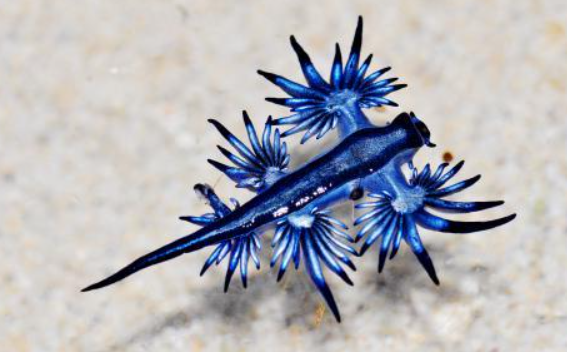
The Blue Dragon Sea Slug has a blue body striped with silver, and it features remarkable appendages called cerata, which resemble fingers. These cerata not only enhance its appearance but also serve as a protective mechanism. The cerata contain stinging cells that can deter potential predators. The Blue Dragon Sea Slug becomes more powerful and lethal by concentrating the poison it absorbs.
Ability to store venomous cells from its prey and use them for self-defence
Despite its small size, the Blue Dragon Sea Slug is a strong predator. It feeds on various creatures, including crabs, tiny fish, and other sea slugs. Due to its eating habits and ability to stockpile venom, it is a top predator in its environment. It is important to note that the Blue Dragon Sea Slug does not harm humans unless they touch or eat it directly.
Reproductive process of the Blue Dragon Sea Slug
The reproductive process of the Blue Dragon Sea Slug is also intriguing. Each member of the species has both male and female reproductive organs, making it a intersex species. During mating, two Blue Dragon Sea Slugs line up their bodies and exchange sperm. After fertilisation, the female lays hundreds of eggs on a gelatinous ribbon, which eventually hatches into small larvae.
Adaptations that enable the Blue Dragon Sea Slug to survive in its environment
The Blue Dragon Sea Slug is a remarkable creature of nature, distinguished by its vivid hues, unique adaptations, and captivating habits. Its ability to store venom, float upside down, and reproduce in such an interesting way makes it an exciting species to study and enjoy. To protect and preserve these stunning sea slugs, it is crucial to observe them closely.
Fascinating facts about Blue Dragon Sea Slug
The Blue Dragon Sea Slug, also known as *Glaucus atlanticus*, is a fascinating creature that inhabits the world’s oceans. Despite its small size, this unique and beautiful slug has captured the attention of marine enthusiasts and researchers alike. With its vibrant blue colour, unique feeding habits, and defence mechanisms, the Blue Dragon Sea Slug is an extraordinary creature. Its ability to adapt to its environment and interact with other organisms showcases the wonders of marine life. As we continue to explore and learn more about these slugs, we must work towards preserving their habitats and ensuring their survival in our oceans.
Appearance: Detailed description of the Blue Dragon Sea Slug’s physical features
The Blue Dragon Sea Slug is small, typically measuring around 3 centimetres in length. Its dorsal side is a vibrant blue, helping it blend with the ocean’s surface. The ventral side of the slug is silver-grey. The slug’s body is elongated and slender, with six appendages known as cerata extending from its sides.
Habitat: Distribution, highlighting regions where it is commonly found
The Blue Dragon Sea Slug is found in the Atlantic, Pacific, and Indian Oceans. It is most commonly spotted in warm, tropical waters. These slugs are pelagic, meaning they spend their lives floating on the water’s surface. They are often found in areas where other organisms, such as jellyfish, are abundant.
Feeding Habits: preference for consuming venomous prey
The Blue Dragon Sea Slug has a unique feeding strategy. It preys on pelagic organisms, including the Portuguese Man o’ War. Despite the Man o’ War’s powerful sting, the Blue Dragon Sea Slug is immune to its toxins. It feeds on the tentacles of the Man o’ War, storing the stinging cells in its cerata for self-defence.
Various defence mechanisms employed by the Blue Dragon Sea Slug
The Blue Dragon Sea Slug has several mechanisms to protect itself from predators. Its vibrant blue colour serves as a warning to potential threats, signalling that it is toxic and should be avoided. If attacked, the slug can release the stored stinging cells from its cerata, delivering a painful sting to its predator. This defence mechanism effectively deters would-be attackers.
Reproduction and Life Cycle
Blue Dragon Sea Slugs are hermaphroditic, meaning they possess both male and female reproductive organs. When two slugs come into contact, they can exchange sperm and fertilise each other’s eggs. The fertilised eggs are then laid in a gelatinous mass, which floats on the water’s surface. After hatching, the larvae go through several stages of development before becoming adult slugs.
Conservation status of the Blue Dragon Sea Slug
Currently, limited information is available regarding the population status of Blue Dragon Sea Slugs. However, their unique adaptations and reliance on specific prey species make them vulnerable to changes in their environment. Climate change, pollution, and habitat destruction are potential threats to their survival. Further research is necessary to fully understand and protect these beautiful creatures.
FAQ (frequently asked questions) about Blue Dragon Sea Slug
Q: What is a Blue Dragon Sea Slug?
Ans: The Blue Dragon Sea Slug, also known as Glaucus atlanticus, is a small, vibrant blue marine mollusk known for its striking appearance and unique ability to float on the ocean’s surface. It is a type of nudibranch, or sea slug, found in warm ocean waters around the world.
Q: Why is it called the Blue Dragon?
Ans: It is called the Blue Dragon due to its dragon-like shape and brilliant blue coloration. Its wing-like appendages resemble those of mythical dragons, and its bold appearance serves as a warning to predators of its toxicity.
Q: Where does the Blue Dragon Sea Slug live?
Ans: The Blue Dragon Sea Slug is typically found in the warm waters of the Atlantic, Pacific, and Indian Oceans. It floats upside-down on the ocean’s surface, carried by wind and ocean currents, and is often seen near coastal areas.
Q: What does the Blue Dragon Sea Slug eat?
Ans: The Blue Dragon feeds on venomous sea creatures, including the Portuguese Man o’ War, by consuming their stinging cells (nematocysts) and storing them in its own tissues for defense. It also preys on other sea slugs and small jellyfish.
Q: Is the Blue Dragon Sea Slug dangerous?
Ans: Yes, while it is small and beautiful, it can deliver a painful sting. The slug stores venom from its prey and can use it defensively. Its sting can cause skin irritation, swelling, and pain in humans, so it’s best admired from a distance.
Q: How big does the Blue Dragon Sea Slug get?
Ans: The Blue Dragon Sea Slug is relatively small, typically growing to about 1 to 1.5 inches (2.5 to 4 cm) in length. Despite its small size, it is highly visible due to its bright coloration and unusual body shape.
Q: How does the Blue Dragon float?
Ans: The Blue Dragon floats on its back at the water’s surface using an air-filled sac in its stomach. It uses surface tension to stay afloat and can be carried across great distances by wind and ocean currents.
Q: Can you touch a Blue Dragon Sea Slug?
Ans: It is not recommended to touch a Blue Dragon Sea Slug. Although it is small, its sting can be painful and may cause an allergic reaction in some people. It’s best to observe this creature without physical contact.
Q: Are Blue Dragon Sea Slugs rare?
Ans: They are not considered rare, but they are not commonly seen due to their small size and drifting lifestyle. They occasionally wash ashore in large numbers, especially after storms, which is when most people encounter them.
Q: Do Blue Dragon Sea Slugs have predators?
Ans: The Blue Dragon has few natural predators due to its use of stolen venom and its bright warning colors. However, some larger marine animals may prey on them, although their toxicity offers strong protection against most threats.
#BlueDragon, #BlueDragonSeaSlug, #SeaSlug, #MarineLife, #OceanCreatures, #Nudibranch, #UnderwaterWorld, #OceanPhotography, #SeaSlugLovers, #MarineBiology, #WildlifeOfTheSea, #GlaucusAtlanticus, #AquaticCreatures, #NatureIsAwesome, #RareSeaLife
Our sources and references about Blue Dragon Sea Slug
1: Wikipedia – Glaucus atlanticus (Blue Dragon)
2: National Geographic – Blue Dragon Sea Slug
3: Smithsonian Ocean – Blue Dragon
4: Australian Museum – Blue Dragon (Glaucus atlanticus)