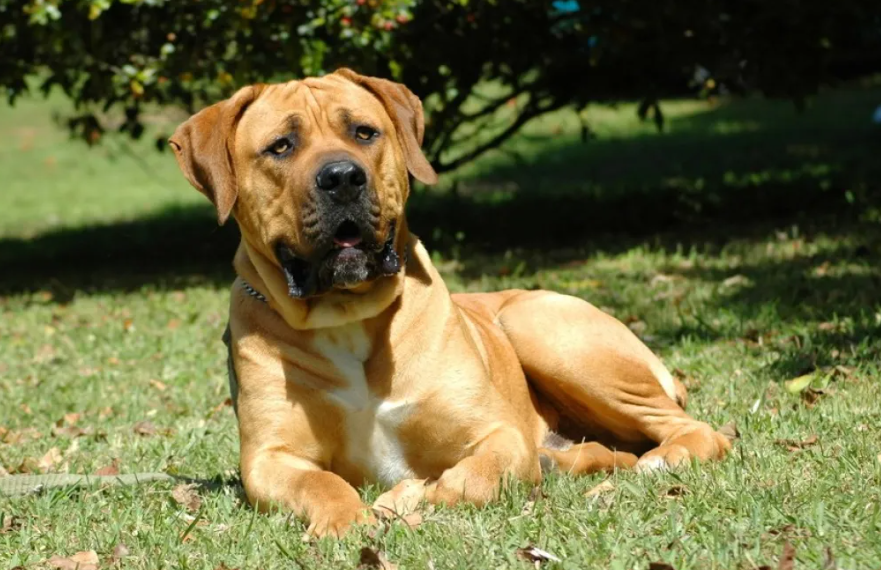
Quick Top 10 Facts about Boerboel Dog
| SCIENTIFIC NAME | Canis lupus familiaris |
| CLASSIFICATION |
KINGDOM: Animalia CLASS: Mammalia ORDER: Carnivora FAMILY: Canidae PHYLUM: Chordata GENUS: Canis |
| SIZE | Height: 24–28 inches (61–71 cm); Weight: 110–200 lbs (50–90 kg) |
| HABITAT | Primarily domesticated; commonly found as family pets, working dogs, or guarding dogs |
| DIET | Carnivorous; includes high-quality dog food with meat, vegetables, and grains |
| SPECIES | Boerboel |
| COUNTRY | Originated in South Africa |
| GESTATION PERIOD | Approximately 63 days |
| LIFE SPAN | 10–12 years |
| CONSERVATION STATUS | Not applicable – domesticated breed with a stable population |
Amazing Facts About Boerboel Dogs
1. Known for their protective nature
Boerboels are natural protectors and were originally bred to guard farms and livestock.
2. Large, muscular build
Boerboels are a strong and powerful breed, with a sturdy frame and an imposing appearance.
3. Intelligent and trainable
These dogs are highly intelligent, making them excellent working dogs. However, they require consistent training.
4. Loyal and affectionate
Boerboels are incredibly loyal to their families and form strong bonds with their human companions.
5. Highly social but protective
While they are friendly with family members, Boerboels are naturally protective of their loved ones and territory.
6. Need early socialization
Early socialization is crucial to ensure that Boerboels grow into well-mannered and balanced adults.
7. Adapt well to various environments
They thrive in spacious environments, especially those with a yard, but can adapt to apartment living with proper exercise.
8. Natural guardians
Due to their protective instincts, Boerboels make great guard dogs for homes and properties.
9. Energetic and active
Although they are large dogs, Boerboels require regular exercise to keep them fit and healthy.
10. Strong prey drive
Due to their history as working dogs, Boerboels have a strong prey drive and can excel in activities like agility or obedience training.
History and origins of Boerboels, tracing back to South Africa
The South African The mastiff, often known as the boerboel, is a powerful, huge dog breed with South African origins. Boerboels are amazing canines with a long and illustrious history. They make ideal guardians and friends because of their devotion, intellect, and protective temperament. Owning a Boerboel, however, requires responsible ownership and a dedication to their mental and physical well-being.
Physical appearance of Boerboels, including their size, weight, and muscular build
The Boerboel dog breed has a powerful, well-built physique and an intimidating look. They have a wide head, a broad chest, and a deep, muscular body. Their short, thick coat shields them from the harsh African environment. Predation prevention was the initial goal of their breeding programme for farms and cattle.
Popularity and unique characteristics of Boerboel Dog
Boerboels are known for having loyal and protective personalities. They are not only very smart, but they also have a strong urge to keep their family and possessions safe. Despite their gigantic size, they are affectionate and compassionate towards their loved ones, which makes them wonderful family pets. They need to be socialised and taught from an early age on to make sure they grow up to be polite and obedient canines.
Fascinating facts about Boerboel Dog
Originating in South Africa, the Boerboel, sometimes called the South African Mastiff, is a huge, strong dog breed. Boerboels are distinguished by their strong physique, self-assured manner, and tendency to be devoted to their families. Here are a few fascinating facts regarding this exceptional breed:
Introduce the Boerboel dog breed and its origins
The working dogs that European immigrants brought to South Africa in the 17th century are the origins of the Boerboel breed. The Boerboel was created by breeding these canines with indigenous African dogs. Boerboels were originally used as farm dogs to keep animals and property safe from harm.
Distinct features such as a broad head, strong jaws, and a confident stance
Large, muscular dogs with a distinct bone structure are called boerboels. They have a strong jaw, a wide skull, and deeply set eyes. They usually have clipped ears; however, this is not happening as often these days. The short, thick coat of a boerboel may be any shade of brown, brindle, or fawn.
Gentle nature with family members and their natural instinct to guard and protect
Boerboels are renowned for their loyalty and sense of protection. They are very smart and make great security dogs. Although they are usually peaceful and kind with their family, they may need early socialisation and training since they might be suspicious of strangers. Boerboels may be rather loving towards their owners and get along well with kids.
Exercise requirements of Boerboels, emphasizing their need for regular physical activity
Boerboels need frequent exercise to keep their bodies and minds engaged because of their size and energy levels. For their general wellbeing, daily walks, playing, and training sessions are crucial. Reward-based techniques should be used in training that is firm, consistent, and positive. In order to guarantee that they develop into well-mannered and well-adjusted canines, early socialisation is essential.
Common health issues that Boerboels may be prone to
Though boerboels are typically healthy, they may sometimes have health problems, just like any big dog. Heart issues, bloating, and hip and elbow dysplasia are among the major health issues with Boerboels. A balanced diet, regular exercise, and regular veterinarian checkups may help preserve their general health and wellbeing.
Duration of Life or Lifespan of Boerboels Dog:
A Boerboel dog typically lives for ten to twelve years. Some Boerboels are known to live even longer when given the right care, food, and exercise. As with any breed of dog, their general well-being and lifespan depend on having a loving and caring environment.
Temperament and personality traits of Boerboels
Adopting a Boerboel calls for serious thought and dedication. They are best suited for seasoned dog owners who can offer the required training, socialisation, and exercise because of their size and protective attitude. When considering bringing a Boerboel into your home, it’s important to do your homework and choose a respectable breeder or rescue.
Popularity of Boerboels in movies
Boerboels have been featured in a number of popular cultural contexts. They have appeared in films like “District 9” and “The Breed,” where their commanding presence and natural tendency to defend have been highlighted. Furthermore, Boerboels have become more well-known as show dogs and are accepted by several kennel associations worldwide.
FAQ (frequently asked questions) about Boerboel Dog
Q: What is a Boerboel?
Ans: The Boerboel is a large and powerful breed of dog originally from South Africa. Known for its protective nature and muscular build, it was originally bred to guard farms and protect livestock from predators.
Q: What does a Boerboel look like?
Ans: Boerboels are large dogs with a muscular and imposing physique. They have short, dense coats that come in various colors, including fawn, brindle, and red. Their broad head, strong jaws, and thick neck make them look quite formidable.
Q: Are Boerboels good family pets?
Ans: Yes, Boerboels can be excellent family pets. They are known to be loyal, protective, and affectionate with their families, including children. However, they require early socialization, consistent training, and firm leadership to ensure they are well-behaved.
Q: How much exercise does a Boerboel need?
Ans: Boerboels are active dogs that need regular exercise to stay healthy and happy. They require at least 1 hour of physical activity each day, such as daily walks, playtime, or training sessions, to prevent boredom and maintain their muscle tone.
Q: Are Boerboels easy to train?
Ans: Boerboels are intelligent and eager to please, but they can be independent and strong-willed. Consistent, positive reinforcement training methods work best. Early socialization and obedience training are essential to prevent undesirable behaviors.
Q: How long do Boerboels live?
Ans: Boerboels typically live between 9 to 12 years. With proper care, including a balanced diet, regular exercise, and routine veterinary visits, they can enjoy a healthy and active life.
Q: Do Boerboels shed?
Ans: Yes, Boerboels shed moderately. They have short coats, so their shedding is manageable with regular brushing, typically once a week. During seasonal shedding periods, more frequent brushing may be needed to keep shedding under control.
Q: What are common health problems in Boerboels?
Ans: Boerboels are generally healthy dogs, but they may be prone to health issues such as hip dysplasia, elbow dysplasia, bloat, and certain heart conditions. Regular vet check-ups and responsible breeding practices can help minimize these risks.
Q: Are Boerboels good with other pets?
Ans: Boerboels can be protective and dominant, so it’s important to socialize them early with other pets. They may get along with other dogs and animals in the household if raised with them, but they may show aggression toward unfamiliar animals, especially other dogs of the same sex.
Q: What kind of owner is best for a Boerboel?
Ans: Boerboels do best with experienced dog owners who can provide firm, consistent leadership. They require an owner who can commit to their training, exercise needs, and socialization. First-time dog owners may find the Boerboel challenging to handle due to its independent nature and protective instincts.
#Boerboel, #BoerboelDog, #SouthAfricanBoerboel, #MastiffBreed, #GuardDog, #DogLovers, #StrongDogs, #FamilyProtection, #WorkingDogs, #BigDogs, #PetLovers, #DogTraining, #DogLife, #PowerfulDogs, #BoerboelLove
Our sources and references about Boerboel Dog
1: Wikipedia – Boerboel
2: American Kennel Club – Boerboel
3: DogTime – Boerboel
4: Petfinder – Boerboel