Quick Top 10 Facts about Brahminy Blindsnake
| SCIENTIFIC NAME | Indotyphlops braminus |
| CLASSIFICATION | KINGDOM: Animalia PHYLUM: Chordata CLASS: Reptilia ORDER: Squamata FAMILY: Typhlopidae GENUS: Indotyphlops SPECIES: I. braminus |
| SIZE | Length: 7–12 inches (18–30 cm) |
| HABITAT | Found in tropical and subtropical regions, often under soil, decaying vegetation, or rotting logs |
| DIET | Feeds primarily on ants and termites |
| SPECIES | Brahminy Blindsnake, a small, burrowing species of snake |
| COUNTRY | Native to Southeast Asia, including India, Sri Lanka, and Southeast Asian islands |
| GESTATION PERIOD | Egg-laying species; fertilization occurs externally |
| LIFE SPAN | Typically 5–10 years in the wild |
| CONSERVATION STATUS | Not endangered; widely distributed and adaptable |
Amazing Facts About Brahminy Blindsnake
1. They are incredibly small
Brahminy Blindsnakes are some of the smallest snakes in the world, rarely exceeding 12 inches (30 cm) in length.
2. They are fossorial
These snakes are adapted to a burrowing lifestyle, spending most of their time underground where they hunt for ants and termites.
3. They are non-venomous
Brahminy Blindsnakes are harmless to humans and other animals. They rely on their burrowing abilities rather than venom to survive.
4. They are blind
As their name suggests, Brahminy Blindsnakes are blind and have vestigial eyes, relying on other sensory mechanisms like touch and vibration to navigate.
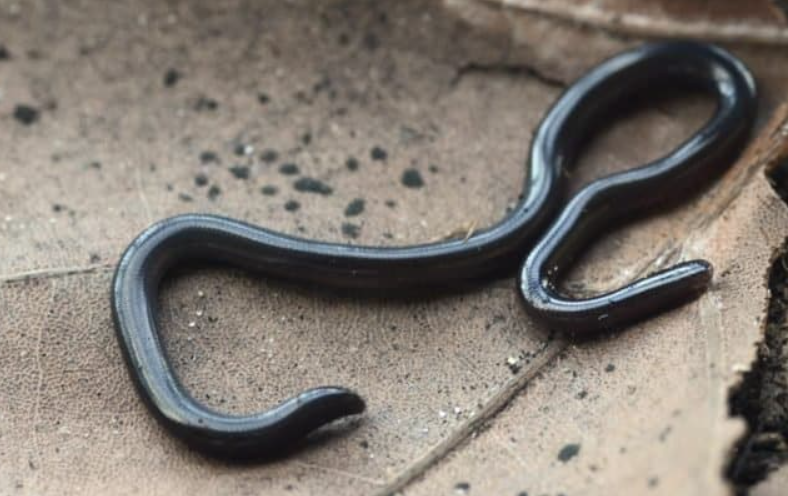
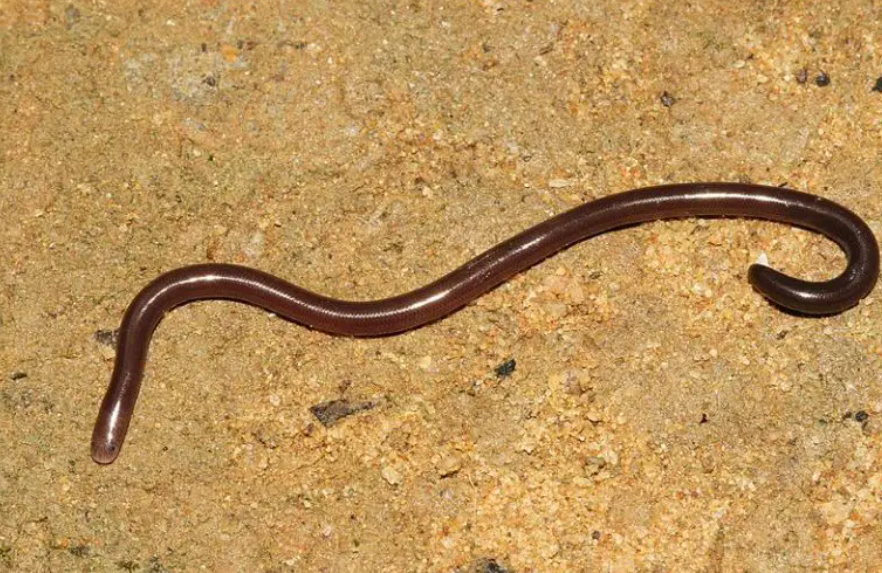
5. They have a smooth, shiny appearance
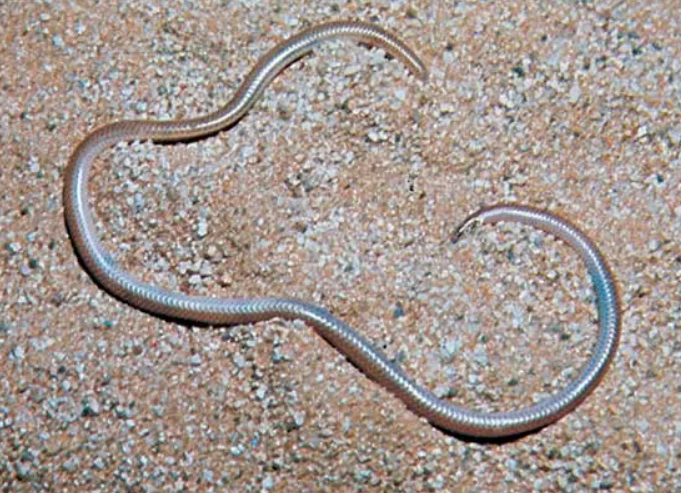
Their smooth, glossy scales help them move easily through soil and other tight spaces in search of food.
6. They are egg-layers
Brahminy Blindsnakes reproduce by laying eggs, often hidden deep underground to protect them from predators.
7. They have a unique method of hunting
These snakes hunt ants, termites, and other small invertebrates by following their tunnels underground.
8. They are widespread in tropical climates
Although they are most commonly found in Southeast Asia, Brahminy Blindsnakes have been introduced to other tropical regions around the world.
9. They are low-maintenance reptiles
In captivity, Brahminy Blindsnakes require minimal care, with a simple diet of ants and a suitable substrate for burrowing.
10. They are solitary creatures
Brahminy Blindsnakes are usually solitary, coming together only for mating during the breeding season.
Introduction of the Brahminy blindsnake and its significance
The Brahminy blindsnake, or Ramphotyphlops braminus, is a rare species of snake in the Typhlopidae family. It is often found around the world, including the Americas, Southeast Asia, Africa, Australia, and other regions. Contrary to popular belief, the Brahminy blindsnake is not a true snake but rather a kind of legless lizard. Owing to their underground existence, blindsnakes are lonely creatures that are seldom seen above ground. When it comes out of its burrow at night to look for food, it is at its most active. To crawl ahead, the blindsnake uses its body muscles to push against the walls of its tunnel.
Interesting facts about this unique species
One of the most interesting characteristics of the Brahminy blindsnake is its small size. Typically growing to a length of 6 to 8 inches, it is one of the smallest snake species in the world. It is known as the “blindsnake” because of its narrow, cylindrical body, which is devoid of eyes. Instead of eyes, it employs other sense organs, such as heat-sensitive pits, to detect its surroundings and locate food.
Feeding behaviour of the Brahminy blindsnake
Termites and ants are the primary meals consumed by the Brahminy blindsnake. It spends much of its time underground, seeking its preferred meal since it is an expert burrower. The distinctive form of the blindsnake’s jaws enables it to devour enormous quantities of termites and ants with speed and efficiency. Remarkably, blindsnakes have also been seen consuming ant larvae and pupae, which are typically protected by the colony.
Unique adaptations of the Brahminy blindsnake
The brahminy blindsnake is a remarkable creature with unique adaptations that allow it to thrive in its underground habitat. Its small size, lack of eyes, and unusual diet make it a very interesting species. Further research and examination of this blindsnake may provide significant new insights into the ecological roles that snakes play in a variety of settings, as well as their evolutionary adaptations.
Fascinating facts about this unique species
Ramphotyphlops braminus, the scientific name for the Brahminy blindsnake, is a peculiar and fascinating member of the Typhlopidae family of snakes. The blindsnake, despite its name, is a kind of legless reptile rather than a snake. We’ll look at some fascinating information on the Brahminy blindsnake, including its traits, habitat, behaviour, and more.
Physical appearance of the Brahminy blindsnake
The Brahminy blindsnake is a little reptile that usually grows to a length of 15 to 20 centimetres. Its smooth, glossy scales, which vary in colour from light brown to grey, cover a cylindrical body. The blindsnake receives its name because, in contrast to other snakes, it is eyeless. Instead, it uses other senses to locate and travel to its prey.
Capacity for self-fertilisation in Brahminy blindsnakes
The Brahminy blindsnake’s capacity for self-fertilisation makes it one of its most intriguing features. Because they are a parthenogenetic species, the females may have children even in the absence of fertilisation. The blindsnake’s unique reproduction technique enables it to quickly establish new habitats and increase its range.
The geographical range and distribution of the Brahminy blindsnake
Although it originated in Southeast Asia, the Brahminy blindsnake has been successfully introduced to various continents, including Africa, the Americas, and Australia. It grows well in many different types of settings, including urban areas, woodlands, grasslands, and agricultural regions. Its abundance and broad dispersion are attributed to its adaptability.
Its ability to burrow underground and live in narrow spaces
The majority of the blindsnake’s life is spent underground, in contrast to that of many other reptiles. It may be found in gardens, farmland, and other places with ideal burrowing conditions; it favours loose soil. It can stay out of sight and evade predators thanks to this behaviour.
The Brahminy blindsnake primarily feeds on ant and termite larvae
Because it is a carnivore, the Brahminy blindsnake primarily eats termites and ants. With its unique jaw and teeth, it removes these insects’ fragile bodies from their nests. The blindsnake may eat a lot of ants or termites in one feeding session, despite its tiny size.
Brahminy blindsnake’s ecological importance
Despite its rather ordinary appearance, the Brahminy blindsnake is a crucial member of the ecology. As a predator, it helps manage ant and termite populations, keeping them from spreading and becoming a nuisance. The general health of the ecosystem is enhanced by the blindsnake’s burrowing behaviour, which also aids in soil aeration and nutrient cycling.
Misconceptions or fears associated with this species
Nonetheless, the blindsnake has spread to other areas where it was not native and is now considered an invasive species. Because of its quick reproduction and environmental adaptation, it may outcompete native species for resources. As a result, biodiversity and local ecosystems may be harmed.
Interactions and impacts the Brahminy blindsnake has on environment
The Brahminy blindsnake is an intriguing animal with distinct traits and habits. It is a fascinating topic to research because of its underground lifestyle, capacity for self-fertilisation, and eating habits. Although it plays a significant role in its natural environment, areas where it has been introduced need to be cautious to avoid any unfavourable ecological effects. We may gain an appreciation for the richness and intricacy of the natural world by comprehending and respecting the Brahminy blindsnake.
FAQ (Frequently Asked Questions) about Brahminy Blindsnake
Q: What is a Brahminy Blindsnake?
Ans: The Brahminy Blindsnake, scientifically known as *Indotyphlops braminus*, is a small, non-venomous snake that belongs to the family Typhlopidae. This snake is known for its tiny size and its ability to live a subterranean lifestyle, spending most of its life underground in tropical regions.
Q: Where is the Brahminy Blindsnake found?
Ans: The Brahminy Blindsnake is native to Southeast Asia but has spread to other parts of the world, including the Caribbean, Central America, and parts of the United States. It is typically found in warm, tropical environments and prefers areas with loose, sandy soils where it can burrow and hide.
Q: What does the Brahminy Blindsnake eat?
Ans: The Brahminy Blindsnake is a carnivore that primarily feeds on small invertebrates, such as ants, termites, and larvae. It uses its small, blunt head to burrow through the soil in search of its prey, which it captures with its specialized feeding mechanisms.
Q: How does the Brahminy Blindsnake live underground?
Ans: The Brahminy Blindsnake has a highly specialized body structure for a subterranean lifestyle. It has smooth, shiny scales that help it move through the soil with ease, and its small eyes are vestigial, meaning they are not functional and covered by a layer of skin. It relies on its keen sense of touch to navigate underground.
Q: Is the Brahminy Blindsnake dangerous?
Ans: No, the Brahminy Blindsnake is non-venomous and poses no significant danger to humans. Its small size and peaceful nature make it harmless, even though it may startle people if encountered unexpectedly. It poses no direct threat to human safety.
Q: How big does the Brahminy Blindsnake get?
Ans: The Brahminy Blindsnake is very small, typically growing to only about 6 to 10 inches (15 to 25 cm) in length. It has a slender body and a smooth, shiny appearance, making it look like a small worm or elongated insect when seen in the wild.
Q: How does the Brahminy Blindsnake reproduce?
Ans: Brahminy Blindsnakes reproduce via parthenogenesis, a form of asexual reproduction in which females can produce offspring without mating. This unique ability allows them to colonize new areas quickly, and populations can grow rapidly in favorable conditions.
Q: Can you keep a Brahminy Blindsnake as a pet?
Ans: While Brahminy Blindsnakes are not commonly kept as pets, some snake enthusiasts may keep them due to their unique behavior and small size. If you choose to keep one, it’s essential to replicate their natural underground habitat by providing a suitable enclosure with loose, sandy soil and plenty of hiding spots.
#BrahminyBlindsnake, #IndotyphlopsBraminus, #Blindsnake, #SubterraneanSnake, #SmallSnakes, #NonVenomousSnake, #TropicalSnakes, #SnakeEnthusiast, #ReptileCare, #SnakePet
Our sources and references about Brahminy Blindsnake
1: Reptile Knowledge – Brahminy Blindsnake
2: IUCN Red List – Brahminy Blindsnake
3: Arkive – Brahminy Blindsnake
4: Snakes for Pets – Brahminy Blindsnake Care