Quick Top 10 Facts about Brontosaurus Dinosaur
| SCIENTIFIC NAME | Brontosaurus excelsus |
| CLASSIFICATION | KINGDOM: Animalia PHYLUM: Chordata CLASS: Reptilia ORDER: Sauropoda FAMILY: Diplodocidae GENUS: Brontosaurus SPECIES: B. excelsus |
| SIZE | Length: 70–72 feet (21–22 meters) Weight: 15–20 tons |
| HABITAT | Floodplains, forests, and other lush, vegetated areas during the Late Jurassic period |
| DIET | Herbivorous; primarily fed on plants such as conifers, cycads, and ferns |
| SPECIES | Brontosaurus, a massive long-necked herbivorous dinosaur that roamed North America during the Late Jurassic period |
| COUNTRY | North America (mostly the western United States, particularly the Morrison Formation) |
| GESTATION PERIOD | Unknown, but like other dinosaurs, likely laid eggs |
| LIFE SPAN | Estimated to be around 70–100 years |
| CONSERVATION STATUS | Extinct |
Amazing Facts About Brontosaurus
1. It was one of the largest dinosaurs
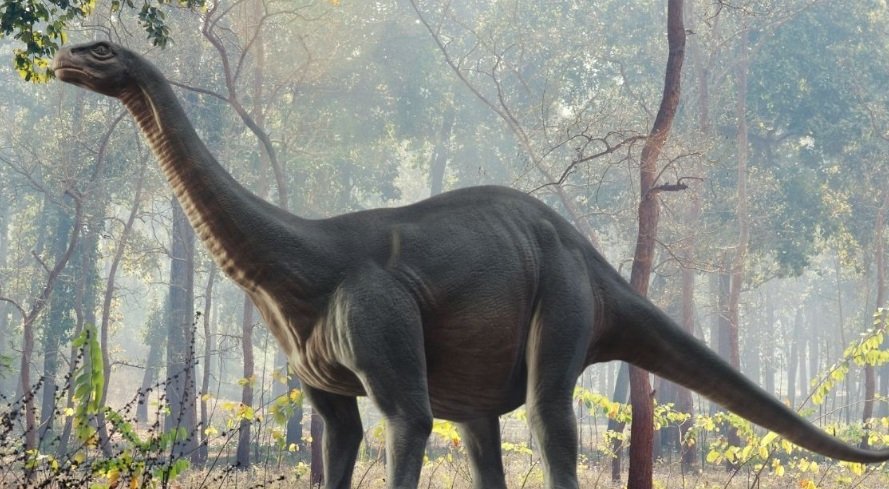
Brontosaurus was an enormous long-necked dinosaur that reached lengths of up to 72 feet (22 meters) and weighed as much as 20 tons, making it one of the largest herbivores of its time.
2. It had a long, whip-like tail
The Brontosaurus had a long tail, which may have been used for defense or as a counterbalance to its massive body, helping it maintain balance while walking.
3. It had a small head for its size
The Brontosaurus had a relatively small head compared to its enormous body, and its neck was long enough to allow it to reach high vegetation as well as graze on lower plants.
4. It was an herbivore
Brontosaurus was a plant-eater, feeding on large quantities of ferns, cycads, and conifers that grew during the Late Jurassic period.
5. It had a long neck
The long neck of Brontosaurus allowed it to feed from tall trees and vegetation, giving it access to food sources that other herbivores could not reach.
6. It lived during the Late Jurassic period
Brontosaurus lived approximately 154 to 153 million years ago during the Late Jurassic period, when the Earth was lush with plant life.
7. Its fossils were discovered in North America
The fossils of Brontosaurus were primarily found in the Morrison Formation, a famous fossil site in the western United States.
8. It was initially misidentified
For many years, Brontosaurus was thought to be a species of Apatosaurus, but studies in the 21st century confirmed it as a distinct genus.
9. It may have had a herd structure
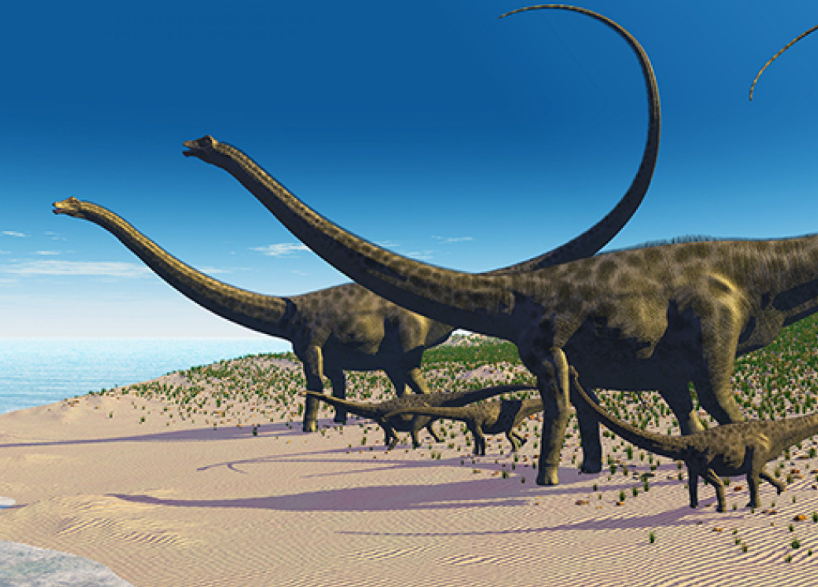
Evidence suggests that Brontosaurus, like many other sauropods, may have lived and traveled in herds, providing protection and social structure.
10. It was not a fast mover
Despite its size, Brontosaurus was likely a slow mover due to its massive body, moving at a speed of only a few miles per hour. It relied on its size for protection against predators.
Brontosaurus, one of the most iconic dinosaurs in history
The Late Jurassic period, some 150 million years ago, saw the emergence of a massive species of long-necked dinosaurs known as Brontosaurus, or Apatosaurus. These herbivorous mammals were among the largest terrestrial creatures to have ever lived, reaching lengths of up to 75 feet and weights of up to 30 tonnes.
Origin and history of Brontosaurus dinosaur
Originally called “Brontosaurus” after a group of petrified bones unearthed in the late 19th century, it was later determined that these bones really belonged to the Apatosaurus, a different kind of dinosaur. The word “Brontosaurus” continued to be employed in popular culture and colloquialism, confusing people.
Physical Characteristics of Brontosaurus dinosaur
The distinctive long neck and tail of the Brontosaurus set it apart from other dinosaurs, even though it had a small brain and a tiny skull. Its long neck, which could extend up to thirty feet, allowed it to reach vegetation that other dinosaurs could not. It moved slowly, maybe like a lumberjack, with its four powerful legs supporting its body. The brontosaurus’s remarkable ability to breathe via air sacs connected to its lungs allowed it to do so even in spite of its massive size. These dinosaurs most likely lived in herds and fed on ferns and conifers.
Fascinating facts about Brontosaurus dinosaur
Massive dinosaurs known as Apatosaurus or Brontosaurus once roamed the Earth millions of years ago. These herbivorous dinosaurs, who were classified as sauropods, were distinguished by their long necks and tails. The following are some amazing details about Brontosaurus dinosaurs:
Body and structure of Brontosaurus dinosaur
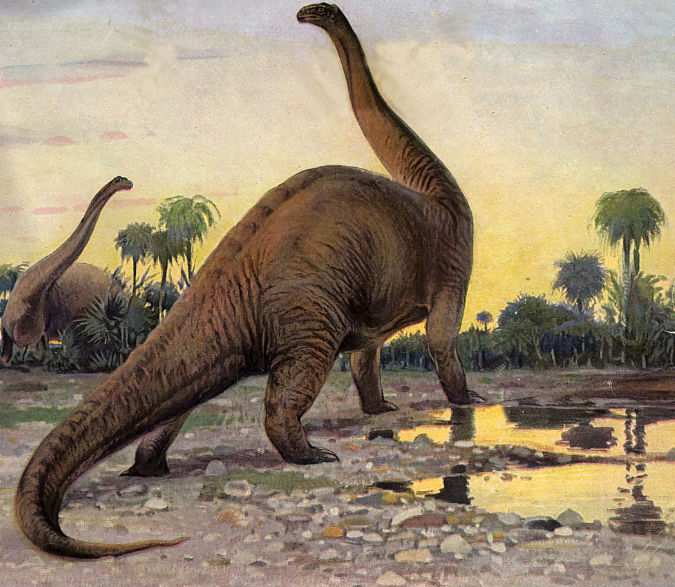
The brontosaurus was one of the largest creatures to ever live on land. They might weigh between 25 and 35 tonnes and reach a maximum length of 75 feet. They were able to reach plants that other dinosaurs were unable to reach due to the length of their necks, which could reach up to thirty feet.
The feeding habits of Brontosaurus focus on its herbivorous diet
Plants served as the primary food source for Brontosaurus dinosaurs, which were herbivores. Their long necks allowed them to reach tall plants, and their teeth, which resembled pegs, were designed to remove leaves from trees. For their vast bulk to survive, these dinosaurs needed to eat enormous quantities of vegetation.
Digestive system of Brontosaurus dinosaur
It’s interesting to note that brontosaurus dinosaurs digested food using a special method. Their huge guts were teeming with microbes that fermented plant matter, facilitating simpler digestion. Gases were generated throughout the fermenting process, which might have led to their unusual flatulence.
History and background information about brontosaurus
About 150 million years ago, during the Late Jurassic era, dinosaurs called brontosaurus thrived. These dinosaurs’ fossils have been discovered in North America, more precisely in the areas that are now Wyoming, Utah, and Colorado.
The possible habitats where Brontosaurus lived during the Late Jurassic period
They lived in verdant, marshy settings between lakes and rivers. In these settings, Brontosaurus dinosaurs could find a plentiful supply of plants to eat. They could easily reach the flora in these marsh environments because of their long necks.
The physical appearance of Brontosaurus, emphasizing its massive size
The agility of Brontosaurus dinosaurs was remarkable, considering their enormous size. They had a distinct gait and were supported by four robust legs. Their bodies sloped downhill from the head to the tail because their front legs were somewhat shorter than their rear legs.
Brontosaurus dinosaurs was sluggish and languid
It is thought that the movement of the Brontosaurus dinosaurs was sluggish and languid. They were able to stay stable while walking or grazing because of the counterbalances provided by their long necks and tails. They were also able to generate enough power to travel through their surroundings because of their great size and weight.
The theories and evidence regarding Brontosaurus dinosaurs
There has been debate regarding the moniker “Brontosaurus” among scientists. Palaeontologist Othniel Charles Marsh named the dinosaur Brontosaurus when he found remains of it in the late 19th century. Nevertheless, it was eventually discovered that the bones belonged to Apatosaurus, a distinct species of dinosaur.
The historical debate regarding Brontosaurus dinosaur classification.
For a long time, Brontosaurus was regarded as an invalid name since it was a junior synonym of Apatosaurus. On the other hand, new findings indicate that the two species vary sufficiently to justify the name Brontosaurus being used again. In order to establish the proper categorization, experts are still debating the issue and studying and analysing the fossils.
Controversies and Misconceptions related to Brontosaurus dinosaur
The Brontosaurus, for example, was an amazing dinosaur. Palaeontologists find them to be an interesting topic of study because of their gigantic size, long necks, and distinctive eating habits. Even with all the controversy surrounding their naming, these dinosaurs still have a special place in our hearts and provide insightful knowledge about the prehistoric past.
FAQ (Frequently Asked Questions) about Brontosaurus
Q: What is a Brontosaurus?
Ans: The Brontosaurus is a large, herbivorous dinosaur that lived during the Jurassic period, approximately 154 to 150 million years ago. It was a long-necked, four-legged sauropod dinosaur, known for its massive size and distinctive, long tail. The Brontosaurus is often recognized for its enormous body and large, graceful neck, which it used to reach vegetation high in the trees.
Q: Where did the Brontosaurus live?
Ans: The Brontosaurus lived in what is now North America, specifically in areas that were part of the Western United States. Fossils of the Brontosaurus have been discovered in formations such as the Morrison Formation, which spans across several states, including Colorado, Wyoming, and Utah. This region was once a lush, forested area with rivers and lakes, providing ample vegetation for large herbivores like the Brontosaurus.
Q: How big was the Brontosaurus?
Ans: The Brontosaurus was a massive dinosaur, reaching lengths of up to 70 feet (21 meters) and weighing as much as 15 to 30 tons. Its long neck alone could span over 30 feet (9 meters). Despite its enormous size, it had a relatively small head compared to the rest of its body, which helped it conserve energy while feeding on plants in the treetops.
Q: What did the Brontosaurus eat?
Ans: The Brontosaurus was a herbivore, feeding primarily on plants such as ferns, cycads, and conifers. It had a long neck that allowed it to reach vegetation high in trees, as well as low-lying plants. Its diet likely consisted of a variety of plant materials, and it may have spent most of its day feeding to sustain its enormous size.
Q: How did the Brontosaurus defend itself?
Ans: The Brontosaurus was a gentle giant with few natural predators due to its massive size. However, like many large dinosaurs, it likely relied on its size and strength for defense. Its long tail may have been used as a weapon against smaller predators, and its sheer size would have made it difficult for predators to attack. It is also believed that Brontosauruses traveled in herds, which may have provided additional protection from carnivorous dinosaurs.
Q: What did the Brontosaurus look like?
Ans: The Brontosaurus had a long, cylindrical body supported by four thick, pillar-like legs. Its neck was long and flexible, and it had a small head relative to its body, with a simple, uncomplicated skull. Brontosaurus tail was long and whip-like, potentially used for communication or defense. Its skin is believed to have been rough and scaly, similar to other large sauropods of the time.
Q: Is the Brontosaurus the same as Apatosaurus?
Ans: The Brontosaurus and Apatosaurus were once thought to be the same dinosaur due to similar body shapes and features. However, in 2015, scientists re-examined fossils and concluded that they were distinct species. The Brontosaurus has some differences in the shape of its skull and neck vertebrae compared to the Apatosaurus, making it a separate genus. Despite the confusion, the Brontosaurus remains one of the most famous sauropods in paleontology.
Q: How long did the Brontosaurus live?
Ans: The Brontosaurus lived during the Jurassic period, approximately 154 to 150 million years ago. It is believed to have roamed the Earth for millions of years, during which time it evolved into a large and successful herbivore. Like other dinosaurs, the Brontosaurus eventually became extinct, likely due to environmental changes and competition with other species.
Q: Why did the Brontosaurus go extinct?
Ans: The Brontosaurus, along with many other dinosaurs, went extinct about 65 million years ago at the end of the Cretaceous period. The exact cause of their extinction is still debated, but it is widely believed to have been caused by a combination of factors, including a massive asteroid impact, volcanic activity, and climate changes. These events drastically altered the environment, leading to the extinction of many species, including the Brontosaurus.
Q: Can scientists recreate the Brontosaurus?
Ans: Currently, it is not possible to recreate the Brontosaurus or any other extinct dinosaur, as we do not have intact DNA from these animals. While scientists are working on advances in genetic engineering and cloning, recreating a dinosaur like the Brontosaurus is still in the realm of science fiction. However, paleontologists continue to learn more about these fascinating creatures through the study of fossils and modern technology.
#Brontosaurus, #Dinosaurs, #JurassicPeriod, #Saurischia, #PrehistoricCreatures, #HerbivorousDinosaurs, #DinosaurFossils, #Paleontology, #DinosaurResearch, #AncientLife, #MassiveDinosaurs, #DinosaurExtinction
Our sources and references about Brontosaurus
1: Wikipedia – Brontosaurus
2: Encyclopaedia Britannica – Brontosaurus
3: Smithsonian Magazine – The Case of the Missing Brontosaurus
4: National Geographic – Brontosaurus