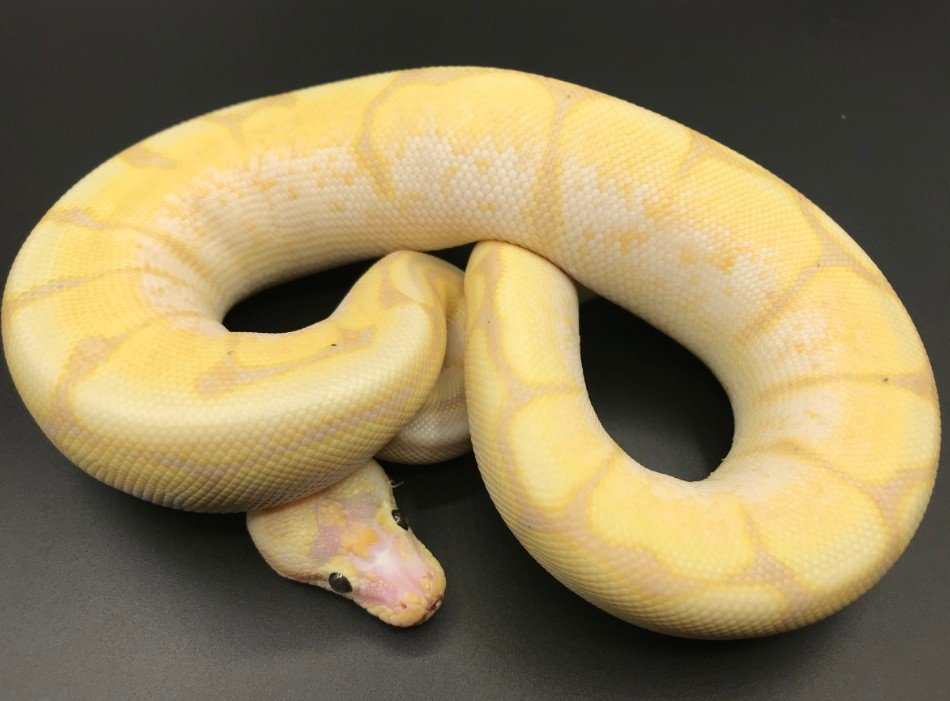
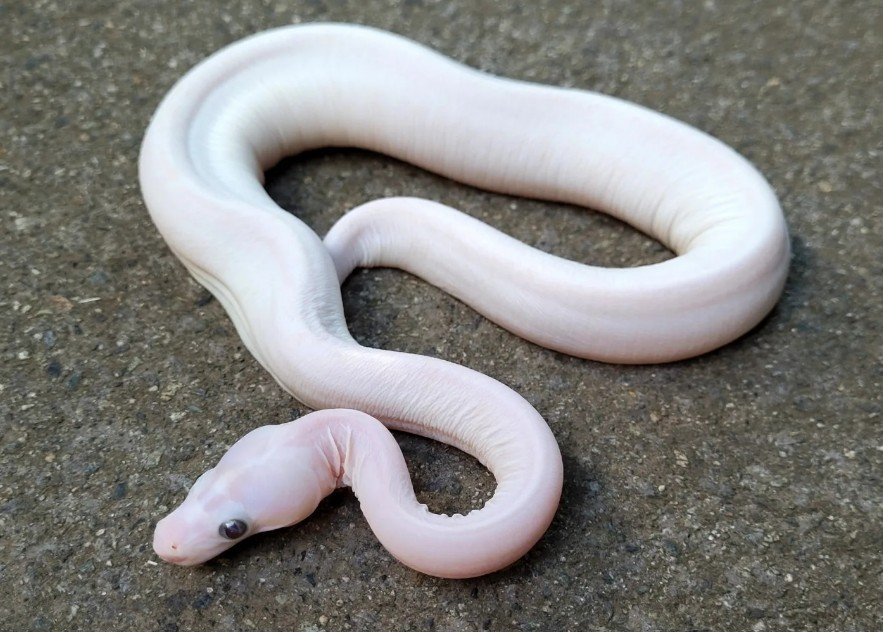
The Scaleless Ball Python is a unique and rare morph of the popular ball python species, known for its lack of scales on the body. Unlike regular ball pythons, which have a typical scaly texture, the scaleless ball python has smooth skin, giving it a distinct appearance. This morph is a result of selective breeding and has gained attention in the reptile community for its unusual look. While their scaleless trait gives them an almost velvety texture, they still share many characteristics with the regular ball python, including their docile nature and small size. Despite their appearance, these pythons require similar care and maintenance as their scaled relatives.
Quick Top 10 Facts about Scaleless Ball Python
| SCIENTIFIC NAME | Python regius |
| CLASSIFICATION | KINGDOM: Animalia PHYLUM: Chordata CLASS: Reptilia ORDER: Squamata FAMILY: Pythonidae GENUS: Python ORDER: Squamata |
| SIZE | Length: 90–150 cm (3–5 feet) when fully grown |
| SPECIES | Ball pythons, specifically the morph of Python regius known as “Scaleless” |
| APPEARANCE | Similar to a regular ball python but with smooth, scale-less skin that gives it a glossy, almost velvety appearance |
| LIFE SPAN | Typically 20–30 years in captivity |
| HABITAT | Native to West and Central Africa, primarily found in grasslands, savannas, and forests |
| DIET | Small mammals, birds, and occasionally reptiles, feeding on prey that they constrict and swallow whole |
| NATURAL PREDATORS | Birds of prey, larger snakes, and carnivorous mammals |
| COUNTRY | Native to countries in West and Central Africa, including Ghana, Nigeria, and Cameroon |
| GESTATION PERIOD | Scaleless ball pythons reproduce through egg-laying, with an incubation period of 55–60 days |
| CONSERVATION STATUS | Listed as “Least Concern” by the IUCN, though habitat loss and illegal pet trade pose threats to wild populations |
Amazing Facts About Scaleless Ball Pythons
1. No Scales, Just Smooth Skin
Scaleless ball pythons are distinct due to their smooth, scale-less appearance, which is a result of a genetic mutation that gives them a soft and almost velvety texture.
2. The Same Personality
Despite their unique appearance, scaleless ball pythons share the same calm and docile temperament as regular ball pythons, making them popular pets.
3. Breeding Phenomenon
The scaleless trait is a result of selective breeding, and these snakes are considered a “morph” of the regular ball python, a highly sought-after feature in the reptile community.
4. Vulnerable to Skin Problems
Because they lack scales, scaleless ball pythons are more prone to skin issues, including burns or injuries, which require extra care.
5. Great Snakes for Beginners
Like regular ball pythons, scaleless ball pythons are often recommended as pets for beginners due to their manageable size and calm demeanor.
6. Lifespan of 20–30 Years
Scaleless ball pythons can live for up to 30 years in captivity, requiring a long-term commitment for those who adopt them as pets.
7. Habitat Needs
Scaleless ball pythons thrive in humid environments with temperatures between 75°F and 85°F (24°C–29°C), and they require access to a hiding spot and a water dish.
8. Slow Metabolism
Like most pythons, scaleless ball pythons have a slow metabolism and don’t need to eat frequently, typically feeding once every 7–14 days depending on their size and age.
9. Restricted Distribution in the Wild
In the wild, scaleless ball pythons are rare due to their genetic mutation, and they are generally bred in captivity.
10. A Fascinating Morph
The scaleless ball python is a fascinating example of how selective breeding can produce unique physical traits in reptiles, making them a favorite for reptile enthusiasts and breeders.
Introduction to the Scaleless Ball Python
An intriguing variety of the well-known ball python (Python regius), the Scaleless Ball Python is distinguished by its smooth and glossy look since it lacks scales. Because of its remarkable look, odd texture, and special care needs, this genetic mutation has generated attention in the reptile-keeping world. The scaleless ball python has quickly become a popular morph among reptile enthusiasts and a sought-after morph in the pet trade, despite the fact that the scaleless characteristic is a relatively new finding in the field of snake breeding.
An Overview of the Ball Python
Understanding the ball python itself is crucial before getting into the details of the scaleless variation. Because of their manageable size and generally docile temperament, ball pythons are one of the most popular and extensively maintained snake species in the reptile hobby. They are indigenous to West and Central Africa and are often found in wooded regions, savannas, and grasslands.
As non-venomous constrictors, ball pythons kill their victims by encircling them and applying pressure until they suffocate. Though some individuals grow significantly bigger, they are usually modest in comparison to other pythons, commonly reaching lengths of 3 to 5 feet. They are a popular option for both novice and seasoned snake keepers because of their peaceful disposition and very low maintenance needs.
The Scaleless Ball Python Mutation
Rather than being a distinct species, the scaleless ball python is a genetic mutation of the ball python that changes the snake’s appearance. The snake’s distinctive look is caused by the scaleless mutation, which alters the expression of the epidermal scales, making them either nonexistent or diminished.
The Genetic Basis of the Scaleless Trait
Because the scaleless feature is recessive, it can only be inherited by children if both parents have the mutation. Though these snakes won’t completely exhibit the scaleless appearance, the characteristic may also manifest in a heterozygous form, when one parent has the gene.
The epidermis, the outermost layer of skin that normally generates scales in the majority of reptiles, is affected by the mutation. Certain parts of the snake’s body may have gaps or entirely smooth skin as a result of this mutation’s decreased scale covering.
Breeding scaleless ball pythons has prompted continuing research to better understand the consequences of this characteristic, although the precise genetic process behind the scaleless mutation remains unclear.
Although the lack of scales gives the snake a distinctive and captivating appearance, it also raises a number of health and welfare issues that we shall discuss in the section below on care.
Physical Attributes of Scaleless Ball Python
The primary characteristic that distinguishes the scaleless ball python from the standard ball python is the absence of visible scales. Because of this mutation, the snake appears smooth and glossy, almost if it has velvety, soft skin.
Important Physical Characteristics
- Smooth Skin: Scaleless ball pythons have smooth skin without the customary bumpy look of scales, in contrast to ordinary ball pythons, which have rough, keeled scales that provide texture and grip. The snake seems sleek and polished due to the skin’s tendency to reflect light and appear glossy.
- Size: Similar in size to conventional ball pythons, scaleless pythons typically reach a length of 3 to 5 feet, while some may grow as long as 6 feet. However, since they lack scales, their bodies could seem a little longer.
- Colouration: Scaleless ball pythons may have colours that are equally as brilliant and diverse as those of conventional ball pythons. There are many varieties of scaleless ball pythons, including albino, pied, banana, clown, and others. However, since they lack scales to reduce the brightness, their colouration may look brighter or more vibrant.
- Texture: A scaleless ball python’s skin may feel considerably softer to the touch since it lacks the usual scales. According to some owners, the texture is silky to the touch and resembles fine velvet or silk.
Although there are noticeable morphological alterations, it’s crucial to keep in mind that the snake’s fundamental anatomy and general look in terms of body form and structure remain same due to the absence of scales. Since the scales are primarily a defensive characteristic, the snake is more susceptible to outside influences when they are absent.
Behaviour and Temperament
A scaleless ball python’s temperament and behaviour are usually very similar to those of a standard ball python. Ball pythons, notably the scaleless type, are regarded as one of the greatest snake species for beginners because of their peaceful, non-aggressive, and docile disposition.
Behavioural Characteristics
- Calm and Timid: Scaleless ball pythons, like their scaled counterparts, are often not aggressive and will frequently shrink into a ball form when agitated or afraid. This behaviour has given rise to the term “ball pythons.”
- Feeding Habits: Small animals like mice and rats make up the majority of the scaleless ball python’s diet, and they follow the same feeding procedures as conventional ball pythons. Some owners report that scaleless pythons may have greater feeding difficulties or need more frequent meals.
- Handling and Care: Scaleless ball pythons are very simple to handle because of their calm temperament. However, handlers must take care not to scratch or harm the snake’s skin because of its fragile nature.
Even though the behaviour of the scaleless ball python is quite similar to that of conventional ball pythons, it’s vital to remember that their absence of scales might make them more susceptible to outside threats, thus additional caution should be used while working with them.
Scaleless Ball Python Care Requirements
A scaleless ball python’s unique requirements must be met while caring for it, especially with relation to humidity, temperature, and skin health. Although they need much the same care as ordinary ball pythons, there are several significant distinctions that must be considered in order to protect the snake’s health and welfare.
Humidity and Temperature Management
- Warmth: Because scaleless ball pythons are ectothermic, their body heat is controlled by outside temperatures. Maintaining a suitable temperature differential in their habitat is crucial, with a warm side of 88-92°F (31-33°C) and a cooler side of 75-80°F (24-27°C).
- Humidity: Usually between 60 and 70 percent, these snakes need slightly more humidity than conventional ball pythons. Humidity promotes skin exfoliation and helps avoid dehydration. Without proper humidity, their skin may develop cracks or dryness.
- Shedding: Although all snakes shed their skin, scaleless ball pythons may have more difficulty. Their skin doesn’t peel off in the same way, and they might need help shedding. Providing a rough surface and maintaining humidity helps ease the process.
Feeding and Nutrition
Scaleless ball pythons should be fed mice and rats of the right size, just as conventional ball pythons. According to some owners, these snakes could have greater trouble eating or need to be fed more often in order to maintain their weight and general health.
Protection Against Physical Damage
The scaleless ball python’s smooth skin is more vulnerable to scratches and abrasions than that of other ball pythons. Sharp objects should not be placed within enclosures, and handlers must be gentle to prevent injury.
Ethical Considerations in Breeding Scaleless Ball Pythons
In the reptile-keeping world, the scaleless mutation in ball pythons has generated ethical questions. Although the mutation itself poses no direct threat, it introduces difficulties concerning the snake’s susceptibility and general health. The morality of breeding for aesthetics, especially for mutations that might raise health risks or lessen natural defences, remains debated.
While some breeders contend that scaleless ball pythons are robust and healthy, others support cautious and ethical breeding methods that prioritise the animals’ welfare. Breeding for appearance should be done with careful consideration of the possible long-term effects on the species, as with any genetic alteration.
FAQ (Frequently Asked Questions) about Scaleless Ball Python
Q: What is a Scaleless Ball Python?
Ans: A Scaleless Ball Python is a morph of the regular ball python (Python regius) that lacks scales, giving it smooth, velvety skin.
Q: How big do Scaleless Ball Pythons get?
Ans: Scaleless ball pythons typically grow to be between 3 and 5 feet (90–150 cm) in length when fully mature.
Q: Are Scaleless Ball Pythons good pets?
Ans: Yes, they are known for their docile and calm nature, making them excellent pets for reptile enthusiasts, particularly beginners.
Q: How long do Scaleless Ball Pythons live?
Ans: They can live for 20 to 30 years in captivity with proper care.
Q: What do Scaleless Ball Pythons eat?
Ans: Scaleless ball pythons primarily eat small mammals, such as mice and rats, and occasionally birds or reptiles.
Q: Are Scaleless Ball Pythons rare?
Ans: Yes, they are rare in the wild, as the scaleless trait is the result of a genetic mutation that is selectively bred in captivity.
Q: Do Scaleless Ball Pythons require special care?
Ans: Yes, they require extra care, especially with regard to humidity and skin health, as they are more vulnerable to burns or injuries due to the lack of scales.
Q: Are Scaleless Ball Pythons endangered?
Ans: Scaleless ball pythons are not endangered, but their wild populations are limited, and they are bred in captivity for the pet trade.
Q: How do Scaleless Ball Pythons reproduce?
Ans: They reproduce through egg-laying, and the eggs typically incubate for about 55–60 days before hatching.
Q: Are Scaleless Ball Pythons good for breeding?
Ans: Yes, they are popular in the reptile breeding community, as their unique appearance makes them highly desirable.
#ScalelessBallPython #BallPythonMorph #PythonRegius #ReptilePets #SnakeLovers #ScalelessSnakes #ReptileEnthusiasts #RareSnakes #PetSnakes
Our sources and references about Scaleless Ball Python
1: Wikipedia – Ball Python
2: Ball Python Breeder – Scaleless Ball Python
3: Reptiles Magazine – Scaleless Ball Pythons