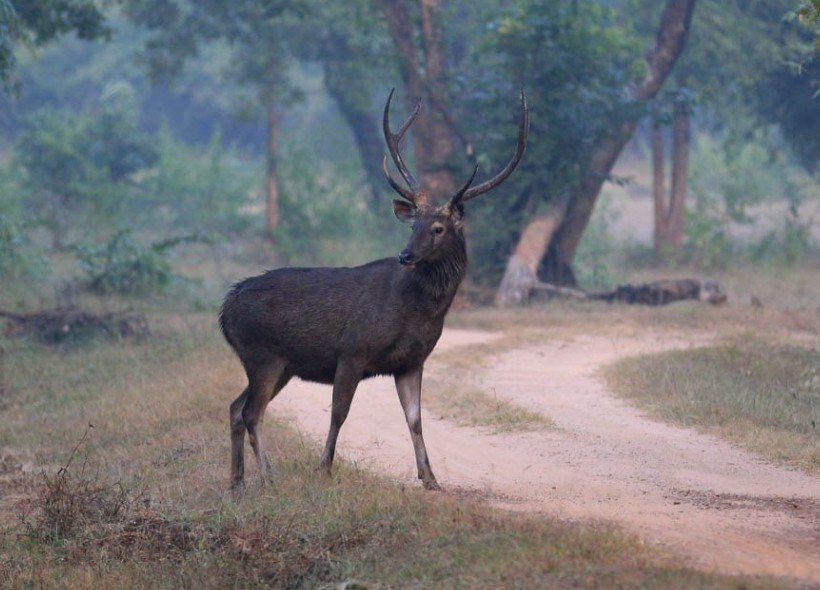
The Sambar is a large deer native to the Indian subcontinent and Southeast Asia. Known for its impressive size and distinctive antlers, the Sambar is a herbivore that thrives in forested areas. This species of deer is an important part of the ecosystem, serving as prey for various predators and as a key herbivore that helps maintain the health of vegetation. With its solitary and secretive nature, the Sambar is a fascinating animal to observe in the wild.
Quick Top 10 Facts about Sambar
| SCIENTIFIC NAME | Cervus unicolor |
| CLASSIFICATION | KINGDOM: Animalia PHYLUM: Chordata CLASS: Mammalia ORDER: Artiodactyla FAMILY: Cervidae |
| SIZE | Height: 90–120 cm (35–47 inches) Weight: 150–300 kg (330–660 lbs) |
| SPECIES | Large deer species, part of the Cervidae family |
| APPEARANCE | Sambar deer have a thick, coarse coat that ranges from reddish-brown to grayish-brown. Males have antlers, which they use during mating season to fight for territory and mates. |
| LIFE SPAN | Typically 12–16 years in the wild |
| HABITAT | Wooded areas, forests, and grasslands, typically in South and Southeast Asia, including India, Sri Lanka, and parts of Southeast Asia. |
| DIET | Herbivorous, feeding on grass, leaves, fruits, and bark |
| NATURAL PREDATORS | Tigers, leopards, and crocodiles |
| CONSERVATION STATUS | Vulnerable, due to habitat loss and poaching |
Amazing Facts About Sambar
1. Large and Majestic
The Sambar is one of the largest deer species, with males often weighing up to 300 kg. Their size makes them an impressive sight in the wild, and they are known for their strong presence in the forest.
2. Antlers of the Males
Male Sambars are equipped with large antlers, which they use during the rutting season to compete with other males for mates. These antlers are shed annually and regrow each year.
3. Solitary Creatures
Unlike some other deer species that form herds, Sambar deer tend to be solitary or found in small family groups. They are often seen alone, especially the males.
4. Shy and Elusive
Sambars are known for their secretive nature and are often difficult to spot in the wild. Their excellent camouflage allows them to blend seamlessly into the dense forest undergrowth.
5. Powerful Swimmers
Sambar deer are strong swimmers and are often seen in or near water. They are known to cross rivers or lakes when moving between areas of their territory or escaping predators.
6. Widely Distributed
Sambars are found across a vast range of habitats in South and Southeast Asia, from the dense forests of India to the hilly areas of Sri Lanka and the jungles of Southeast Asia.
7. Herbivores with a Diverse Diet
Sambars are herbivores and have a varied diet that includes grasses, leaves, fruits, and bark. They play an important role in controlling the growth of vegetation in their habitats.
8. Sensitive to Human Activity
Sambars are highly sensitive to human disturbance. Habitat destruction, poaching, and hunting have significantly affected their populations in some areas, making them vulnerable to extinction.
9. Vital to the Ecosystem
Sambars help maintain the balance in their ecosystem by controlling vegetation growth. They also serve as prey for apex predators like tigers and leopards.
10. Vulnerable Conservation Status
Due to habitat loss, poaching, and competition with livestock, the Sambar is classified as Vulnerable on the IUCN Red List. Efforts are being made to conserve their habitats and ensure their survival in the wild.
Sambar: The Majestic Deer of South Asia
The Sambar deer (Rusa unicolor) is one of the largest and most impressive deer species in Asia. Known for its size, distinctive antlers, and adaptability, the sambar has become an iconic figure in the forests of South and Southeast Asia. From the dense jungles of India to the tropical woodlands of Sri Lanka, the sambar plays a key role in ecosystems and cultural landscapes. Despite threats such as habitat loss and poaching, it remains vital to its natural environment.
What is a Sambar Deer?
The sambar deer is a large herbivore of the genus Rusa. It inhabits South, Southeast, and East Asia, including India, Sri Lanka, Nepal, Bhutan, Bangladesh, Myanmar, Thailand, and Vietnam. Sambar deer adapt to a variety of habitats, from dense forests and grasslands to tropical jungles and scrublands.
Renowned for its size, dark shaggy coat, and impressive antlers, the sambar supports ecosystems as prey for tigers, leopards, and wolves. Its adaptability has made it one of Asia’s most resilient deer species.
Physical Characteristics of the Sambar Deer
The sambar stands out due to its robust build, size, and impressive antlers. Key physical traits include:
1. Size
Adult males, or stags, measure 3.3–4.3 feet (1–1.3 m) at the shoulder and weigh 400–550 pounds (180–250 kg). Females, or hinds, stand 2.6–3.3 feet (0.8–1 m) and weigh 220–330 pounds (100–150 kg). Their muscular build helps stags navigate dense forests and rugged terrains, making them formidable in the wild.
2. Coat and Colouration
The sambar’s coat is dark, grizzled brown or grey, often shaggy around the neck and shoulders. Seasonal changes may thicken the coat for colder months. Younger deer have lighter, reddish-brown fur that darkens with age, providing camouflage in forested habitats.
3. Antlers
Males grow large, branching antlers that can reach 3 feet (1 m). Antlers are shed and regrown annually and are used for display and combat during the rut to establish dominance and secure mates.
4. Face and Eyes
Sambar deer have expressive, dark eyes, flat faces, and long ears that detect subtle sounds. Their sensitive noses help locate predators and potential mates.
Behaviour and Diet
Sambar deer are primarily nocturnal and crepuscular but may forage during the day in dense cover. Key aspects of their behaviour and diet include:
1. Social Structure
They are generally solitary, though females and young may form small herds. Males are territorial, especially outside the breeding season, but may compete aggressively for females during the rut. Herds of females and young stay together for protection, with strong maternal bonds guiding fawn development.
2. Communication
Sambar deer communicate through vocalisations, such as grunts, snorts, and calls, and via body language to signal aggression, submission, or alertness. Males often bellow during the rut to attract females and warn rival stags.
3. Diet
They are herbivores, feeding on grasses, leaves, fruits, shoots, bark, and aquatic plants. Their foraging sustains their large size and contributes to ecosystem balance by regulating plant growth. Sambar deer rely on keen senses to detect predators while grazing.
Habitat and Distribution
Sambar deer inhabit tropical rainforests, temperate woodlands, scrublands, and grasslands across South, Southeast, and East Asia. They favour dense vegetation and water access. Notable habitats include India’s Western Ghats and Himalayan foothills, Sri Lanka, Nepal, Bangladesh, Vietnam, Myanmar, and Thailand. They are highly adaptable to altitudinal and climatic variations.
Reproduction and Life Cycle
The mating season, or rut, occurs during the monsoon or early winter. Males compete for females through antlered battles, with dominant stags gaining breeding rights. Gestation lasts about eight months, usually producing a single fawn, though twins are possible. Fawns have reddish-brown coats that darken with age and remain under maternal care until they forage independently.
Sambar deer reach sexual maturity at 2–3 years. Males develop full antlers and dominance later. Lifespan ranges from 12–15 years on average, with some living up to 20 years.
Conservation Status and Threats
The IUCN lists the sambar deer as “Least Concern,” with stable populations in many regions. However, habitat loss, poaching, hunting, and human-wildlife conflict threaten local populations. Hunting for meat, antlers, and hides, along with deforestation for agriculture and urbanisation, can impact their long-term survival.
FAQ (Frequently Asked Questions) about Sambar
Q: What is a Sambar?
Ans: The Sambar is a large deer native to the Indian subcontinent and Southeast Asia. It is known for its impressive size, solitary behavior, and large antlers in males.
Q: Where are Sambar deer found?
Ans: Sambar deer are found in South and Southeast Asia, including India, Sri Lanka, Nepal, Bangladesh, and parts of Southeast Asia like Thailand, Cambodia, and Vietnam.
Q: How big do Sambar deer get?
Ans: Sambar males can weigh up to 300 kg (660 lbs) and stand up to 120 cm (47 inches) tall at the shoulder. Females are generally smaller than males.
Q: What do Sambar deer eat?
Ans: Sambar deer are herbivores and feed on a variety of plants, including grasses, leaves, fruits, and bark.
Q: Are Sambar deer endangered?
Ans: Sambar deer are classified as Vulnerable due to habitat loss, poaching, and hunting. Conservation efforts are being made to protect their populations.
Q: Do Sambar deer live in groups?
Ans: Sambar deer are typically solitary animals, although they may be seen in small groups during the mating season or when a mother is raising her young.
Q: How do Sambar deer defend themselves from predators?
Ans: Sambar deer are fast runners and are excellent swimmers, often escaping into water bodies to avoid predators like tigers and leopards.
Q: What predators hunt Sambar deer?
Ans: The main predators of Sambar deer include tigers, leopards, and crocodiles, who prey on them in their natural habitat.
Q: How long do Sambar deer live?
Ans: Sambar deer typically live between 12 and 16 years in the wild, although their life expectancy can be shorter due to predation and human activity.
Q: What is the role of Sambar deer in the ecosystem?
Ans: Sambar deer are important herbivores that help maintain the balance of vegetation in their habitat. They also serve as prey for large predators, playing a key role in the food chain.
#Sambar #IndianDeer #SoutheastAsianWildlife #Herbivores #EndangeredSpecies #ForestFauna #WildlifeConservation #DeerSpecies #SambarDeerFacts #WildlifeProtection
Our sources and references about Sambar
1: Wikipedia – Sambar Deer
2: IUCN Red List – Sambar Deer
3: ABC Education – Sambar Deer