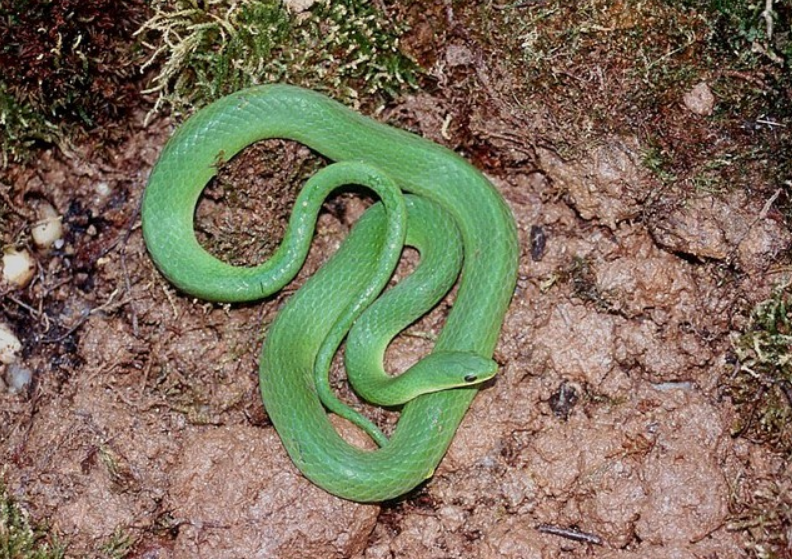
The Smooth Green Snake is a non-venomous snake native to North America. It is small and brightly colored, with smooth, lime-green scales. These snakes are insectivores and are commonly found in grasslands, gardens, and meadows, where they help control insect populations.
Quick Top 10 Facts about Smooth Green Snake
| SCIENTIFIC NAME | Opheodrys vernalis |
| CLASSIFICATION | KINGDOM: Animalia PHYLUM: Chordata CLASS: Reptilia ORDER: Squamata FAMILY: Colubridae GENUS: Opheodrys SPECIES: O. vernalis |
| SIZE | Length: 18–30 inches (46–76 cm) |
| HABITAT | Grasslands, meadows, forests, and shrublands in North America, especially in the central and northeastern United States |
| DIET | Primarily insects such as grasshoppers, crickets, and caterpillars |
| SPECIES | Smooth Green Snake, known for its bright green coloration and slender body |
| COUNTRY | Native to North America, specifically in the United States and Canada |
| LIFE SPAN | Up to 6 years in the wild |
| CONSERVATION STATUS | Least Concern; not currently threatened, but vulnerable to habitat loss |
Amazing Facts About Smooth Green Snakes
1. They are non-venomous
Smooth Green Snakes are completely harmless to humans and other animals. They rely on their camouflage and speed to avoid predators.
2. Their vibrant green color helps with camouflage
The bright green coloration of the Smooth Green Snake allows it to blend in with its natural environment, particularly in grassy areas and meadows.
3. They have a slender body
These snakes are known for their long, thin, and slender bodies, which help them navigate through grass and brush easily.
4. They are excellent climbers
Although they primarily live on the ground, Smooth Green Snakes are great climbers and can be found in shrubs, trees, and vegetation.
5. Their diet consists mostly of insects
Smooth Green Snakes primarily feed on insects like grasshoppers, crickets, and caterpillars. They are important insectivores in their ecosystems.

6. They are solitary animals
Smooth Green Snakes are generally solitary, only coming together to mate. They are not territorial but prefer to avoid other snakes.
7. They are fast and agile
Their speed and agility help them catch fast-moving prey and evade predators. They are quick to retreat to cover if threatened.
8. They have a relatively short lifespan
Smooth Green Snakes typically live up to 6 years in the wild, although their life expectancy can be shorter in captivity due to the absence of natural predators.
9. They are active during the day
Smooth Green Snakes are diurnal, meaning they are active during the day, hunting for food and basking in the sun to regulate their body temperature.
10. Their populations are vulnerable to habitat loss
Although classified as Least Concern, Smooth Green Snakes are still vulnerable to habitat destruction caused by urbanization and agricultural expansion.
An Overview of the Smooth Earth Snake
The Smooth Earth Snake (Virginia valeriae), a tiny, non-venomous snake species, belongs to the Colubridae family. Snake watchers and reptile enthusiasts favour it due to its gentle temperament and unique, smooth, glossy appearance. As a predator of tiny invertebrates like insects and earthworms, the Smooth Earth Snake plays a significant role in the ecology. Despite its small size and evasive behaviour, it often goes unnoticed.
Below are the physical traits, habitat, nutrition, behaviour, and conservation status of the Smooth Earth Snake, along with its special role in nature.
1. Where Smooth Earth Snake is found
The tiny, terrestrial Smooth Earth Snake inhabits parts of North America. It often resides in areas offering plenty of shelter, such as riparian zones, meadows, and forested areas. While it is not as frequently seen as some other snake species, it is distinguished by its calm disposition and restricted distribution.
2. The Smooth Earth Snake’s Physical Features
The Smooth Earth Snake has a small size, smooth scales, and muted colouring. Though it may not seem very noticeable, it possesses several features that set it apart from other snakes.
Dimensions and Form
- Length: The Smooth Earth Snake typically measures between 10 to 15 inches (25 to 38 cm). Some individuals, however, can grow a little longer—up to 20 inches (50 cm).
- Form: Its cylindrical, narrow shape is designed for digging through dirt and rubble. The snake’s streamlined form results from its smooth, glossy scales, which make it well-suited for ground-dwelling.
The Colour
The Smooth Earth Snake’s colour varies depending on the individual. It ranges from greyish-brown to tan or light olive, with darker patterns along the sides or back. The snake appears glossy due to its smooth scales. Its underbelly tends to be lighter in colour, ranging from white to pale yellow.
This colouration allows the snake to blend into its environment, such as fallen leaves, dirt, or plant materials.
The Head and Tail
The Smooth Earth Snake’s short, blunt head blends seamlessly with its body. Unlike many other snakes, it does not possess a prominent head structure.
The tail is short and tapered, lacking the characteristic patterns seen in other species, such as rat snakes or garter snakes. This helps the Smooth Earth Snake maintain a low profile in its surroundings.
Skin and Scales
The Smooth Earth Snake’s non-keeled, smooth scales give it its name. Unlike many other species with rough or ridged scales, the snake’s scales lie flat against its body, creating a smooth and glossy appearance. Its smooth scales make it easier to navigate through its preferred environment of soft dirt and leaf litter.

3. Distribution and Habitat
The Smooth Earth Snake inhabits the eastern United States, often found in areas with moisture and shelter. It thrives in forests, woods, meadows, grasslands, and regions near rivers or streams. The snake typically hides among leaf litter, behind logs, or in animal burrows to conceal itself and search for food.
Favourite Environment
- Wooded Areas: Dense vegetation with plenty of hiding spots and moisture is ideal for the Smooth Earth Snake’s survival.
- Riparian Zones: The snake commonly resides in moist, well-drained soil near ponds, rivers, and streams, where it finds both food and shelter.
- Decomposing Organic Matter: The Smooth Earth Snake favours habitats with abundant plant life, earthworms, and decaying leaves. These areas provide both food and ideal hiding places.
Range
The Smooth Earth Snake’s range covers much of the eastern United States, from northern Florida to southern Virginia. It thrives in regions with enough foliage, moisture, and soil for burrowing.
4. Nutrition and Feeding Practices
The Smooth Earth Snake is an invertivorous and primarily insectivorous reptile. It consumes a variety of tiny food items from its surroundings. Its main food sources include:
- Earthworms
- Insects
- Larvae
- Tiny spiders
- Centipedes
To find and identify its prey, the snake uses its sense of smell and vibrations. It frequently uses its tongue to detect chemical signals in the environment. The Smooth Earth Snake burrows into the ground or leaf litter to seek soft-bodied invertebrates.
As a constrictor, the Smooth Earth Snake wraps its body around its prey to immobilise it before eating. Its prey primarily consists of soft-bodied creatures, which are easy to subdue due to the snake’s small size.
5. Action and Conduct
The Smooth Earth Snake is a terrestrial and secretive species. It spends much of its life hidden from view. The snake is most active during the warmer months, particularly in spring and summer when food is plentiful, and the weather is favourable.
Habits of the Night
The Smooth Earth Snake is primarily nocturnal. It ventures out at night to feed and explore its surroundings. The snake is also known to be active on cloudy days, especially when humidity is high and temperatures are moderate.
Hiding and Burrowing
As a burrower, the Smooth Earth Snake often hides underground, behind fallen trees, rocks, or in cracks in the earth. The snake frequently uses tunnels left behind by other small creatures, such as rodents or amphibians, for shelter and security.
Reproduction and Mating
The Smooth Earth Snake lays eggs in secretive locations, such as under rocks or decaying organic materials. Females typically lay between one to six eggs at a time. Once hatched, the young snakes are independent and receive no parental care.
6. Status of Conservation
Although the Smooth Earth Snake is not currently listed as a vulnerable or endangered species, it faces threats from pollution, urbanisation, and habitat degradation. These risks arise from human activities, including land development, loss of forest habitats, and the draining of wetlands.
However, organisations such as NatureServe and the IUCN Red List do not consider the snake a species of immediate concern. In some areas, its population remains stable. Ongoing monitoring of its habitat is crucial to prevent potential future risks.
7. Fascinating Details Regarding the Smooth Earth Snake
- Non-Venomous: The Smooth Earth Snake is entirely non-venomous and poses no harm to humans, despite its intimidating appearance.
- Reluctant to Bite: The Smooth Earth Snake is known for its docile nature. It avoids confrontation and prefers to hide or flee rather than bite.
- Camouflage: The snake’s subdued colouring helps it blend in with its surroundings, making it difficult for predators to detect.
FAQ (Frequently Asked Questions) about Smooth Green Snake
Q: What is a Smooth Green Snake?
Ans: The Smooth Green Snake (Opheodrys vernalis) is a non-venomous snake known for its vibrant green coloration and slender, elongated body. It is primarily an insectivore and is found in grasslands, meadows, and forests in North America.
Q: Where do Smooth Green Snakes live?
Ans: Smooth Green Snakes are native to North America, particularly found in the central and northeastern United States and parts of Canada. They thrive in grassy areas, meadows, and low shrublands.
Q: What do Smooth Green Snakes eat?
Ans: They primarily feed on insects, including grasshoppers, crickets, and caterpillars. Their diet helps control insect populations in their habitats.
Q: Are Smooth Green Snakes dangerous?
Ans: No, Smooth Green Snakes are completely non-venomous and harmless to humans. They use their speed and camouflage to avoid predators rather than fight.
Q: How do Smooth Green Snakes catch their prey?
Ans: They are quick and agile, often using their speed to catch fast-moving insects. They also rely on their camouflage to remain hidden while waiting for prey to pass by.
Q: How long do Smooth Green Snakes live?
Ans: In the wild, Smooth Green Snakes can live up to 6 years, although their life expectancy may be shorter in captivity due to various factors like diet and lack of natural predators.
Q: Can Smooth Green Snakes be kept as pets?
Ans: While Smooth Green Snakes can be kept as pets, they are delicate and require a specific habitat, including access to insects for food. They are best suited for experienced reptile owners.
Q: Are Smooth Green Snakes good for beginners?
Ans: Smooth Green Snakes are not typically recommended for beginners due to their delicate nature and specific care requirements. They need a carefully maintained habitat and a diet of live insects.
Q: How do Smooth Green Snakes protect themselves from predators?
Ans: Smooth Green Snakes use their excellent camouflage to blend in with their environment, making them hard to spot by predators. If threatened, they will quickly slither away to safety.
Q: Are Smooth Green Snakes endangered?
Ans: No, the Smooth Green Snake is classified as Least Concern by the IUCN. However, their populations can be impacted by habitat destruction, such as urbanization and agriculture.
#SmoothGreenSnake, #OpheodrysVernalis, #NonVenomousSnake, #Insectivores, #SnakeSpecies, #Reptiles, #Wildlife, #Conservation, #SnakeLovers, #NorthAmericanSnakes
Our sources and references about Smooth Green Snake
1: Wikipedia – Smooth Green Snake
2: PetMD – Smooth Green Snake Care
3: Virginia Tech – Smooth Green Snake
4: IUCN Red List – Smooth Green Snake