The Sarus Crane (Grus antigone) ranks as the tallest flying bird in the world. It inhabits regions of South Asia, Southeast Asia and northern Australia. People often note its striking look: long legs, red head and large wingspan. These cranes perform beautiful, dancing courtship rituals. You will find them in wetlands, agricultural fields and grasslands. They play a vital role in maintaining the health of their ecosystems. They behave as social birds, often appearing in pairs or small groups. You can hear their distinctive calls carried across long distances. Although not yet endangered, their populations face threats from habitat loss and human activity.
Quick Top 10 Facts About the Sarus Crane
| SCIENTIFIC NAME | Grus antigone |
| CLASSIFICATION | KINGDOM: Animalia PHYLUM: Chordata CLASS: Aves ORDER: Gruiformes FAMILY: Gruidae GENUS: Grus SPECIES: G. antigone |
| SIZE | Height: 140–160 cm (4.6–5.2 feet) Wingspan: 2.2–2.5 m (7.2–8.2 feet) |
| SPECIES | Several subspecies of the Sarus Crane occur in different regions of South Asia, Southeast Asia and Australia. |
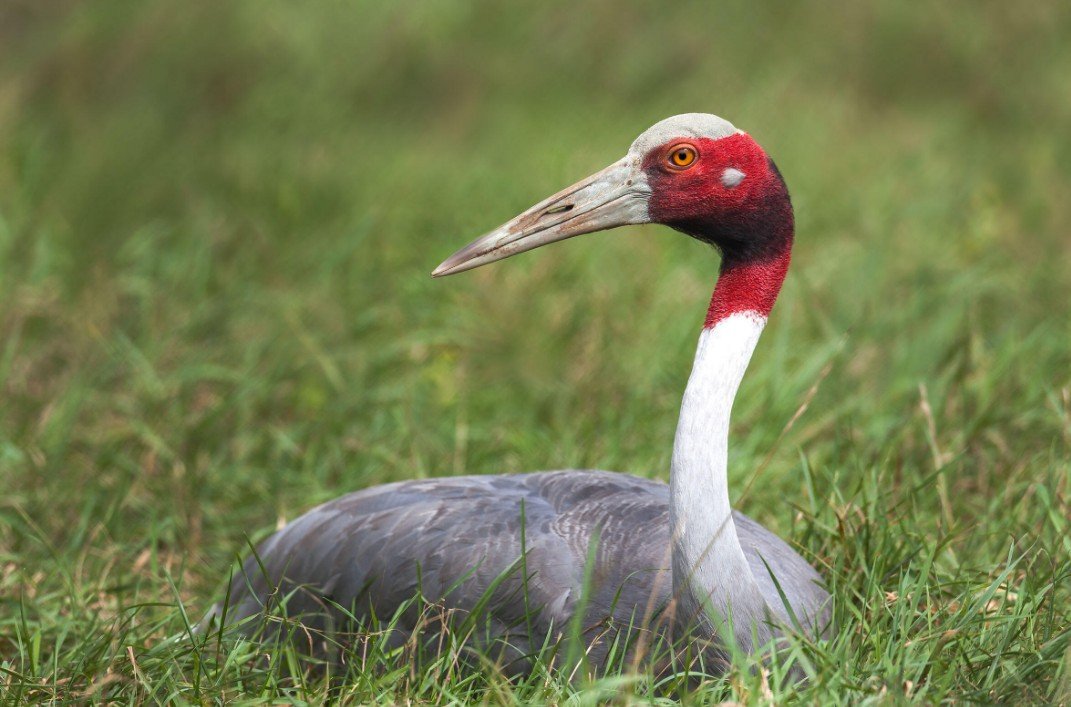
| APPEARANCE | Sarus Cranes display a tall body, long legs, and a red head and neck. Their plumage appears mostly white, with a slight grey tint on the wings. |
| LIFE SPAN | They typically live 20–30 years in the wild, though they may live longer in captivity. |
| HABITAT | You find Sarus Cranes in wetlands, marshes, agricultural fields and grasslands across South Asia, Southeast Asia and parts of northern Australia. |
| DIET | Sarus Cranes act as omnivores. They feed on plants, seeds, roots, tubers and small animals such as insects, amphibians and small reptiles. |
| NATURAL PREDATORS | Adult Sarus Cranes face few natural predators, but their eggs and chicks remain vulnerable to foxes, large birds of prey and jackals. |
| COUNTRY | India, Nepal, Cambodia, Australia and parts of Southeast Asia. |
| CONSERVATION STATUS | Listed as “Vulnerable” on the IUCN Red List because habitat destruction, hunting and agricultural disturbance threaten them. |
Amazing Facts About the Sarus Crane
1. Tallest Flying Bird
The Sarus Crane grows into the tallest flying bird in the world. Adults stand nearly 5 feet tall. Their wingspan can extend to 8 feet.
2. Symbol of Love and Loyalty
Sarus Cranes form strong pair bonds and often remain with their mate for life. They perform elaborate courtship displays to reinforce that bond.
3. Beautiful Dance Rituals
During breeding season, Sarus Cranes perform graceful dances. The dances involve synchronized movements, jumping and bowing to each other.
4. Habitat of Wetlands and Grasslands
These cranes inhabit wetlands, marshes and grasslands. There they forage for food, rear their young and nest among tall grasses and reeds.
5. Loud and Distinctive Calls
Sarus Cranes emit a powerful and distinctive call. That call carries over long distances across their wetland habitat.
6. Omnivorous Diet
They consume an omnivorous diet, eating plants, seeds, roots and tubers. They also take small animals like insects, amphibians and small reptiles.
7. Long Lifespan
In the wild, Sarus Cranes can live up to 30 years. In captivity, they may live longer thanks to controlled care.
8. Vulnerable Species
The IUCN lists the Sarus Crane as “Vulnerable.” Threats include habitat loss, hunting and agricultural activities. Conservation efforts now aim to protect their habitats.
9. Social Birds
Sarus Cranes display strong social behaviour. They often appear in pairs or small family groups. During non-breeding seasons, they may join larger flocks for foraging or migration.
10. Amazing Migrators
In some regions, Sarus Cranes migrate long distances. They travel between breeding and wintering grounds to find suitable habitats.

Introduction to the Sarus Crane: Nature’s Towering Beauty
One of the world’s highest flying birds is the Sarus Crane (Grus antigone). In wetlands across Southeast Asia, Australia and parts of the Indian subcontinent, the Sarus Crane appears as a symbol of elegance and beauty. Its graceful appearance, remarkable size and unique behaviour distinguish it. People revere the Sarus Crane for its ecological and cultural importance. It plays a vital role in ecosystems and local culture. This article covers its history, physical traits, habitat, diet, behaviour and conservation initiatives.
1. The Sarus Crane in Brief
Overview and Classification
All cranes belong to the family Gruidae, including the Sarus Crane. Its striking form and graceful movements make it the most recognisable crane species worldwide. We recognise the bird in marshes by its lofty size, wide wingspan and long slim legs.
2. The Sarus Crane’s Physical Features
Graceful Appearance and Imposing Stature
People admire the Sarus Crane for its remarkable size, elegant shape and eye-catching colour patterns. Because of those features, many consider it one of the most magnificent bird species.
Dimensions and Mass
- Height: Sarus Cranes rank among the tallest flying birds, reaching 5 to 6 feet (1.5 to 1.8 metres).
- Weight: Females usually weigh 4.5 to 7 kg (10 to 15 lbs); adult males weigh 6.5 to 8 kg (14 to 18 lbs).
Unique Colouration and Identification
The easiest way to identify Sarus Cranes lies in their distinctive colouring:
- Head: A vivid red skin runs from the top of the head down the neck.
- Body: The rest of the body displays light grey or greyish-white tones, sometimes with faint brown undertones.
- Eyes: Their black eyes contrast with the grey feathers and crimson head.
- Neck: They hold their very long neck elegantly while walking or standing.
Legs and Bill Adaptations
The crane uses its long, thin straight beak to probe wet soil or water for food. Its long pinkish‑grey legs contribute to a graceful appearance. You most often see Sarus Cranes in marshes and shallow lakes. There, their long legs prove crucial for wading.
3. Distribution and Habitat
Preferred Wetland Environments
You’ll find Sarus Cranes in wetlands, marshes, riverbanks, rice paddies and small lakes. They favour open areas near water, as those supply food and nesting sites.
Geographical Range of Sarus Cranes
- Indian Subcontinent: You find Sarus Cranes in Bangladesh, Nepal and India. Populations occur across northern and central India, and parts of Rajasthan, Uttar Pradesh and Gujarat.
- Southeast Asia: They inhabit regions of Vietnam, Myanmar and Cambodia. You may see them in Vietnam’s marshes and Cambodia’s Tonle Sap Lake.
- Australia: The Sarus Crane occurs in northern Australia, though less commonly. In spite of rarity, they still influence local ecology.
Ideal Nesting and Feeding Grounds
Wetlands and broad grasslands supply both food and nesting places. To build nests and forage, Sarus Cranes often choose areas with thick vegetation and shallow water, such as marshes or wet meadows.
4. Nutrition and Feeding Practices
Omnivorous Diet and Foraging Behaviour
As omnivores, Sarus Cranes feed primarily on plants. They also consume insects, small amphibians and other invertebrates. Their diet varies with the food available in their habitat.
Principal Food Sources
- Seeds, Grasses and Grains: They eat seeds, grasses and grains, especially in rice fields. By consuming associated insects, they help reduce pest populations.
- Invertebrates: They probe for worms, beetles, crickets and grasshoppers in soil or water.
- Aquatic Plants: They consume rhizomes, roots and other wetland vegetation to gain vital nutrients and energy.
Efficient Foraging Techniques
Sarus Cranes forage by probing muddy soil or shallow water with their long pointed bills. They excel at locating food in flooded rice fields within their range.
5. Social Structure and Behaviour
Monogamous Pair Bonding
Sarus Cranes form lifelong pair bonds. Once two cranes pair, they remain together and share parenting duties.
Nesting and Breeding Season
They breed during the rainy season, varying by region. To conceal nests from predators, they build them in thick foliage beside shallow water. They use grasses, reeds and water plants to construct nests.
- Eggs: The female often lays two eggs. Environmental pressures or predation may mean only one survives. The eggs usually appear olive with black markings.
- Incubation: Both parents share incubation duties. The period lasts about 30 days.
- Chicks: After hatching, the chicks walk and swim almost immediately (precocial). For months, the parents feed and protect them until they survive independently.
Social Interaction and Grouping
Outside breeding season, you often see Sarus Cranes in pairs or alone. However, during migration or resource abundance, they may form small flocks. These flocks remain smaller than those of other crane species and usually comprise kin groups.
6. Status of Conservation
Conservation Status and Population Decline
Because their numbers have declined, the IUCN currently classifies the Sarus Crane as Vulnerable. This decline results from habitat loss, pollution, hunting and conflict between humans and wildlife.
Risks to the Sarus Crane Population
- Habitat Loss: Urbanisation, wetland drainage and converting wetlands to farmland have destroyed their habitat. Those losses remove nesting, foraging and breeding sites.
- Agricultural Expansion: Pesticide use in rice fields and other farming practices threatens crane food supplies. These chemicals also degrade water quality in wetlands.
- Hunting and Egg Gathering: In some areas, people still hunt cranes and collect eggs illegally. Even where laws protect them, poaching persists in areas with weak enforcement.
Key Conservation Activities
Conservationists and governments increasingly establish protected wetlands and breeding facilities. They raise awareness and involve local communities in conservation efforts. Organisations such as BirdLife International and the WWF work with regional governments to conserve native habitat and boost public awareness.
7. Sarus Crane Cultural Significance
Symbolism and Spiritual Connections
Many cultures revere the Sarus Crane. In India, people often link it to longevity and fertility. You find its image in myths, religious traditions and folklore across the region. Many societies regard the crane as a symbol of beauty and endurance due to its elegant appearance and ecological role.
Representation in Art and Literature
To reinforce its symbolic status, artists depict the Sarus Crane in poetry, painting and traditional songs across numerous regions.
FAQ (Frequently Asked Questions) About the Sarus Crane
Q: What is a Sarus Crane?
Ans: The Sarus Crane is the world’s tallest flying bird. We know it by its striking appearance: long legs, red head and elaborate courtship rituals. It comes from parts of South Asia, Southeast Asia and northern Australia.
Q: How tall do Sarus Cranes grow?
Ans: Sarus Cranes may reach heights of 140–160 cm (4.6–5.2 feet). That stature makes them the tallest flying birds globally.
Q: What do Sarus Cranes eat?
Ans: They follow an omnivorous diet. They eat plants, seeds, roots, tubers and small animals including insects, amphibians and small reptiles.
Q: Are Sarus Cranes endangered?
Ans: They are listed as “Vulnerable.” Threats include habitat loss, hunting and disturbances caused by human activity.
Q: How long do Sarus Cranes live?
Ans: In the wild, they typically live 20–30 years. In captivity, they often live longer under careful management.
Q: Where can I find Sarus Cranes?
Ans: You find them in wetlands, marshes and grasslands across South Asia, Southeast Asia and northern Australia. They occur in countries such as India, Nepal and Cambodia.
Q: Do Sarus Cranes mate for life?
Ans: Yes, they form enduring pair bonds. They perform elaborate courtship displays to strengthen that bond.
Q: Why are Sarus Cranes important to ecosystems?
Ans: Sarus Cranes help maintain wetland health. They control insect populations and assist in seed dispersal for plants.
Q: How do Sarus Cranes communicate?
Ans: They communicate using loud, distinctive calls. These calls carry far, especially during their courtship performances.
Q: Can Sarus Cranes fly long distances?
Ans: Yes, in some regions they migrate across long stretches. They travel between breeding and wintering grounds to find optimal habitats.
#SarusCrane #TallestFlyingBird #GrusAntigone #CraneConservation #BirdsOfAsia #WetlandBirds #Wildlife #SocialBirds #EndangeredBirds #WildlifeProtection
Our sources and references about Sarus Crane
1: Wikipedia – Sarus Crane
2: IUCN Red List – Sarus Crane
3: Britannica – Sarus Crane
4: Audubon – Sarus Crane