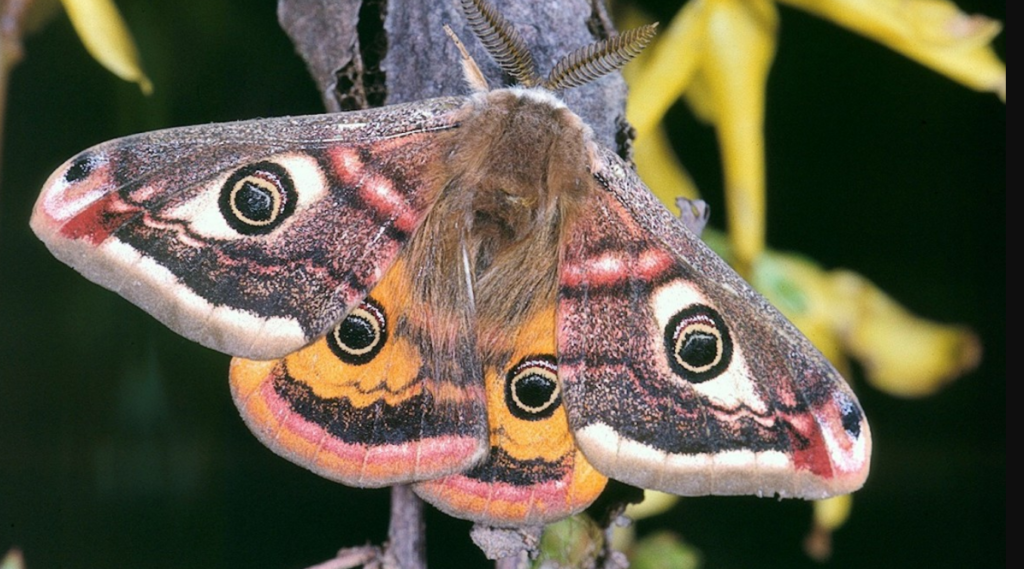
The Saturniidae family, also known as giant silk moths, is one of the largest and most colourful moth families in the world. Saturniids are famous for their impressive size, brilliant colours, and the ability to produce silk. They are typically large and stout-bodied moths with characteristic eye spots on their wings that provide camouflage from predators. Most species in the Saturniidae family do not eat as adults, relying instead on the energy stored during their larval stage. Saturniidae moths are primarily found in tropical and subtropical regions, although some species also inhabit temperate zones. These fascinating insects go through a complete metamorphosis, starting as eggs, moving to larvae (caterpillars), then pupating before emerging as adult moths.
Quick Top 10 Facts about Saturniidae Moth
| SCIENTIFIC NAME | Saturniidae |
| CLASSIFICATION | KINGDOM: Animalia PHYLUM: Arthropoda CLASS: Insecta ORDER: Lepidoptera FAMILY: Saturniidae |
| SIZE | Wingspan: Up to 30 cm (12 inches), depending on the species |
| SPECIES | Includes well-known species like the Atlas Moth (Attacus atlas), Cecropia Moth (Hyalophora cecropia), and Luna Moth (Actias luna). |
| APPEARANCE | Saturniidae moths are known for their large size, colourful wings, and striking patterns. Many species have eyespots on their wings to confuse or deter predators. |
| LIFE SPAN | Adult moths typically live for about 1 to 2 weeks, while the larval stage can last for several months. |
| HABITAT | Saturniidae moths are found in various environments, from tropical and subtropical forests to temperate woodlands and grasslands, depending on the species. |
| DIET | Most adult Saturniidae moths do not feed, as they rely on the energy stored from their caterpillar stage. The larvae feed on a variety of plants, including leaves of trees and shrubs. |
| NATURAL PREDATORS | Birds, bats, and other predators are known to feed on Saturniidae moths, especially during the moth’s vulnerable adult stage. |
| COUNTRY | Saturniidae moths are found across the globe, with different species inhabiting regions in North and South America, Africa, Asia, and Australia. |
| CONSERVATION STATUS | While some species of Saturniidae moths are common, others are considered endangered due to habitat loss, pollution, and the destruction of their food sources. |
Amazing Facts About Saturniidae Moth
1. The Largest Moths in the World
Saturniidae moths are among the largest moths in the world, with species like the Atlas Moth reaching wingspans of up to 30 cm (12 inches).
2. Eye Spots for Defense
Many Saturniidae moths have large, distinctive eye spots on their wings, which help confuse predators or make them appear larger than they actually are.
3. No Mouthparts in Adults
Unlike many other insects, adult Saturniidae moths do not have functional mouthparts. They do not eat and rely on the energy they stored during their caterpillar stage.
4. They Can Produce Silk
The larvae of Saturniidae moths produce silk, which is strong and valuable. Some species, like the Bombyx mori, are farmed for their silk production.
5. The Caterpillars are Colorful
Saturniidae larvae, or caterpillars, are often large, colourful, and sometimes spiny. They feed on the leaves of various trees, such as willows and oaks.
6. Short Adult Lifespan
As adults, Saturniidae moths have a short lifespan of around 1 to 2 weeks, during which time their main goal is reproduction.
7. They Are Attracted to Light
Like many moths, Saturniidae moths are nocturnal and are often attracted to lights at night.
8. Incredible Flying Abilities
Some Saturniidae moths, such as the Atlas Moth, are capable of powerful and graceful flight, despite their large size.
9. Mating Rituals are Intricate
Saturniidae moths have complex mating rituals, with males using their highly developed antennae to detect the pheromones released by females.
10. Fascinating Conservation Efforts
While many species of Saturniidae moths are not at risk, conservationists are working to protect species whose populations are declining due to habitat destruction and climate change.
Overview of the Saturniidae Family of Moths
Classification and Global Distribution
Large moths belonging to the varied Saturniidae family may be found worldwide in both tropical and temperate climates. The family belongs to the same order as butterflies, the Lepidoptera. Giant silkworm moths, which are distinguished by their remarkable wingspans, striking colouration, and unique physical characteristics, are most often linked to the Saturniidae family of moths.
There are over 2,300 species in the Saturniidae family, which are divided among numerous genera. Many of these species have very localised distributions. These moths are often distinguished by their size and unique wing patterns.
Physical Attributes of Saturniidae Moths
Massive Wingspans and Body Sizes
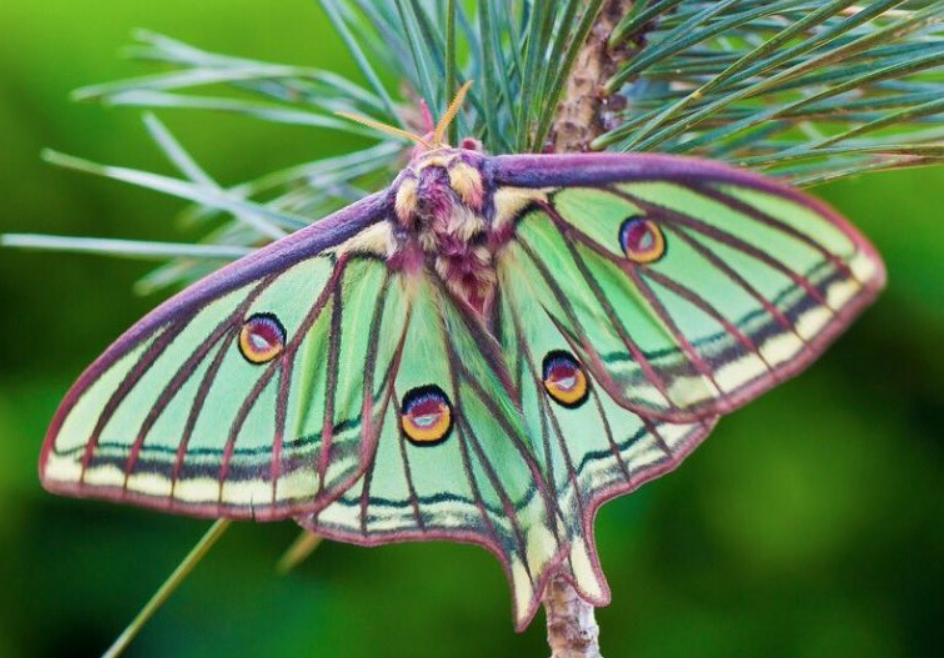
Among other moth families, Saturniidae moths are distinguished by their enormous size and remarkable wingspan. They are highly prized for their elaborate wing patterns and eye-catching colour patterns. Although every species in the family has distinct morphological qualities, the majority of Saturniidae moths share a number of similarities.
Size Details
- Wingspan: Some species of Saturniidae moths have wingspans of more than 12 inches (30 cm), making them among the biggest moths in the world. With a wingspan of up to 14 inches (36 cm), the Atlas Moth (Attacus atlas) is the moth with the biggest wingspan.
- Body Length: Depending on the species, Saturniidae moths often have a body length of 2 to 4 inches (5 to 10 cm).
Coloration and Wing Patterns
The most noticeable characteristic of Saturniidae moths is often their wings. To improve their ability to fly and blend in with their surroundings, they are usually big and wide. Vibrant patterns and striking hues, like as brown, orange, yellow, green, red, and black, are often seen on their wings. These hues are intended to assist the moths blend in with the natural surroundings or hide with the nearby plants.
- The Atlas Moth: Big, eye-like markings and brown, orange, and white-marked wings serve as a deterrent to predators.
- The Polyphemus Moth: Resembles an owl due to its wide, rounded wings with eyespots on the forewings, acting as a kind of defence.
Feathery Antennae for Sensing
Large, feathery antennae are another characteristic of Saturniidae moths that aid in their ability to sense chemical signals in the atmosphere. Because they let males to detect the pheromones generated by females across great distances, these antennae are particularly crucial for mating.
Life Cycle and Metamorphosis of Saturniidae Moths
Complete Metamorphosis Explained
Moths in the Saturniidae family have a complicated life cycle that includes many developmental phases. They go through four primary phases of metamorphosis, much like the majority of moths and butterflies: egg, larva (caterpillar), pupa (chrysalis), and adult (moth). Their evolutionary tactics heavily rely on this life cycle.
Egg Stage
The leaves of certain host plants are where the female Saturniidae moth deposits her eggs. Although each species of moth has a different host plant, the majority of Saturniidae moths are host plant specialists. On the underside of leaves, some species deposit their eggs in groups, while others do it singly.
Larval (Caterpillar) Stage
Large, vibrant caterpillars with a ravenous appetite are often the larvae of Saturniidae moths. They may develop quickly at this stage and feed on the leaves of their host plants. Many species have spines or hairs covering their caterpillars, which may act as a defence against predators. The poisonous spines of certain species, such as the Lonomia Moth, may be harmful to both people and animals.
In order to accommodate their growing size, Saturniidae moths undergo many instars, or development phases, during the caterpillar stage. Usually, this phase lasts for a few weeks.
Pupal Stage
The caterpillar transitions into the pupal stage after reaching adulthood. The caterpillar creates a silk protective cocoon at this stage, often using plant fragments to blend in with its surroundings. The pupa’s protective shelter throughout its transition into an adult moth is the cocoon.
Adult Moth Stage
The last stage of the Saturniidae moth’s life cycle is adulthood. Adult moths usually only survive a few weeks, making them short-lived. The moth’s main objective at this period is to procreate. They depend on the energy saved in their body from the caterpillar stage rather than feeding in their adult form.
The nocturnal adult Saturniidae moths spend their time laying eggs and mating. Males use their very sensitive antennae to detect pheromones generated by females, which helps them locate them during mating, which often takes place at night.
Distribution and Habitat of Saturniidae Moths
Geographic Range Across Continents
Many species of Saturniidae moths are found in tropical and subtropical parts of the world. Because their larvae can locate appropriate host plants to feed on, they flourish in regions with an abundance of flora, especially forests, woods, and savannas.
- Asia: The tropical woods of Southeast Asia, including parts of India, China, Malaysia, and Indonesia, are home to the Atlas Moth.
- North America: The woods of the United States and Canada host the Polyphemus Moth.
- South America: The Cecropia Moth is common in South American forests.
- Australia: Includes the Bogong Moth, known for seasonal migrations.
Habitat Preferences
Because they can locate a wide range of host plants for their larvae, these moths are especially prevalent in tropical rainforests. Certain species of Saturniidae, like as the Polyphemus Moth, may also be found in regions with a lot of tree cover, such as temperate woods and woodlands.
Ecological Role and Importance of Saturniidae Moths
Pollination and Herbivory
Moths of the Saturniidae family are essential to their ecosystems in a number of ways. As they go from blossom to flower in pursuit of partners, they spread pollen, acting as pollinators for a variety of plants. Furthermore, their larvae are significant plant material consumers that aid in controlling the development of certain plant species. In turn, a range of predators, such as birds, bats, and other insectivores, eat Saturniidae moths.
Pollination Process
Although their adult moths aid in pollination, Saturniidae moths are most known for their function as herbivores during their larval stage. These moths aid in the transmission of pollen, which promotes plant reproduction, by consuming nectar from a range of plants. The Saturniidae moths’ big, feathery antennae let them navigate during the night, which improves their capacity for efficient pollination.
Food Source for Predators
A range of predators, including as birds and bats, often feed on adult Saturniidae moths despite their remarkable size and colouration. Although certain Saturniidae species are protected from these predators by their big wings and eye-catching patterns, moths remain an essential component of the food chain.
Conservation Status of Saturniidae Moths
Threats to Survival
Although there are presently no threats to many species of Saturniidae moths, habitat loss, deforestation, and the illicit pet trade are posing problems for some, especially those with limited ranges or those that rely on certain host plants. The loss of tropical rainforests, one of the main habitats of the Atlas Moth and other giant moth species, is having an increasing impact on these species.
Conservation Efforts
The preservation of Saturniidae moths’ habitats, especially in tropical rainforests, is a common goal of conservation initiatives. The survival of these moths depends on the protection of their habitats. Certain species have also been conserved in captivity, where scientists and environmentalists examine their reproductive and behavioural patterns.
FAQ (Frequently Asked Questions) about Saturniidae Moth
Q: What is a Saturniidae moth?
Ans: Saturniidae is a family of large, often colourful moths known for their impressive size and ability to produce silk. Common species include the Atlas Moth and the Luna Moth.
Q: How large can Saturniidae moths get?
Ans: Saturniidae moths can have wingspans of up to 30 cm (12 inches), making them some of the largest moths in the world.
Q: Do Saturniidae moths eat?
Ans: Adult Saturniidae moths do not eat. They rely on the energy they stored during their larval stage, which is when they consume plants and grow.
Q: Where are Saturniidae moths found?
Ans: These moths are found in a variety of regions, including tropical and subtropical areas of North and South America, Africa, Asia, and Australia.
Q: Why do Saturniidae moths have eye spots on their wings?
Ans: The eyespots on their wings serve as a defence mechanism to confuse predators or make the moths appear larger and more intimidating.
Q: How long do Saturniidae moths live?
Ans: Adult Saturniidae moths typically live for 1 to 2 weeks, with their primary goal being reproduction during this time.
Q: Are Saturniidae moths endangered?
Ans: While many species of Saturniidae moths are not endangered, some are at risk due to habitat destruction and environmental changes.
Q: What do Saturniidae moth larvae eat?
Ans: The larvae feed on a variety of plants, including leaves from trees like willows, oaks, and other broad-leaved plants.
Q: Are Saturniidae moths important for silk production?
Ans: Yes, some Saturniidae moths, like the Bombyx mori, are farmed for their silk, which is used in textiles.
Q: How do Saturniidae moths communicate?
Ans: Moths communicate through pheromones released by females to attract males during the mating process, often with the males using their antennae to detect these scents.
#Saturniidae #GiantSilkMoths #MothFacts #Insects #Lepidoptera #AtlasMoth #LunaMoth #InsectConservation #MothLife #MothBehavior
Our sources and references about Saturniidae Moth
1: Wikipedia – Saturniidae
2: Britannica – Saturniid Moth
3: National Geographic – Saturniid Moths
4: Moths of the Web – Saturniidae Moths


