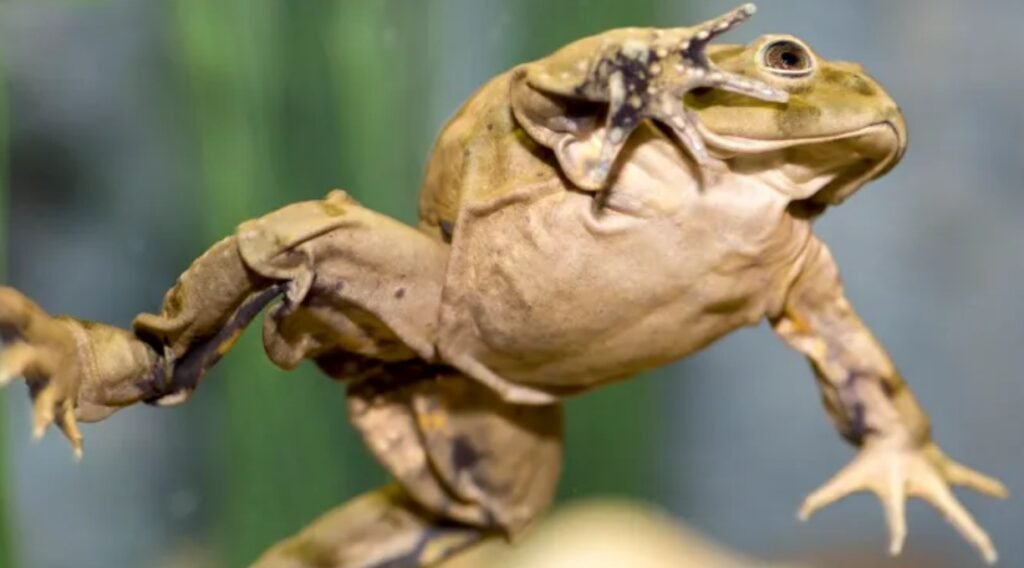
The Scrotum Frog, also known as the Rheobatrachus vitellinus, is a fascinating and unique species of frog found primarily in the rainforests of Australia. Notable for its unusual reproductive behavior, the Scrotum Frog has been a subject of great interest to researchers. This amphibian is best known for its ability to carry fertilized eggs in its stomach until they develop into tadpoles. Despite its somewhat unappealing name, the Scrotum Frog is an intriguing example of evolutionary adaptation, particularly in terms of reproduction.
Quick Top 10 Facts about Scrotum Frog
| SCIENTIFIC NAME | Rheobatrachus vitellinus |
| CLASSIFICATION | KINGDOM: Animalia PHYLUM: Chordata CLASS: Amphibia ORDER: Anura FAMILY: Heleophrynidae |
| SIZE | Adults typically range from 10–15 cm (4–6 inches) in length. |
| SPECIES | Native only to the rainforests of Queensland, Australia. |
| APPEARANCE | The Scrotum Frog is characterized by its rugged appearance, with rough, mottled skin that helps it blend into its forest environment. |
| LIFE SPAN | Typically 5–10 years in the wild. |
| HABITAT | Primarily found in the wet, dense rainforests of Queensland, Australia, where it thrives in cool, shaded areas. |
| DIET | Insects, small invertebrates, and occasionally plant material. |
| NATURAL PREDATORS | Birds, larger amphibians, and reptiles prey on the Scrotum Frog. |
| COUNTRY | Australia |
| GESTATION PERIOD | The female carries the fertilized eggs in her stomach, and the tadpoles develop internally before being “born” from her mouth. |
| CONSERVATION STATUS | Extinct in the wild; the last known sighting of the Scrotum Frog was in the early 1980s. Conservation efforts have not been successful in preserving the species. |
Amazing Facts About Scrotum Frog
1. Unique Reproductive Process
The most famous feature of the Scrotum Frog is its ability to carry fertilized eggs in its stomach until they develop into tadpoles. This unusual form of “gastric brooding” is an example of extreme adaptation to the environment.
2. Extinct in the Wild
Unfortunately, the Scrotum Frog is considered extinct in the wild. The last known population was in Queensland, Australia, but habitat destruction and disease have led to its decline.
3. “Gastric Brooding” Behavior
Females swallow fertilized eggs, where they develop into tadpoles. Once the tadpoles are fully developed, the female “gives birth” through her mouth, where the tadpoles emerge as fully formed froglets.
4. Limited Habitat
The Scrotum Frog was found only in the rainforests of Queensland, Australia, and its habitat was extremely limited, which contributed to its vulnerability.
5. Large, Bulbous Eyes
The Scrotum Frog has large, bulging eyes, which help it see in its dark, forested environment, especially when searching for food.
6. Insectivorous Diet
The Scrotum Frog feeds on small insects and other invertebrates. Its diet helps control insect populations in the rainforest.
7. Cold-Blooded Amphibian
As an amphibian, the Scrotum Frog is cold-blooded, which means it relies on its environment to regulate its body temperature.
8. Vulnerable to Habitat Destruction
Like many amphibians, the Scrotum Frog is highly sensitive to environmental changes. Deforestation and climate change have had significant impacts on its population.
9. Discovered in the 1970s
The Scrotum Frog was first described scientifically in the 1970s, and its remarkable reproductive behavior quickly caught the attention of biologists and researchers.
10. The Frog’s Strange Name
The Scrotum Frog’s name, although unappealing, refers to the appearance of the female’s swollen belly when she is carrying her developing offspring.
Introduction to the Remarkable Scrotum Frog
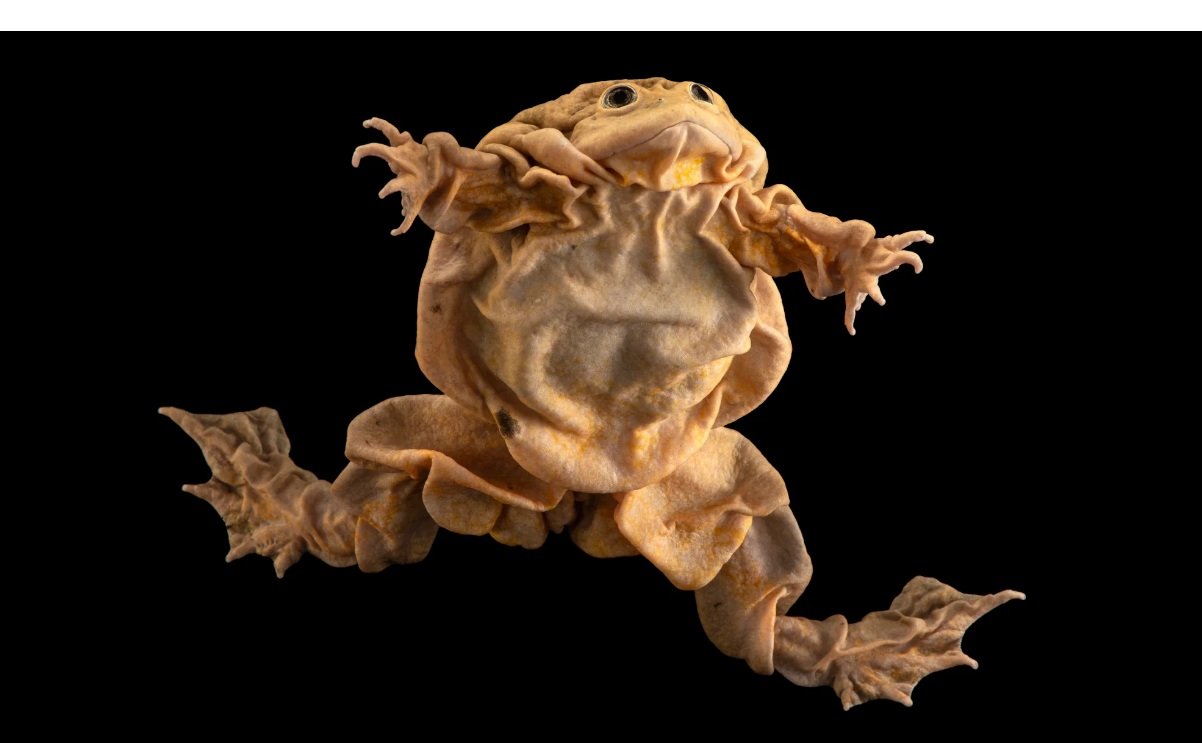
Once, the Scrotum Frog (Rheobatrachus silus) roamed the rivers and streams of northeastern Australia. This remarkable and unusual amphibian captivated both scientists and enthusiasts due to its unique reproductive strategy. Although officially extinct since the 1980s, its distinctive biology, particularly its reproductive system, continues to intrigue many.
The Scrotum Frog: A Unique Amphibian
Origin and Classification
The Scrotum Frog, or Rheobatrachus silus, belonged to the Rheobatrachidae family. It earned its peculiar name due to its unusual appearance. Despite its body measuring approximately 10–12 centimetres (4–5 inches) in length, it is most renowned for its distinctive and fascinating reproductive method.
Distinctive Reproductive Practices
Unique Internal Reproduction of the Scrotum Frog
The Scrotum Frog’s most notable feature was its highly unusual reproductive strategy, distinguishing it from all other amphibians. This species is particularly famous for raising its young internally.
Gestation and Internal Fertilisation
- After mating, the female would swallow the fertilised eggs, which would then hatch within her stomach.
- Unlike other frogs that deposit eggs externally, the Scrotum Frog retained her developing tadpoles inside her body for an extended period.
- Within the mother’s stomach, the tadpoles would continue to develop until they eventually transformed into juvenile frogs.
- Once fully matured, these young frogs would emerge through the mother’s mouth.
Biologists have been fascinated by the Scrotum Frog’s peculiar method of giving birth, known as gastric brooding, and have marvelled at this rare and highly specialised reproductive mechanism.
Brooding in the Stomach
- To facilitate this process, the female’s stomach underwent unique modifications.
- During the brooding phase, the stomach ceased secreting the digestive enzymes that typically break down food.
- Instead, it transformed into an environment that protected the developing tadpoles.
- The tadpoles continued to receive nourishment from the mother via her blood supply, similar to mammal embryos.
- After several weeks, the fully developed juvenile frogs, ready to survive independently, would leap out of the mother’s mouth.
Due to its unusual and captivating reproduction method, the Scrotum Frog attracted the attention of scientists. During the brooding period, it was nicknamed the “Scrotum Frog” because of the way its stomach resembled a scrotum.
Distribution and Habitat of the Scrotum Frog
The endemic Scrotum Frog inhabited the freshwater streams and rainforests of northeastern Queensland, Australia. The cool, damp temperatures in these environments were ideal for the frog’s reproductive technique. Similar to the alpine areas it occupied, the Scrotum Frog’s habitat consisted of streams and rivers with low silt levels and swift-moving, cold waters.
Reduced and Eliminated: The Extinction of the Scrotum Frog
Factors That Contributed to Extinction
- Destroying Habitats: In northeastern Queensland, habitat fragmentation resulted from the removal of rainforests for urbanisation and agricultural growth. The Scrotum Frog, which relied on healthy forests and pure freshwater systems to survive, faced significant challenges due to the loss of their natural habitats.
- Changes in Climate: The Scrotum Frog’s problems may have been exacerbated by the effects of climate change, including increased temperatures and altered rainfall patterns. Amphibians, whose bodies are highly sensitive to temperature variations, can be greatly impacted by such changes.
- Diseases: Amphibians are especially vulnerable to fungal diseases, such as the chytrid fungus’s lethal chytridiomycosis. This illness may have contributed to the demise of the Scrotum Frog and has been responsible for the decline and extinction of several frog species worldwide.
The Scrotum Frog was one of the most unusual and fascinating species ever discovered. Therefore, its extinction is a tragic loss in the world of frogs, even though there aren’t many documented sightings of it in the wild after the 1980s.
The Scrotum Frog’s Legacy
A Biological Marvel with Scientific Significance
Despite being extinct, the Scrotum Frog’s legacy serves as a crucial reminder of the remarkable biological diversity that once existed and continues to exist on Earth. Its demise highlights the fragility of ecosystems and species, particularly when confronted with human-induced stresses like disease, habitat loss, and climate change.
Ongoing Scientific Interest
Due to its unique reproductive habits, the Scrotum Frog remains a subject of study for scientists, especially concerning evolutionary biology and frog physiology. Many researchers have investigated whether internal brooding could be a viable reproductive strategy in other species and how it may have evolved, inspired by the Scrotum Frog’s stomach brooding mechanism.
In efforts to replicate or learn from this extraordinary method of childbirth, some scientists have explored biotechnological applications of this reproductive process. There remains curiosity about the possibility that frogs could produce fully grown offspring via internal brooding, potentially leading to advancements in reproductive science.
Lessons in Conservation
The Scrotum Frog’s extinction underscores the vulnerability of frogs and other species to environmental changes. Its disappearance emphasises the importance of conservation initiatives to protect endangered species’ habitats and to understand and mitigate the effects of diseases and climate change.
As many amphibian species face increasing threats, conservation efforts have become more urgent. The global decline of amphibians represents one of the most significant biodiversity crises of our time, and the lessons from the Scrotum Frog’s fate highlight the necessity of preserving natural environments.
FAQ (Frequently Asked Questions) about Scrotum Frog
Q: What is the Scrotum Frog?
Ans: The Scrotum Frog, or *Rheobatrachus vitellinus*, is a species of frog that was known for its unique reproductive behavior, where females carry fertilized eggs in their stomachs until they develop into tadpoles.
Q: Where is the Scrotum Frog found?
Ans: The Scrotum Frog was native to the rainforests of Queensland, Australia. However, it is now considered extinct in the wild.
Q: How do Scrotum Frogs reproduce?
Ans: Scrotum Frogs reproduce by a process called “gastric brooding,” where the female swallows the fertilized eggs. The eggs develop into tadpoles inside her stomach and later emerge as froglets through her mouth.
Q: Why is the Scrotum Frog extinct?
Ans: The Scrotum Frog went extinct in the wild due to habitat destruction, disease, and other environmental pressures that impacted its ability to survive.
Q: Are there any conservation efforts for the Scrotum Frog?
Ans: Despite efforts to conserve the species, the Scrotum Frog is considered extinct in the wild. There have been no successful reintroductions of the species into its natural habitat.
Q: How long do Scrotum Frogs live?
Ans: The typical lifespan of a Scrotum Frog in the wild was around 5 to 10 years.
Q: How did the Scrotum Frog get its name?
Ans: The name “Scrotum Frog” refers to the appearance of the female’s swollen belly when carrying her developing offspring.
Q: Are Scrotum Frogs dangerous to humans?
Ans: No, Scrotum Frogs were not dangerous to humans. They posed no significant threat but were an interesting species due to their reproductive methods.
Q: Can Scrotum Frogs be kept as pets?
Ans: Due to their extinction in the wild, Scrotum Frogs cannot be kept as pets, and they are not available in the pet trade.
Q: What role did Scrotum Frogs play in their ecosystem?
Ans: As insectivores, Scrotum Frogs helped control insect populations in their rainforest habitat, playing a role in maintaining ecological balance.
#ScrotumFrog #Rheobatrachus #GastricBrooding #Amphibians #UniqueReproduction #ExtinctSpecies #AustralianFrogs #FrogFacts
Our sources and references about Scrotum Frog
1: Wikipedia – Scrotum Frog
2: Australian Geographic – Scrotum Frog Extinction
3: Britannica – Scrotum Frog
4: ABC Education – Scrotum Frog