The Sockeye Salmon is a species of salmon found in the Pacific Ocean. It is famous for its bright red coloration during the spawning season. Sockeye salmon are prized for their rich flavor and high nutritional value. They undertake long migrations from the ocean to freshwater rivers to spawn, often swimming hundreds of miles.
Quick Top 10 Facts about Sockeye Salmon
| SCIENTIFIC NAME | Oncorhynchus nerka |
| CLASSIFICATION | KINGDOM: Animalia PHYLUM: Chordata CLASS: Actinopterygii ORDER: Salmoniformes FAMILY: Salmonidae GENUS: Oncorhynchus SPECIES: O. nerka |
| SIZE | Average length: 24 inches (61 cm); Weight: 5–15 pounds (2.3–6.8 kg) |
| HABITAT | North Pacific Ocean and freshwater lakes and rivers of western North America and northeast Asia |
| DIET | Primarily feeds on zooplankton in freshwater and saltwater; also consumes small fish and crustaceans |
| SPECIES | Sockeye Salmon, also known as red salmon or blueback salmon |
| COUNTRY | Found in the United States (especially Alaska), Canada, Russia, and Japan |
| GESTATION PERIOD | Eggs incubate over winter; hatch in spring and develop into fry by late spring or early summer |
| LIFE SPAN | 3 to 5 years |
| CONSERVATION STATUS | Varies by population; some runs are healthy, others are threatened or endangered due to habitat loss and overfishing |
Amazing Facts About Sockeye Salmon
1. They undergo dramatic color changes
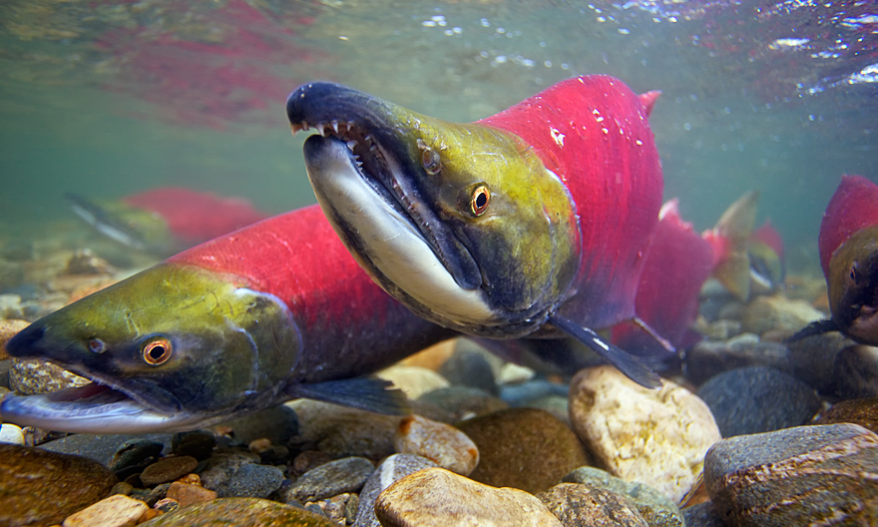
During spawning, Sockeye Salmon turn bright red with a green head—earning them the nickname “red salmon.”
2. Known for long migrations
Sockeye Salmon travel thousands of miles from the ocean to freshwater lakes and rivers to spawn.
3. They are anadromous
They are born in freshwater, live most of their life in the ocean, and return to freshwater to reproduce.
4. A keystone species
Sockeye play a vital role in their ecosystem by providing nutrients to freshwater systems and wildlife.
5. Die after spawning
Like most Pacific salmon, Sockeye die shortly after spawning, completing their life cycle.
6. Their juveniles may stay in lakes
Young Sockeye, known as smolts, often stay in freshwater lakes for 1–3 years before migrating to the ocean.
7. Highly prized for taste
Sockeye are considered one of the best-tasting salmon due to their firm texture and rich flavor.
8. Vital to Indigenous cultures
They hold cultural, spiritual, and economic significance to many Indigenous communities in the Pacific Northwest.
9. They can jump waterfalls
During migration, Sockeye Salmon display impressive strength, leaping up waterfalls and rapids to reach spawning grounds.
10. Sensitive to environmental changes
Sockeye Salmon populations are indicators of ecosystem health and are affected by climate change, pollution, and water management practices.
Top 10 Facts about Sockeye Salmon: Pacific’s Iconic Fish
The sockeye salmon (Oncorhynchus nerka), also known as red salmon, is one of the most recognisable and commercially important species of Pacific salmon. It is well-known for its unique life cycle, vibrant red colour, and its significance to local businesses and natural environments. For many years, fishermen, biologists, and environmentalists have been captivated by sockeye salmon, which are vital for the well-being of both freshwater and marine environments. This article provides a thorough overview of the remarkable sockeye salmon, examining its distinct traits, behaviour, habitat, life cycle, and conservation status.
1. The Physical Attributes of Sockeye Salmon
Compared to other salmon species, sockeye salmon are medium-sized fish with several unique physical traits. Their physical characteristics help them survive and reproduce, in addition to being aesthetically pleasing.
Dimensions and Form
- Length: Sockeye salmon typically reach lengths of 24 to 30 inches when fully grown. Males can grow up to 33 inches.
- Weight: Males usually weigh more than females, as they are larger during the spawning season. Typically, they weigh between 5 and 15 pounds.
The Colour
- Bright Red Colour: The bright red colour of sockeye salmon is one of its most distinguishing characteristics. In the water, they have a silvery belly and a blue-green back. However, during the spawning season, males turn a vivid red, while females take on a more muted shade. This dramatic colour change plays a role in their reproductive behaviour and helps attract mates.
- Black Spots: Like many other salmon species, sockeye salmon have black spots on their backs and tails. During spawning, males often develop a hooked snout, known as a kype, to compete for mates.
Tail and Fins
- Sockeye salmon move quickly across rivers and seas due to their large, well-developed tails and pointed pectoral fins. They rely on these fins to swim upstream to spawn and during their migratory journeys.
2. Distribution and Habitat
Sockeye salmon are primarily found in the Pacific Ocean and its tributaries. They also inhabit certain rivers and lakes in the Bering Sea, along with the coastlines of Alaska, British Columbia, and the northwest United States. Their seasonal migrations and migratory patterns set them apart from other salmon species and are important aspects of their life cycle.
Habitat in Freshwater
- Spawning Grounds: Sockeye salmon are known for their spectacular spawning journeys. After spending time in the ocean, they return to their birthplaces in freshwater lakes or streams. These spawning sites are usually found in the hilly areas of Alaska, Canada, and the Pacific Northwest. Some populations breed in lakes, where the young salmon remain for a while before migrating to the ocean.
- Rivers & Streams: Sockeye salmon travel upstream against strong currents to find the best breeding grounds. They prefer clear, cold water with clean gravel beds, where they can deposit their eggs in a safe, oxygen-rich environment.
The Marine Environment
- Oceanic Seas: Sockeye salmon spend most of their adult lives in offshore and nearshore seas. They migrate over great distances between the nutrient-rich waters of the open ocean and their riverine spawning grounds. During this time, sockeye salmon feed on krill, plankton, and small fish to meet their growth and energy needs.
3. Reproduction and the Life Cycle
Sockeye salmon have an amazing life cycle, which includes intricate migrations between freshwater and marine habitats over several years.
Eggs and the Fry Stage
- Spawning: Sockeye salmon create gravel nests, known as redds, in freshwater streams and rivers, where females deposit their eggs during the late summer or early autumn spawning season. Males, who compete fiercely for the females’ attention, fertilise the eggs.
- Incubation: After fertilisation, the eggs incubate for several months, usually over the winter, before hatching into alevins. The water flowing through the gravel beds provides oxygen to the eggs during this time.
- Fry Stage: After hatching, the baby fish, known as fry, start growing. At this stage, they begin swimming and exploring their watery surroundings after absorbing the yolk sacs. Before migrating to the ocean, they spend a significant amount of time in freshwater.
Ocean Migration and Smoltification
- Smoltification: After spending a year or two in freshwater, the fry undergo a physiological change called smoltification. They transform from freshwater fish to sea-adapted fish. Their bodies become more streamlined, and they learn to control their intake of salt to prepare for life in the ocean.
- Migration to the Ocean: Once smoltification is complete, the juvenile salmon, now known as smolts, move towards the ocean. They pass through estuaries and travel downriver to enter the open waters of the Pacific Ocean, where they will spend most of their adult lives.
Adult Sockeye Salmon
Before returning to their birth rivers to spawn, sockeye salmon may spend between three and seven years in the ocean. During this time, they grow significantly as they feed on marine life, becoming larger and fatter.
Death and Spawning
- Spawning Migration: Sockeye salmon migrate back to their native rivers when they reach sexual maturity. They face several obstacles along the way, including swift currents, natural barriers like waterfalls, and predators. During this strenuous and hazardous journey, their bodies undergo significant changes, and they often stop eating, relying on stored energy.
- Death Following Spawning: Sockeye salmon complete their life cycle by dying after spawning. As their bodies decompose, they provide nutrients to the surrounding environment. Their deaths are crucial for maintaining healthy freshwater and marine ecosystems.
4. Nutrition and Feeding Practices
Sockeye salmon are predatory feeders, consuming a variety of marine life during their time in the water. They primarily eat small fish, krill, and zooplankton.
Krill
- Krill are small, shrimp-like crustaceans that provide a valuable energy source for developing salmon. Sockeye salmon, in particular, feed heavily on krill.
Plankton
- During their juvenile years, sockeye salmon mainly consume zooplankton, which they filter through their gills as they swim through the water.
5. Threats and the Status of Conservation
Despite being a significant species from both ecological and commercial perspectives, sockeye salmon face several challenges, some of which are exacerbated by climate change and human activities.
Population Reductions
- Many sockeye salmon populations are declining due to climate change, habitat loss, and overfishing. Their reproductive and migratory habits are particularly vulnerable to the warming of freshwater rivers and seas.
- Due to damming, river pollution, and unsustainable fishing practices, sockeye salmon populations in the Columbia River and Fraser River systems have suffered significant declines.
Conservation Activities
- Various government agencies and conservation groups are working to rehabilitate damaged rivers and estuaries, improve fishing practices, and preserve sockeye salmon habitats. Initiatives include implementing sustainable fish management practices, reducing bycatch in commercial fisheries, and constructing fish ladders at dams.
6. Cultural and Economic Significance
Sockeye salmon are of great cultural and economic importance in many areas, particularly in Alaska, British Columbia, and the Pacific Northwest. Sockeye salmon stocks generate revenue for both commercial and recreational fishing industries, and these fish have long been a vital food source for indigenous teams. For many Native American groups and First Nations in Canada, the annual return of sockeye salmon holds deep cultural significance, with celebrations and rituals dedicated to the fish.

FAQ (Frequently Asked Questions) about Sockeye Salmon
Q: What is a Sockeye Salmon?
Ans: The Sockeye Salmon (Oncorhynchus nerka), also known as red salmon, is a species of anadromous fish in the salmon family. It is known for its distinctive bright red body and greenish head during spawning season. Sockeye are highly prized for their flavorful, rich, and firm-textured meat, making them a popular catch in commercial and recreational fisheries.
Q: Where does the Sockeye Salmon live?
Ans: Sockeye Salmon are native to the northern Pacific Ocean and the rivers discharging into it. They are found in regions ranging from the Columbia River in the Pacific Northwest to Alaska and parts of northeastern Asia. They live in the ocean for most of their lives but migrate to freshwater streams and lakes to spawn.
Q: What does the Sockeye Salmon eat?
Ans: In the ocean, Sockeye Salmon feed primarily on plankton, krill, small fish, and aquatic insects. Juvenile sockeye in freshwater lakes consume zooplankton and other small invertebrates until they migrate to the ocean.
Q: How big does a Sockeye Salmon get?
Ans: Adult Sockeye Salmon typically measure between 18 to 31 inches (45 to 80 cm) in length and weigh 4 to 15 pounds (1.8 to 6.8 kg). However, some individuals can grow even larger depending on their environment and diet.
Q: What is unique about Sockeye Salmon’s spawning?
Ans: Sockeye Salmon undertake a dramatic migration from the ocean back to the freshwater streams and lakes where they were born to spawn. During this time, their bodies change color to bright red, and males develop a pronounced hump and hooked jaw. After spawning, both males and females die, completing their life cycle.
Q: Are Sockeye Salmon endangered?
Ans: While many populations of Sockeye Salmon are stable, some runs—particularly in the Pacific Northwest—have declined due to habitat loss, overfishing, and barriers such as dams. Certain populations are listed under conservation statuses, and restoration efforts are in place to protect these fish.
Q: Can you eat Sockeye Salmon?
Ans: Yes, Sockeye Salmon is considered one of the most flavorful and nutritious types of salmon. It is rich in omega-3 fatty acids and is commonly grilled, smoked, or canned. Wild-caught Sockeye is especially prized for its deep red flesh and firm texture.
Q: How long do Sockeye Salmon live?
Ans: Sockeye Salmon typically live for 4 to 5 years. Most of that time is spent maturing in the ocean before they return to freshwater to spawn and complete their life cycle.
Q: What threats do Sockeye Salmon face?
Ans: Sockeye Salmon face threats such as habitat degradation, climate change, pollution, overfishing, and obstacles to migration like dams and water diversions. Conservation programs and sustainable fishing practices are essential to their survival.
#SockeyeSalmon, #SalmonFacts, #PacificFish, #WildlifeConservation, #AquaticLife, #SpawningSalmon, #Fisheries, #SustainableSeafood, #NatureLovers, #OceanToStream
Our sources and references about Sockeye Salmon
1: Wikipedia – Sockeye Salmon
2: NOAA Fisheries – Sockeye Salmon
3: National Geographic – Sockeye Salmon
4: Wild Salmon Center