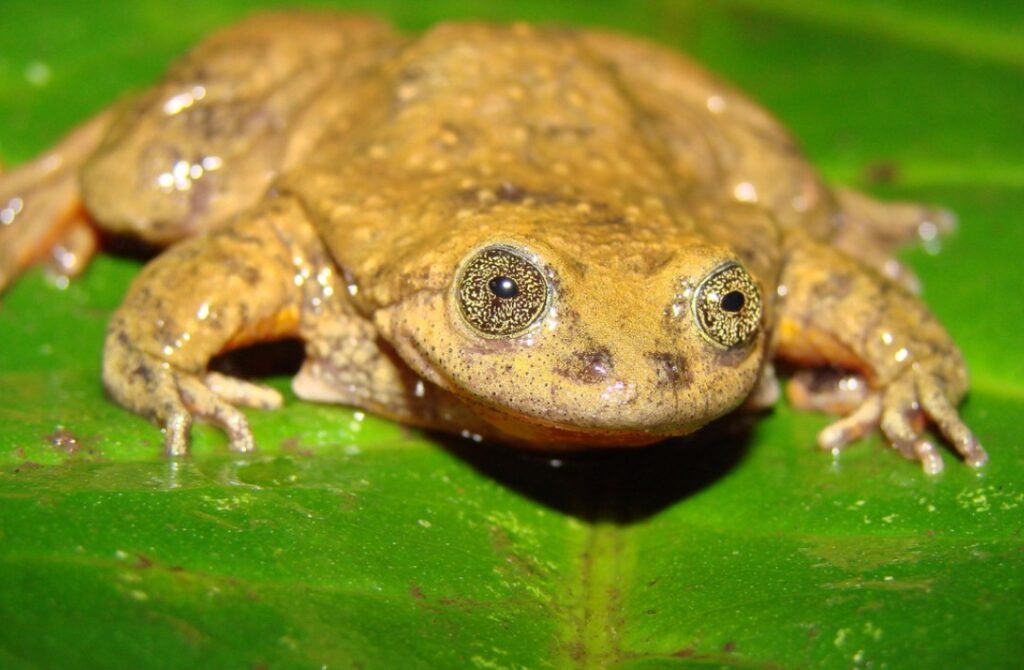
The Sehuencas Water Frog, also known as the Sehuencas Brown Frog, is a critically endangered species native to the cloud forests of Bolivia. It is known for its unique appearance, with a rough, brownish skin that helps it camouflage with its surroundings. This frog was thought to be extinct until it was rediscovered in 2008, and since then, conservationists have worked hard to protect it. Its habitat is threatened by deforestation, climate change, and invasive species. The Sehuencas Water Frog is an important indicator of the health of its ecosystem, and efforts are ongoing to ensure its survival.
Quick Top 10 Facts about Sehuencas Water Frog
| SCIENTIFIC NAME | Telmatobius yuracare |
| CLASSIFICATION | KINGDOM: Animalia PHYLUM: Chordata CLASS: Amphibia ORDER: Anura FAMILY: Telmatobiidae |
| SIZE | Length: 7–9 cm (2.8–3.5 inches) for adults |
| SPECIES | The Sehuencas Water Frog is a species of aquatic frog found in the cloud forests of Bolivia. |
| APPEARANCE | Rough, brownish skin with a slightly wrinkled texture; these frogs have large, bulging eyes, and a body adapted to life in water. |
| LIFE SPAN | Typically 10–15 years in the wild, though their lifespan may vary depending on environmental conditions and conservation efforts. |
| HABITAT | Found in the cloud forests of Bolivia, particularly in cool, fast-flowing streams and rivers. |
| DIET | Sehuencas Water Frogs are carnivorous, feeding on invertebrates such as insects, worms, and small crustaceans. |
| NATURAL PREDATORS | Birds of prey, snakes, and other larger amphibians or reptiles may prey upon Sehuencas Water Frogs, though their primary threats are human-related. |
| COUNTRY | Bolivia |
| GESTATION PERIOD | Sehuencas Water Frogs reproduce through external fertilization, and their eggs typically hatch into tadpoles in about a week. |
| CONSERVATION STATUS | Critically Endangered (IUCN). Habitat destruction, pollution, and the introduction of non-native species have severely impacted the population of this species. |
Amazing Facts About Sehuencas Water Frog
1. Rediscovered After Being Thought Extinct
The Sehuencas Water Frog remained unseen for years, and researchers believed it had gone extinct. They rediscovered it in 2008 in a small region of Bolivia, which inspired conservation efforts to protect this rare species.
2. Adapted to Cold, Fast-Flowing Streams
This frog thrives in cold, fast-flowing streams within the cloud forests, and its body allows it to move through swift waters with ease.
3. Camouflage Master
The Sehuencas Water Frog has rough, brown skin that helps it blend into its surroundings and shields it from predators.
4. Aquatic Lifestyle
Unlike many frogs, the Sehuencas Water Frog spends nearly its entire life in water, which makes it an excellent swimmer.
5. Vulnerable to Habitat Loss
Habitat destruction, including deforestation and pollution, threatens the Sehuencas Water Frog and slowly reduces its natural environment.
6. Active at Night
Like many amphibians, the Sehuencas Water Frog stays active at night and prefers the cooler hours of the evening.
7. Critical Role in Ecosystems
This amphibian plays a key ecological role by helping control insect populations and supporting the balance of the ecosystem.
8. Conservation Efforts Ongoing
Conservationists work to protect the Sehuencas Water Frog through breeding programmes, habitat restoration, and public education to safeguard its ecosystem.
9. Endangered Status
The Sehuencas Water Frog is critically endangered due to its limited range and continued habitat destruction. Active conservation remains essential for its survival.
10. Unique Reproductive Habits
The Sehuencas Water Frog lays eggs in streams, where tadpoles grow into froglets within weeks, ensuring the species continues. 
The Sehuencas Water Frog & Amphibian Conservation
Researchers once believed the Sehuencas Water Frog (Telmatobius yuracare) no longer lived in the wild. This intriguing and severely endangered species, native to Bolivia’s montane wetlands, plays an important ecological role. However, habitat loss, disease, and climate change now threaten its existence.
1. Physical Features of Sehuencas Water Frog Size, Appearance & Identification
The Sehuencas Water Frog displays unique traits that suit its wet, high-altitude habitat. Several key characteristics distinguish it from other amphibians.
Dimensions, Structure & Size
- Medium-Sized Endangered Frog: Mature males usually reach 7.5 to 8 cm (around 3 inches) in body length, while females grow up to 9 cm (around 3.5 inches), making this frog a medium-sized species.
- Semi-Aquatic Adaptations: Its strong body and semi-aquatic adaptations help it survive in its humid, high-altitude environment.
Frog Skin Texture, Colouration & Aquatic Adaptations
The Sehuencas Water Frog has smooth, moist skin, and its colouration helps it hide in its environment. Its skin varies from olive to greenish-brown, with darker, mottled patterns that blend with the water and marsh plants.
- Large Aquatic Eyes: The frog has prominent eyes, a common trait in aquatic amphibians. Its webbed feet also help it navigate through watery areas.
- Unique Amphibian Trait – No External Eardrums: This frog lacks external eardrums or tympanic membranes. Instead, it detects sound through vibrations in the water and environment.
2. Habitat of Bolivian Andes Habitat & Wetland Ecosystems
The Sehuencas Water Frog lives mainly in the Sehuencas River Basin within the Andes Mountains. It inhabits remote, high-altitude wetlands and swift, clear streams that are cold, oxygen-poor, and rich in nutrients.
High-Altitude Streams & Yungas Wetlands
The Yungas region, a rainforest zone on the Andes’ eastern slopes, contains cold, fast-moving streams where this frog thrives. These clear waters, filled with rocks, plants, and submerged areas, offer shelter and breeding sites. Wetlands found between 2,000 and 3,000 metres (6,600 and 9,800 feet) provide calmer water and suitable temperatures for the Sehuencas Water Frog.
Reduced Habitat Range & Endangered Status
This frog once occupied a wider region, but its range has shrunk due to habitat damage and human activities. Researchers have recorded it only in a few isolated Yungas locations, and it now survives within a small portion of its original habitat.
3. Diet and Behaviour of Sehuencas Water Frog & Nocturnal Behaviour
The Sehuencas Water Frog remains mainly nocturnal, and it becomes most active at night when cooler temperatures support feeding and movement.
Frog Hunting Behaviour
Sehuencas Water Frogs hunt small invertebrates, including aquatic insects, crustaceans, and small arthropods that live in streams and pools. The frog catches prey using its long, sticky tongue and relies on its sharp vision and tactile sensitivity to locate food. It often feeds in shallow stream areas where small creatures hide among rocks and vegetation.
Breeding Cycle, Egg-Laying & Tadpole Development
The Sehuencas Water Frog lays eggs in shallow, slow-moving streams. After fertilisation, the tadpoles develop before turning into young frogs. The female lays small clusters of eggs, usually during the rainy season when rising water improves breeding conditions. Unlike many frogs, this species does not experience a free-swimming tadpole stage. Its tadpoles develop directly inside the egg, an adaptation that suits the oxygen-rich, fast-flowing streams it inhabits.
4. Threats to Sehuencas Water Frog
Several natural and human-related threats endanger the Sehuencas Water Frog and have caused a sharp decline in its population.
Deforestation, Water Pollution & Climate Change Impacts
Deforestation and agricultural expansion destroy wetlands and riparian zones where the frog lives. Pollution from mining and farming further harms the species by degrading water quality. Climate change alters rainfall patterns and raises temperatures, which can disrupt breeding and reduce reproductive success.
Amphibian Disease Threats
Chytridiomycosis, caused by the fungus *Batrachochytrium dendrobatidis* (Bd), poses one of the greatest threats. This disease has devastated amphibian species worldwide, especially in tropical and high-altitude regions. The fungus attacks the frog’s skin, causing lesions that may lead to dehydration, organ failure, and death. 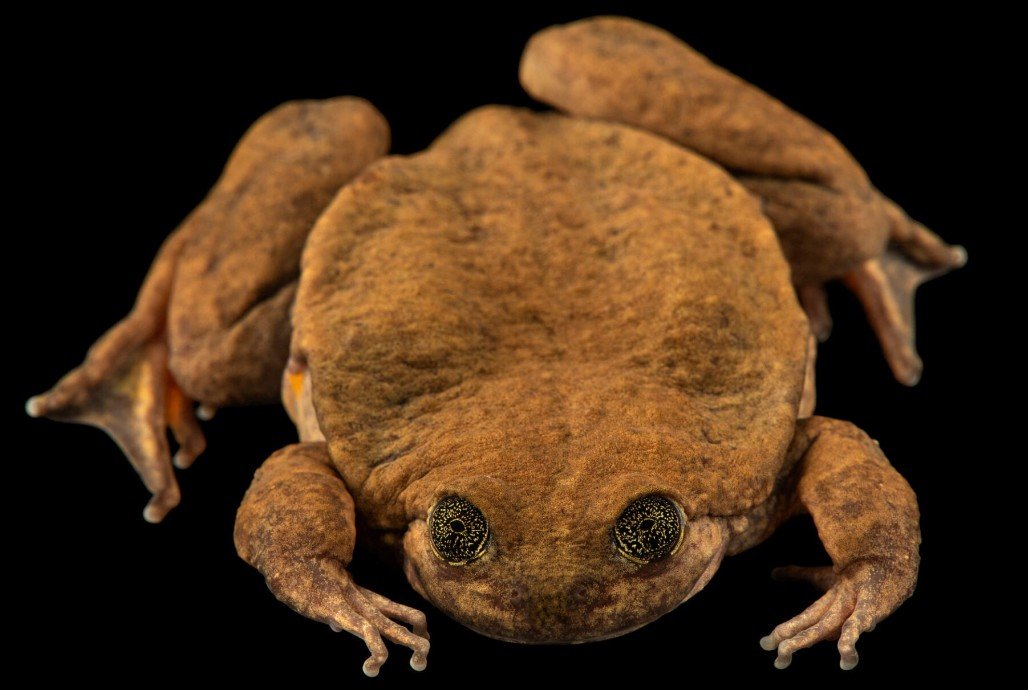
5. Conservation Efforts for Sehuencas Water Frog
Conservationists are working urgently to prevent the extinction of the Sehuencas Water Frog, as its habitat continues to decline.
Captive Breeding Success & Reintroduction Programmes
Researchers from Bolivia and the United States rediscovered the frog in 2018 after years without sightings. They found a small group in a remote area and began a captive breeding programme to secure the species’ survival. The Bolivian government and the Wildlife Conservation Society (WCS) helped launch these controlled breeding efforts. Successfully raised frogs returned to the wild in 2020, and ongoing monitoring supports their natural population.
Wetland Restoration, Reforestation & Ecosystem Protection
Restoration projects aim to revive the high-altitude wetlands in the frog’s native range. These efforts include reforestation, habitat protection, and reducing water pollution. Local groups also promote sustainable farming and raise awareness to protect the frog and its fragile environment.
FAQ (Frequently Asked Questions) about Sehuencas Water Frog
Q: What is the Sehuencas Water Frog?
Ans: The Sehuencas Water Frog is a critically endangered amphibian native to Bolivia’s cloud forests. Researchers believed it extinct until its rediscovery in 2008.
Q: How long do Sehuencas Water Frogs live?
Ans: In the wild, these frogs typically live 10–15 years, depending on environmental conditions.
Q: What do Sehuencas Water Frogs eat?
Ans: They are carnivorous and mainly eat insects, worms, and small crustaceans.
Q: Where are Sehuencas Water Frogs found?
Ans: They live in Bolivia’s cloud forests and inhabit cold, fast-moving streams and rivers.
Q: Are Sehuencas Water Frogs endangered?
Ans: Yes, they are critically endangered due to habitat loss, pollution, and invasive species.
Q: How do Sehuencas Water Frogs reproduce?
Ans: They lay eggs in water, and tadpoles hatch within a week. The tadpoles develop into young frogs within the stream.
Q: What is the conservation status of Sehuencas Water Frog?
Ans: The IUCN classifies the Sehuencas Water Frog as critically endangered, and conservation programmes aim to protect the species.
Q: What are the threats to the Sehuencas Water Frog?
Ans: Habitat destruction, pollution, and invasive species pose major threats to its survival.
Q: What is being done to protect Sehuencas Water Frogs?
Ans: Conservationists focus on habitat restoration, captive breeding programmes, and community awareness to safeguard this species.
#SehuencasWaterFrog #EndangeredSpecies #Amphibians #Conservation #BoliviaFrog #FrogFacts #SaveTheFrogs #WildlifeConservation
Our sources and references about Sehuencas Water Frog
1: Wikipedia – Sehuencas Water Frog
2: IUCN Red List – Sehuencas Water Frog
3: WWF – Sehuencas Water Frog
4: National Geographic – Sehuencas Water Frog