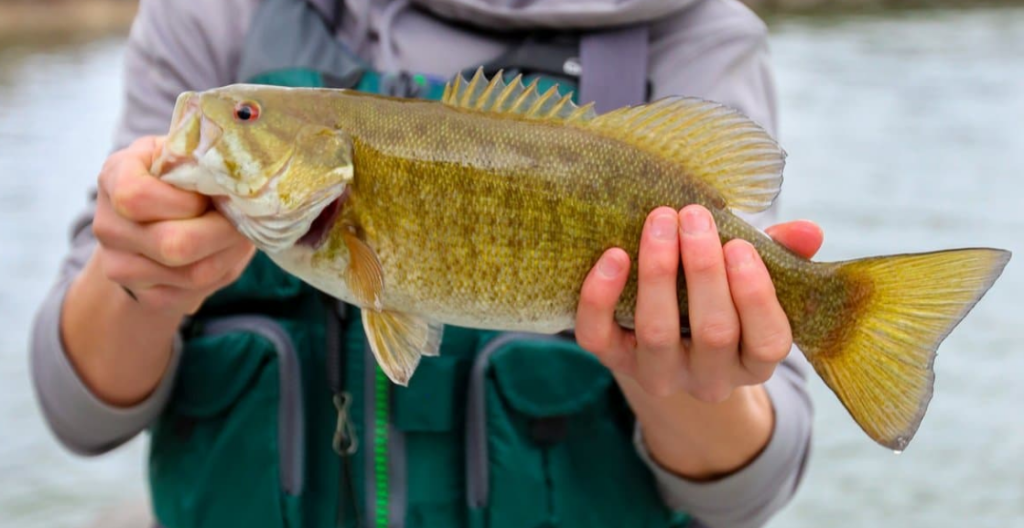
The Smallmouth Bass (Micropterus dolomieu) is a popular freshwater fish native to North America. Known for its aggressive nature and strong fighting ability, it is highly sought after by anglers. Smallmouth Bass are typically found in clear, cool lakes and rivers, often preferring rocky or sandy bottoms. They are carnivorous, preying on smaller fish, insects, and crustaceans. This species has become an important part of the ecosystem, controlling populations of smaller fish and contributing to biodiversity in freshwater habitats.
Smallmouth Bass Scientific Classification
| SCIENTIFIC NAME | Micropterus dolomieu |
| CLASSIFICATION | KINGDOM: Animalia PHYLUM: Chordata CLASS: Actinopterygii ORDER: Perciformes FAMILY: Centrarchidae |
| SIZE | Length: 30–51 cm (12–20 inches), typically weighing 0.5–1.5 kg (1–3 lbs), with some larger individuals reaching up to 5 kg (11 lbs) |
| SPECIES | Various species of freshwater fish within the Centrarchidae family, including other bass species |
| APPEARANCE | Smallmouth Bass have an olive or brownish coloration with dark vertical bars across their body, a small mouth, and sharp teeth. Their bodies are streamlined for quick swimming and agility. |
| LIFE SPAN | Typically 6–10 years in the wild, with some individuals living up to 12 years |
| HABITAT | Clear, cool rivers, lakes, and reservoirs with rocky or sandy bottoms, often in regions of North America such as the Great Lakes and the Mississippi River basin |
| DIET | Primarily carnivorous, feeding on smaller fish, crayfish, and aquatic insects |
| NATURAL PREDATORS | Large fish species, birds of prey, and humans (through recreational fishing) |
| COUNTRY | Native to North America, particularly in the United States and Canada |
| GESTATION PERIOD | Smallmouth Bass lay eggs during the spring; fertilization is external, and the eggs hatch in 1–2 weeks |
| CONSERVATION STATUS | Not currently at risk, but populations may be threatened by habitat loss, pollution, and overfishing in some areas |
Smallmouth Bass Facts
1. Strong Fighters
Smallmouth Bass are known for their fierce fighting ability when hooked. They are highly valued by sport anglers due to their energetic and aggressive behavior during catch-and-release fishing.
2. Adaptable Habitat
They can live in a variety of freshwater environments, ranging from lakes and reservoirs to fast-moving rivers and streams, provided the water is clear and cool.
3. Carnivorous Diet
Smallmouth Bass feed on a wide range of prey, including fish, crayfish, and insects. Their strong jaws and sharp teeth help them catch and consume prey effectively.
4. Excellent Swimmers
With a streamlined body and powerful fins, Smallmouth Bass are agile swimmers, capable of making quick movements to catch prey or avoid predators.
5. Popular Sport Fish
Smallmouth Bass are one of the most popular game fish species in North America, attracting anglers from around the world due to their challenging catch and energetic fight.
6. Nest Builders
During spawning season, male Smallmouth Bass build nests on the lake or river bottom, guarding the eggs until they hatch and ensuring the safety of the young.
7. Sensitive to Water Quality
These fish thrive in clean, clear water, making them an important indicator of the health of freshwater ecosystems. Poor water quality can impact their population numbers.
8. Active Hunters
Smallmouth Bass are opportunistic hunters, using their keen eyesight and lateral line system to detect movement in the water and pursue potential prey.
9. Seasonal Movements
They tend to move to deeper waters in winter to avoid the colder temperatures and return to shallower, warmer waters in spring for spawning.
10. Critical to Ecosystem Balance
As predators, Smallmouth Bass help control populations of smaller fish and invertebrates, contributing to the balance of their freshwater ecosystems.
11. They prefer cooler waters
Unlike their relative, the largemouth bass, Smallmouth Bass thrive in cooler, clearer waters.
12. Males guard the nests
After females lay eggs, male Smallmouth Bass aggressively guard the nests until the fry swim away.
13. They feed heavily in the morning and evening
Peak feeding times are typically during low light periods at dawn and dusk.
14. They grow slowly
Smallmouth bass grow at a moderate pace, with many individuals taking several years to reach trophy size, especially in cooler, well-oxygenated freshwater systems.
Smallmouth Bass
The smallmouth bass (Micropterus dolomieu) is one of North America’s most popular freshwater game fish. Renowned for its aggressive strikes, strong fighting ability, and widespread presence in rivers, lakes, and streams, this species holds a special place in recreational fishing culture. Beyond angling appeal, the smallmouth bass plays an important role in freshwater ecosystems by regulating prey populations and maintaining balanced aquatic food webs.
Species Overview
The smallmouth bass is a freshwater fish native to North America and a member of the centrarchid family, which includes bluegill, crappie, and largemouth bass. Anglers value this species for its strength, endurance, and unpredictable behaviour once hooked, making it a favourite among sport fishing enthusiasts seeking a challenging catch.

Physical Features
Smallmouth bass are medium-sized freshwater fish with streamlined, muscular bodies adapted for fast swimming in moving water. Their bronze to olive-green colouring, combined with dark vertical bands, allows them to blend seamlessly into rocky riverbeds and vegetated lake environments.
The Structure of the Body
- Body Shape: Smallmouth bass have elongated, torpedo-shaped bodies that allow for rapid acceleration and efficient pursuit of prey.
- Colouration: Their backs range from olive-brown to golden green, fading into lighter undersides. Juveniles often display more pronounced vertical striping.
- Mouth: The upper jaw extends only to the middle of the eye, making it noticeably smaller than that of the largemouth bass.
- Fins: Spiny dorsal fins and soft-rayed ventral fins provide balance and precise manoeuvrability in flowing water.
Dimensions and Mass
- Size: Most smallmouth bass measure between 12 and 18 inches, although individuals may grow up to 24 inches in ideal conditions.
- Weight: Average weights range from one to four pounds, while trophy smallmouth bass can exceed seven pounds.
Habitat Range
Smallmouth bass inhabit a wide variety of freshwater habitats, including rivers, reservoirs, streams, and clear-water lakes. They strongly prefer areas with rocky or gravel substrates, submerged logs, and aquatic vegetation that offer cover and ambush points.
Geographic Range
- Native Range: Eastern and central North America, including the Great Lakes, southern Canada, and the Mississippi River basin.
- Introduced Range: Widely introduced across western North America, Europe, and parts of Asia due to their popularity in sport fishing.
Preferred Conditions
- Water Temperature: Optimal temperatures range from 60 to 75°F (15–24°C), supporting active feeding and growth.
- Water Flow: Smallmouth bass thrive in clean, oxygen-rich waters with moderate to strong currents and structural cover.
Diet Behaviour
As aggressive freshwater predators, smallmouth bass rely on speed and surprise to capture prey. They often position themselves near rocks or submerged structures to ambush passing food.
Diet Composition
- Primary Foods: Aquatic insects, crayfish, and other crustaceans make up a large portion of their diet.
- Fish: Minnows, shiners, and juvenile sunfish are commonly consumed.
- Feeding Times: Feeding activity peaks during dawn and dusk when water temperatures are stable and prey is abundant.
Hunting Behaviour
- Ambush Strategy: Smallmouth bass strike quickly from cover, using sudden bursts of speed.
- Territorial Males: During spawning season, males aggressively defend nests from predators and rival fish.
Life Cycle
Smallmouth bass reproduction typically occurs in late spring to early summer when water temperatures reach ideal spawning levels.
Spawning Process
- Nesting: Males create shallow nests in gravel or rocky substrates.
- Egg Care: Eggs hatch within three to five days, with males guarding fry until they become free-swimming.
- Lifespan: Most smallmouth bass live between six and ten years, though some individuals exceed this in protected habitats.
Conservation Status
Smallmouth bass are not currently listed as threatened or endangered and remain abundant across much of their range. However, environmental pressures can affect local populations.
Threat Factors
- Habitat Loss: Pollution, sediment runoff, and water temperature changes degrade freshwater ecosystems.
- Invasive Species: Non-native fish compete for food and spawning habitat.
- Fishing Pressure: Overfishing in unmanaged waters can reduce population quality.
Recreational Value
Smallmouth bass are highly prized by recreational anglers for their strength, endurance, and aerial fighting style. They are a cornerstone species in catch-and-release fishing, competitive bass tournaments, and conservation-focused sport fisheries across North America.

FAQ (Frequently Asked Questions) about Smallmouth Bass
Q: What is a Smallmouth Bass?
Ans: The Smallmouth Bass (Micropterus dolomieu) is a popular freshwater fish found in rivers and lakes across North America. It is known for its aggressive nature, strong fighting ability when caught, and distinctive bronze or olive-green coloration. It is a favourite among sport fishermen due to its challenging fight and tasty meat.
Q: Where does the Smallmouth Bass live?
Ans: Smallmouth Bass are native to North America, particularly in the Great Lakes and their tributaries, and along the eastern and central United States. They inhabit clear, cool streams, rivers, and lakes with rocky or sandy bottoms and moderate to fast currents.
Q: What does the Smallmouth Bass eat?
Ans: Smallmouth Bass are carnivorous and primarily feed on smaller fish, invertebrates, and amphibians. Their diet includes minnows, crayfish, insects, and occasionally smaller fish such as sunfish. They are aggressive predators and often hunt by ambush.
Q: How big does a Smallmouth Bass get?
Ans: Smallmouth Bass typically grow to lengths of 12 to 20 inches (30 to 50 cm) and weigh between 1 and 4 pounds (0.5 to 1.8 kg). However, some individuals can exceed 6 pounds (2.7 kg) in weight and reach lengths of 24 inches (61 cm). Their size varies depending on the quality of their habitat and food sources.
Q: Are Smallmouth Bass dangerous?
Ans: Smallmouth Bass are not dangerous to humans. They are non-venomous and typically do not pose a threat to swimmers or anglers. However, their sharp spines in the dorsal and pelvic fins can cause painful wounds if mishandled.
Q: How do Smallmouth Bass reproduce?
Ans: Smallmouth Bass spawn in late spring and early summer when water temperatures reach around 60°F (15°C). Males create a nest by clearing debris on the bottom of the lake or riverbed. They then guard the eggs and protect the fry (young fish) until they are ready to swim on their own.
Q: What does the Smallmouth Bass look like?
Ans: Smallmouth Bass have a distinctive body shape with a slightly compressed, laterally flattened body. They are typically olive to bronze in colour, with vertical dark bars running across their body. They have a small mouth, and their fins are dark and slightly spiny, which adds to their signature look.
Q: How long do Smallmouth Bass live?
Ans: Smallmouth Bass can live for up to 10 years in the wild, although most do not reach this age due to predation and fishing pressure. The average lifespan in the wild is typically 5 to 7 years.
Q: Can you keep a Smallmouth Bass as a pet?
Ans: While it is possible to keep Smallmouth Bass in a large, well-maintained aquarium or pond, they are typically not kept as pets due to their need for a large, specific environment and the difficulty in providing the appropriate diet and care. They are more commonly enjoyed in the wild or as part of sport fishing activities.
Q: Are Smallmouth Bass endangered?
Ans: Smallmouth Bass are not considered endangered. In fact, they are abundant in their natural range and are a popular species for recreational fishing. However, like many fish species, they face threats from habitat degradation, pollution, and invasive species, which can affect local populations.
#SmallmouthBass, #SportFishing, #FreshwaterFish, #FishingLovers, #Angling, #BassFishing, #Wildlife, #AquaticLife, #FishingTips, #FishingCommunity
Our sources and references about Smallmouth Bass
1: Wikipedia – Smallmouth Bass
2: National Wildlife Federation – Smallmouth Bass
3: Minnesota DNR – Smallmouth Bass
4: Fishing Tips Depot – Smallmouth Bass Fishing


