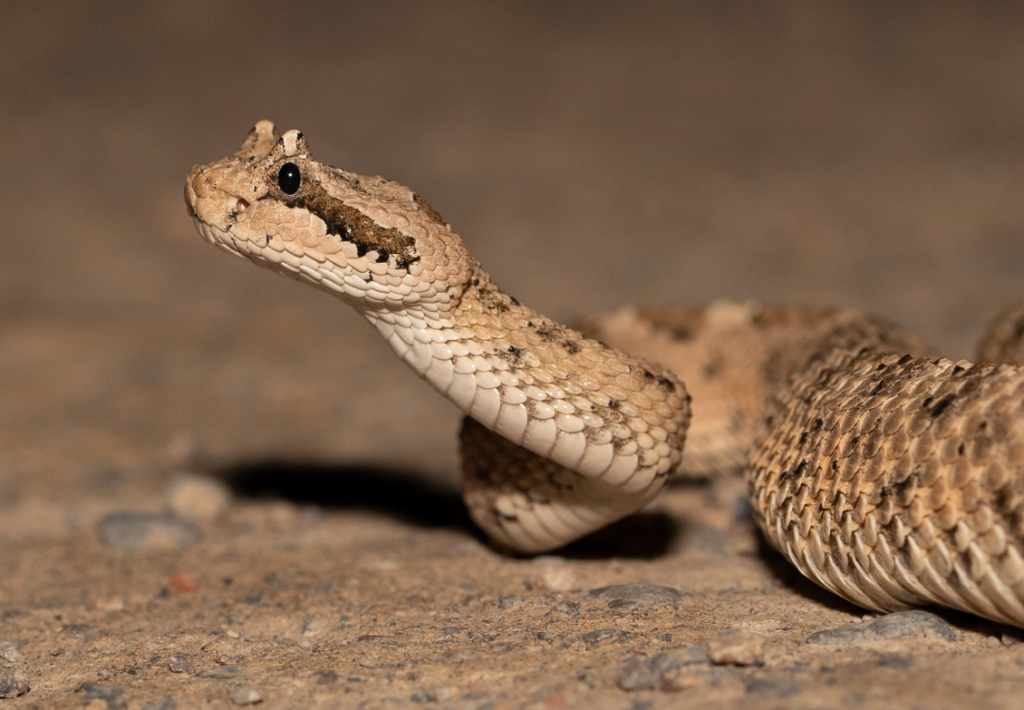
The Sidewinder is a small, venomous pit viper known for its distinctive sideways movement, which gives it its name. Native to the deserts of the southwestern United States and northwestern Mexico, the Sidewinder has adapted well to hot, sandy environments. It is most active during the night and cooler parts of the day. The snake uses specialized scales to grip and “walk” sideways over loose sand, helping it conserve energy and avoid overheating. Despite its venomous nature, the Sidewinder is generally not aggressive toward humans and plays a vital role in desert ecosystems by controlling rodent and lizard populations.
Quick Top 10 Facts about Sidewinder
| SCIENTIFIC NAME | Crotalus cerastes |
| CLASSIFICATION | KINGDOM: Animalia PHYLUM: Chordata CLASS: Reptilia ORDER: Squamata FAMILY: Viperidae |
| SIZE | Length: 40–80 cm (16–31 inches) |
| SPECIES | There are three recognized subspecies: Mojave, Sonoran, and Colorado Desert sidewinders. |
| APPEARANCE | Short, stout body with a pale tan to pink or grayish color and dark blotches. Notable horn-like scales above each eye. |
| LIFE SPAN | 10–20 years in the wild |
| HABITAT | Arid desert environments with sandy dunes and sparse vegetation, primarily in the southwestern U.S. and northwestern Mexico |
| DIET | Small mammals, lizards, and birds; primarily ambush predators using heat-sensing pits to detect prey |
| NATURAL PREDATORS | Birds of prey, larger snakes, coyotes, and roadrunners |
| COUNTRY | United States (Arizona, California, Nevada) and Mexico (Baja California and Sonora) |
| GESTATION PERIOD | Approximately 3–4 months; Sidewinders are ovoviviparous (give birth to live young) |
| CONSERVATION STATUS | Least Concern (IUCN) |
Amazing Facts About Sidewinder
1. Unique Movement
The Sidewinder gets its name from its sideways locomotion, which helps it travel efficiently over hot, loose sand.
2. Desert Specialist
It thrives in arid, sandy deserts and can withstand extreme temperatures, often burrowing during the hottest part of the day.
3. Horned Eyes
The distinctive horn-like scales above its eyes help protect against sand and intense sunlight.
4. Venomous but Not Aggressive
Although venomous, the Sidewinder is shy and avoids confrontation with humans whenever possible.
5. Excellent Camouflage
Its color blends perfectly with desert surroundings, making it nearly invisible to predators and prey alike.
6. Night Hunter
The Sidewinder is mostly nocturnal, using its heat-sensing pits to detect warm-blooded prey in the dark.
7. Live Births
Unlike many snakes, the Sidewinder gives birth to live young rather than laying eggs.
8. Juvenile Hunting Strategy
Young Sidewinders use a tail-wiggling behavior (caudal luring) to mimic insects and attract prey.
9. Efficient Movement
Its unique sideways movement reduces body contact with the hot sand, helping to conserve energy and avoid overheating.
10. Important Ecosystem Role
As both predator and prey, the Sidewinder helps maintain ecological balance in desert habitats.
Introduction to the Sidewinder Rattlesnake
General Overview of the Species
One of the pit vipers of the genus Crotalus is the Sidewinder, a kind of rattlesnake. It is mostly found in the arid areas of northern Mexico and the southwestern United States, where it grows well on rocky desert hills, scrublands, and sandy deserts. The Sidewinder’s distinctive method of moving, which entails sideways S-shaped movements, is the source of its name. Often called “sidewinding,” this behaviour is an essential adaptation that enables the snake to move across hot desert sands with as little touch as possible with the blazing ground.
Behavior Toward Humans
Despite being poisonous, the Sidewinder is mostly non-aggressive and avoids human contact. Being a master of camouflage, it blends in perfectly with its environment, making it harder for prospective predators or prey to identify, yet it is more inclined to attack when it feels threatened.
Physical Attributes of the Sidewinder
Size and Scale Structure
- The Sidewinder is a relatively small rattlesnake, averaging 45 to 76 cm (18 to 30 inches) in length.
- Some individuals may grow up to 91 cm (36 inches).
- Despite their size, they can deliver a potent venomous bite.
Coloration and Camouflage
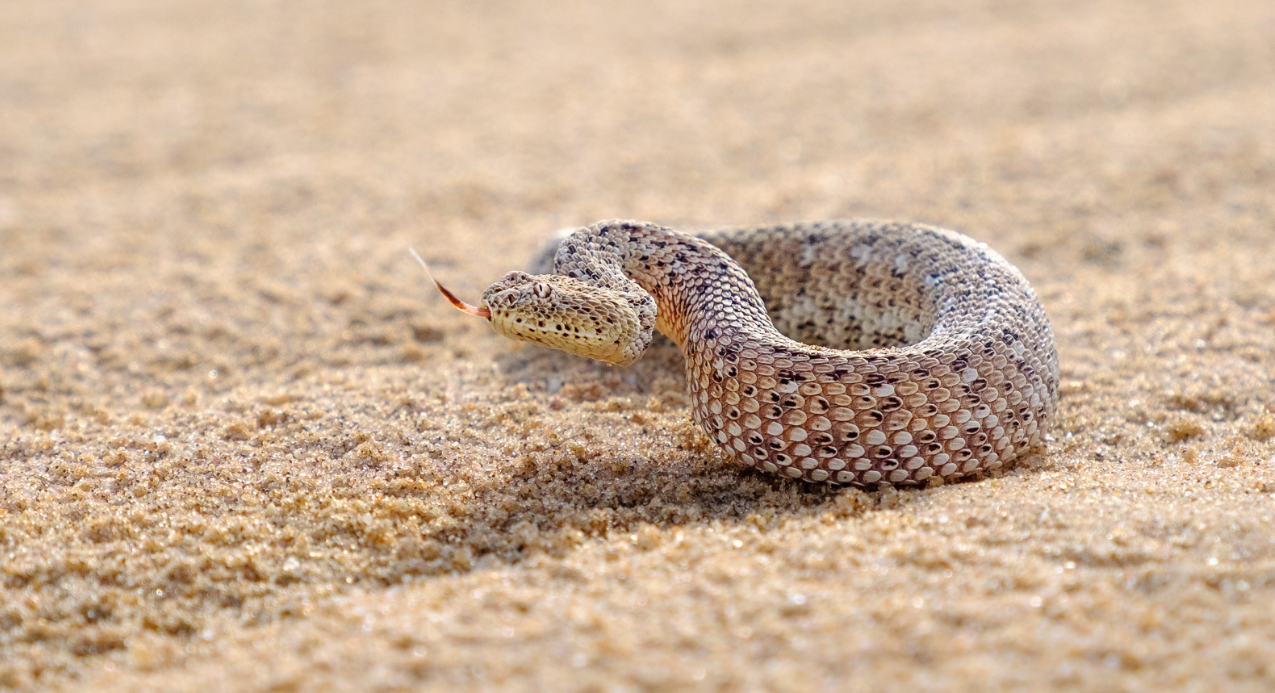
One of the Sidewinder’s most striking characteristics is the colour of its body. Its dark, asymmetrical patterns and pale tan or grayish-brown body help it blend in with the sandy desert environments. The snake is very disguised because of its rough scales and pattern, which resemble desert landscapes. The snake can evade detection by both predators and prey thanks to its colouration, which is a crucial survival characteristic.
Head Shape and Sensory Organs
- Triangular head, typical of pit vipers.
- Equipped with a rattle at the tail end, though not all individuals use it frequently.
- Small but highly functional eyes suited for detecting movement even in low light.
Sidewinding Locomotion
The Sidewinder’s most well-known trait is its method of movement. Unlike other snakes, it moves in a zigzag, sideways pattern, using slanted arcs that limit ground contact. This helps it move efficiently on hot sand and uneven terrain while avoiding overheating. Sidewinding is a prime example of desert-specific evolutionary adaptation.
Function of the Rattle
The rattle, composed of keratin segments, creates a buzzing sound when the snake feels threatened. This sound serves as a warning to predators or humans, though some individuals may opt for stealth and avoid using the rattle altogether to stay camouflaged.
Behavior and Feeding Habits
Nocturnal and Crepuscular Activity
Being nocturnal and crepuscular, the Sidewinder is most active at night or in the early morning, particularly during the scorching summer months in the desert when daytime temperatures may reach very high levels. The Sidewinder usually hides behind sand dunes, plants, or boulders during the hottest parts of the day.
Adaptive Locomotion
As previously stated, the Sidewinder’s ability to move via sidewinding is its most unique characteristic. This method of movement is a necessary adaptation for living in the hot, sandy deserts, where the snake may prevent overheating by reducing its direct contact with the ground. The snake can move more effectively across loose, changing sand thanks to its special movement.
Feeding Behavior and Diet
- Carnivorous predator feeding on frogs, birds, reptiles, and small mammals.
- Ambush hunter, remaining concealed until prey is within striking distance.
- Delivers a venomous bite and waits for the venom to immobilize prey before ingestion.
- Possesses a flexible jaw allowing consumption of prey larger than its head.
Distribution and Habitat
Geographic Range
- Found in the deserts of the southwestern United States: Arizona, California, and Nevada.
- Also present in northern Mexico, including Sonora.
Adaptation to Desert Environment
The Sidewinder has adapted to live in temperatures that may reach over 100°F (38°C) during the day, making the arid environment the ideal home. The Sidewinder has adapted to survive in one of the planet’s most hostile settings by being able to hide in the cool, protected places during the day and come out to hunt at night.
Shelter and Survival Strategies
To avoid the scorching sun throughout the day, the Sidewinder seeks cover behind plants, sand dunes, or rock outcrops. By doing this, it is able to keep its body temperature low and evade bigger predators.
Life Cycle and Reproductive Behavior
Reproductive Process
As an ovoviviparous species, the Sidewinder does not lay eggs; instead, it gives birth to live offspring. Usually mating in late summer or early autumn, the female Sidewinder gives birth to a litter of two to twelve pups, though the exact number fluctuates, following a gestation period of around six months.
Juvenile Development
- Newborns are fully developed and capable of movement and hunting shortly after birth.
- Although they resemble adults, juveniles are smaller and do not possess a fully developed rattle.
Conservation Status and Threats
IUCN Classification
Because of its very steady population in its natural desert environment, the Sidewinder is categorised by the International Union for Conservation of Nature (IUCN) as a Least Concern species.
Threats to the Species
- Habitat destruction due to agriculture and urban development.
- Vehicle-related fatalities in desert roads and highways.
- Human encroachment into desert regions leading to habitat fragmentation.
Long-Term Outlook
The Sidewinder is not now thought to be in grave danger of becoming extinct, despite these risks. In many places, its elusiveness and isolated habitats have kept it comparatively secure from human intrusion.
FAQ (Frequently Asked Questions) about Sidewinder
Q: What is a Sidewinder?
Ans: A Sidewinder is a species of venomous pit viper known for its sideways movement and desert adaptations.
Q: Where do Sidewinders live?
Ans: They inhabit desert regions of the southwestern United States and parts of northwestern Mexico.
Q: Are Sidewinders dangerous?
Ans: They are venomous but typically not aggressive toward humans and rarely bite unless threatened.
Q: How does a Sidewinder move?
Ans: It moves sideways by lifting parts of its body off the ground, leaving J-shaped tracks in the sand.
Q: What do Sidewinders eat?
Ans: Their diet includes rodents, lizards, and small birds.
Q: How long do Sidewinders live?
Ans: They can live up to 20 years in the wild.
Q: How do Sidewinders reproduce?
Ans: They are ovoviviparous and give birth to live young after a gestation period of 3–4 months.
Q: Are Sidewinders endangered?
Ans: No, they are listed as Least Concern by the IUCN.
Q: Do Sidewinders have predators?
Ans: Yes, they are preyed upon by hawks, roadrunners, and other larger animals.
#Sidewinder #DesertSnake #PitViper #VenomousSnake #Sidewinding #WildlifeFacts #SnakeMovement #Reptiles #DesertAnimals
Our sources and references about Sidewinder
1: Wikipedia – Sidewinder
2: National Park Service – Sidewinder
3: Animal Diversity Web – Crotalus cerastes
4: IUCN Red List – Sidewinder