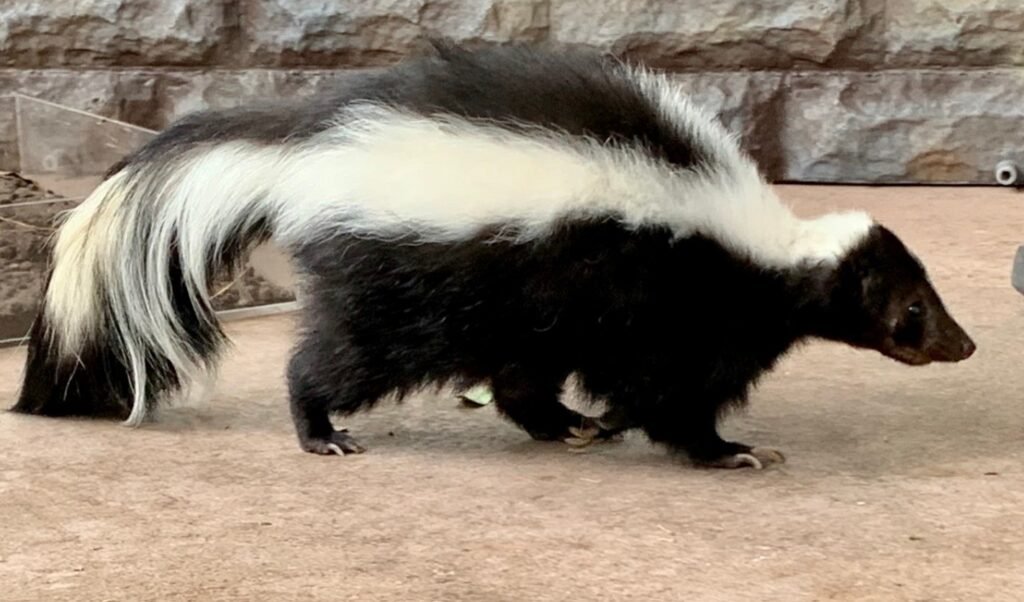
Skunks are small to medium-sized mammals known for their distinctive black and white fur and their ability to spray a foul-smelling liquid as a defence mechanism. Found primarily in the Americas, skunks are nocturnal animals and are often seen in forests, grasslands, and urban areas. While their odour is infamous, skunks are generally solitary and non-aggressive, preferring to avoid confrontations. They play a crucial role in controlling insect and rodent populations in their ecosystems.
Quick Top 10 Facts about Skunk
| SCIENTIFIC NAME | Mephitis mephitis (Common Striped Skunk), with other species like Spilogale putorius (Spotted Skunk) |
| CLASSIFICATION | KINGDOM: Animalia PHYLUM: Chordata CLASS: Mammalia ORDER: Carnivora FAMILY: Mephitidae |
| SIZE | Length: 40–50 cm (16–20 inches), including the tail Weight: 1.8–4.5 kg (4–10 lbs) |
| SPECIES | Common Striped Skunk, Spotted Skunk, Hooded Skunk, and several other species in the Mephitidae family. |
| APPEARANCE | Skunks have black fur with white stripes or spots on their back and tail, though the exact markings can vary by species. They have long, bushy tails and small, rounded ears. |
| LIFE SPAN | Typically 3–7 years in the wild; up to 10 years in captivity |
| HABITAT | Skunks are found in forests, grasslands, agricultural fields, and urban areas throughout North and South America. |
| DIET | Skunks are omnivores, feeding on insects, small mammals, fruits, seeds, and plants. They are also known to eat eggs and carrion. |
| NATURAL PREDATORS | Large carnivores like coyotes, foxes, and owls may prey on skunks, but their ability to spray makes them difficult for most predators to hunt. |
| COUNTRY | Primarily North and South America, including the United States, Canada, and parts of Central America. |
| GESTATION PERIOD | Typically 60–75 days, with most skunks giving birth to 4–6 kits per litter. |
| CONSERVATION STATUS | Skunks are not considered endangered, though certain species, such as the western spotted skunk, may face threats due to habitat loss and human activity. |
Amazing Facts About Skunk
1. Famous Defense Mechanism
Skunks are best known for their ability to spray a foul-smelling liquid from glands near their tail as a defence mechanism. This odour can deter most predators.
2. Nocturnal Creatures
Skunks are primarily nocturnal, foraging for food at night and resting in burrows or dens during the day.
3. Omnivorous Diet
Skunks are opportunistic feeders, eating a variety of foods ranging from insects, small rodents, and fruits to eggs and carrion.
4. Solitary Animals
Skunks are generally solitary creatures, with each individual maintaining a separate home range, except during mating season or when females are caring for their young.
5. Good Diggers
Skunks are skilled diggers, using their strong forelimbs and claws to search for food like insects, worms, and small rodents buried in the ground.
6. Poor Vision, Good Smell
Skunks have poor vision but excellent smell, which they use to locate food and navigate their environment. Their sense of smell is one of the best in the animal kingdom.
7. Kits are Born Blind
Skunk kits (babies) are born blind and helpless, depending on their mother for warmth and food until they are old enough to explore the world.
8. A Skunk’s Spray Can Travel Far
The spray produced by a skunk can travel up to 10 feet and can cause severe irritation to the eyes and skin of predators or humans.
9. They Are Clean Animals
Despite their infamous odour, skunks are actually quite clean and will designate a specific area for waste, unlike some other animals.
10. Important Ecological Role
Skunks play a key role in their ecosystems by helping control populations of insects, small mammals, and other pests.
Introduction to Skunks
Skunks are small to medium-sized mammals best known for their powerful defense mechanism: a strong-smelling spray that they release when threatened. This distinctive behavior, combined with their striking black and white coloration, makes skunks one of the most easily recognizable animals in North America and beyond. While their smell often precedes their appearance, skunks are fascinating creatures with unique habits, habitats, and roles in their ecosystems.
Physical Characteristics of Skunks
Size and Body Structure
Skunks typically range in size from 12 to 18 inches (30 to 45 cm) in length, not including the tail. Their tail can be nearly as long as their body and is fluffy and bushy, often raised in a defensive posture when threatened. Skunks generally weigh between 4 to 10 pounds (1.8 to 4.5 kg), though this can vary depending on the species and geographic location.
Coloration and Markings
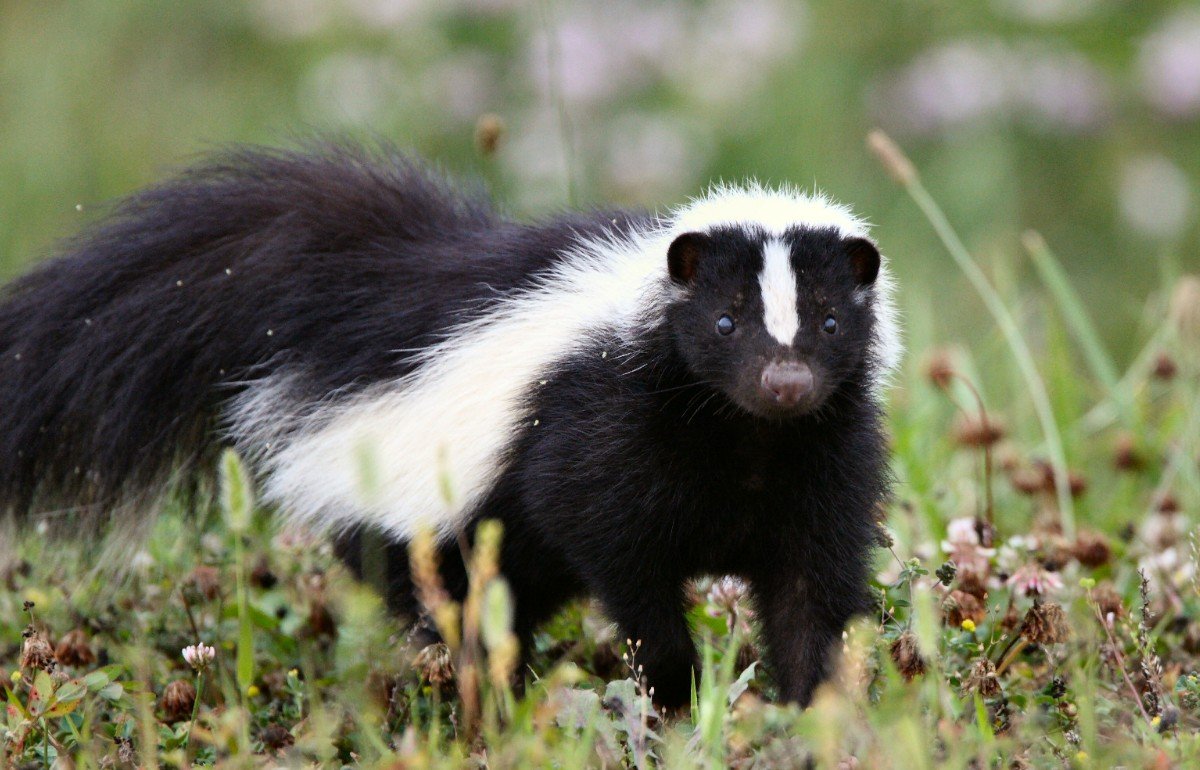
Skunks are famous for their black and white fur, which serves as a warning signal to potential predators about the danger they pose. Their coloration varies across species, but it usually involves a dark black body with white stripes, spots, or patches running along their backs and tails. These contrasting colors are meant to serve as a deterrent, warning predators to stay away.
Muzzle and Ears
Skunks have a short, pointed muzzle and small ears, which are adapted to their nocturnal lifestyle. Their eyesight is not particularly sharp, but they have a keen sense of hearing and smell, helping them navigate in low-light conditions.
Skunk Species and Distribution
Four Main Skunk Species
- Striped Skunk (Mephitis mephitis): The striped skunk is the most common species in North America, especially found in the United States, Canada, and Mexico. This skunk is easily recognizable due to the characteristic black body with two prominent white stripes running along the back.
- Spotted Skunk (Spilogale putorius): The spotted skunk is smaller and more agile than the striped skunk. It is found in the central and southern United States. Its coat is black with small white spots or markings, and it has a more slender body.
- Hooded Skunk (Mephitis macroura): Found in Mexico and parts of the southwestern United States, the hooded skunk is similar to the striped skunk but has a more noticeable white crest of fur around its head and neck, resembling a “hood.”
- Tropical Skunk (Conepatus semistriatus): The tropical skunk is found in Central and South America and is distinguished by its white, long tail and the absence of distinct stripes. They often inhabit rainforests and tropical habitats.
Habitat and Geographic Range
In addition to these species, skunks are distributed throughout a wide range of environments, from urban areas to remote forests and grasslands. They are most common in North and Central America, though their range also extends into parts of South America.
Behavior and Social Structure of Skunks
Nocturnal Lifestyle
Skunks are nocturnal creatures, meaning they are primarily active during the night. They typically spend their days resting in dens, which can be burrows, hollow trees, or spaces under buildings. Their nocturnal behavior helps them avoid predators and competition for food.
Territoriality and Communication
Skunks are territorial and will defend their territory from other skunks. They mark their territory by spraying a strong-smelling musk and through scent marking with glands located near the base of their tail. They use their sense of smell to locate food and mates and communicate with each other.
Reproductive Behavior
Skunks breed in the late winter to early spring months. After a gestation period of 60 to 75 days, the female gives birth to a litter of 4 to 7 young skunks, which are born blind and helpless. The mother will raise her young in a den, where they will stay until they are old enough to venture out on their own. By the age of 2 months, the young skunks are fully weaned and begin to forage with their mother.
Skunk Diet and Feeding Habits
Omnivorous Diet
Skunks are omnivores, meaning they eat a wide variety of foods, including plants, insects, small mammals, and even eggs. Their diet varies based on the availability of food and the time of year.
Insect Consumption
Skunks are excellent hunters of insects, including beetles, grasshoppers, and crickets. They use their keen sense of smell to locate underground insect larvae and dig them up with their strong claws.
Small Mammals and Eggs
Skunks will also hunt small animals, such as mice, voles, and birds, as well as steal eggs from bird nests. They are also known to scavenge on dead animals, adding to their opportunistic feeding behavior.
Fruits and Vegetation
In addition to their carnivorous diet, skunks enjoy eating fruits, berries, nuts, and roots. In the wild, they may consume grapes, apples, and even corn in agricultural areas.
Scavenging in Urban Environments
Skunks will often scavenge garbage or leftovers from human food. Their adaptability to urban environments allows them to take advantage of human food waste.
The Skunk’s Powerful Defense Mechanism
The Spray: A Unique Chemical Defense
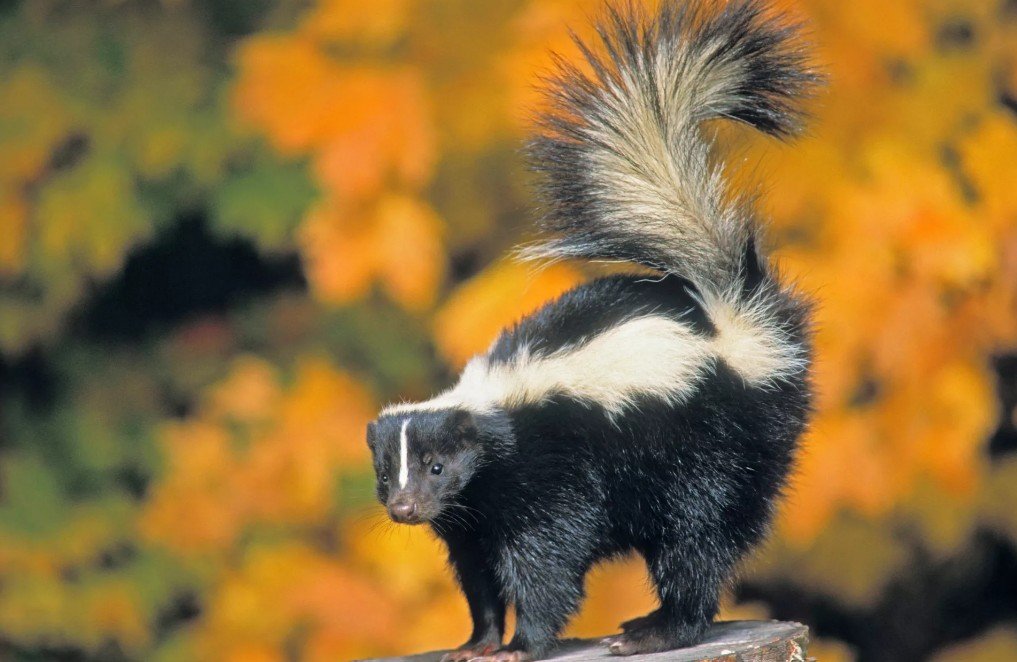
The skunk is perhaps most famous for its powerful defense mechanism: the spray. When threatened, skunks can emit a foul-smelling liquid from two glands located near their anus. This spray can be directed with precision and can travel distances of up to 10 feet (3 meters).
Composition and Effects of the Spray
The spray contains thiol compounds, which are sulfur-based chemicals that produce an intensely pungent odor. This strong scent is so potent that it can cause nausea, eye irritation, and even temporary blindness in those who are sprayed. The odor lingers for hours and is notoriously difficult to remove.
Warning Signals Before Spraying
Before spraying, skunks often give a series of warning signals. They may stamp their feet, raise their tails, and hiss or growl. If the threat persists, they will turn their back on the predator, raise their tail, and spray in defense.
Effectiveness of the Defense Strategy
The skunk’s defense mechanism is highly effective. Most predators, such as foxes, coyotes, or domestic dogs, learn to avoid skunks after being sprayed once. The skunk’s nocturnal lifestyle further reduces encounters with predators, as many of their natural enemies are not active at night.
Skunks in Popular Culture and Ecological Importance
Skunks in Media and Folklore
The skunk is often depicted in popular media, notably through cartoons like Pepe Le Pew from the Warner Bros. “Looney Tunes” series. This character, though romanticized, reflects the skunk’s notorious scent and its ability to attract attention.
Ecological Contributions
By consuming pests like insects, skunks help reduce crop damage and can even indirectly help in pest control in agricultural regions. Their habit of eating small rodents also helps control populations of species that can be harmful to crops or other wildlife.
Conservation Status of Skunks
Population and Threats
Skunks are not considered endangered, and their populations are stable across most of their range. However, like many species, skunks face threats from habitat destruction, road mortality, and disease. In urban areas, skunks often find themselves at risk of traffic accidents or conflicts with humans due to their scavenging habits.
FAQs (Frequently Asked Questions) about Skunk
Q: Why do skunks spray?
Ans: Skunks spray as a defence mechanism when they feel threatened. The spray contains sulphur-based compounds that produce a foul odour to deter predators.
Q: Can skunks be kept as pets?
Ans: While skunks can be kept as pets in some areas, they require specialised care, and their scent glands may be removed to prevent spraying. However, keeping them as pets is not legal everywhere.
Q: What do skunks eat?
Ans: Skunks are omnivores, feeding on a wide variety of food, including insects, small mammals, fruits, seeds, and eggs.
Q: Are skunks dangerous to humans?
Ans: Skunks are generally non-aggressive toward humans but can be dangerous if they spray. Their odour can cause irritation to the eyes and skin.
Q: Where do skunks live?
Ans: Skunks are adaptable and can live in forests, grasslands, urban areas, and even in burrows or under porches, depending on the species.
Q: How far can a skunk spray?
Ans: A skunk can spray up to 10 feet with great accuracy, which serves as an effective deterrent against predators.
Q: How long do skunks live?
Ans: In the wild, skunks typically live 3–7 years, while in captivity, they can live up to 10 years with proper care.
Q: Are skunks nocturnal?
Ans: Yes, skunks are nocturnal animals, meaning they are most active during the night and sleep during the day.
Q: Do skunks have any natural predators?
Ans: Skunks have few natural predators due to their ability to spray, but some animals like coyotes, bobcats, and great horned owls may still pose a threat.
Q: Can skunks be trained?
Ans: Skunks are intelligent and can be trained, especially if raised from a young age. They can learn basic commands and use a litter box.
#Skunk #Mammals #SkunkSpray #Wildlife #NocturnalAnimals #SkunkFacts #AnimalDefenseMechanism #WildlifeConservation #Omnivores
Our sources and references about Skunk
1: Wikipedia – Skunk
2: National Geographic – Skunk
3: Britannica – Skunk
4: World Wildlife Fund – Skunk