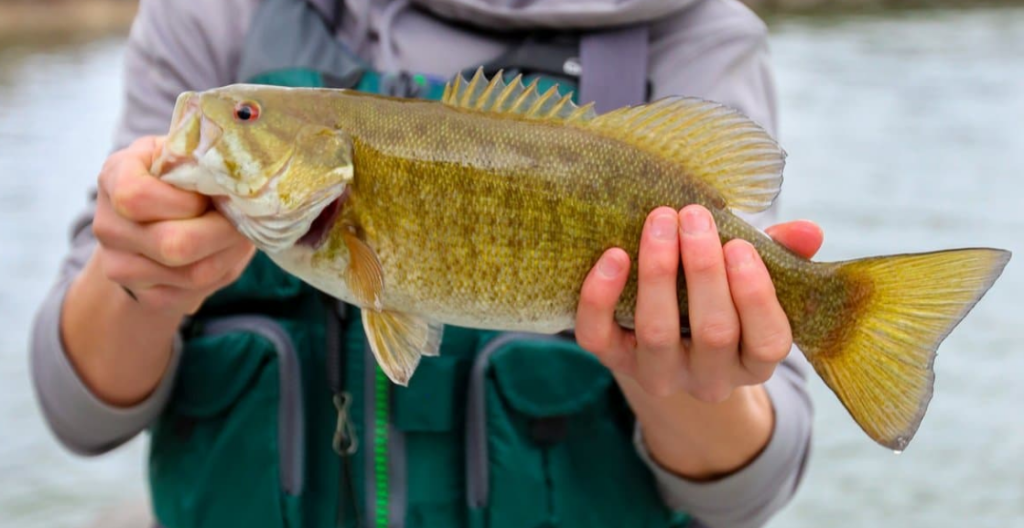
Quick Top 10 Facts about Smallmouth Bass
| SCIENTIFIC NAME | Micropterus dolomieu |
| CLASSIFICATION | KINGDOM: Animalia PHYLUM: Chordata CLASS: Actinopterygii ORDER: Perciformes FAMILY: Centrarchidae GENUS: Micropterus SPECIES: M. dolomieu |
| SIZE | Length: 12–20 inches (30–50 cm); Weight: up to 12 pounds (5.4 kg) |
| HABITAT | Clear, cool streams, rivers, and lakes with rocky or sandy bottoms |
| DIET | Carnivorous; feeds on crayfish, insects, amphibians, and smaller fish |
| SPECIES | Smallmouth Bass, a popular freshwater game fish known for its fighting ability |
| COUNTRY | Native to North America, particularly the United States and Canada |
| GESTATION PERIOD | Eggs hatch in about 1–2 weeks after being laid and fertilised in nests |
| LIFE SPAN | 6–14 years in the wild |
| CONSERVATION STATUS | Least Concern; populations are stable but impacted locally by habitat changes and invasive species |
Amazing Facts About Smallmouth Bass
1. Smallmouth Bass are powerful fighters
Anglers prize Smallmouth Bass for their spirited fight and acrobatic leaps when hooked.
2. They prefer cooler waters
Unlike their relative, the largemouth bass, Smallmouth Bass thrive in cooler, clearer waters.
3. They have keen vision
Smallmouth Bass rely on excellent eyesight to hunt prey, especially in clear water environments.
4. Their colour changes with habitat
Their body colour can vary from bronze to greenish, depending on the water clarity and bottom type.
5. Males guard the nests
After females lay eggs, male Smallmouth Bass aggressively guard the nests until the fry swim away.
6. They can travel for spawning
Smallmouth Bass often migrate within rivers and lakes to find suitable spawning grounds.
7. They feed heavily in the morning and evening
Peak feeding times are typically during low light periods at dawn and dusk.
8. Introduced outside native range
Smallmouth Bass have been introduced to many areas outside their native range, sometimes affecting native species.
9. Popular for catch-and-release fishing
Many anglers practice catch-and-release to preserve healthy populations of Smallmouth Bass.
10. They grow slowly
Smallmouth Bass grow at a moderate pace, with many individuals taking several years to reach trophy size.
A Common Game Fish and Ecological Icon: The Smallmouth Bass
The smallmouth bass (Micropterus dolomieu) is one of North America’s most popular game fish. It is famous for its fierce nature, incredible fighting ability, and its wide range in freshwater lakes, rivers, and streams. The smallmouth bass is an iconic species that has caught the attention of both researchers and fishermen. It plays a key role in biological food webs and recreational fishing.
1. An Overview of Smallmouth Bass
The smallmouth bass is a type of freshwater fish native to North America. It belongs to the centrarchid family, which also includes other well-known species such as crappie (Pomoxis spp.), bluegill (Lepomis macrochirus), and largemouth bass (Micropterus salmoides). Fishermen favour smallmouth bass because of their reputation for aggression and their ability to put up a fierce fight once caught. This makes them a popular choice for those who enjoy challenging fishing conditions.

2. Smallmouth Bass Anatomy and Physical Features
Smallmouth bass are medium-sized fish with sleek, muscular bodies that are ideal for swift swimming. Their dark vertical bands on the sides and their golden to brownish-green colouring allow them to blend in with the rocky and overgrown environments they often inhabit. Below are the main physical characteristics of smallmouth bass:
The Structure of the Body
- Body Shape: Smallmouth bass possess long, torpedo-shaped bodies, which enable them to swim swiftly across the water. This streamlined shape enhances their ability to chase prey and evade predators.
- Colouration: Their dorsal side is usually olive-brown or golden-green, fading to a lighter belly. Younger fish often display more distinct black vertical bands along their flanks.
- Mouth: The upper jaw of the smallmouth bass extends slightly beyond the eyes, making it smaller than the largemouth bass. This distinguishes it from its larger relative, whose mouth is much wider.
- Fins: Smallmouth bass have soft-ventral fins and spiky dorsal fins, typical of the centrarchid family. These fins provide stability and manoeuvrability when swimming.
Dimensions and Mass
- Size: Smallmouth bass typically grow to 12 to 18 inches, although they can reach lengths of up to 24 inches.
- Weight: While trophy-sized fish can weigh up to seven pounds, the average weight ranges from one to four pounds. A smallmouth bass weighing over eight pounds is considered a remarkable catch.
3. Distribution and Habitat of Smallmouth Bass
Smallmouth bass can be found in a variety of aquatic environments, including rivers, lakes, reservoirs, and streams. They often inhabit areas with rocky or gravel bottoms, submerged objects such as fallen trees, and aquatic plants. These habitats offer protection from predators and ample cover for hunting. Additionally, smallmouth bass prefer colder, oxygen-rich waters.
Geographical Dispersion
- Native Range: The smallmouth bass is native to eastern and central North America, including the Great Lakes region, southern Canada, and the Gulf of Mexico.
- Introduced Range: Due to its popularity with fishermen, smallmouth bass have spread to many regions beyond their natural range. This includes western North America, parts of Europe, and some areas of Asia. Their ability to adapt to a variety of freshwater environments has facilitated their successful introduction to these areas.
Favourite Situations
- Water Temperature: The ideal water temperature for smallmouth bass is between 60 and 75°F (15 and 24°C). They thrive in cooler to moderately warm waters and tend to avoid warmer waters, which may lack sufficient oxygen.
- Water Depth and Flow: Smallmouth bass are often found in deeper pools or fast-moving currents in rivers, streams, and lakes. They typically prefer areas close to rocky outcroppings or submerged objects that provide shelter. Clean water with moderate to strong currents is their preferred habitat.
4. Smallmouth Bass Diet and Behaviour
As aggressive predators, smallmouth bass primarily feed on other fish, crustaceans, and even amphibians. They are known for their hunting technique, which often involves ambushing prey from rocky crevices or beneath submerged logs. Below are the key aspects of smallmouth bass diet and behaviour:
Nutrition
- Primary Diet: Smallmouth bass are carnivorous and consume a wide range of foods, including aquatic insects, small fish, invertebrates, and crustaceans. They particularly enjoy eating crayfish, mayflies, and caddisflies during the warmer months when these prey are abundant.
- Fish: As opportunistic feeders, smallmouth bass eat smaller fish species, including immature sunfish, minnows, and shiners. They also feed on soft-bodied prey, such as small amphibians or squid.
- Feeding Habits: Smallmouth bass often feed most actively during dawn and dusk, when food is more abundant, and water temperatures are cooler. They may also feed sporadically throughout the day, especially in the spring and summer when they are busiest.
Hunting Practices
- Ambush Predators: Smallmouth bass are well-known for waiting for their prey to swim by. They can accelerate quickly to attack their prey, making them highly effective predators.
- Male Territorial Behaviour: During the spawning season, male smallmouth bass display territorial behaviour. They protect their nests and eggs from other fish or potential predators. Males become more aggressive in defending their territory during the mating season.
5. Smallmouth Bass Lifespan and Reproduction
Smallmouth bass spawn in late spring or early summer when the water temperature ranges between 60 and 70°F (15 and 21°C).
Nesting and Spawning
- Nesting: Smallmouth bass build their nests in shallow, rocky, or gravelly areas. The male digs a small depression in the substrate for the female to lay her eggs. After the female lays the eggs, the male fertilises them and stays to guard the nest from potential threats.
- Eggs and Fry: Smallmouth bass eggs are typically yellowish and hatch in three to five days. The male continues to guard the nest until the fry can swim independently, which usually takes one to two weeks.
- Lifespan: Smallmouth bass usually live between six and ten years. However, some may live longer, particularly in ideal conditions with minimal predation.
6. Status of Conservation
Currently, smallmouth bass are not considered endangered or vulnerable. They have been successfully introduced to numerous regions and are widely distributed across their native range. However, pollution, invasive species, and changes in habitat quality can negatively impact smallmouth bass populations, as they do for many other fish species.
Dangers
- Habitat Degradation: Smallmouth bass populations may be affected by the loss of freshwater habitats caused by pollution, sedimentation, and changes in water temperature. Excessive runoff from urban and agricultural areas can disrupt aquatic ecosystems, impacting fish health.
- Invasive Species: Non-native fish species may outcompete smallmouth bass for food and habitat, leading to a decline in their populations in some areas.
- Overfishing: While smallmouth bass are abundant and well-managed in many fishing areas, overfishing in certain locations can lead to population pressure and smaller fish.
7. The Value of Recreation and Fishing
Smallmouth bass are considered some of the best freshwater game fish due to their challenging fight and aggressive nature when caught. Recreational anglers, especially those who enjoy catch-and-release fishing or compete in bass tournaments, frequently target them. The smallmouth bass tournament scene has grown significantly in recent years, with professional fishing organisations like the Bassmaster Elite Series hosting events.

FAQ (Frequently Asked Questions) about Smallmouth Bass
Q: What is a Smallmouth Bass?
Ans: The Smallmouth Bass (Micropterus dolomieu) is a popular freshwater fish found in rivers and lakes across North America. It is known for its aggressive nature, strong fighting ability when caught, and distinctive bronze or olive-green coloration. It is a favourite among sport fishermen due to its challenging fight and tasty meat.
Q: Where does the Smallmouth Bass live?
Ans: Smallmouth Bass are native to North America, particularly in the Great Lakes and their tributaries, and along the eastern and central United States. They inhabit clear, cool streams, rivers, and lakes with rocky or sandy bottoms and moderate to fast currents.
Q: What does the Smallmouth Bass eat?
Ans: Smallmouth Bass are carnivorous and primarily feed on smaller fish, invertebrates, and amphibians. Their diet includes minnows, crayfish, insects, and occasionally smaller fish such as sunfish. They are aggressive predators and often hunt by ambush.
Q: How big does a Smallmouth Bass get?
Ans: Smallmouth Bass typically grow to lengths of 12 to 20 inches (30 to 50 cm) and weigh between 1 and 4 pounds (0.5 to 1.8 kg). However, some individuals can exceed 6 pounds (2.7 kg) in weight and reach lengths of 24 inches (61 cm). Their size varies depending on the quality of their habitat and food sources.
Q: Are Smallmouth Bass dangerous?
Ans: Smallmouth Bass are not dangerous to humans. They are non-venomous and typically do not pose a threat to swimmers or anglers. However, their sharp spines in the dorsal and pelvic fins can cause painful wounds if mishandled.
Q: How do Smallmouth Bass reproduce?
Ans: Smallmouth Bass spawn in late spring and early summer when water temperatures reach around 60°F (15°C). Males create a nest by clearing debris on the bottom of the lake or riverbed. They then guard the eggs and protect the fry (young fish) until they are ready to swim on their own.
Q: What does the Smallmouth Bass look like?
Ans: Smallmouth Bass have a distinctive body shape with a slightly compressed, laterally flattened body. They are typically olive to bronze in colour, with vertical dark bars running across their body. They have a small mouth, and their fins are dark and slightly spiny, which adds to their signature look.
Q: How long do Smallmouth Bass live?
Ans: Smallmouth Bass can live for up to 10 years in the wild, although most do not reach this age due to predation and fishing pressure. The average lifespan in the wild is typically 5 to 7 years.
Q: Can you keep a Smallmouth Bass as a pet?
Ans: While it is possible to keep Smallmouth Bass in a large, well-maintained aquarium or pond, they are typically not kept as pets due to their need for a large, specific environment and the difficulty in providing the appropriate diet and care. They are more commonly enjoyed in the wild or as part of sport fishing activities.
Q: Are Smallmouth Bass endangered?
Ans: Smallmouth Bass are not considered endangered. In fact, they are abundant in their natural range and are a popular species for recreational fishing. However, like many fish species, they face threats from habitat degradation, pollution, and invasive species, which can affect local populations.
#SmallmouthBass, #SportFishing, #FreshwaterFish, #FishingLovers, #Angling, #BassFishing, #Wildlife, #AquaticLife, #FishingTips, #FishingCommunity
Our sources and references about Smallmouth Bass
1: Wikipedia – Smallmouth Bass
2: National Wildlife Federation – Smallmouth Bass
3: Minnesota DNR – Smallmouth Bass
4: Fishing Tips Depot – Smallmouth Bass Fishing


