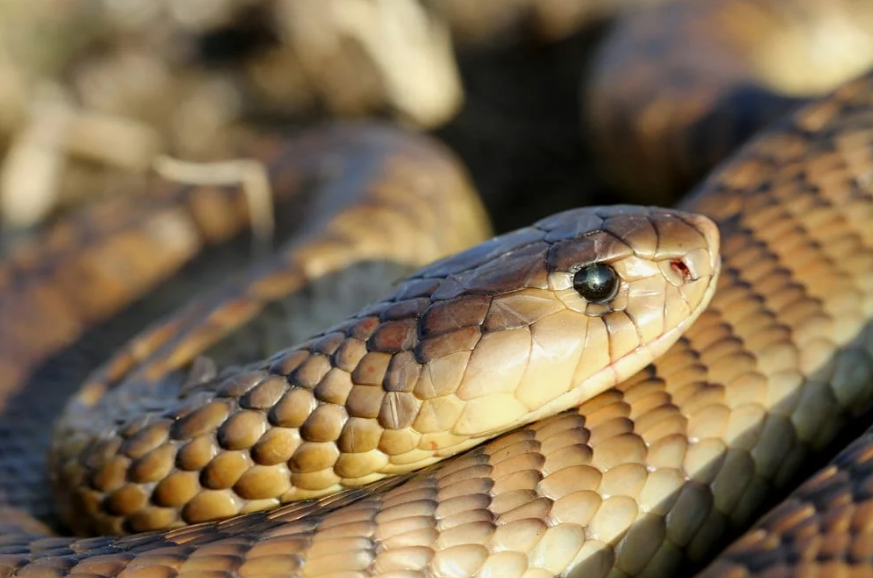
The Snouted Cobra, also known as the Mozambique spitting cobra, is a venomous species found in parts of Africa. It gets its name from the distinctive “snout” or protrusion at the front of its head. This snake is known for its defensive spitting behavior, which it uses to spray venom at potential threats, aiming for the eyes of predators or threats.
Quick Top 10 Facts about Snouted Cobra
| SCIENTIFIC NAME | Naja annulifera |
| CLASSIFICATION | KINGDOM: Animalia PHYLUM: Chordata CLASS: Reptilia ORDER: Squamata FAMILY: Elapidae GENUS: Naja SPECIES: N. annulifera |
| SIZE | Length: Up to 8 feet (2.5 meters) |
| HABITAT | Savannas, woodlands, and scrublands in southern Africa, including South Africa, Botswana, and Zimbabwe |
| DIET | Carnivorous; feeds on rodents, birds, frogs, lizards, and other snakes |
| SPECIES | Snouted Cobra, named for its distinctive snout and known for its hood display and potent venom |
| COUNTRY | Found in southern African countries such as South Africa, Mozambique, Namibia, and Zimbabwe |
| LIFE SPAN | Average life span of 10–12 years in the wild |
| CONSERVATION STATUS | Not currently threatened; considered Least Concern by conservation authorities |
Amazing Facts About Snouted Cobras
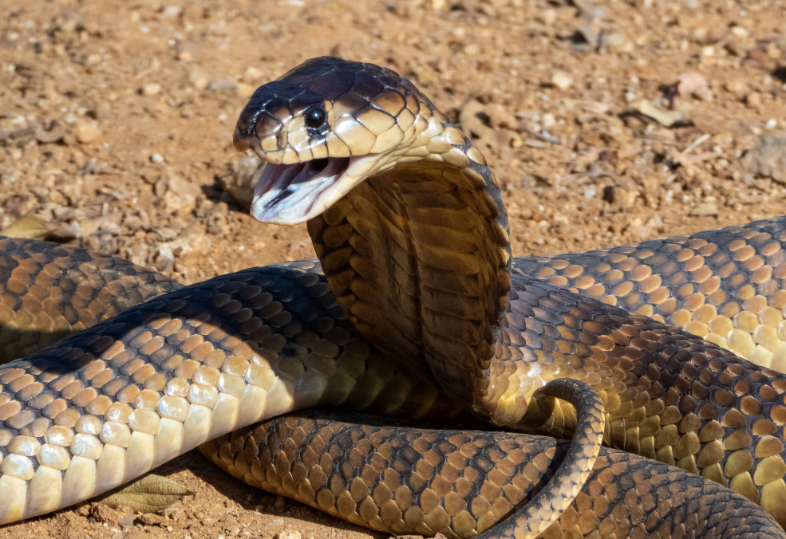
1. They can raise their hood when threatened
Snouted cobras display a classic cobra hood when feeling threatened, making themselves appear larger to deter predators.
2. They are highly venomous
Their venom contains neurotoxins and can cause respiratory failure if untreated—though bites to humans are rare and avoidable.
3. They are named for their snout
The “snouted” name refers to their slightly elongated, rounded snout, distinguishing them from other cobra species.
4. They are ground-dwelling snakes
Snouted cobras usually live on the ground and prefer dry environments, though they can climb and swim if necessary.
5. They hunt at night
These cobras are primarily nocturnal, using their strong sense of smell to track down prey in the dark.
6. They can spit venom but rarely do
Although related to spitting cobras, snouted cobras typically do not spit venom and instead bite when defending themselves.
7. They often play dead
When severely threatened, they may feign death—a behaviour known as ‘thanatosis’—to escape danger.
8. They are important for rodent control
By feeding on rats and mice, snouted cobras help control pest populations in agricultural regions.
9. They can be confused with other cobras
Their banded juvenile colouration and hood can make them look like other African cobra species, especially the Cape Cobra.
10. They are respected in African culture
Like many snakes, snouted cobras are both feared and respected in traditional African folklore and stories.
Exploring the Snouted Cobra: An African Predator
The poisonous species of snake known as the snouted cobra, or Naja annulifera in scientific parlance, is distributed across Africa. This cobra may be readily identified by its distinctive elongated and pointed nose, which resembles a snout. The snake’s nose has a special function that enables it to target and strike its prey precisely.
Characteristics and Features of the Snouted Cobra
Adult snout cobras generally reach lengths of 1.2 to 1.5 metres, making them a medium-sized snake. Smooth scales ranging in hue from light brown to olive green cover its thin, cylindrical body. The snake’s belly is often paler, either creamy yellow or white in colour.
The Venomous Arsenal: Snouted Cobra’s Defensive Strategy
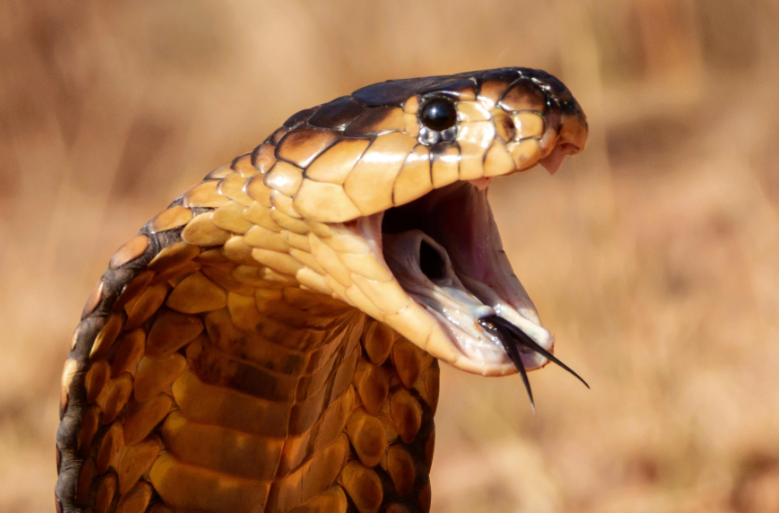
One of the snouted cobra’s most intriguing features is its venom. Its strong neurotoxic venom damages its prey’s nervous system, much like that of other cobras. Its hollow fangs, located at the front of its mouth, are where the poison is administered. In response to threats or provocation, the snouting cobra will hiss loudly, rear up, and expand its hood. Should the danger continue, it will attack quickly, piercing the prey with its poison.
The Enigmatic Snouted Cobra: A Creature of Interest
The snouted cobra, with its characteristic snout, slim build, and strong venom, is an amazing species of snake overall. It is a fascinating topic for research and in-the-wild observation.
Insights into the Snouted Cobra
Throughout Africa, there exists a poisonous snake species called Naja annulifera, or snouted cobra. It is renowned for both its strong venom and its unusual snout. In this post, we shall look at a few fascinating facts about the snouted cobra.
Anatomy and Behavior of the Snouted Cobra
The snouted cobra is a medium-sized snake that reaches a maximum length of 1.5 metres. It gets its name from its unusually long and extended nose, which accentuates its slim build. The snouted cobra’s hue might vary, although it usually has deeper markings and is brown or olive in colour. This snake is very poisonous and has a reputation for acting aggressively when it feels threatened.
Range and Habitat of the Snouted Cobra
Originating in sub-Saharan Africa, the snouted cobra is found in nations including Botswana, Zimbabwe, Mozambique, and South Africa. It favours densely vegetated environments, including savannas, grasslands, and woodlands. It is a species that is adaptable to many different types of settings, including marshes and desert areas.
Dietary Habits and Hunting Techniques
The primary diet of the snouted cobra includes small animals, including mice, birds, frogs, and other snakes. It is a highly skilled predator that immobilises its victim with venom. The snouted cobra’s venom is neurotoxic, which means that it damages the targets’ neurological systems. It uses its fangs, which are situated at the front of its mouth, to inject its venom. While hunting, the snouted cobra uses its acute sense of smell to locate its victim. It attacks with rapid speed, delivering a swift and lethal bite once it has found its prey. The snouted cobra’s venom is strong enough to kill its victim in a matter of minutes.
Reproductive Cycle and Offspring
The snouted cobra is an oviparous species that lays eggs. In a suitable spot, such as a burrow or a hollow log, the female snake will lay a clutch of 10–20 eggs. After that, she will watch over the eggs until they hatch, which should happen in 60 to 70 days. After the eggs hatch, the young snakes are completely autonomous and independent. They can hunt and defend themselves from an early age, and they are born with a fully developed venom system.
Conservation Status and Importance
There is currently no endangered species list for the snouted cobra. However, like many snake species, it is threatened by a variety of factors, including habitat loss and human persecution. Because they are often misinterpreted and feared, snakes are needlessly killed. It’s critical to keep in mind that snakes, as both predators and prey, are essential components of ecosystems. They are crucial to maintaining the natural equilibrium of their habitats and aid in the management of rodent and other pest populations.
FAQs (Frequently Asked Questions) about Snouted Cobra
Q: What is a Snouted Cobra?
Ans: The Snouted Cobra (Naja annulifera) is a highly venomous snake native to southern Africa, known for its defensive hood and nocturnal hunting behaviour.
Q: Where do snouted cobras live?
Ans: They are found in dry, open habitats in countries like South Africa, Namibia, Mozambique, and Zimbabwe.
Q: Are snouted cobras dangerous to humans?
Ans: Yes, they are venomous, and bites can be dangerous, but they are shy and typically avoid human interaction unless provoked.
Q: What does a snouted cobra eat?
Ans: They primarily feed on rodents, birds, frogs, lizards, and occasionally other snakes.
Q: How can you identify a snouted cobra?
Ans: Look for a long, slender body, an erect hood when threatened, and a slightly rounded snout; juveniles may have banded markings.
Q: Can snouted cobras spit venom?
Ans: They are related to spitting cobras but generally do not spit venom; they rely on biting to deliver venom.
Q: Are snouted cobras active during the day?
Ans: No, they are mainly nocturnal and do most of their hunting at night.
Q: How long do snouted cobras live?
Ans: In the wild, they can live around 10 to 12 years, though this may vary depending on environmental factors.
Q: Are Snouted Cobras protected species?
Ans: No, they are not currently listed as threatened or endangered and are classified as Least Concern.
Q: What should you do if you see a snouted cobra?
Ans: Keep your distance, avoid startling it, and allow it to move away on its own. Do not try to handle or corner it.
#SnoutedCobra, #NajaAnnulifera, #AfricanSnakes, #VenomousSnakes, #Reptiles, #WildlifeAfrica, #SnakeFacts, #CobraSpecies, #Herpetology, #AnimalKingdom
Our sources and references about Snouted Cobra
1: Wikipedia – Snouted Cobra
2: African Snakebite Institute – Snouted Cobra
3: Reptile Database – Naja annulifera
4: Kruger Park – Snouted Cobra