
The Snow Bunting is a small, migratory songbird found in northern regions of North America and Eurasia. It has a striking plumage, with males displaying mostly white feathers in the winter. Snow buntings breed in high-altitude areas and migrate south to warmer climates during the winter months.
Quick Top 10 Facts about Snow Bunting
| SCIENTIFIC NAME | Plectrophenax nivalis |
| CLASSIFICATION | KINGDOM: Animalia PHYLUM: Chordata CLASS: Aves ORDER: Passeriformes FAMILY: Calcariidae GENUS: Plectrophenax SPECIES: P. nivalis |
| SIZE | Length: 6.7–7.9 inches (17–20 cm); Wingspan: 12.6–13.8 inches (32–35 cm); Weight: 0.9–1.1 ounces (25–31 g) |
| HABITAT | Arctic tundra and alpine regions of North America, Europe, and Asia during the breeding season; migrates to southern regions in winter |
| DIET | Omnivorous; primarily seeds and grains, supplemented by insects during the breeding season |
| SPECIES | Snow Bunting, known for its white plumage and striking contrast with its black wings and back during the breeding season |
| COUNTRY | Breeds in the Arctic and migrates to lower latitudes in the winter, including parts of the United States, Canada, and Europe |
| GESTATION PERIOD | Egg incubation lasts 10–12 days |
| LIFE SPAN | Average life span of 3-5 years in the wild |
| CONSERVATION STATUS | Least Concern (IUCN); population is stable, though the species is vulnerable to habitat loss due to climate change |
Amazing Facts About Snow Buntings
1. Snow Buntings are often called “snowflakes of the Arctic”
Their pure white plumage, especially in winter, makes them blend seamlessly with their snowy surroundings, earning them the nickname “snowflakes of the Arctic.”
2. They are expert migrants
Snow Buntings are migratory birds that travel from the Arctic regions where they breed to southern regions during the winter, including parts of the United States and Europe.
3. They breed in the harsh Arctic
These birds are adapted to life in the Arctic tundra, where they build nests in rocky crevices or under snow banks to protect against the cold.
4. They are omnivores
Snow Buntings mainly eat seeds, grains, and small invertebrates like insects during the breeding season, making them opportunistic feeders.
5. Their plumage changes with the seasons
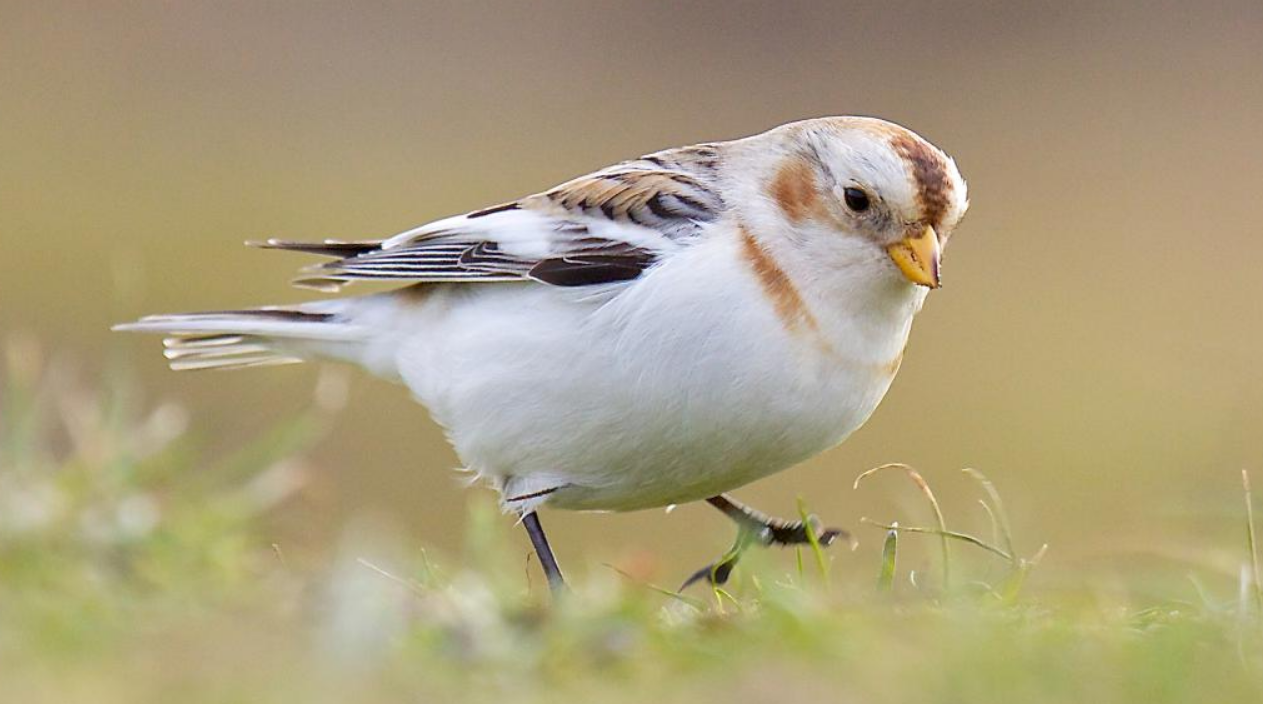
During the breeding season, males develop a dark, striking black and white pattern, while females and non-breeding males retain a more subdued, brownish appearance.
6. They are social birds
Snow Buntings are often found in large flocks during migration, especially in winter when they forage together in fields and agricultural areas.
7. Their song is a simple trill
Snow Buntings are not known for elaborate songs. Their calls are typically short, high-pitched trills used to communicate with flock members.
8. They have a unique courtship display
During the breeding season, male Snow Buntings perform aerial displays to attract mates, often fluttering in the air and singing their simple song.
9. Snow Buntings are tough survivors
These birds are well-equipped to endure extreme cold. They can survive the harsh conditions of the Arctic, even during the long winters when food is scarce.
10. They are considered a “good indicator species”
Because Snow Buntings are sensitive to climate changes and environmental conditions, they are often seen as a key indicator of the health of Arctic ecosystems.
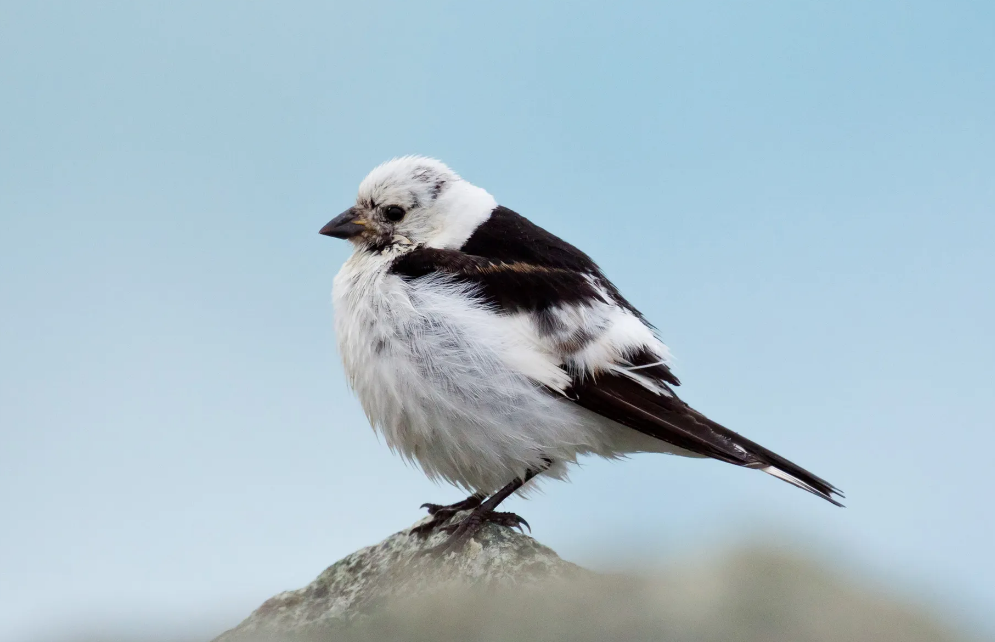
An Endearing Arctic Bird: Snow Bunting
Small and resilient, the Snow Bunting (Plectrophenax nivalis) originates from the Arctic and subarctic regions of Asia, Europe, and North America. Ornithologists and bird enthusiasts find the snow bunting fascinating due to its remarkable ability to withstand frigid temperatures, migratory patterns, and stunning plumage. In this article, we will explore the physical traits, habitat, behaviour, nutrition, migratory routes, and conservation status of this hardy species.
1. Physical Attributes
The snow bunting, a small bird that resembles a sparrow, changes its appearance significantly with the seasons. Its most distinctive feature is its unique plumage, which alters greatly between summer and winter.
Summertime Plumage
The male snow bunting’s striking black-and-white plumage makes it easy to identify in summer. The wings and back are dark brown or black, with faint speckled stripes. The head, breast, and underparts are mostly white. The females and young birds tend to have a more subdued colouration, blending in with their environment with brownish-grey or greyish-brown tones. The bird’s small, stubby, yellow-orange beak stands out in stark contrast to its feathery body.
Winter Feathers
Both males and females undergo a change in plumage during winter. Their feathers turn whiter in snowy conditions, and the darker portions become greyish-brown, offering better camouflage. Compared to their bright summer plumage, their winter appearance is more muted, though the wings and tail feathers retain darker tones.
Dimensions
The snow bunting is a small bird, with a wingspan measuring 30-34 cm (12-13 inches) and a length of around 18 cm (7 inches). It is lightweight, weighing about 30–40 grams (1–1.4 ounces), making it well-suited for its migratory lifestyle and for surviving in cold climates.
2. Range and Habitat
The snow bunting primarily inhabits arctic and subarctic climates, where it breeds in open, rocky areas such as the tundra. It is highly tolerant of the frigid temperatures that characterise these regions and can withstand harsh environments.
Habitat for Breeding
During the breeding season, snow buntings reside in the high Arctic regions of North America, Europe, and Asia. They prefer relatively flat areas with sparse vegetation, such as rocky cliffs, open tundra, or bare fields, for nesting. To protect themselves from the elements, they often build nests in sheltered locations, like cracks between rocks. If available, the birds may even use abandoned buildings or other artificial structures for nesting.
Winter Environment
In winter, snow buntings migrate south to more temperate regions of North America, Europe, and parts of Asia. They can often be found in open fields, farmlands, and grasslands searching for food. Snow buntings are also commonly spotted along coasts and in open agricultural areas near beaches. Preferring open, exposed environments, they tend to avoid heavily forested areas.
3. Social Structure and Behaviour
Snow buntings are very social birds, especially outside the breeding season. In winter, they often form large flocks, numbering in the hundreds or even thousands. These flocks travel together as they migrate south, using their size to locate food and evade predators.
Feeding Habits
Snow buntings are ground feeders, searching for seeds and small invertebrates on the ground. They often find seeds from weeds and grasses in open fields, farmlands, and grasslands. During the breeding season, they supplement their diet with berries and, occasionally, insects and other small animals. In winter, they depend on leftover grain from agricultural fields and often forage near human settlements when food is scarce.
Breeding Practices
Snow buntings are monogamous and form lasting pair bonds during the breeding season. They build their nests using grasses, feathers, and other materials they find in the surrounding environment. Typically, they lay four to seven eggs. While the male protects the territory and forages for food, the female incubates the eggs for 10 to 12 days. After hatching, both parents care for the young until they are ready to fledge, usually within two to three weeks.
Interaction
Although snow buntings are generally silent, they communicate with other members of their flock through faint sounds and chirps, particularly during flight or mating.
4. Patterns of Migration
The migratory behaviour of the snow bunting is one of its most fascinating characteristics. Snow buntings migrate over great distances between their breeding grounds in the Arctic and their wintering habitats in more temperate regions. Migration is a vital part of their survival strategy, as they move to areas with better food availability during the harsh winter months, all while being accustomed to cold temperatures.
Routes of Migration
In winter, snow buntings migrate south to southern Canada, parts of the northern United States, Europe, and Asia. They depart from their breeding sites in the high Arctic regions of Canada, Alaska, and Russia. The availability of food and the dropping temperatures often trigger migration. Snow buntings can travel thousands of miles during migration, and their journeys can be a breathtaking spectacle.
Wintertime Conduct
During migration, snow buntings modify their behaviour to find food and shelter. They often forage in large flocks in recently harvested farming areas. They can also be seen along roadsides, scavenging food left behind by cars or humans.
5. Nutrition
The snow bunting’s diet fluctuates with the seasons, though seeds and small plant materials make up the bulk of its food. Snow buntings are opportunistic feeders and utilise whatever food sources they can find to survive in the Arctic, where food can be scarce.
Summertime Nutrition Plan
During the breeding season in the Arctic, snow buntings primarily eat grass and herb seeds. To provide protein for their growing young, they also include small insects and invertebrates in their diet.
Winter Nutrition Plan
In more temperate climates during winter, snow buntings rely heavily on seeds from grass and other plants. When berries and small fruits are available, they will consume them. After harvest, they often graze in agricultural areas, eating weed seeds and leftover grain.
6. Status of Conservation
Although the snow bunting is vulnerable to environmental changes, it is not officially classified as threatened or endangered. As a bird adapted to cold climates, it relies on specific habitats for feeding and nesting. Habitat loss and climate change could pose significant threats to the species.
Changes in Climate
The warming of the Arctic presents a major threat to snow buntings, as it may alter their migratory and nesting habits. As temperatures rise, their breeding habitats may become unsuitable for nesting, leading to a potential decline in population. Habitat loss due to human development, such as urbanisation and agricultural expansion, could also impact their ability to find suitable food and shelter.
Conservation Activities
Although the snow bunting is not currently classified as endangered, monitoring its population and implementing conservation efforts to protect their natural habitats could help ensure the species’ long-term survival. Conservation efforts in Arctic regions where these birds breed may focus on preserving tundra ecosystems and reducing human disruptions.
FAQ (Frequently Asked Questions) about Snow Bunting
Q: What is a Snow Bunting?
Ans: The Snow Bunting is a small, migratory songbird that breeds in the Arctic and migrates to southern regions in winter. It is known for its distinctive white plumage and striking contrast with black wings and back during the breeding season.
Q: Where does the Snow Bunting come from?
Ans: The Snow Bunting breeds in the Arctic regions of North America, Europe, and Asia. It migrates to lower latitudes, including parts of the United States, Canada, and Europe, during the winter months.
Q: What does the Snow Bunting eat?
Ans: Snow Buntings are omnivores, primarily eating seeds and grains. During the breeding season, they supplement their diet with insects and other small invertebrates.
Q: How big does a Snow Bunting get?
Ans: Snow Buntings are relatively small birds. They typically measure 6.7–7.9 inches (17–20 cm) in length, with a wingspan of 12.6–13.8 inches (32–35 cm) and a weight of 0.9–1.1 ounces (25–31 g).
Q: Are Snow Buntings good to have around?
Ans: Snow Buntings are beneficial to have around, especially in agricultural areas, as they help control the populations of seeds and insects. Their presence is also a sign of a healthy environment.
Q: How does the Snow Bunting behave?
Ans: Snow Buntings are social birds that form large flocks, especially during migration and in winter. They are active foragers and use simple trills to communicate with each other. During the breeding season, males engage in courtship displays to attract mates.
Q: What does the Snow Bunting look like?
Ans: Snow Buntings have distinctive plumage, with males displaying a striking black and white pattern during the breeding season. Females and non-breeding males are typically brownish with a more subdued pattern.
Q: How long do Snow Buntings live?
Ans: Snow Buntings have an average lifespan of 3 to 5 years in the wild, though some individuals may live longer if they avoid predators and extreme weather conditions.
Q: Can you keep a Snow Bunting as a pet?
Ans: Snow Buntings are wild birds and should not be kept as pets. They are migratory and require specific environmental conditions to survive. It is best to appreciate these beautiful birds in their natural habitat.
Q: Are Snow Buntings endangered?
Ans: Snow Buntings are not considered endangered and are currently classified as Least Concern by the IUCN. However, they are vulnerable to the effects of climate change, which can alter their breeding grounds and migratory routes.
#SnowBunting, #ArcticBirds, #MigratoryBirds, #Birdwatching, #Songbirds, #WildlifeConservation, #BirdSpecies, #NatureLovers, #BuntingBirds, #AvianLife
Our sources and references about Snow Bunting
1: Wikipedia – Snow Bunting
2: All About Birds – Snow Bunting
3: Audubon – Snow Bunting
4: Britannica – Snow Bunting


