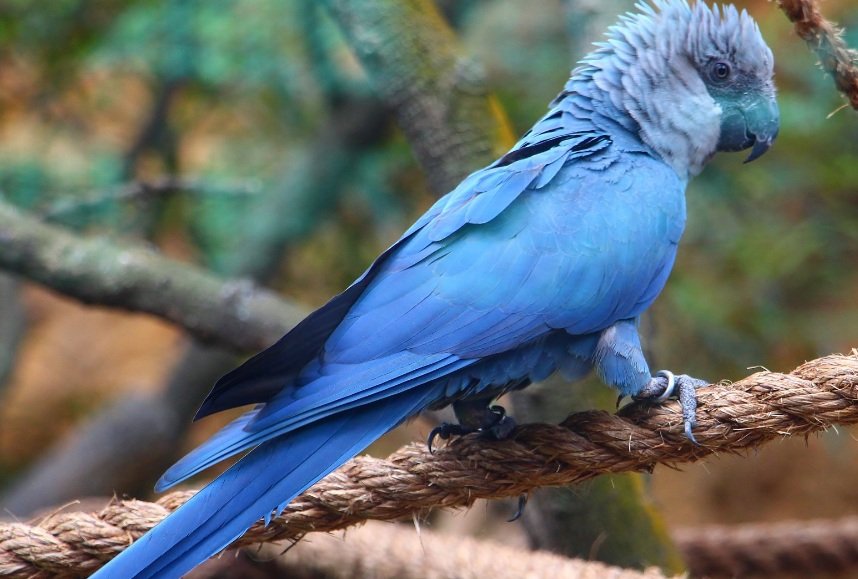
The Spix’s Macaw, also known as the Little Blue Macaw, is an extremely rare species of parrot native to Brazil. Known for its striking blue feathers, the Spix’s Macaw was once thought to be extinct in the wild, though there are ongoing efforts to reintroduce captive-bred birds back into their native habitat. They are primarily herbivorous, feeding on fruits, seeds, and nuts.
Quick Top 10 Facts about Spix’s Macaw Parrot
| SCIENTIFIC NAME | Cyanopsitta spixii |
| CLASSIFICATION | KINGDOM: Animalia PHYLUM: Chordata CLASS: Aves ORDER: Psittaciformes FAMILY: Psittacidae GENUS: Cyanopsitta SPECIES: C. spixii |
| SIZE | Length: 55–60 cm (22–24 inches) Weight: 350–450 grams (12–16 ounces) |
| HABITAT | Originally found in the Brazilian state of Bahia, now considered extinct in the wild |
| DIET | Primarily seeds, nuts, fruits, and some vegetation |
| SPECIES | Spix’s Macaw, also known as the Little Blue Macaw |
| COUNTRY | Brazil (native), now in captive breeding programs around the world |
| GESTATION PERIOD | Egg-laying species; incubation lasts about 26–30 days |
| LIFE SPAN | Up to 50 years in captivity |
| CONSERVATION STATUS | Extinct in the wild; critically endangered with ongoing conservation efforts |
Amazing Facts About Spix’s Macaw Parrots
1. People know them as the Little Blue Macaw
People commonly call Spix’s Macaw the Little Blue Macaw because of its vibrant blue plumage and smaller size compared to the larger Hyacinth Macaw.
2. They declared them extinct in the wild
In 2000, experts declared Spix’s Macaw extinct in the wild. The primary reasons were habitat destruction and illegal trapping for the pet trade.
3. They are highly intelligent
Like many parrots, Spix’s Macaws are incredibly intelligent. They can perform complex behaviours, such as problem-solving and even mimicking human speech.
4. They have a distinctive call
Spix’s Macaws produce a soft, melodious call that distinguishes them from other species. People used to hear it often in their native habitat before their extinction in the wild.
5. They are now part of captive breeding programmes
Thanks to conservation efforts, several Spix’s Macaws now live in captivity. Conservationists hope to reintroduce them to their natural habitat in the future.
6. They are excellent fliers
Spix’s Macaws are known for their ability to soar gracefully through the air. They use their wide wings to navigate their environment effectively.
7. They have a varied diet
Spix’s Macaws eat a wide variety of foods, including nuts, seeds, fruits, and even some vegetation. These foods help keep them healthy in the wild.
8. They are monogamous
Spix’s Macaws form lifelong bonds with their mates. They often stay with the same partner for life.
9. Their natural habitat was riverine forests
Originally, Spix’s Macaws lived in the Brazilian riverine forests near the Rio São Francisco. They thrived among tall trees and dense foliage.
10. They are part of ongoing conservation efforts
Conservationists work tirelessly to bring Spix’s Macaws back into the wild. Their efforts focus on protecting the species’ habitat and increasing their population through breeding programmes.
Top 10 Intriguing Facts about the Spix’s Macaw Parrot
The Spix’s Macaw, scientifically named *Cyanopsitta spixii*, is a critically endangered parrot species native to Brazil. Known for its eye-catching blue feathers and unusually long tail feathers, the Spix’s Macaw gained worldwide attention as the model for the animated character “Blu” in the *Rio* movie. Conservation efforts have intensified to prevent the species’ extinction, as only a few individuals remain in the wild. Habitat degradation and illegal trapping for the pet trade are the main reasons for the species’ decline.
Conservation programmes, such as captive breeding, habitat restoration, and community-based initiatives, focus on protecting and rehabilitating the surviving Spix’s Macaw population. Additionally, international coordination between governmental agencies, local communities, and conservation groups is crucial for the species’ long-term survival.
Threats and Conservation Efforts of the Spix’s Macaw Parrot
This magnificent bird is highly prized by collectors. Unfortunately, it has suffered due to habitat degradation and illegal capture. As a result, the Spix’s Macaw is now one of the rarest birds in the world, with only a few individuals remaining in captivity. Conservationists are working to reintroduce the species to the wild through breeding programmes and habitat restoration projects.
Behaviour and Conservation Importance of the Spix’s Macaw Parrot
Spix’s Macaws are social birds that usually live in pairs or small groups. Their main food sources include fruits, seeds, and nuts, which they crack open with their powerful beaks. The species is well-loved by pet owners due to its intelligence and ability to imitate human speech. However, due to their endangered status, it is illegal to own a Spix’s Macaw without the appropriate licences and documentation. Conservation activities are essential to preserve this magnificent species for future generations. 
Unveiling the World of Spix’s Macaw: Endangered Beauty
The breathtakingly beautiful Spix’s Macaw is tragically at risk of extinction. Protection and conservation activities are vital to its survival. We can all help safeguard this extraordinary bird for future generations by spreading awareness, supporting conservation efforts, and opposing the illegal wildlife trade.
The critically endangered Spix’s Macaw, sometimes called the Little Blue Macaw, is a native parrot species from Brazil. Its vivid blue feathers cover its entire body from head to tail, making it easily recognisable. The bird measures around 55 centimetres in length and has a wingspan of approximately 85 centimetres, making it a medium-sized parrot.
Natural Habitat of the Spix’s Macaw Parrot
The Little Blue Macaw, or Spix’s Macaw, is a severely endangered parrot species. Here are a few fascinating facts about this beautiful bird:
Physical Appearance of the Spix’s Macaw Parrot
Spix’s Macaws naturally inhabit the semi-arid states of Bahia and Piauí in northeastern Brazil. They likely lived in the *caatinga*, a dry woodland characterised by cacti and prickly vegetation.
Feeding Habits of Spix’s Macaw Parrots
Spix’s Macaws are known for their striking appearance. Their head, back, and wings are bright blue, while their belly and breast are pale greyish-blue. The bird also has a long, elegant tail and a large beak. Due to its exquisite feathers, the Spix’s Macaw is highly sought after in the illegal pet trade.
Social Behaviour of Spix’s Macaw Parrot
The main foods that Spix’s Macaws consume include berries, seeds, nuts, and fruits. Their strong beaks enable them to break through tough shells and access the nutrient-rich insides. Since they eat fruits and disperse seeds through their droppings, they play an important role in seed dispersal.
Conservation Status of the Spix’s Macaw Parrot
Spix’s Macaws are social birds that typically live in small groups. These flocks consist of family units that use a range of vocalisations to communicate. The birds are also renowned for their intelligence and their ability to imitate sounds and even human speech. 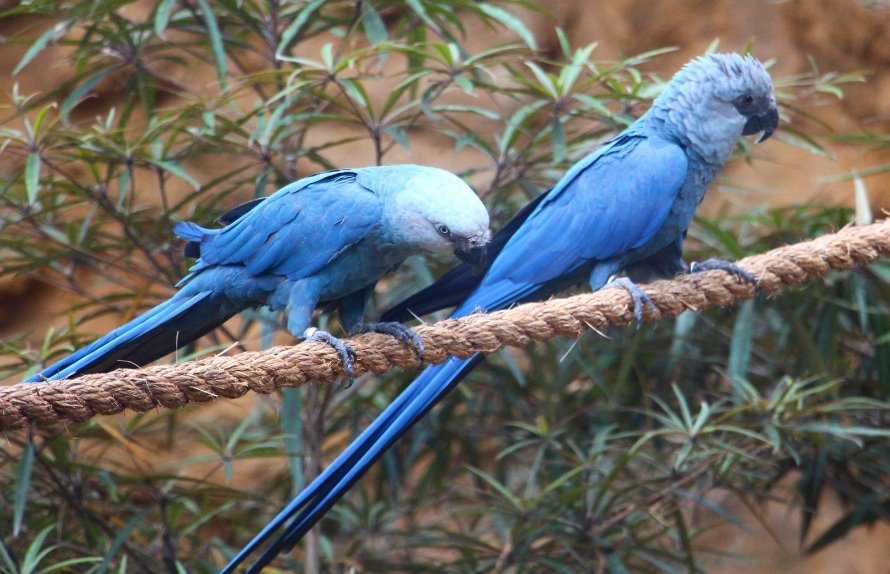
Conservation Efforts of the Spix’s Macaw Parrot
The Spix’s Macaw is one of the rarest birds in the world and is severely endangered. The main threats to its survival include habitat degradation due to deforestation, illegal trapping for the pet trade, and a lack of genetic diversity. Conservationists are working hard to protect and conserve the remaining population of this iconic species.
Rehabilitation Initiatives for Spix’s Macaw Parrot
To prevent the extinction of the Spix’s Macaw, numerous conservationists and organisations are putting in tireless effort. One significant initiative is the Spix Macaw Reintroduction Project, which aims to restore captive-bred birds to their natural environment. Some progress has been made in this area, with a few birds already released and monitored in Brazil.
Captive Breeding Programmes of Spix’s Macaw Parrots
Captive breeding programmes are essential for the survival of Spix’s Macaws. The primary aim of these initiatives is to return the captive birds to the wild while also increasing their population. The long-term goal is to establish self-sustaining populations that can contribute to the species’ survival.
Global Awareness for Preserving the Spix’s Macaw Species
Spix’s Macaw became globally recognised due to the animated film *Rio*, where the main character, Blu, is based on a Spix’s Macaw. This film inspired people worldwide to help save the species, leading to greater awareness about its endangered status and the need for conservation.
FAQ (Frequently Asked Questions) about Spix’s Macaw Parrot
Q: What is a Spix’s Macaw?
Ans: The Spix’s Macaw, also known as the Little Blue Macaw, is a species of parrot native to Brazil. It is famous for its striking blue plumage and was once considered extinct in the wild. Conservationists have worked hard to reintroduce this critically endangered species into its native habitat.
Q: Where does the Spix’s Macaw come from?
Ans: The Spix’s Macaw is native to the Brazilian state of Bahia, specifically the Rio São Francisco in the Bahia region. In the early 2000s, experts declared the species extinct in the wild. However, breeding programmes in captivity have helped increase its numbers in recent years.
Q: What does the Spix’s Macaw eat?
Ans: In the wild, the Spix’s Macaw primarily feeds on seeds, nuts, fruits, and flowers. It particularly enjoys the fruit of the Acai palm and the seeds of various native plants. In captivity, it receives a diet consisting of high-quality pellets, fresh fruits, vegetables, and nuts to maintain balance.
Q: How big does the Spix’s Macaw get?
Ans: Spix’s Macaws are medium-sized parrots. They measure about 20 inches (50 cm) in length, from beak to tail. Their wingspan can reach up to 40 inches (1 metre), making them powerful fliers.
Q: Are Spix’s Macaws good pets?
Ans: Spix’s Macaws are highly intelligent and social birds that need plenty of attention and mental stimulation. While they can be affectionate and playful, they are not ideal for inexperienced bird owners. They require high maintenance and special care to thrive in a home environment.
Q: How does a Spix’s Macaw behave?
Ans: Spix’s Macaws are known for being highly social and curious. They form strong bonds with their owners and enjoy playful interactions. They are also famous for their loud calls and vocalisations. Due to their intelligence, they need constant mental stimulation to avoid boredom.
Q: What does the Spix’s Macaw look like?
Ans: Spix’s Macaws have vibrant blue plumage that covers most of their body. Their face and wings feature some greenish-yellow shades. They have a black beak and pale yellowish eyes. Long, graceful tail feathers complete their majestic appearance.
Q: How long do Spix’s Macaws live?
Ans: In captivity, Spix’s Macaws can live for up to 30-40 years with proper care. In the wild, their lifespan may be slightly shorter due to the challenges they face in their natural environment.
Q: Can you keep a Spix’s Macaw indoors?
Ans: Yes, you can keep a Spix’s Macaw indoors. However, it requires a large aviary or cage to move freely. The bird also needs regular out-of-cage time for exercise, socialisation, and mental stimulation. Due to their size and activity levels, they are not suited to small living spaces.
Q: Are Spix’s Macaws endangered?
Ans: Yes, Spix’s Macaws are critically endangered, with only a small number left in captivity. For many years, the species was thought to be extinct in the wild. Thanks to successful captive breeding programmes, some individuals have been reintroduced into the wild. Ongoing conservation efforts are crucial to preventing their extinction.
#SpixsMacaw, #Macaw, #EndangeredSpecies, #BirdConservation, #ExoticBirds, #ParrotLovers, #WildlifeProtection, #RareBirds, #PetBirds, #BirdWatching
Our sources and references about Spix’s Macaw
1: Wikipedia – Spix’s Macaw
2: World Parrot Trust – Spix’s Macaw
3: Britannica – Spix’s Macaw
4: BirdLife International – Spix’s Macaw