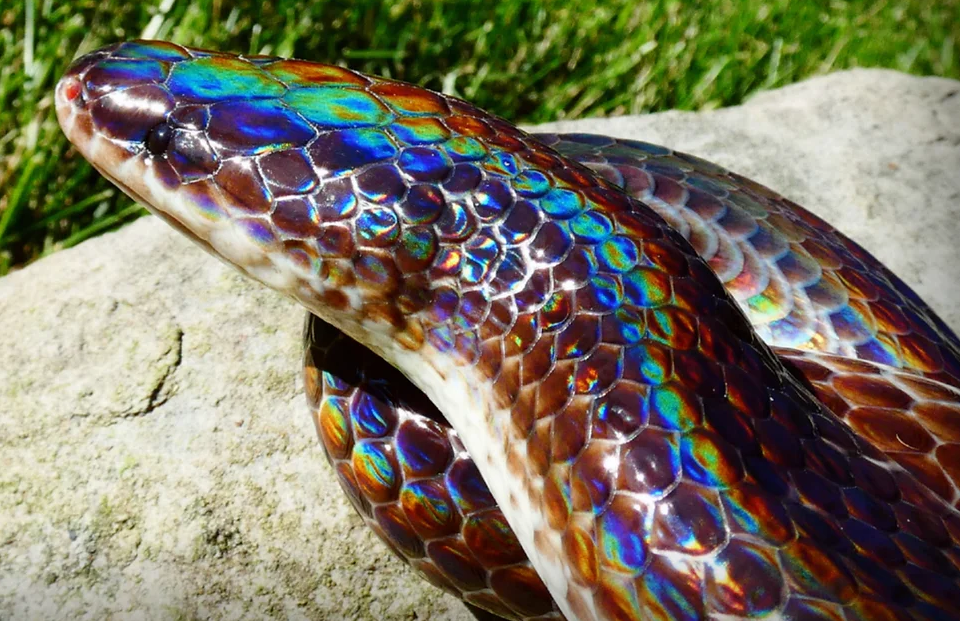
The Sunbeam Snake, also known as Xenopeltis unicolor, is a fascinating species of non-venomous snake native to Southeast Asia. It is renowned for its iridescent, metallic scales, which shine brilliantly under light, giving it a sunbeam-like appearance. Despite their striking appearance, Sunbeam Snakes are relatively calm and reclusive, making them a bit challenging to observe in the wild. They are burrowing snakes that spend most of their time underground and are primarily nocturnal. Sunbeam Snakes are carnivorous and feed on small reptiles, amphibians, and invertebrates. They are also known for their unique defensive behavior, where they coil tightly and thrash when threatened.
Sunbeam Snake Scientific Classification
| SCIENTIFIC NAME | Xenopeltis unicolor |
| CLASSIFICATION | KINGDOM: Animalia PHYLUM: Chordata CLASS: Reptilia ORDER: Squamata FAMILY: Xenopeltidae GENUS: Xenopeltis SPECIES: X. unicolor |
| SIZE | Length: 3–4 feet (0.9–1.2 meters) Weight: 1.5–2.5 kg (3.3–5.5 lbs) |
| SPECIES | The Sunbeam Snake is a species of non-venomous snake from Southeast Asia. It is renowned for its iridescent scales and is primarily found in tropical forests, spending most of its time underground. |
| APPEARANCE | Sunbeam Snakes are famous for their glossy, metallic scales, which have a rainbow-like sheen. Their coloration typically includes shades of black or dark brown with reflective, golden, green, and blue highlights that shine under light. The snake’s sleek body and smooth scales further contribute to its unique and beautiful appearance. |
| LIFE SPAN | Typically 10–15 years in captivity |
| HABITAT | Sunbeam Snakes are native to Southeast Asia, particularly in countries like Indonesia, Malaysia, and Thailand. They are often found in tropical forests, where they reside in burrows or under logs and rocks. |
| DIET | Sunbeam Snakes are carnivorous and primarily feed on small vertebrates, such as amphibians, small reptiles, and invertebrates. In captivity, they are typically fed small rodents, amphibians, or lizards. |
| NATURAL PREDATORS | In the wild, Sunbeam Snakes face predation from larger reptiles, birds of prey, and mammals. They use their burrowing behavior and nocturnal lifestyle to avoid predators as much as possible. |
| COUNTRY | Indonesia, Malaysia, Thailand |
| GESTATION PERIOD | Sunbeam Snakes lay eggs, with the typical incubation period ranging from 2 to 3 months. After hatching, the young snakes are independent and must fend for themselves. |
| CONSERVATION STATUS | Least Concern (LC) – Sunbeam Snakes are not currently considered endangered, though they are sometimes collected for the pet trade, which could impact local populations. |
Amazing Facts About Sunbeam Snake
1. Stunning Iridescent Scales
One of the most notable features of the Sunbeam Snake is its iridescent scales, which reflect light and give the snake a beautiful “sunbeam” effect, making it a visually striking reptile.
2. Primarily Burrowing
Sunbeam Snakes are burrowers and spend most of their time underground. They create tunnels and are often found in dense, humid environments in tropical forests.
3. Non-Venomous but Defensive
Although they are non-venomous, Sunbeam Snakes can be defensive when threatened. They may thrash and coil tightly as a defensive mechanism to protect themselves.
4. Nocturnal Behavior
Sunbeam Snakes are primarily nocturnal and are most active during the night, hunting and exploring underground or in their burrows.
5. Rare and Exotic Pet
Due to their unique appearance and relatively secretive nature, Sunbeam Snakes are considered an exotic pet species. However, they are not as common as other pet snakes, which makes them a rare find in the pet trade.
6. Smooth and Glossy Skin
The Sunbeam Snake’s smooth and glossy skin is another feature that makes it stand out. Their scales are so reflective that they appear metallic or shiny under certain lighting.
7. Small but Mighty
Although Sunbeam Snakes grow to a manageable length of 3–4 feet, they have a powerful and muscular build. This helps them capture and constrict prey efficiently.
8. Easily Stress-Free in Captivity
In captivity, Sunbeam Snakes are generally easy to care for, requiring a warm and humid environment to thrive. They need a secure enclosure with proper substrate to allow for burrowing.
9. Carnivorous Diet
Sunbeam Snakes eat a carnivorous diet consisting of small reptiles, amphibians, and invertebrates in the wild. In captivity, they are often fed small mammals like mice and lizards.
10. Camouflage and Stealth
In the wild, Sunbeam Snakes use their ability to hide in burrows and blend in with their surroundings, avoiding detection by predators and prey alike.
Species Introduction
Native to Southeast Asia, the Sunbeam Snake (Xenopeltis unicolor) is an exceptionally attractive and unusual species of non-venomous snake. Widely searched as a sunbeam snake species, it is renowned for its metallic-like, iridescent skin that gleams in sunlight, making it one of the most visually striking snakes in the world. Despite its alluring appearance, this burrowing snake remains uncommon and highly secretive in the wild, often overlooked compared to more familiar tropical snake species. This article explores the physical traits, natural habitat, behaviour, feeding habits, and conservation status of the Sunbeam Snake, highlighting why it is a true marvel of nature.
Body Characteristics
The Sunbeam Snake is often described as an iridescent wonder due to its sparkling, metallic sheen that reflects light in vivid patterns. These physical adaptations are commonly associated with iridescent non-venomous snakes found in tropical environments.
Body Size
- Length: Sunbeam Snakes typically reach lengths of 3 to 5 feet (0.9 to 1.5 metres), placing them among medium-sized Southeast Asian snakes. In rare cases, individuals may grow up to 6 feet (1.8 metres).
- Body Shape: They have a smooth, cylindrical, and elongated body that allows easy movement through soil and leaf litter, an important trait for a burrowing forest snake.
- Head: The flat, slender head is slightly narrower than the body and features small black eyes, giving the snake its discreet and mysterious appearance.
Colouration
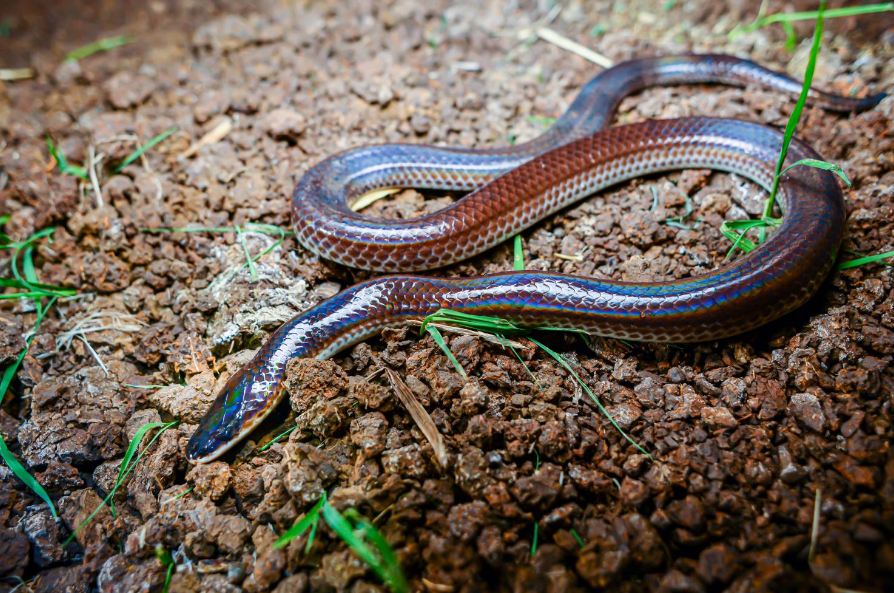
- Iridescent Skin: The Sunbeam Snake’s iridescent scales are its most recognisable feature. These smooth, metallic-looking scales refract light at different angles, creating a rainbow-like glow. Searches for sunbeam snake iridescent scales often highlight this glowing dark brown to black coloration.
- Underside: The underside is noticeably lighter, ranging from cream to pale yellow, creating strong contrast that enhances the snake’s reflective appearance.
Range Habitat
The Sunbeam Snake is distributed across Southeast Asia, including Thailand, Myanmar, Malaysia, Indonesia, Cambodia, and Laos. It is most frequently associated with sunbeam snake natural habitat searches, particularly tropical and subtropical forests with dense ground cover.
Preferred Habitat
- Rainforests: Humid tropical rainforests provide ideal living conditions, offering moisture, shade, and protection from predators.
- Burrowing Lifestyle: As a terrestrial burrowing snake, the Sunbeam Snake spends much of its life underground in soil, leaf litter, or beneath logs and rocks, making sightings relatively rare.
- Climate: Warm temperatures and consistent humidity are essential, as these snakes rely on cool, moist environments to regulate body temperature.
Behaviour Patterns
Sunbeam Snakes are nocturnal and secretive reptiles. Although they may occasionally surface during cooler daytime conditions, most activity occurs at night. This behaviour is typical of nocturnal tropical snakes.
Solitary Behaviour
- Solitary Nature: Sunbeam Snakes live alone and only interact with others during the breeding season.
- Burrowing Habits: Their advanced burrowing ability helps them avoid predators, maintain humidity, and stay hidden from human disturbance.
Diet Feeding
Hunting Strategy
- Non-Venomous: As a non-venomous constrictor, the Sunbeam Snake poses no danger to humans and subdues prey by coiling rather than using venom.
- Diet: Its carnivorous diet includes amphibians, small reptiles, insects, worms, eggs, and occasionally small mammals, making it a versatile forest predator.
- Hunting Method: This species relies on stealth and ambush techniques, striking quickly when prey comes within reach.
Life Cycle
Because of their underground lifestyle, details about Sunbeam Snake reproduction remain limited. However, available studies on sunbeam snake reproduction provide insight into their life cycle.
Breeding Season
- Breeding Period: Mating typically occurs during the rainy season, when prey availability and humidity levels support offspring survival.
- Mating Behaviour: Mating takes place in concealed areas such as burrows or dense vegetation, offering safety and privacy.
Egg Laying
- Oviparous Species: Females lay between four and eight eggs per clutch in protected underground locations.
- Incubation: Eggs incubate for approximately two to three months without parental care.
- Hatchlings: Newly hatched snakes are fully independent and begin hunting shortly after emergence.

Conservation Status
The International Union for Conservation of Nature (IUCN) currently lists the Sunbeam Snake as Least Concern. However, ongoing environmental pressures mean sunbeam snake conservation status remains an important topic.
Main Threats
- Habitat Loss: Deforestation caused by logging, agriculture, and urban expansion continues to reduce suitable rainforest habitats.
- Illegal Trade: Due to its striking appearance, the Sunbeam Snake is sometimes targeted for the exotic pet trade, leading to population decline in certain regions.
- Climate Change: Altered rainfall patterns and rising temperatures threaten the humidity-dependent environments this species requires for survival.
FAQ (Frequently Asked Questions) about Sunbeam Snake
Q: What is a Sunbeam Snake?
Ans: The Sunbeam Snake is a non-venomous species known for its stunning iridescent scales. It is native to Southeast Asia and spends most of its time underground in burrows.
Q: How big do Sunbeam Snakes get?
Ans: Sunbeam Snakes typically grow to a length of 3–4 feet (0.9–1.2 meters) and weigh between 1.5–2.5 kg (3.3–5.5 lbs).
Q: Are Sunbeam Snakes good pets?
Ans: Yes, Sunbeam Snakes can make fascinating pets for reptile enthusiasts. They are relatively calm, easy to care for, and their iridescent scales make them visually stunning.
Q: What do Sunbeam Snakes eat?
Ans: Sunbeam Snakes are carnivorous and primarily feed on small reptiles, amphibians, and invertebrates in the wild. In captivity, they are usually fed small rodents, amphibians, or lizards.
Q: How long do Sunbeam Snakes live?
Ans: Sunbeam Snakes typically live 10–15 years in captivity with proper care.
Q: Are Sunbeam Snakes venomous?
Ans: No, Sunbeam Snakes are non-venomous. They rely on constriction to capture and subdue their prey.
Q: Where can I find Sunbeam Snakes?
Ans: Sunbeam Snakes are native to Southeast Asia, particularly in Indonesia, Malaysia, and Thailand. They are typically found in tropical forests, where they burrow underground.
Our sources and references about Sunbeam Snake
1: Wikipedia – Sunbeam Snake
2: Reptiles Magazine – Sunbeam Snake Care
3: The Pet Hobbyist – Sunbeam Snake