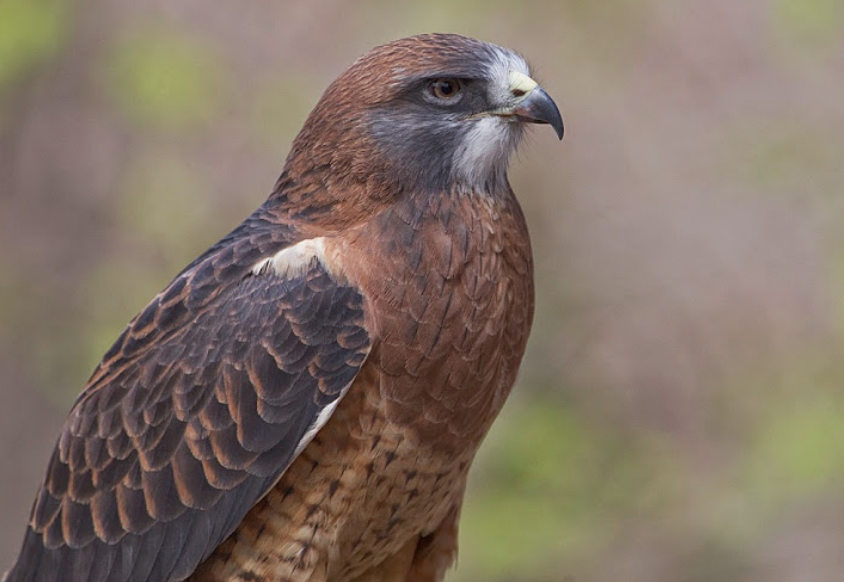
Swainson’s Hawk is a medium-to-large bird of prey found primarily in North America, especially in open country and grasslands. It is known for its long-distance migration, travelling thousands of miles between breeding grounds in the United States and Canada and wintering areas in South America. These hawks have broad wings, a short tail, and striking plumage that varies from light to dark morphs. Swainson’s Hawks primarily feed on insects during migration and breeding seasons but also hunt small mammals and reptiles. Their sociable nature during migration and dramatic group flyovers make them a favourite among birdwatchers.
Quick Top 10 Facts about Swainson’s Hawk
| SCIENTIFIC NAME | Buteo swainsoni |
| CLASSIFICATION | KINGDOM: Animalia PHYLUM: Chordata CLASS: Aves ORDER: Accipitriformes FAMILY: Accipitridae GENUS: Buteo SPECIES: B. swainsoni |
| SIZE | Length: 18–22 inches (46–56 cm) Wingspan: 46–54 inches (117–137 cm) Weight: 1.5–3.5 pounds (0.7–1.6 kg) |
| SPECIES | Swainson’s Hawk is a raptor species native to North America, famous for its long migrations and adaptability to open-country habitats. |
| APPEARANCE | Swainson’s Hawks have broad wings and a short tail. Light morphs have white underparts with a reddish chest, while dark morphs are mostly chocolate brown. They have a pale face and a distinctive white patch on the throat. |
| LIFE SPAN | Typically 8–16 years in the wild |
| HABITAT | Open habitats such as prairies, grasslands, agricultural fields, and desert edges, particularly in western North America during breeding season. |
| DIET | Feeds on insects (especially grasshoppers and dragonflies), small mammals, birds, reptiles, and amphibians. Insects dominate the diet during migration. |
| NATURAL PREDATORS | Eggs and chicks are vulnerable to raccoons, skunks, and larger birds of prey. Adults have few natural predators due to their size and strength. |
| COUNTRY | United States, Canada (breeding); Argentina, Brazil (wintering) |
| GESTATION PERIOD | Incubation lasts about 28–35 days. Chicks fledge approximately 38–46 days after hatching. |
| CONSERVATION STATUS | Least Concern (LC) – While populations declined in the past due to pesticide use, conservation efforts have helped stabilise numbers. |
Amazing Facts About Swainson’s Hawk
1. Longest Migrating Raptor
Swainson’s hawks migrate up to 14,000 miles round trip between North and South America, making them one of the longest-migrating raptors.
2. Sociable Migrators
Unlike many raptors, Swainson’s Hawks migrate in large flocks called “kettles”, sometimes numbering in the thousands.
3. Insect-Loving Raptors
While many hawks hunt mammals, Swainson’s Hawks consume large amounts of insects like grasshoppers and dragonflies, especially in migration.
4. Morph Diversity
These hawks show colour variation (morphs), with individuals ranging from light to dark plumage, helping them adapt to different habitats.
5. Sharp Eyesight
Like most raptors, Swainson’s Hawks have excellent vision and can detect prey from high in the sky or across large fields.
6. Nesting in Open Country
They often nest in isolated trees or utility poles in open landscapes, choosing high perches with a wide field of view.
7. Adaptable Diet
Their flexible feeding habits allow them to thrive in varied environments and during long migrations across continents.
8. Lifelong Pairs
Swainson’s Hawks often form monogamous pairs and return to the same nesting site year after year.
9. Beneficial to Agriculture
By feeding on insect pests, these hawks help farmers naturally control grasshopper populations and other crop-damaging species.
10. Threatened by Pesticides
In the past, pesticides like monocrotophos in South America caused mass deaths during migration, prompting international conservation efforts.

Introduction to the Swainson’s Hawk (Buteo swainsoni)
The Swainson’s Hawk (Buteo swainsoni) is a magnificent and versatile predator recognised for its outstanding hunting abilities, stunning plumage, and extraordinary migratory behaviour. Due to its distinctive travel habits, nutrition, and ecological significance, this predatory bird, which is often seen across the plains of North America and southern Canada, has drawn the interest of both biologists and bird watchers.
Scientific Naming and Taxonomic Classification
The Swainson’s Hawk, named after the English naturalist William Swainson, is a crucial member of the Buteo genus, which also contains the Red-tailed Hawk and other hawk species. Below are the main traits, behaviour, distribution, diet, migration, and conservation initiatives of the Swainson’s Hawk.
Physical Characteristics of Swainson’s Hawk
Dimensions and Form
- Wingspan: The remarkable wingspan of Swainson’s Hawks is between 45 and 53 inches (115 and 135 cm).
- Body Length: They are smaller than the Red-tailed Hawk but bigger than several other hawk species, with an average length of 18 to 22 inches (45 to 56 cm).
- Weight: Female Swainson’s Hawks are somewhat bigger than males, with adults weighing between 1.2 and 2.0 pounds (0.5 and 0.9 kg).
Colouration and Plumage
Depending on the season and their geographic area, Swainson’s Hawks have different colours. Among the general traits are:
- Head and Chest: Usually dark brown or blackish, the head has a pale face and neck. In sharp contrast to the deeper hues of the wings and back, its chest may be pale or light brown.
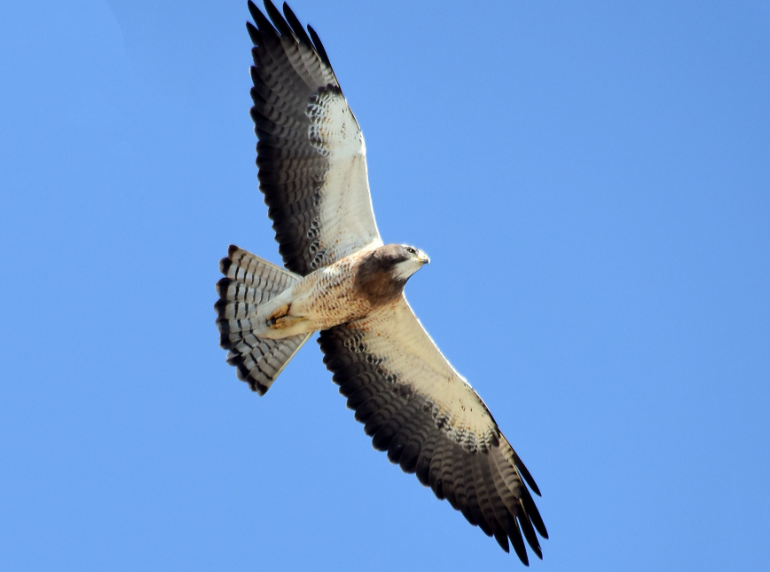
- Wings and Back: The Swainson’s Hawk’s wings and back are both dark brown to grey, with noticeable white dots on the shoulders. They can glide elegantly in wide areas with to their large, broad, and slightly pointed wings.
- Tail: Usually grayish-brown, the tail has a light tip and black stripes. One important feature that sets them apart from other hawks is their banded tail.
Additional Identifying Characteristics
- Beak and Talons: The Swainson’s Hawk, like other hawks, uses its hooked beak and sharp talons to help catch and devour food.
- Eyes: They can detect prey at a distance because to their keen eyesight and yellow to orange eyes.
Swainson’s Hawk Habitat and Behaviour
Preferred Environment and Nesting Areas
The main habitats of Swainson’s Hawks are open spaces such as prairies, savannas, grasslands, and agricultural areas. Near these vast spaces, they often build their nests on cliffs, large trees, or power poles. When migrating, they go for open areas like grasslands and deserts in Mexico and the southern United States.
Behavioral Traits and Social Patterns
The soaring birds known as Swainson’s Hawks mostly depend on thermals, or rising air currents, to sustain their flight without using a lot of energy. Their long tail and wide wings let them to remain in the air for lengthy stretches of time. The hawks have a reputation for being reserved. With the exception of calling to one another during mating season or while defending their territory, Swainson’s Hawks are not very loud raptors.
Diet and Hunting Techniques of Swainson’s Hawk
Primary Food Sources
- Small Mammals: Mice, voles, ground squirrels, and gophers are among the rodents that Swainson’s Hawks often hunt. Their food is mostly composed of these tiny animals, particularly during the mating season.
- Insects: Swainson’s Hawks will start hunting grasshoppers, crickets, beetles, and other big insects in regions with fewer animals. Their ability to capture flying insects in midair is very impressive.
- Birds and Reptiles: Occasionally, especially during migration or at times when other food supplies are limited, Swainson’s Hawks may also hunt tiny birds, lizards, and snakes.
Hunting Practices and Techniques
Swainson’s Hawks often hunt when perched, scanning their environment for possible prey. As soon as they see anything of interest, they will swiftly descend and use their talons to seize the victim. Swainson’s Hawks have been seen to hunt in packs during migration, which enables them to cover more ground and improves their chances of locating food.
Group Foraging During Migration
It’s interesting to note that Swainson’s Hawks may hunt in big numbers in open spaces like fields during migration. They probably locate more prey and adapt to their quickly changing environment because to their collective foraging behaviour.
Migration and Lifespan of Swainson’s Hawk
Impressive Long-Distance Migration
Every year, Swainson’s Hawks migrate from their breeding sites in the United States and Canada to South America, notably Argentina, Brazil, and Uruguay, where they spend the winter. During migration, Swainson’s Hawks are reported to fly in big flocks of up to 2,000 to 3,000 miles (3,200 to 4,800 km). They sometimes fly thousands of miles without stopping for food, and they depend on thermals to help them with their lengthy journeys. The seasonal migration takes place from early spring to late summer for the return trip and from late summer to early autumn for the northward voyage.
Typical Lifespan in the Wild
In the wild, Swainson’s Hawks often live 10 to 15 years, however many immature hawks die during the first year. Those that survive to maturity may have much longer lifespans. The availability of food, the temperature, and human interference such as habitat damage or hunting which affect how long they live.
Conservation Status and Environmental Threats
IUCN Conservation Classification
The International Union for Conservation of Nature (IUCN) has designated the Swainson’s Hawk as Least Concern. Despite this, habitat degradation, pesticide usage, and human encroachment have raised worries over their population levels in certain locations.
Major Environmental Threats
- Loss of Habitat: Swainson’s Hawks’ native habitats, especially grasslands and prairies, are being lost or fragmented as a result of increased urbanisation and agriculture. The hawks may have a harder time locating hunting and breeding locations as a result.
- Pesticide Use: Using pesticides in agricultural regions may make it harder for Swainson’s Hawks to find food, especially insects and rodents. When hawks eat polluted prey, pesticides may potentially cause illness.
Conservation Efforts and Strategies
The preservation of their habitats in wildlife refuges and protected areas benefits Swainson’s Hawks. Furthermore, encouraging sustainable farming methods may lower pesticide exposure and provide secure hunting areas. Researchers are better able to comprehend Swainson’s Hawk movements and pinpoint regions that need protection throughout their migratory trip because to ongoing efforts to monitor migration patterns using satellite technology.
FAQs (Frequently Asked Questions) about Swainson’s Hawk
Q: What is a Swainson’s hawk?
Ans: Swainson’s Hawk is a North American bird of prey known for its long migrations, broad wings, and preference for open grasslands.
Q: Where do Swainson’s Hawks migrate?
Ans: They migrate from North America to South America, primarily Argentina, travelling up to 7,000 miles each way.
Q: What do Swainson’s hawks eat?
Ans: They primarily eat insects, especially during migration, but also hunt small mammals, reptiles, and birds.
Q: Are Swainson’s hawks endangered?
Ans: No, they are listed as Least Concern, though past pesticide use posed serious threats to their populations.
Q: What habitats do Swainson’s Hawks prefer?
Ans: They prefer open spaces like prairies, deserts, farmlands, and grasslands with scattered trees for nesting.
Q: How can you identify a Swainson’s Hawk?
Ans: Look for a large hawk with a pale body, a reddish-brown chest, long pointed wings, and a short, squared tail.
Q: Do they nest in trees?
Ans: Yes, they nest in isolated trees, shrubs, and sometimes on artificial structures like poles or windmills.
Q: Are Swainson’s hawks beneficial?
Ans: Yes, they control pest populations by feeding on insects and rodents, making them valuable to ecosystems and agriculture.
Our sources and references about Swainson’s Hawk
1: Wikipedia – Swainson’s Hawk
2: Audubon Field Guide – Swainson’s Hawk
3: Cornell Lab – Swainson’s Hawk
4: National Geographic – Swainson’s Hawk